News
96% of Ghanaian pensioners willing to work beyond retirement age – CREX study

- /home/u249204778/domains/spectator.com.gh/public_html/wp-content/plugins/mvp-social-buttons/mvp-social-buttons.php on line 27
https://spectator.com.gh/wp-content/uploads/2026/09/WhatsApp-Image-2026-09-10-at-15.25.34.jpeg&description=96% of Ghanaian pensioners willing to work beyond retirement age – CREX study', 'pinterestShare', 'width=750,height=350'); return false;" title="Pin This Post">
- Share
- Tweet /home/u249204778/domains/spectator.com.gh/public_html/wp-content/plugins/mvp-social-buttons/mvp-social-buttons.php on line 72
https://spectator.com.gh/wp-content/uploads/2026/09/WhatsApp-Image-2026-09-10-at-15.25.34.jpeg&description=96% of Ghanaian pensioners willing to work beyond retirement age – CREX study', 'pinterestShare', 'width=750,height=350'); return false;" title="Pin This Post">
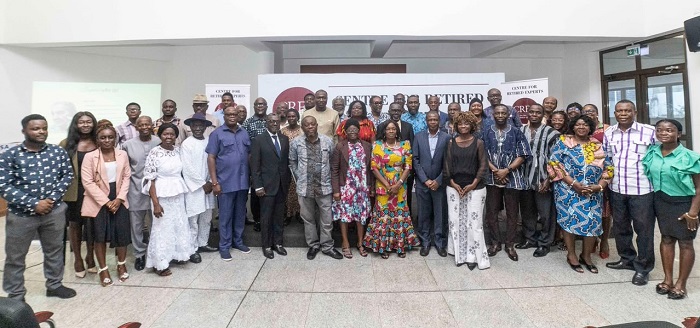
The Centre for Retired Experts (CREX) has called for deliberate national action to harness the knowledge and skills of retired professionals for Ghana’s development.
The call follows a study conducted by CREX in February 2026, which found that 96 per cent of 559 pensioners surveyed were willing to continue contributing to national development beyond the mandatory retirement age.
The study examined retirees’ willingness, motivation and capacity to undertake productive work after formal retirement.
Presenting the findings at a dissemination seminar in Accra, the Lead Researcher at CREX, Dr Adam Salifu, said about 90 per cent of the respondents were willing to mentor young professionals, while 88 per cent were prepared to serve as advisers or board members.
He, however, noted that only about one in five retirees remained professionally active despite the willingness of many others to contribute.
Dr Salifu said nearly 98 per cent of the retirees surveyed would register on a structured platform for retiree engagement, but 93 per cent were unaware of any existing platform where they could offer their expertise.
The study found that 97 per cent of the respondents believed there was a gap between the potential of retired professionals and the systems available to engage them productively.
According to the findings, retirees were motivated mainly by the desire to remain mentally active and contribute to national development rather than financial rewards.
About 84 per cent of the respondents were willing to contribute between one and four hours a day, while more than 90 per cent indicated that they could work between one and four days a week.
The study further showed that more than half of the retirees supported an increase in the current retirement age of 65, while about 86 per cent rejected the view that retirement had made them less useful to society.
Based on the findings, the CREX Director in charge of Research and Training, Dr Benedicta Quao, called for a coordinated national system to connect retirees’ skills and experience with opportunities in public institutions, private organisations and civil society.
She proposed that such a system should include transparent matching of retirees with opportunities, clear governance arrangements, flexible working options and standard guidelines for post-retirement contracts and incentives.
Dr Quao called for digital and lifelong learning programmes for retirees, systems to preserve institutional knowledge before employees retire, and mentoring programmes to connect experienced professionals with younger people.
The Executive Director of CREX, Prof Albert Martins, described the experience of retired professionals as a national asset and said Ghana was sitting on one of its richest but underused human-resource resources.
He warned that the country risked losing decades of institutional knowledge, technical skills, professional networks and leadership experience whenever qualified retired professionals were left without opportunities to continue contributing.
The CREX Director in charge of the Health Sector, Dr Chris Boamah-Mensah, said retired experts could help strengthen institutions, mentor the next generation and support development in communities.
He urged the government to view retirement as a new stage of national service rather than the end of productive contribution.
The CREX Director in charge of the Business Sector, Dr Sampson Narteh-Yoe, also urged public institutions, private organisations, civil society groups and development partners to establish practical systems to identify, register and engage retired experts.
The seminar was chaired by the Director of the UPSA Research and Consultancy Centre, Professor Alexander Preko, who expressed hope that the findings would encourage policy discussions and partnerships towards developing a national framework for harnessing the expertise of retired professionals.
By: Jacob Aggrey









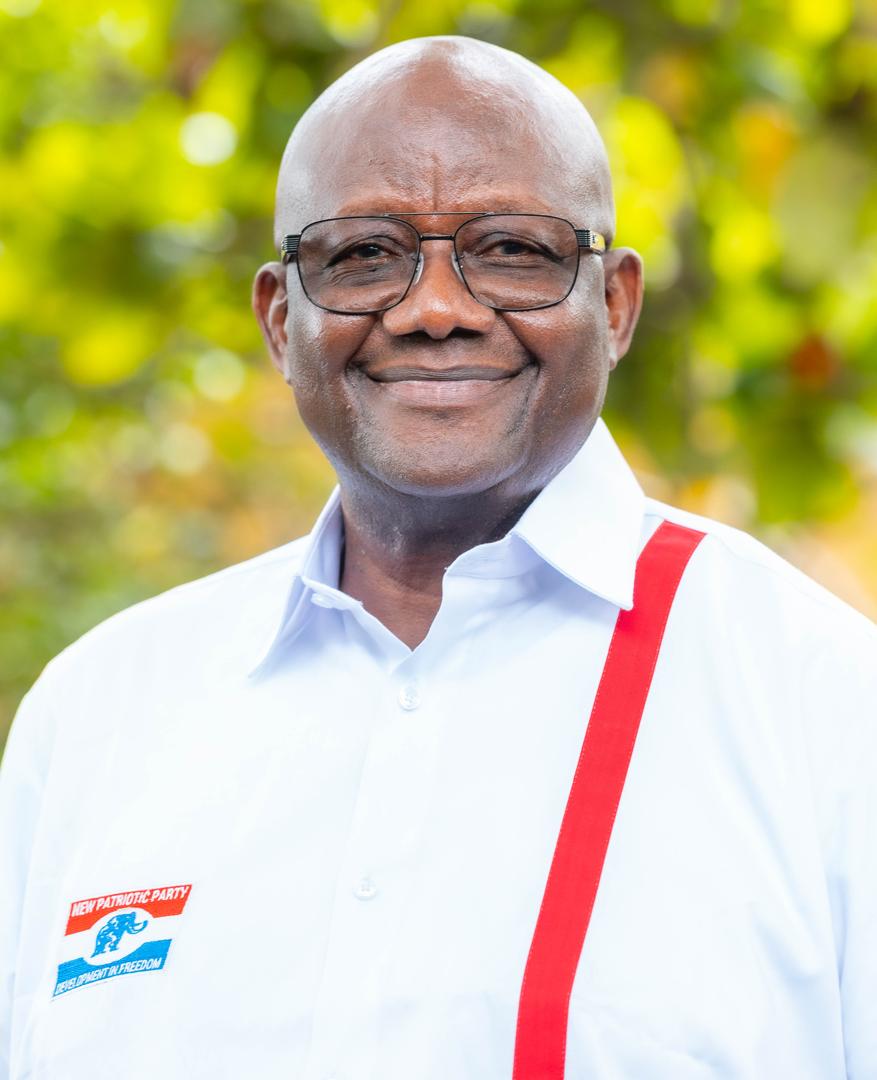
Private Legal Practitioner and New Patriotic Party (NPP) stalwart Charles Owusu Juanah says Awentami Paul Afoko has already started engaging members of opposing camps within the party as part of efforts to build a united front ahead of the 2028 elections.
Lawyer Juanah, who is the National Chairman of Friends of Bawumia, said some NPP members who have lost key positions have become disgruntled and now behave as though the party belongs to them.
He said this attitude has contributed to the divisions within the party and created the need for a leadership figure capable of bringing the various groups back together.
Juanah believes Afoko has the personality and relationships necessary to undertake that reconciliation.
He revealed that the former chairman has already started reaching out to people from opposing camps.
“He has even begun interacting with opposing camps in order to form a united front ahead of the 2028 elections,” Juanah said.
According to him, Afoko’s engagement with rival groups shows his focus is on building the party rather than deepening existing divisions.
Juanah said the former chairman understands that the NPP cannot successfully prepare for the next election while its members remain divided.
“He has foresight, the vision, and strategy to ensure there’s a united front,” he said.
Juanah added that Afoko had already begun talks with some members as part of the process.
He said these engagements demonstrate a willingness to listen to different sides and create a platform where members who have fallen out with one another can work together.
“He has even begun talks with some members,” Juanah said.
He argued that Afoko’s approach also shows his understanding of leadership.
According to Juanah, leadership in the current circumstances requires someone who can speak to different factions without treating political disagreements as permanent divisions.
He said Afoko’s charisma allows him to engage people who may not belong to the same camp.
Juanah therefore believes the former chairman can help bring back members who feel alienated from the party.
“If there’s anyone who can ensure all disgruntled members come together, then it’s no other than Paul Afoko,” he said.
For Juanah, the reconciliation effort is important because the NPP will need a united internal structure before it can effectively organise for the 2028 election. He said Afoko’s current engagement with rival camps is therefore consistent with the former chairman’s broader “Reunite, Rebuild, and Recapture” message.
By: Jacob Aggrey
Ghana is set to take centre stage in fashion, culture and the creative economy as the maiden Black Star Fashion Week (BSFW) takes off with a two-day national fashion experience designed to discover talent, convene the industry and showcase Ghanaian fashion on a global stage.
Put together by the Presidency-backed Black Star Experience Secretariat led by Rex Owusu Marfo, with support from the Ministry of Tourism, Culture and Creative Arts and its agencies such as the Ghana Tourism Authority (GTA) and Creative Arts Agency, it is structured across two connected experiences in Accra and Senchi.
The Black Star Fashion Week will move from inteligent industry dialogue and talent discovery to an exciting fashion celebration.
The first day will take place in Accra on November 4 and will centre on the Black Star Fashion Summit.
The Summit will bring together designers, fashion entrepreneurs, creatives, industry leaders, investors, buyers, manufacturers, policymakers, media and other stakeholders for a day of conversations, knowledge exchange, networking and talent development.
The Accra experience will feature keynote addresses, panel discussions, fireside conversations, masterclasses, industry presentations and practical workshops covering areas relevant to the growth of Ghana’s fashion industry, including entrepreneurship, branding, digital marketing, textile innovation, manufacturing, fashion finance, export readiness, e-commerce, artificial intelligence, sustainability and intellectual property.
A major component of Day One will be the 16-Region Designer Programme, bringing emerging fashion talent from across the country into one national platform.
Each participating designer will present a creative interpretation of their region, reflecting its identity, culture, heritage, materials, craftsmanship and contemporary design language.
The Accra programme will culminate in the selection of five designers. Out of the five, one will advance to the flagship fashion show at Senchi.
The second day will move to Royal Senchi on November 7, where the Black Star Fashion Show and experience will take place.
Beyond the runway, Senchi will host a Fashion Village, bringing together designer showcases, retail, textiles, artisan experiences, brand activations, beauty, technology, food and beverage, tourism and lifestyle experiences.
The event will also celebrate Ghana’s cultural diversity through music, dance, textiles, craft, food, storytelling, heritage and visual arts, demonstrating the deep connection between fashion and Ghana’s wider cultural ecosystem.
Honours will go out to outstanding contributors to Ghana’s fashion ecosystem, while networking and business engagements will connect designers and creative businesses with buyers, investors, manufacturers, retailers and other industry stakeholders.
Black Star Experience (BSE) is a Government of Ghana inititive for Culture, Arts, Tourism and Creative engagement.
As a national, year-round platform, the Black Star Experience brings together Ghana’s cultural, artistic, tourism and creative offerings to strengthen Ghana’s identity, promote the country as a preferred global destination and position Ghana as a leading cultural and creative capital of Africa.