News
It’s an eyesore! …Catholic Bishops slam Karnival Kingdom Festival

- /home/u249204778/domains/spectator.com.gh/public_html/wp-content/plugins/mvp-social-buttons/mvp-social-buttons.php on line 27
https://spectator.com.gh/wp-content/uploads/2026/05/Catholic-priests.jpg&description=It’s an eyesore! …Catholic Bishops slam Karnival Kingdom Festival', 'pinterestShare', 'width=750,height=350'); return false;" title="Pin This Post">
- Share
- Tweet /home/u249204778/domains/spectator.com.gh/public_html/wp-content/plugins/mvp-social-buttons/mvp-social-buttons.php on line 72
https://spectator.com.gh/wp-content/uploads/2026/05/Catholic-priests.jpg&description=It’s an eyesore! …Catholic Bishops slam Karnival Kingdom Festival', 'pinterestShare', 'width=750,height=350'); return false;" title="Pin This Post">
What was supposed to give another dimension to Ghana’s growing creative industry has ignited the anger of a section of the clergy.
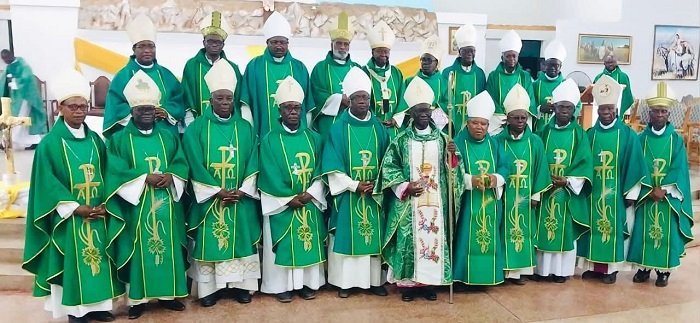
Championing the call for an investigation into how ‘law breakers’ enjoyed police protection is the Ghana Catholic Bishops Conference (GCBC) who described the maiden ‘Karnival Kingdom Festival’ on April 22-28, 2026 as an ‘eyesore’.
In the view of the conference, the provision of police protection for acts that breached the criminal code represents a serious failure of official duty.
The event turned parts of the city of Accra into an ultimate ‘Soca paradise,’ as carnival enthusiasts from around the world joined Ghanaians for an unforgettable fusion of lively music, epicparties, and deep cultural connection.
Organisers of the event described the Karnival Kingdom Festival as “not just another destination event; but a bold new premium experience that redefines what it means to celebrate. At its core, it’s about reconnecting with the motherland, bringing carnival culture back to the place where its spirit was born. From the rhythmic heartbeat of the drums to the colours of mothers, this is a return to source, a celebration of heritage, and a unifying call to joy.”
But in the eyes of the Bishops, what was seen and paraded on the streets was ‘sacrilege’, “denigrating our values as a nation and breached the laws of our land (CF section 278 of the Criminal Offences Act, 1960, Act 29).”
In response, its widely publicised statement took note of the public nudity at the festival during which participants received police protection.
The statement signed by Most Rev. Matthew Kwasi Gyamfi, Bishop of Sunyani and President of the Conference demanded for investigation and unequivocally condemn the act of public nudity.
“We call for immediate investigation into the role of state institutions, and the importation of foreign cultural practices. The presence of police protection for participants raises serious questions about official oversight.”
It said the event reflects a clash between globalised festival culture and Ghana’s established legal standards, adding that, “An imported event cannot claim exemption from Ghanaian law. Cultural exchange must respect the host nation’s laws and values.”
Raising issues about governance, the Bishops questioned which agencies issued permits and the deployment of police to protect participants engaged in public nudity and wondered why state agencies responsible for protecting public order may have facilitated rather than prevented the misconduct.
The Conference urges all parties to allow the investigative process to proceed without undue political pressure.
As a result, it recommended a thorough impartial investigation with public findings; review of permit processes with clear decency guidelines; an inquiry into why police protection was provided; and a national dialogue on limits of cultural expression in public spaces.
The conference also commended the Member of Parliament (MP) for Assin South, Mr John Ntim Fordjour, for his call in this direction.
By Andrew Nortey








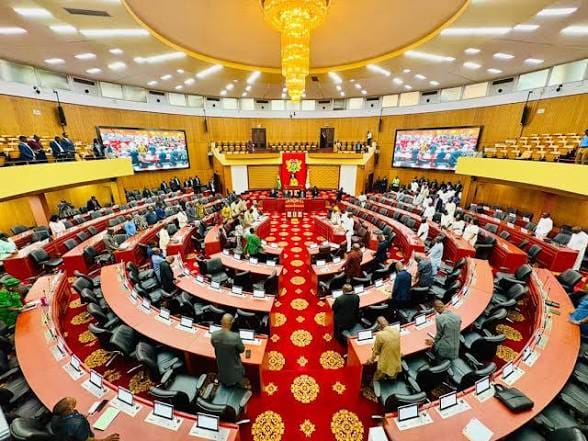
Parliament has clarified public commentary on social media regarding a notice on its notice board that read “No Vacancy for National Service Personnel 2026/2027. Kindly go for reposting.”
In a statement, signed by the Director of Media Relations, David Sebastian Damoah, Parliament said the notice has been misconstrued and was not a policy statement, a freeze on national service placements, or a change in its support for the National Service Scheme.
According to Parliament, the notice was a routine administrative message to prospective personnel who reported to the House, informing them that it has received more personnel than it can accommodate for the 2026/2027 service year and that they should seek reposting to other institutions.
It said it remains committed to the National Service Scheme and values the contribution of service personnel to its work, and regrets any confusion or inconvenience the wording may have caused.
By Edem Mensah-Tsotorme

Ghanaian public advocate Hopeson Yaovi Adorye has been elected to the Board of Directors of the World Taxpayers Association (WTA).
The election took place on Sunday, October 5, 2026, during the Association’s conference in Kraków, Poland.
His election marks a significant addition to his international leadership portfolio and provides a platform for Ghanaian and African perspectives to contribute to global discussions on taxpayer rights, responsible taxation, transparency and prudent management of public resources.
Reacting to his election, Mr. Adorye expressed appreciation to the leadership and members of the WTA for the confidence reposed in him.
“I am deeply honoured by this confidence and conscious of the responsibility that comes with it. Taxpayers are at the heart of every economy, and they deserve fairness, transparency, accountability and value for the taxes they pay. I look forward to working with colleagues from across the world to strengthen the voice of taxpayers and promote responsible fiscal governance,” he said.
According to him, taxation should not be viewed solely as a mechanism for raising government revenue, but also as an important component of the social contract between citizens and the state.
Mr. Adorye said governments have a responsibility to ensure taxes are collected fairly and public resources are utilised efficiently to deliver quality infrastructure, healthcare, education, security and other essential services.
His election also creates an opportunity to bring African experiences into international conversations on taxation and public expenditure.
Mr. Adorye, who is Executive Director of Taxpayers League Ghana, has previously served as Global Board Chairman of the International Youth Network for UN Security Council Resolution 2250, an NGO associated with the United Nations Economic and Social Council (ECOSOC).
He is expected to use his new role to champion fiscal accountability, taxpayer education, good governance and stronger citizen participation in public financial management.