Sports
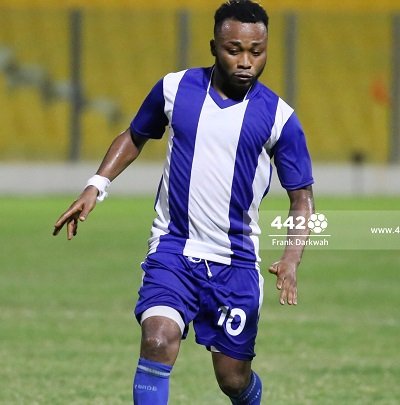
Is the Stars’ coach watching? Awako’s golden feet…

- /home/u249204778/domains/spectator.com.gh/public_html/wp-content/plugins/mvp-social-buttons/mvp-social-buttons.php on line 27
https://spectator.com.gh/wp-content/uploads/2021/01/AWAKO.jpg&description=Is the Stars’ coach watching? Awako’s golden feet…', 'pinterestShare', 'width=750,height=350'); return false;" title="Pin This Post">
- Share
- Tweet /home/u249204778/domains/spectator.com.gh/public_html/wp-content/plugins/mvp-social-buttons/mvp-social-buttons.php on line 72
https://spectator.com.gh/wp-content/uploads/2021/01/AWAKO.jpg&description=Is the Stars’ coach watching? Awako’s golden feet…', 'pinterestShare', 'width=750,height=350'); return false;" title="Pin This Post">
When he took the bold decision to return home from the United States to relaunch his career, many wondered whether it was a prudent move to make.
Endowed with a dazzling feet that draws tantalising patterns on the lush field, one would have thought the swash-buckling midfielder will rather continue to avail his talent to other clubs in Europe, Asia or the
Americas.
But for the 30-year-old Gladson Awako, there was the need to come home and ‘reboot’ a glittering football career that was steadily taking a slump.
“Sometimes, you miss domestic football and when things are not going as envisaged, there’s the need to come home, put things right and stage another adventure,” he says.
On hearing he had touched down, many clubs dashed fiercely for his signature, all wanting to have a good feel of Awako’s phenomenal midfield inventiveness where he sprays the field with a series of mesmerising runs, adroit dribbling and incisively intelligent passes.
Rather interestingly, Awako decided to seal the deal with Ghana’s Wonder Club – Great Olympics – an outfit whose stay in the domestic elite league has been wondrously inconsistent.
Never mind, Awako would say. “That’s where my heart belongs now.”
Indeed, since joining the Dade boys in the 2019/2020 season, the Voltarian has been shimmering and had inspired the Blue-and-White shirts to some incredibly difficult wins – most often scoring or serving as provider, before the season was truncated due to COVID-19 concerns.
But the player would sparkle again from where he left off as he has been in tremendous-fine-fettle form in the new season, picking up the Ghana Premier League (GPL) Player for December.
Indeed, his sterling form in the six matches under review (November-December) saw him bang home four goals with three assists. Within the period, he also clinched the NASCO Man-of-the-Match award four times.
Limpidly, Awako had shown more than enough that he is ready to don the colours of the senior national team again, having been called up into the Black Stars for a friendly against the Argentina national team in October 2009.
Ever since, the Olympics playmaker and skipper has been looking forward to lace up his boots again for the Stars, having now mushroomed into a player of the first water.
Years back, he had been criticised for overly hanging on the ball. Now, Awako is a huge departure from that style and distributes the ball with the aplomb of a veteran.
It is the belief of this column that the sweat merchant of the Black Stars, Charles Kwablah Akonnor, is watching Awako closely and should be willing to give him an opportunity to showcase that dexterity bottled up in his moderately-sized body.
For the records, the talented Awako was a member of the national Under-20 football team (Black Satellites) that dazzled the world to win the 2009 FIFA Youth World Cup held in Egypt. Ahead of that feat, he had played a crucial role to help Ghana annex the African Youth Championship in Rwanda, same year.
Awako was also a CAF Champions League winner with TP Mazembe in 2015, having won the domestic trophy with the DR Congo side three times – beginning from 2012. He was also part of the squad that clinched the CAF Confederation Cup and the CAF Super Cup – all in 2016. In 2013, Mazembe were runner-up in the Confederation Cup in which he played a significant role.
The ‘Nungua boy’ started his career at Ajax Academy, joined Heart of Lions, which later loaned him to Real Sportive (and back to Lions) before his move to Berekum Chelsea – and was a member of the Berekum side that reached the group stage of the CAF Champions League in 2012.
The high-flying Awako tasted the thrills of US football with Phoenix Rising FC in the 2017-2018 season, finishing as runner-up in the USA Soccer League (USL) Championship, before heading home.
With the experience under his sleeve, Coach Akonnor cannot afford to overlook this talent in the next Stars’ call-up. In any case, the Stars’ chief trainer had earlier asserted that local players who ‘shine’ would get a look-in, and the nimble-footed Awako must get the nod!
PlainTalk
With John Vigah


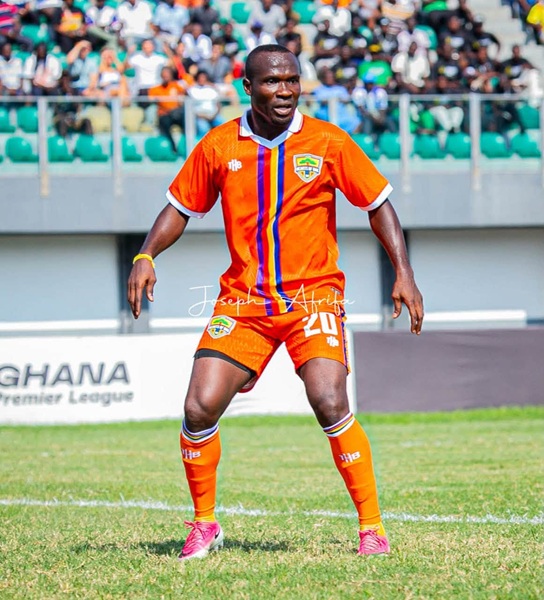
Accra Hearts of Oak and Dreams FC will headline Matchday 5 of the Ghana Premier League when the two sides meet at the University of Ghana Sports Stadium tomorrow, with both clubs seeking a result that could shape their early season campaign.
The encounter comes at a crucial moment for the two sides with the Phobians looking to recover from their first defeat of the campaign and Dreams still searching for their first victory after four matches.
The Rainbow lads started the season strongly but were beaten 1-0 by Karela United last weekend, while Dreams suffered a slim 1-0 defeat to Bechem United.
Hearts had earlier recorded impressive victories over Berekum Chelsea and Bibiani Gold Stars before drawing goalless with Bechem United, leaving the club with seven points from their opening four matches.
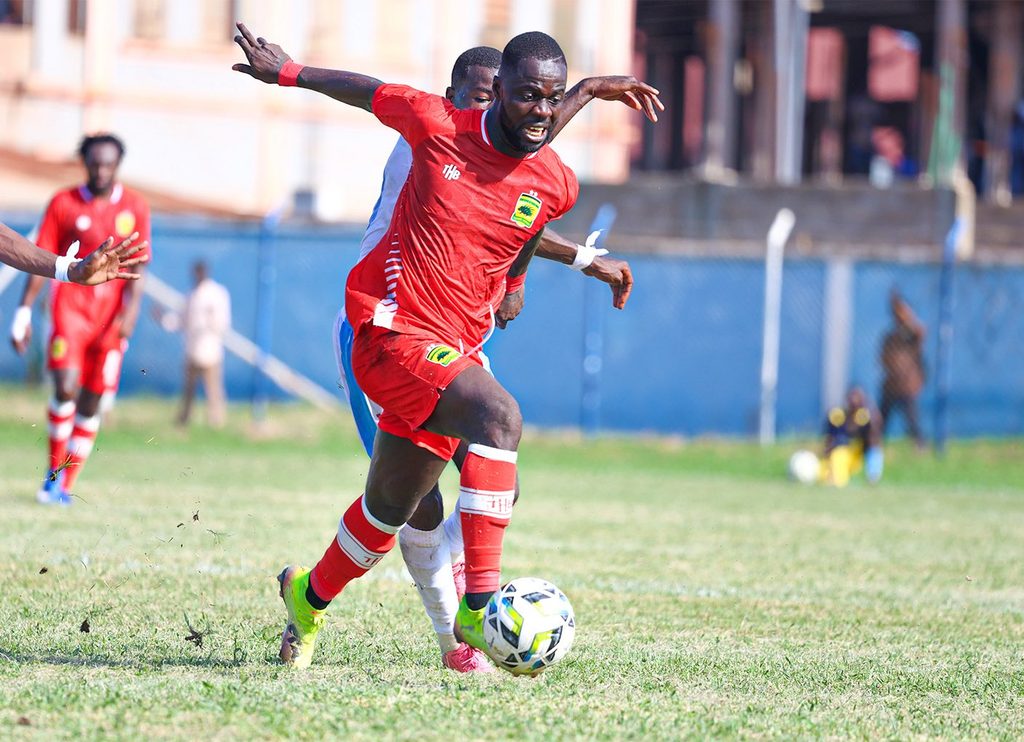
Their defeat at Karela United, however, means they will be under pressure to quickly return to winning ways against a Dreams side determined to make home advantage count.
Dreams, meanwhile, have endured a difficult beginning to the campaign and will see tomorrow’s fixture as an opportunity to change their fortunes.
The ‘Still Believe’ side have collected points from only their opening draws and are yet to register a victory, making the meeting with one of the country’s traditional giants an important test of their character.
Elsewhere, Vision FC will welcome Bibiani Gold Stars to the Nii Adjei Kraku II Sports Complex today, with both teams looking to strengthen their positions.
Vision have shown encouraging form in the early stages, while Gold Stars will be seeking a response after suffering a 2-0 home defeat to newcomers Port City FC.
At the Debibi Presby Park, newly promoted Debibi United will face defending champions Medeama SC tomorrow.
Medeama finally opened their account with a convincing 4-1 victory over Basake Holy Stars and will be hoping that the result marks the beginning of a stronger title defence.
Port City FC will continue their impressive debut campaign when they host Bechem United at the Daasebere Boamah Darko II Park.
Basake Holy Stars will attempt to recover from their heavy defeat to Medeama when they host Berekum Chelsea at the Ampain AAK II Sports Arena.
Aduana FC will welcome Swedru All Blacks to the Nana Agyemang Badu I Park after producing one of the weekend’s most notable results last Sunday.
At the Kpando Stadium, Heart of Lions will host FC AshantiGold ’04 in another meeting between sides coming off victories.
FC Samartex 1996 will meanwhile welcome Young Apostles FC to the Nsenkyire Sports Arena, with the home side seeking to maintain their unbeaten start to the campaign.
By Enoch Ntiamoah Siaw
SKIP THE QUEUE, TAP THE NEWS
You can now read the Ghanaian Times and The Spectator newspapers from the comfort of your device via TimesNewsPlus.
Join our WhatsApp Channel: https://whatsapp.com/channel/0029VbBElzjInlqHhl1aTU27
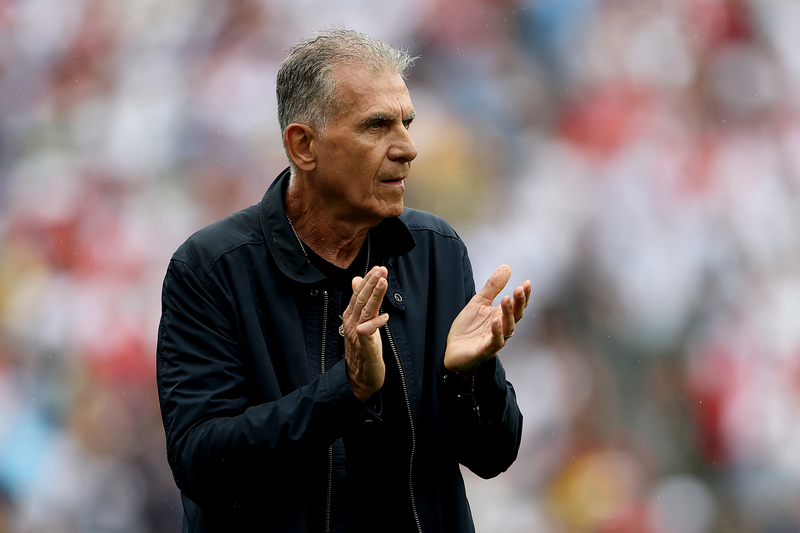
Tuesday, September 29, 2026 would go into the annals of Ghana football as one of the darkest days for the Black Stars.
In an AFCON 2027 qualifier against The Gambia, the Black Stars did not only break the hearts of the fans, but conceded a defeat that left followers with sleepless nights.
Coming from a Matchday 1 defeat to the Elephants of La Cote d’Ivoire in Bouake, the outcome of the second game against The Gambia was one that was non-negotiable.
It had the ability to spark a revival to contend for one of the slots for the next AFCON showpiece.
The Gambia is a formidable side but definitely, not one to have frustrated Ghanaians to watch in pain and awe the Black Stars lose a game from a winning position.
That is a possibility in the game of football but when the stakes are high in such cases, it becomes unacceptable to the fans.
And grievously has Carlos Queiroz answered the massive call for his resignation.
At his post-match press conference, he made it clear that bowing out was the easiest decision but insisted that would not solve the myriad problems facing the Black Stars.
For the coach to be fired two days after that declaration raises a lot of concerns as he seem to be aware of existing problems the FA may even not know.
Unfortunately, coaches over the years have always been sacrificial lambs in situations of this nature but when he talks about particular problems affecting the team, his sack leaves much to be desired.
That aside, it is important to also take another look at the country’s pool of players, both local and foreign based.
Some of us have been advocates for forming the Black Stars around the ever-present local players who may lack the skill, finesse and flamboyance believed to give the foreign based players the edge over their local counterparts.
The locals, however, compensate that with their commitment and dedication.
Sadly, it appears this consistent call have fallen on deaf ears and no one wants to give any attention to that.
If the fear is that results would be poor, then that would be no excuse again following outcomes of the Stars in their last two games.
From what was witnessed in Bouake and Accra, one can confidently boast that there isn’t much difference between the foreign based players and the locals.
If there is any, it would probably be the treatment given to the two sets of players.
The call on the FA now is to give major consideration to the local players. Any coach that sees no good in the local players must have no business handling the national team.
That does not also shut the door on the ‘foreigners’. We witnessed how the early 90s teams were beautifully blended to have a formidable team.
It is time the FA goes back to the basics. With the locals, there can be more camps, leading to improved cohesion. Any foreign based player invited must settle into the team quickly and make a difference. That is the only way to rescue the Black Stars from its free fall.
By Andrew Nortey
SKIP THE QUEUE, TAP THE NEWS
You can now read the Ghanaian Times and The Spectator newspapers from the comfort of your device via TimesNewsPlus.
Join our WhatsApp Channel: https://whatsapp.com/channel/0029VbBElzjInlqHhl1aTU27