Editorial
Investigate construction of speed ramps at Amrahia toll booth

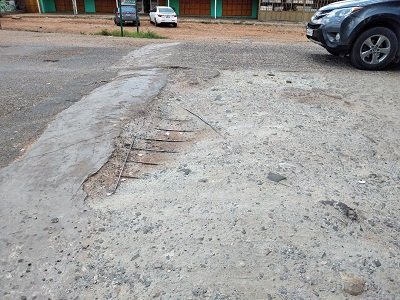
I humbly wish to request the Minister of Roads and Highways, Hon Akwasi Amoako –Attah, to investigate the construction of speed ramps at the Amrahia toll booth near the Ghana Christian University College on the Adentan- Dodowa road.
Though the speed ramps have been constructed less than one year, the two ramps have developed big pot holes which have compelled drivers to slow down, thereby creating traffic at the toll booth.
It is an undeniable fact that substandard materials were used in the construction of the speed ramps, thereby leading to their deterioration within a short period.
Motorists who use the road daily are of the view that the tax-payers money has not been judiciously utilised so far as the execution of this project is concerned.
There are some speed ramps which have stood the test of time and people are of the view that such a project should have been given to a contractor who has an enviable track record over the years, but not an amateur.
The construction of the speed ramps which will help in checking the speed of motorists as they approach the tool booth to pay their levy is to prevent the unfortunate incident of vehicles crushing into the containers from which the officials operate.
Ghanaians will be glad if the minister will find out issues pertaining to the process by which the contract was awarded, the track record of the contractor, the official who supervised and eventually certified the job among other relevant questions.
Since it is difficult to raise money through taxes to fund essential projects in the country, Ghanaians should not be deprived of getting value for money in the execution of projects.
Paul Okyere,
Oyibi, Accra.


Dear Sir/Madam,
I am writing to draw the attention of the authorities to the deplorable state of the road at Bortianor Hills in the Ga South Municipality, and the serious effect it is having on our environment and our health.
The road has been in a terrible condition for years. It is full of deep potholes, gullies and loose stones. When it rains, the entire stretch becomes muddy, flooded and completely impassable. Cars get stuck, school children wade through dirty water to get to school, and pregnant women and the sick struggle to get to hospital.
When it is dry, the situation is even worse. The dust is unbearable. It covers our homes, our food, our clothes and our shops. We breathe this dust every day. Many residents, especially children and the elderly, are now suffering from cough, catarrh, asthma and eye infections.
What pains us most is that some time ago, a contractor came and applied only the first coat on portions of the road and then left. Since then, there has been no improvement. That first coat has already been washed away by the rains. In fact, the road is now worse than it was before, because the loose gravel and the broken edges have created more dust and more erosion.
The environment is suffering too. Because of the bad road, tanker trucks and heavy vehicles that bring us water and building materials have further destroyed what is left of it. The drains are choked, rainwater has no proper channel, and erosion is eating into people’s plots and foundations. The dust and noise have killed the peace of this once quiet community.
Bortianor Hills is a fast-growing community. People are building, paying taxes, paying property rates and contributing to national development. We do not deserve to live in this condition.
We are therefore appealing to the Ga South Municipal Assembly, the Department of Urban Roads, and the Ministry of Roads and Highways to come back and complete the road. If a contract was awarded, let it be enforced. If the contractor has abandoned site, let a new one be engaged. Silence is not acceptable.
Good roads are not a luxury. They are life, health and dignity.
Resident,
A significant shift in Ghana’s diaspora policy is highlighted by the first Open D.O.O.R. Dialogues, which move the emphasis from transient heritage tourism, such as the 2019 Year of Return, to a planned, 10-year framework for long-term repatriation and economic integration.
Although the project highlights the African diaspora’s enormous developmental potential, the conversations reveal a persistent conflict between high-level political goodwill and the practical, bureaucratic reality that returnees must deal with.
The Ministry of Foreign Affairs correctly notes that the diaspora is more than just seasonal tourists; it is an important source of investment, innovation, and talent transfer.
According to Dr. Collins Rawlings Nyunyonyame, institutional fragmentation rather than a lack of motivation is the main obstacle to sustainable return. Long-term settlement is deliberately discouraged when potential returns confront unclear bureaucratic procedures across many agencies, such as immigration, foreign affairs, and diaspora affairs.
A crucial operational step is the demand for a centralised platform for diaspora opportunities and efficient collaboration. Grand policies run the risk of failing at the implementation phase if there are no clear, uniform processes for citizenship, business registration, and property acquisition.
Ghana can increase local industries, close skills gaps in specialised fields, and attract foreign direct investment by drawing in wealthy or highly qualified diasporans. The state must, however, strike a balance between these incentives to avoid unintentionally marginalising locals, especially in highly competitive industries like urban real estate.
In order to feel like they belong and have the chance to “Build Home,” returnees need civic security and legal clarity. Practical deterrents include things like complicated land tenure regimes, friction between dual citizenship, and expensive import charges on personal belongings.
The shift from a “Year of Return” to a “Decade of Repatriation” necessitates extensive integration at the community level. For repatriation to be successful, everyday economic and social partnerships between returnees and local communities must take precedence over scholarly and ministerial discussions.
The Open D.O.O.R. Dialogues accurately point out that emotional appeal is insufficient for the next stage of diaspora engagement. Ghana’s policy needs to change from cultural welcoming to a highly organised, seamless institutional ecosystem if the concept “Come Home. Stay Home. Build Home.” is to become a reality.