News
Include boy child in education, leadership discussions


- /home/u249204778/domains/spectator.com.gh/public_html/wp-content/plugins/mvp-social-buttons/mvp-social-buttons.php on line 27
https://spectator.com.gh/wp-content/uploads/2026/05/Apostle-Professor-Kwabena-Agyapong-Kodua-Vice-Chancellor-Pentecost-University-1.jpg&description=Include boy child in education, leadership discussions', 'pinterestShare', 'width=750,height=350'); return false;" title="Pin This Post">
- Share
- Tweet /home/u249204778/domains/spectator.com.gh/public_html/wp-content/plugins/mvp-social-buttons/mvp-social-buttons.php on line 72
https://spectator.com.gh/wp-content/uploads/2026/05/Apostle-Professor-Kwabena-Agyapong-Kodua-Vice-Chancellor-Pentecost-University-1.jpg&description=Include boy child in education, leadership discussions', 'pinterestShare', 'width=750,height=350'); return false;" title="Pin This Post">
The Vice Chancellor of the Pentecost University, Apostle Professor Kwabena Agyapong-Kodua, is advocating an intentional conversation about the development and education of the boy child in creating stronger families and societies.
According to him, the boy child must not be ignored in conversations on leadership, education, family stability and national transformation because they are key to national development.
“There is a reason why a boy child must not be denied opportunities like education; he is a future leader. When boys are trained well, society becomes safer and stronger,” he stated.
Apostle Prof. Agyapong-Kodua made the remark at a forum organised by the Church of Pentecost Schools Outreach Ministry in Accra to observe the International Day of the Boy Child observed on May 16.
It was held in collaboration with the Pentecost Men’s Ministry and the Ghana Education Service (GES), and under the theme: ‘Flourish and Thrive: Investing and Unleashing Boys for Strong Families and Communities.’
Leading the discussion, the Pentecost University Vice Chancellor warned that poor mentorship, declining in education, harmful social media influences and emotional neglect have made a lot of young boys vulnerable.
With a lot of the attention switching to the girl child, the boy child, he said was confronted with many challenges including violence, substance abuse, educational decline, emotional neglect and the absence of positive role models.
According to Apostle Prof. Agyapong-Kodua, he noted that boys were turning to social media for direction due to the absence of fathers and mentors to help shape their lives.
“If we are not intentional, social media will mentor our children for us. We are not saying they should not use social media, but they should be guided to access the right information to excel in life,” he stated.
Prof. Agyapong-Kodua urged society to encourage boys to become creators of technology rather than mere consumers.
Contributing, Madam Gifty Asiedu, Director of the Girls’ Education Unit at the GES Headquarters, said the service remained committed to ensuring that no child was left behind, adding that, “supporting the boy child should not come at the expense of progress made in girl-child education.”
“If you focus intentionally on one gender and neglect the other, you create a societal problem,” she underlined.
She said the GES had observed some decline in boys’ retention in school, although the gap between boys and girls was not yet too wide.
“Over the years, attention has been focused on the girl child and we have seen the benefits. However, data now show that the statistics concerning the boy child continue to decline,” she indicated.
She explained that the service was implementing gender-responsive education to ensure that classroom teaching addressed the needs of both boys and girls equally.
Elder Barima Acheampong Sarpong II, Deputy Director of the Pentecost Men’s Ministry and Chief of Asante Asaman in the Ashanti Region, said society needed to critically examine the plight of boys.
“As we celebrate the International Day for the Boy Child, I urge every man to identify one boy child, find out how he is doing and dedicate some time to mentoring him,” he explained.
The programme, attended by educators, church leaders and policymakers, was the second edition following a partnership initiated last year between the Schools Outreach Ministry, the Pentecost Men’s Ministry and the GES.
It sought to improve school enrolment, completion rates and learning outcomes among boys so they could grow into responsible men who would build strong families and communities.
By Esinam Jemima Kuatsinu

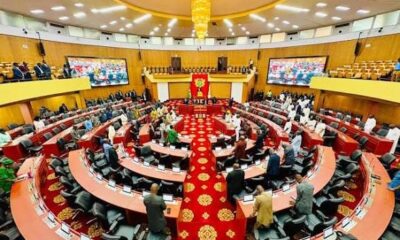






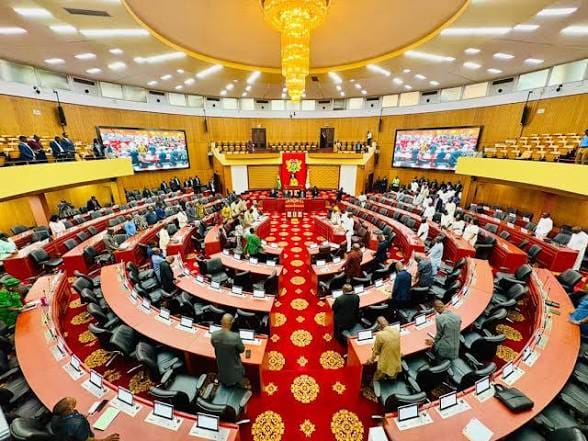
Parliament has clarified public commentary on social media regarding a notice on its notice board that read “No Vacancy for National Service Personnel 2026/2027. Kindly go for reposting.”
In a statement, signed by the Director of Media Relations, David Sebastian Damoah, Parliament said the notice has been misconstrued and was not a policy statement, a freeze on national service placements, or a change in its support for the National Service Scheme.
According to Parliament, the notice was a routine administrative message to prospective personnel who reported to the House, informing them that it has received more personnel than it can accommodate for the 2026/2027 service year and that they should seek reposting to other institutions.
It said it remains committed to the National Service Scheme and values the contribution of service personnel to its work, and regrets any confusion or inconvenience the wording may have caused.
By Edem Mensah-Tsotorme
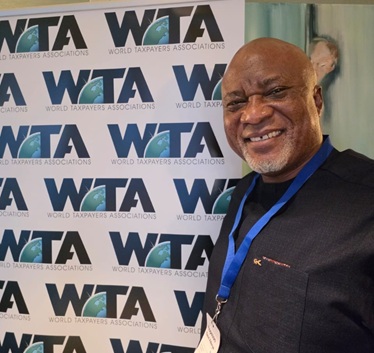
Ghanaian public advocate Hopeson Yaovi Adorye has been elected to the Board of Directors of the World Taxpayers Association (WTA).
The election took place on Sunday, October 5, 2026, during the Association’s conference in Kraków, Poland.
His election marks a significant addition to his international leadership portfolio and provides a platform for Ghanaian and African perspectives to contribute to global discussions on taxpayer rights, responsible taxation, transparency and prudent management of public resources.
Reacting to his election, Mr. Adorye expressed appreciation to the leadership and members of the WTA for the confidence reposed in him.
“I am deeply honoured by this confidence and conscious of the responsibility that comes with it. Taxpayers are at the heart of every economy, and they deserve fairness, transparency, accountability and value for the taxes they pay. I look forward to working with colleagues from across the world to strengthen the voice of taxpayers and promote responsible fiscal governance,” he said.
According to him, taxation should not be viewed solely as a mechanism for raising government revenue, but also as an important component of the social contract between citizens and the state.
Mr. Adorye said governments have a responsibility to ensure taxes are collected fairly and public resources are utilised efficiently to deliver quality infrastructure, healthcare, education, security and other essential services.
His election also creates an opportunity to bring African experiences into international conversations on taxation and public expenditure.
Mr. Adorye, who is Executive Director of Taxpayers League Ghana, has previously served as Global Board Chairman of the International Youth Network for UN Security Council Resolution 2250, an NGO associated with the United Nations Economic and Social Council (ECOSOC).
He is expected to use his new role to champion fiscal accountability, taxpayer education, good governance and stronger citizen participation in public financial management.