News
IMF $3bn Bailout: Joe Jackson urges govt to avoid reckless borrowing


The Director of Business Operations at Dalex Finance, Joe Jackson, is urging the government to refrain from excessive borrowing following the International Monetary Fund’s (IMF) $3 billion bailout for Ghana.
Speaking on Eyewitness News on Citi FM, Joe Jackson emphasized the need for the government to take a retrospective look at the activities that led to the economic crisis.
He stressed that the government should use the funds wisely and avoid reckless borrowing, as this would only worsen the economic situation.
Joe Jackson highlighted that receiving the bailout funds comes with the responsibility of ensuring proper utilization.
He cautioned against another spending spree and emphasized the importance of behaving responsibly to secure future tranches of the bailout.
“What this means is that, once we have taken the money, the behaviour that we have to undertake to ensure that this money is spent properly, has to kick in. We now have to make sure that we do the right thing. If anything at all, this is absolutely the wrong time to believe that we can be reckless in borrowing”.
He added, “This is the time you get prudent with your money. It’s not an invitation to go on another spending spree, it’s not the time to show your bad habits. If government doesn’t behave, it won’t get the 2nd tranche, talk less of the 3rd tranche. The whole world is watching to see how government will behave”.
He urged the government to learn from the current challenges and take measures to prevent reckless borrowing in the future.
“The programme is going to be for a few years, so I’m sure we will behave properly. We are so close to disaster this time, so close to total collapse that we have to learn our lessons. We need to ask ourselves the things we can do to prevent future governments from this reckless borrowing. How do we make sure that we don’t borrow and borrow until we can’t pay anymore? How do we make sure this does not happen again?” he emphasised.
Joe Jackson also called for a reduction in the size of government appointees and the elimination of ineffective State-Owned Enterprises draining the country’s resources.
The government sought financial assistance from the IMF due to various factors, including Ghana’s escalating debt situation, the impact of the COVID-19 pandemic, the Russia-Ukraine war, the banking sector clean-up, and excess capacity payments in the energy sector.
On December 12, 2022, the IMF reached a staff-level agreement with Ghanaian authorities on a new arrangement under the Extended Credit Facility.
Vice President Dr. Mahamudu Bawumia acknowledged the limited revenue generation options faced by the government amid the worsening economic challenges, leading to the decision to seek support from the IMF.
President Nana Addo Dankwa Akufo-Addo also expressed confidence in Ghana’s engagement with the IMF, stating that the deal would spur economic growth.
Credit: citinewsroom.com


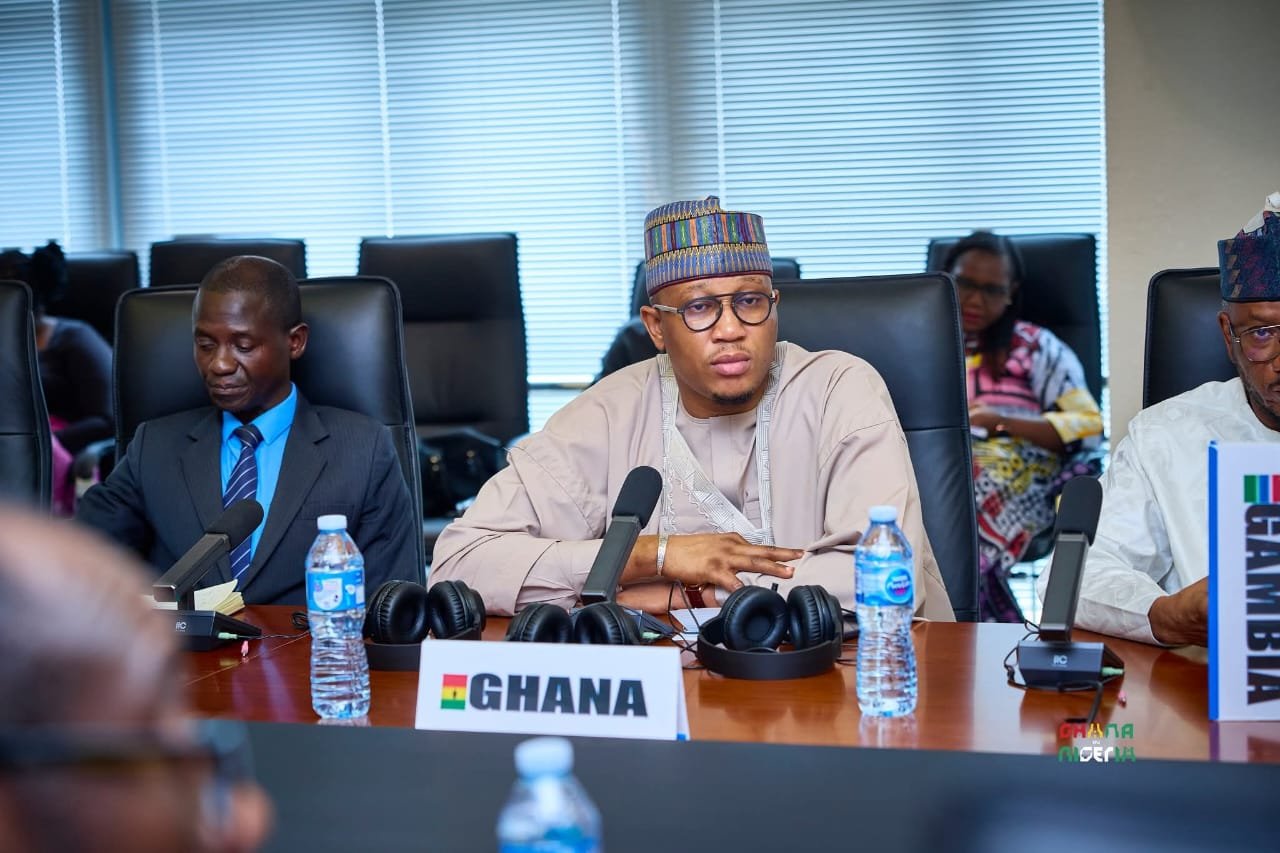
The Ghana High Commission in Abuja, Nigeria, is appealing to the public to help trace the relatives or next of kin of Apia Solomon, a Ghanaian national believed to be from Osu, Accra.
According to a public announcement by the High Commission, Mr. Solomon, born on March 6, 1960, in Accra, died on July 5, 2021, from cardiopulmonary failure.
He worked as a temporary civilian staff member at the National Defence College in Nigeria. His remains are currently being kept at the Nigerian Air Force Hospital morgue in Abuja, pending burial arrangements.
The High Commission says efforts to locate his relatives have so far been unsuccessful and is urging anyone with information about his family, friends or next of kin to come forward.
Anyone with relevant information is encouraged to contact the Ghana High Commission in Abuja.
By: Jacob Aggrey
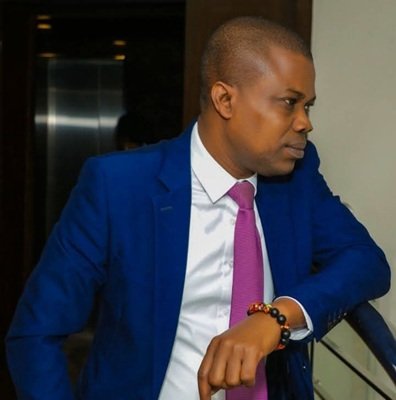
Security consultant Richard Kumadoe has blamed what he describes as flawed recruitment and incomplete background checks for some of the problems facing the Bureau of National Intelligence (BNI).
He has called on the leadership of the BNI to review the backgrounds of officers recruited during specific periods, particularly those who entered the agency under recent recruitment processes.
Speaking on the issue on TV3 yesterday, Mr Kumadoe alleged that some individuals were recruited into the intelligence agency without proper background checks and completed vetting.
“Certain categories of persons were dumped into the BNI, whose backgrounds were not checked, and whose vettings were not completed,” he stated.
He said some of the officers linked to the concerns appeared to have been recruited within the same period, making it necessary for the agency to examine the recruitment records and backgrounds of those who joined during that time.
Mr Kumadoe argued that the problems could be addressed by ensuring that recruitment procedures were properly followed and that all applicants underwent the required checks before being employed.
According to him, when the selection process is flawed, it can lead to problems within the institution.
He blamed the politicisation of security institutions, arguing that appointing people without the necessary intelligence experience and allowing political interests to influence recruitment could undermine their operations.
“When you have a selection procedure that was flawed because you politicised the place, brought in people to come and head the place when they have no business being there, they don’t know anything about being a BNI officer, they are not intelligence officers, and you flood the place with politicians and political artists, then you circumvent the standard procedure and you are going to have some of these problems,” he said.
Mr Kumadoe, however, defended the current leadership of the BNI, arguing that efforts to address longstanding problems within security institutions could bring such issues to light.
He said the leadership should be assessed in the context of the steps it is taking to improve the agency’s operations and uphold professional standards.
Drawing on his own experience in the intelligence field, he said the opportunity to serve under experienced officers had helped him develop the skills and integrity needed to contribute to national security.
By: Jacob Aggrey