Hot!
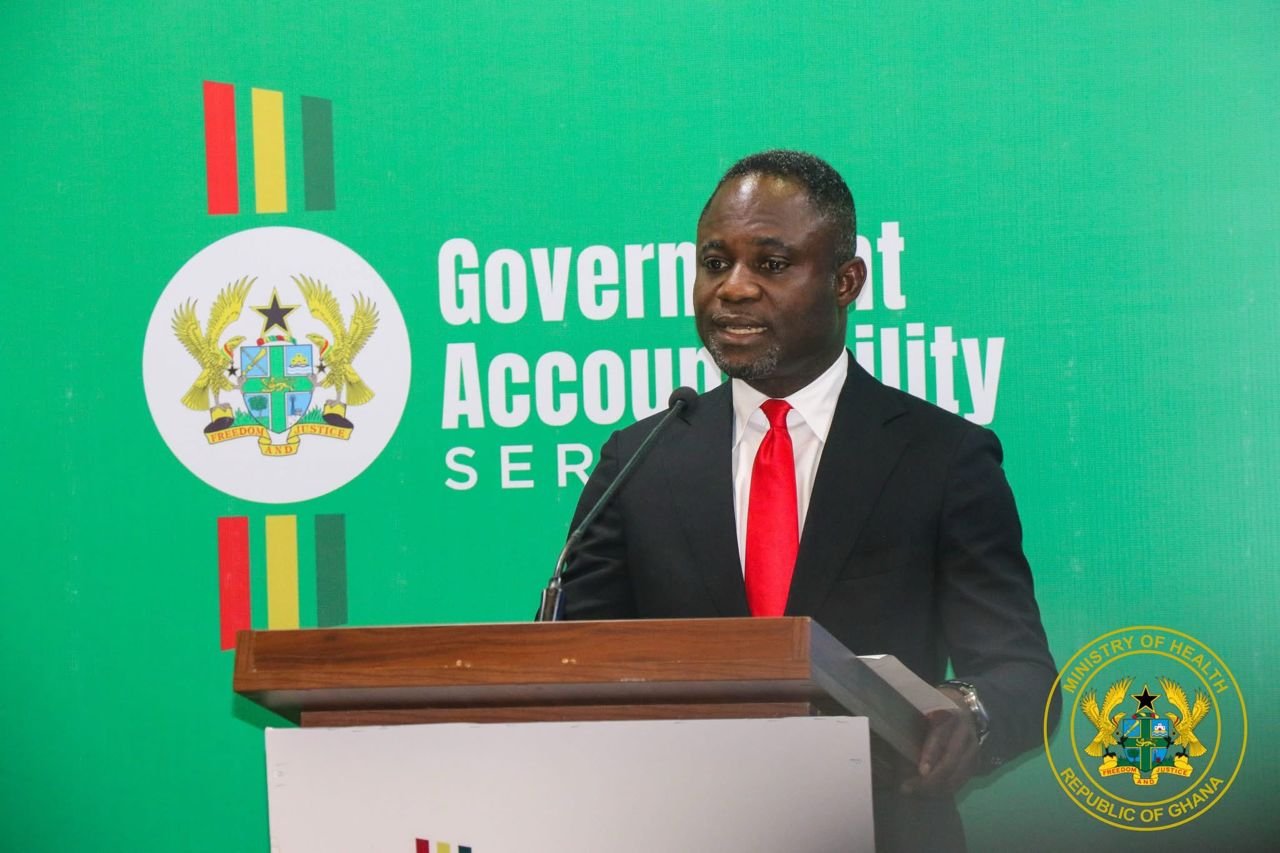
Health Minister introduces GHIMS to replace LHIMS and protect national health data

- /home/u249204778/domains/spectator.com.gh/public_html/wp-content/plugins/mvp-social-buttons/mvp-social-buttons.php on line 27
https://spectator.com.gh/wp-content/uploads/2025/10/WhatsApp-Image-2025-10-29-at-16.33.38-1000x600.jpeg&description=Health Minister introduces GHIMS to replace LHIMS and protect national health data', 'pinterestShare', 'width=750,height=350'); return false;" title="Pin This Post">
- Share
- Tweet /home/u249204778/domains/spectator.com.gh/public_html/wp-content/plugins/mvp-social-buttons/mvp-social-buttons.php on line 72
https://spectator.com.gh/wp-content/uploads/2025/10/WhatsApp-Image-2025-10-29-at-16.33.38-1000x600.jpeg&description=Health Minister introduces GHIMS to replace LHIMS and protect national health data', 'pinterestShare', 'width=750,height=350'); return false;" title="Pin This Post">
The Minister of Health, Kwabena Mintah Akandoh, has announced the introduction of a new digital health platform, the Ghana Health Information Management System (GHIMS), to replace the suspended Lightwave Health Information Management System (LHIMS).
He explained that the move marks the end of manual medical record-keeping in Ghana’s health facilities.
GHIMS, he said, is a fully state-owned and managed system designed to improve the security and accessibility of health information across the country.
Speaking at a media engagement at the Jubilee house, the Minister revealed that the decision followed forensic and technical audits that uncovered serious problems with the previous LHIMS project.
According to him, the $100 million LHIMS contract, awarded in 2019 to connect 950 health facilities, was expected to be completed by 2022. However, after two extensions, the contractor still failed to meet key targets.
“By the time the contract expired in December 2024, only 450 facilities had been connected less than half of the original target even though over $77 million had already been paid, representing more than 70 percent of the total cost,” he revealed.
“The audit also found shortages and poor-quality equipment, with an estimated $29 million worth of supplies either missing or below standard,” he added.
The Minister described the contractor’s refusal to hand over administrative access and Ghana’s health data as “pure blackmail,” saying it caused repeated service disruptions and data losses.
To fix these challenges, he noted that the Ministry has now developed GHIMS, a new national digital health system built entirely by the government.
The system he noted includes a National Health Information Exchange, a secure platform that allows different health service providers to connect under government regulation, preventing any single company from controlling national health data.
GHIMS he underscored also links directly with the National Health Insurance Authority database, making it possible for patients to access their medical records anywhere in the country.
“This means that a patient registered in Tamale can receive treatment in Accra without having to re-register,” he indicated.
Mr. Akandoh announced that GHIMS will be rolled out in phases over four weeks, starting with teaching and regional hospitals, followed by district hospitals, polyclinics, health centers, and CHPS compounds.
He added that the audit findings have been forwarded to the Attorney-General and other state security agencies for further investigation and appropriate action.
By: Jacob Aggrey

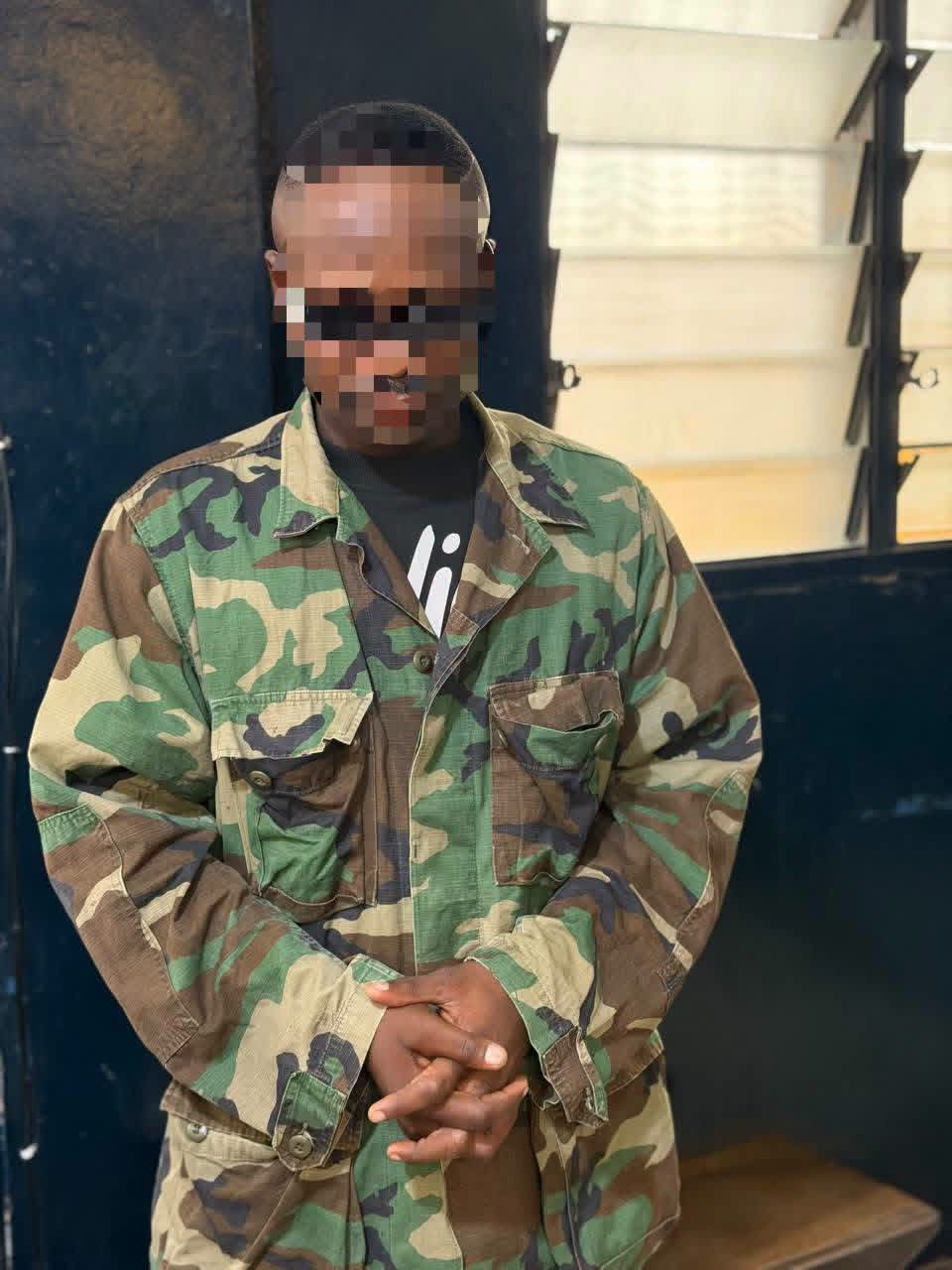
The Tema Regional Police Command has arrested a 32-year-old man for allegedly posing as a soldier and extorting money from unsuspecting members of the public at Ashaiman.
The suspect, identified as Bright Atsu Kudiabor, was arrested by the Ashaiman Police on Wednesday, September 16, 2026, at about 7:00 a.m.
According to the Police, he was arrested at an area known as “I Shall Return”, where he was allegedly parading himself as a soldier and demanding money from people.
The Police said Kudiabor, who is an ex-convict, was initially arrested by personnel of the Ghana National Fire Service in Ashaiman with assistance from other members of the public.
A search conducted on him after he was handed over to the Police reportedly led to the recovery of a set of military camouflage uniform.
The suspect is currently in Police custody and assisting with investigations.
The Tema Regional Police Command said he would be processed for court after investigations are completed.
The Police urged the public to remain vigilant and report anyone who falsely presents themselves as a soldier or a member of another security agency to deceive or extort money from the public.
By: Jacob Aggrey

Volta Regional Minister, James Gunu, says the Volta Region holds enormous agricultural potential and efforts must be geared towards connecting farmers to the needed resources to unlock that potential.
He said focus must be on linking farmers to resources, technology, financing and markets to increase production, create jobs and build sustainable livelihoods.
Hon. Gunu made the remarks at the national launch of the Ghana Tomato Self-Sufficiency Initiative (GHATSI) held at Anloga in the Volta Region on Tuesday, September 15.
The initiative, under the theme “Produce at Home. Feed the Nation. Export the Surplus,” seeks to boost local tomato production, processing and marketing while reducing Ghana’s heavy reliance on imported tomatoes.
The launch was attended by the Minister for Food and Agriculture, Eric Opoku, his Deputy, John Setor Dumelo, Feed Ghana Coordinator, Bright Demordzi, Members of Parliament, traditional leaders, MMDCEs, farmers and other stakeholders.
Mr.Gunu expressed appreciation to the Minister for Food and Agriculture for the support announced for the region, including two excavators, 200 cartons of organic fertiliser, and GH¢200,000 for Ms. Kuatudzo Esther Dela, a tomato farmer and processor from Ziope.
He described the initiative as an important step towards making agriculture a stronger driver of food security, job creation and economic growth in the Volta Region.
By Edem Mensah-Tsotorme