Hot!
Halting free fall of Black Stars


• Chris Hughton
Gone were the days when matches between Ghana’s Black Stars and Super Eagles of Nigeria were categorised as one of the biggest continental rivalries or derbies.
The reason was known to many. They had the best teams and very good crop of individual players.
And more so, qualification to international competitions was like a birth right; maybe except Ghana that had to wait until 2006 to have a taste of the FIFA World Cup – the Germany edition.
But what is seen now of this two African nations in football is nothing to write home about. In the past where the two countries used outcomes of the other to push themselves to greater heights, they now console each other with their results.
A fantastic example of this assertion was the match day one encounter of the 2026 FIFA World Cup qualifiers played last week.
The Super Eagles of Nigeria had played a day ahead of Ghana and surprisingly drew 1-1 against Zimbabwe at home.
The following day when the Black Stars struggled against Madagascar in Kumasi and run away with a late goal victory, a fan stated that “We are not the only people suffering. Nigeria are also suffering.”
That is the level to which what was a beautiful rivalry has sunk to.
Such has been the aggravating fall of the Black Stars in world football. From a brand that easily drove thousands of fans to the stadium, it has become almost hell pulling a few fans to the stadium to watch the team because of the constant poor performances.
Within a very short period, several coaches have come and gone, earning very fat salaries and bonuses but with nothing to show for.
After Coach Kwesi Appiah failed to make a case for local coaches, Milovan Rajevac, Otto Addo and Chris Hughton have all been given the chance to build a winsome and formidable Black Stars team but to no avail.
Hughton, who is currently in the saddle, is already under enormous pressure following the latest round of poor showings from the Stars as the race to Canada, USA, Mexico 2026 commences with two games already cleared.
By extension, the entire technical team, have not been spared the fans tirades, with many calling for an early sack to avoid the tragedy of missing out on a dream World Cup.
That would surely be expected considering the huge expectation of the fans but in calling for that, it is important to properly identify the problem of the team to carefully situate it.
Coaches have always suffered the anger of the fans in bad days but this generation of Black Stars have brought to the fore issues about their quality.
The changes in the coaching outfits with the same result should by now inform authorities about the need to adopt a second plan- which I personally feel must be a shift from the over reliance on the foreign based players a bit to the locals.
It has become clear that the bad nature of the local facilities alone is making it difficult for these foreign legions to perform to the best of their abilities.
This has led to calls about their commitment and dedication to the national course because fans watch them perform in the European leagues but what is seen of them with the national team comes nowhere near that of their club sides.
My position on this matter has not changed although some believe it is not feasible.
In our local league, which is obviously not at its best, there are still a few good players that can perform equally well, if not better than some of those that state resources are expended on but offer nothing.
One can quickly make mention of Christopher Nettey, Razak Kasim, Augustine Okrah, Jonathan Sowah, Nurudeen Abdulai, Isaac Mintah, Justice Blay, Dominic Nsobilah, Kelvin Osei Asibey, John Antwi, Yusif Nurudeen Mohammed, Razak Simpson and many others out there.
These are very good players that have not been given a chance at the very big stage just because they are locally based and are accused of lacking exposure.
Ghana had a very strong squad in the 1990s because there was a huge local player’s representation in the team and blended well with the foreign based players.
That era had the likes of Abedi Pele, Anthony Yeboah, Ali Ibrahim, Prince Opoku Polley, Edward Ansah, Isaac Asare, Kwame Ayew, Anthony Baffour and a host of others.
In the same team were the likes of Emmanuel Armah (Senegal), Emmanuel Ampiah, Frank Amankwah, Nii Darko Ankrah, Sarfo Gyamfi, Stanley Aborah, Kwesi Appah and others.
They gave the team a defensive solidity that have not been seen with the Stars in recent times.
If this was achieved in the past, why can’t it work now? What has changed?
Maybe, the time is up now for the FA and technical handlers to develop a quota system for both set of players to ensure that in every assembly, local players would be allotted a certain number of slots.
The fears being expressed that this could lead to failure cannot stand because even with the all foreign based, we appear to have failed already.
By Andrew Nortey


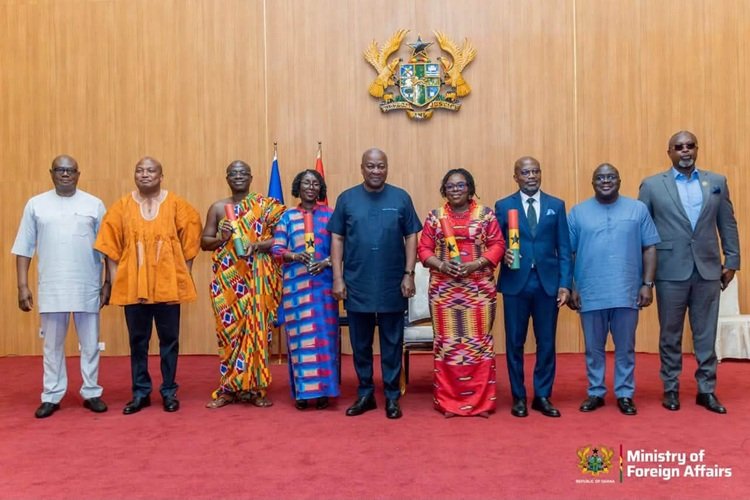
President John Dramani Mahama has commissioned four career diplomats as ambassador-designates to represent Ghana in four countries.
The commissioning ceremony took place on Friday, October 16, 2026.
The new envoys are Her Excellency Nana Antwiwaa Dodoo, Ambassador-Designate to Angola; His Excellency Louis Kwame Obeng, Ambassador-Designate to Qatar; Her Excellency Evelyn Korantemaa Ofosu-Amable, Ambassador-Designate to Israel; and His Excellency Jedidiah Reuben Adogla, Permanent Representative-Designate to Switzerland.
President Mahama charged them to advance Ghana’s national interests through strategic partnerships, economic diplomacy, investment mobilization, and expanded access to international markets.
He said Ghana’s diplomatic engagements must deliver tangible economic benefits, create jobs, and strengthen the country’s standing on the international stage.
The four envoys are career diplomats with over 27 years of experience.
On behalf of her colleagues, Her Excellency Nana Antwiwaa Dodoo thanked the President for the confidence reposed in them and pledged their commitment to emulate his leadership and deliver on the mandate given to them.
By Edem Mensah-Tsotorme
The professor who spends his days exploring the intricacies of African languages found himself at the centre of a different kind of lesson on Friday, October 2, 2026. 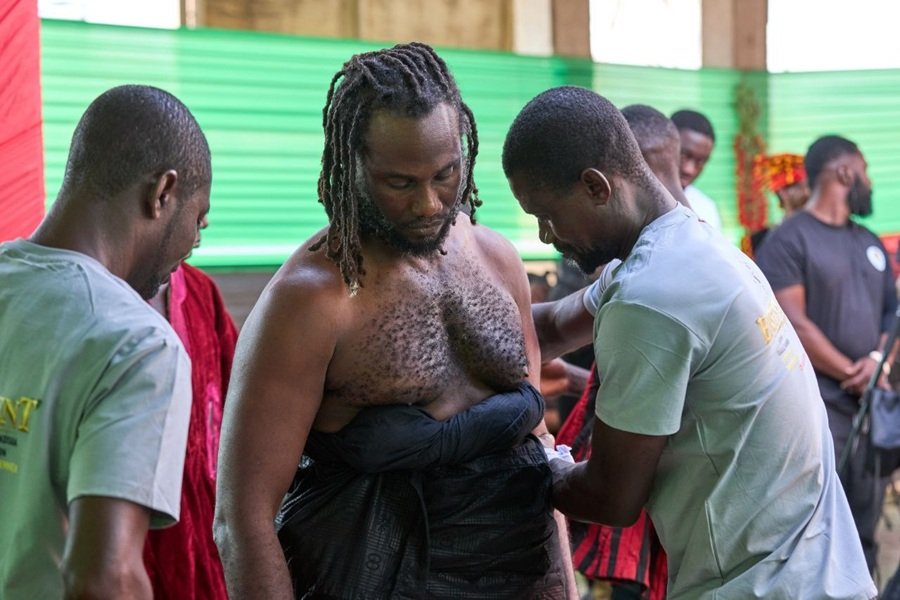
This time, there were no lecture notes, academic arguments or university classrooms. Instead, there was the weight of tradition, the rhythm of a community celebration and the solemnity of an oath at a royal palace.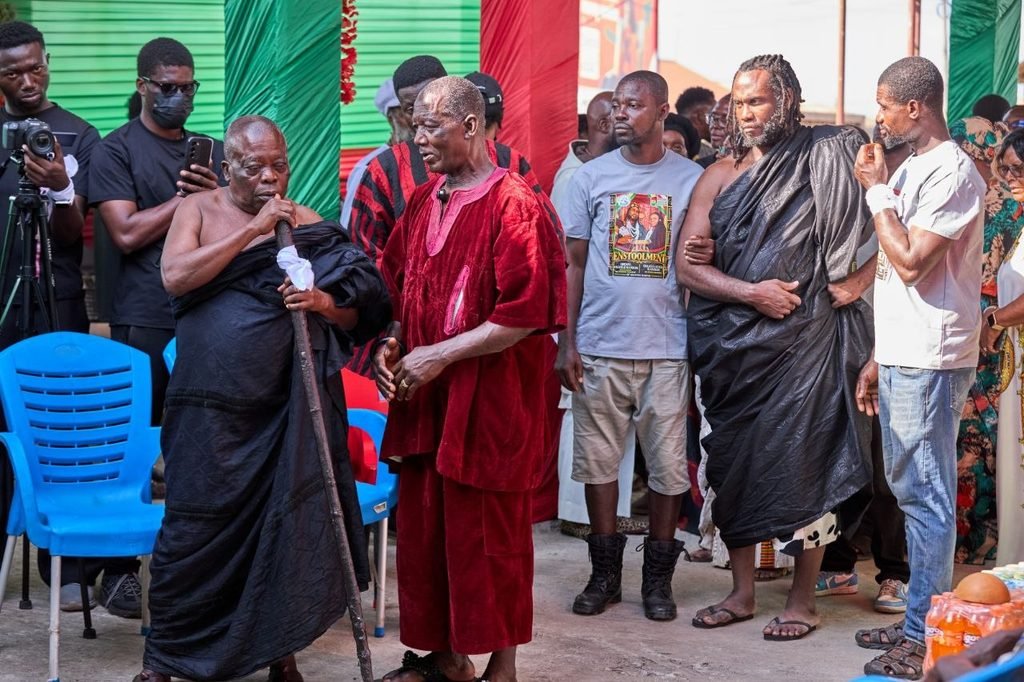
Professor Ọbádélé Kambon, a full Professor of African Linguistics at the University of Ghana, was enstooled as Apagyahene and Sunsum Ɔsahene of Akuapem Mampong in the Eastern Region in a ceremony that brought academia and traditional authority together.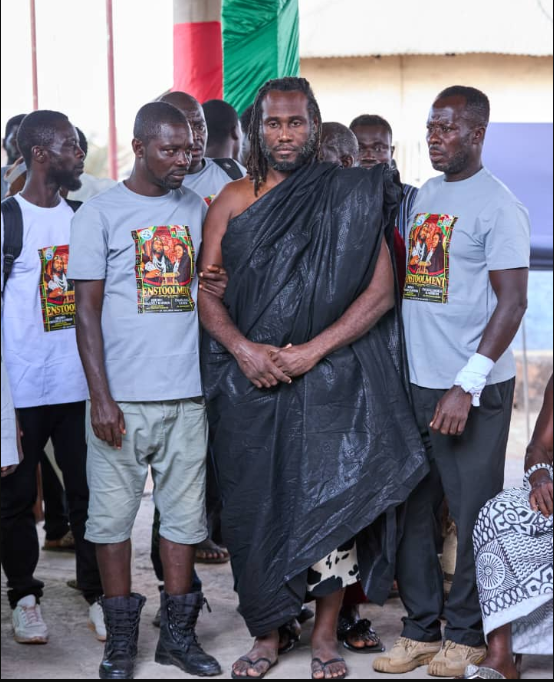
For the professor, the occasion was more than a new title. It was a moment that connected his academic interests in African languages and indigenous knowledge with the living traditions of an Akan community.
The day’s events unfolded through a series of customary observances. Kambon was first taken to the compounds of the Ɔkyeamehene and Gyasehene, where the preparations for his installation continued.
Then came the application of hyire, the white kaolin powder associated with traditional rites.
With the customary proceedings underway, the new chief was lifted onto the shoulders of celebrants and carried along the main thoroughfare of Akuapem Mampong.
The procession transformed the streets into a public stage for a ceremony rooted in the community’s traditional institutions.
There was something striking about the image, a university professor, accustomed to the measured language of academic discourse, being carried through the town in a display of traditional recognition.
Yet the celebration was not complete with the procession.
A ram was sacrificed at the Mamponghene’s compound before Kambon was taken to the palace, to swear the oath associated with his new offices.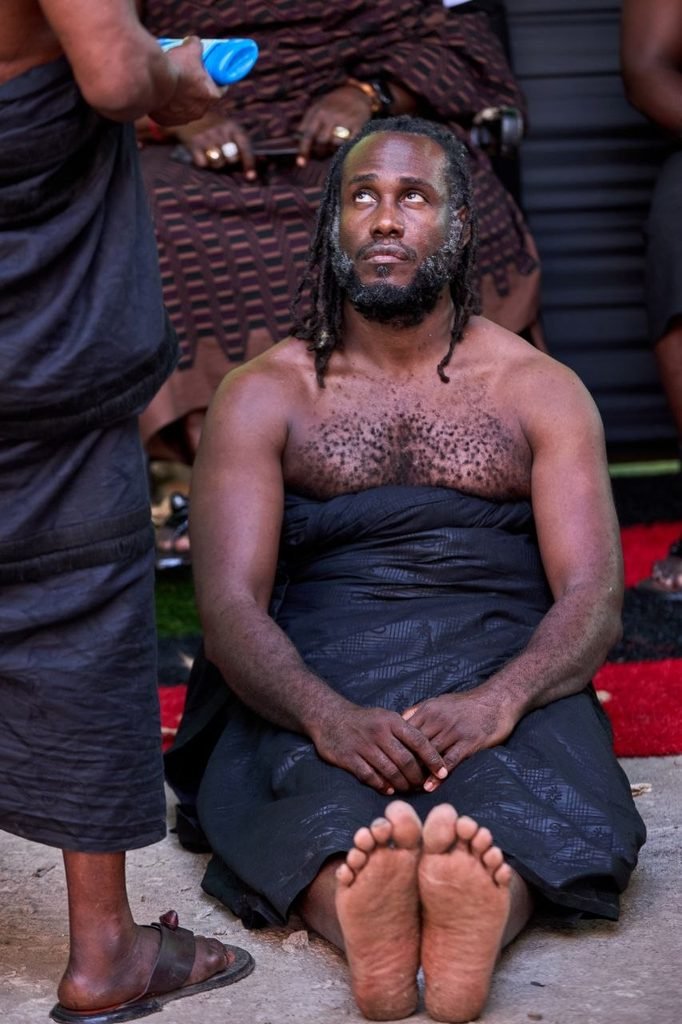

The ceremony brought him formally into his roles as Apagyahene and Sunsum Ɔsahene.
Beyond the colourful proceedings, the titles themselves carry layers of historical meaning.
Kambon in his research explores the historical connections between Apagya and Akan political and military organisation.
Accounts cited in his work linked Apagya to an asafo, or military company, while historical writing traces an Apagya stool in Asante to the reign of Opoku Ware I in the eighteenth century.
These historical associations offer a glimpse into the institutions that have shaped Akan society over generations, although they do not automatically define the precise responsibilities of the office in Akuapem Mampong.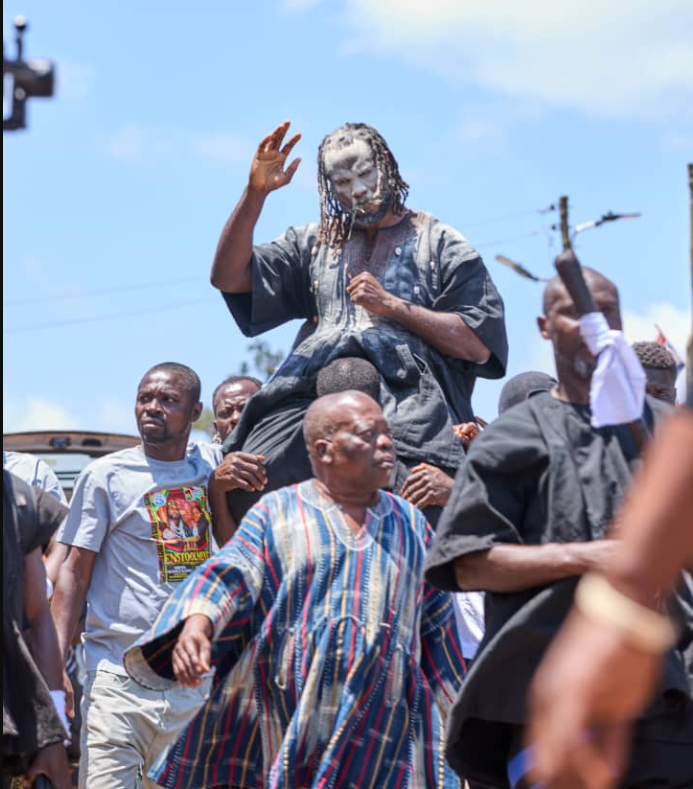
Kambon’s own professional life reflects a similar interest in preserving and examining African knowledge.
His work encompasses Akan language structure, naming practices across the Black world, proverbs and indigenous intellectual traditions.
Through Abibitumi, the platform he founded, he also promotes language learning, scholarship and cultural engagement.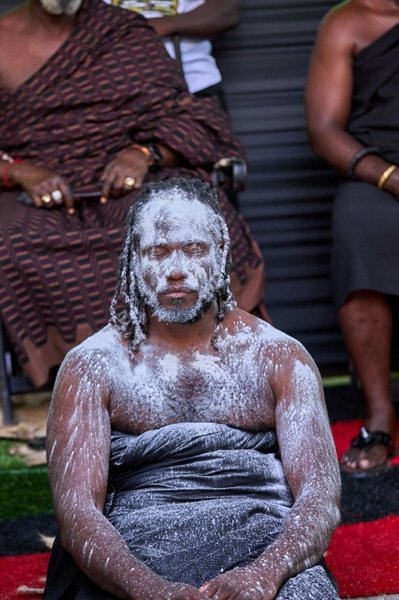
But tradition was only one part of the story that day.
When the formal ceremony gave way to a reception, the occasion expanded into a celebration of three milestones: Kambon’s enstoolment, his promotion to full professor and his daughter Ama’s admission to the University of Ghana.
The gathering therefore carried a personal significance that went beyond the honours bestowed on one man. 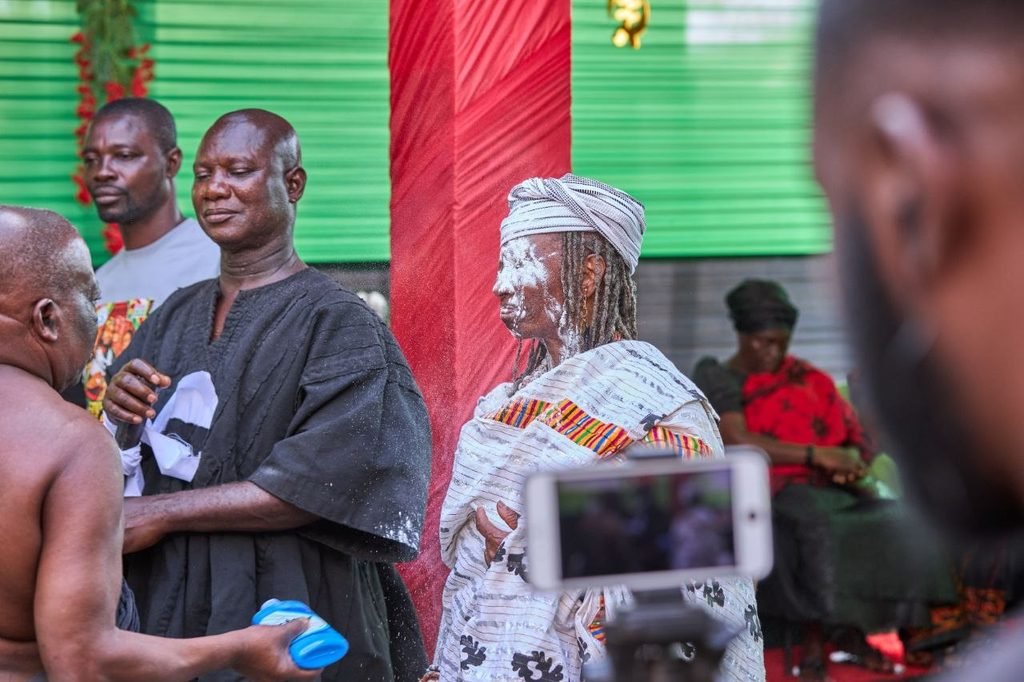
It celebrated professional advancement, the continuation of family aspirations and a connection to cultural heritage.
For a father, seeing a daughter gain admission to the same university where he holds a distinguished academic position offered another reason to celebrate.
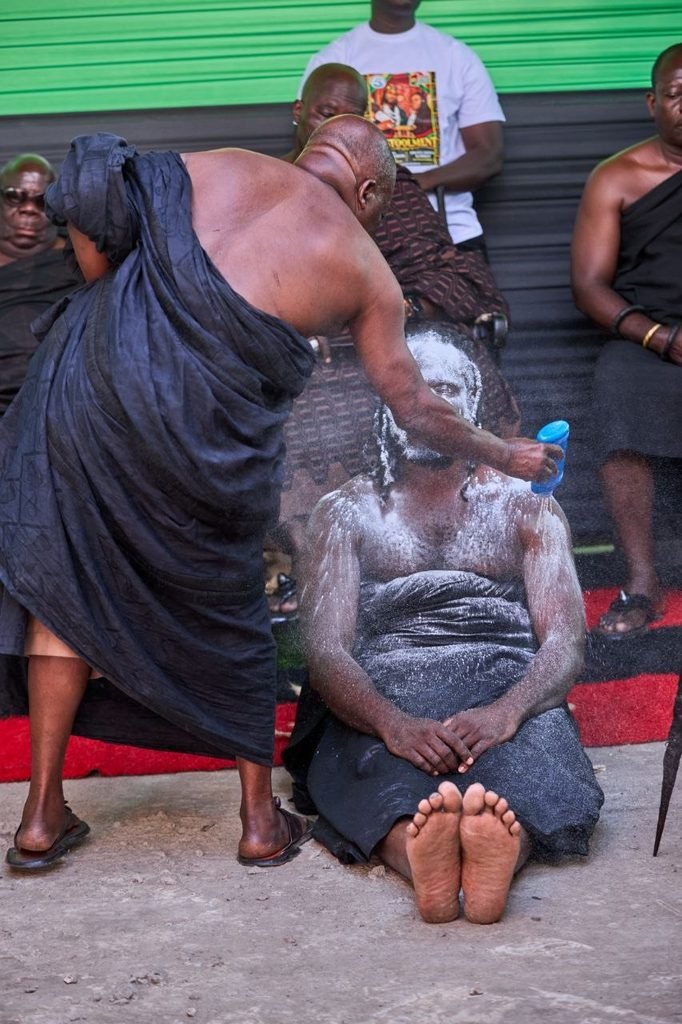
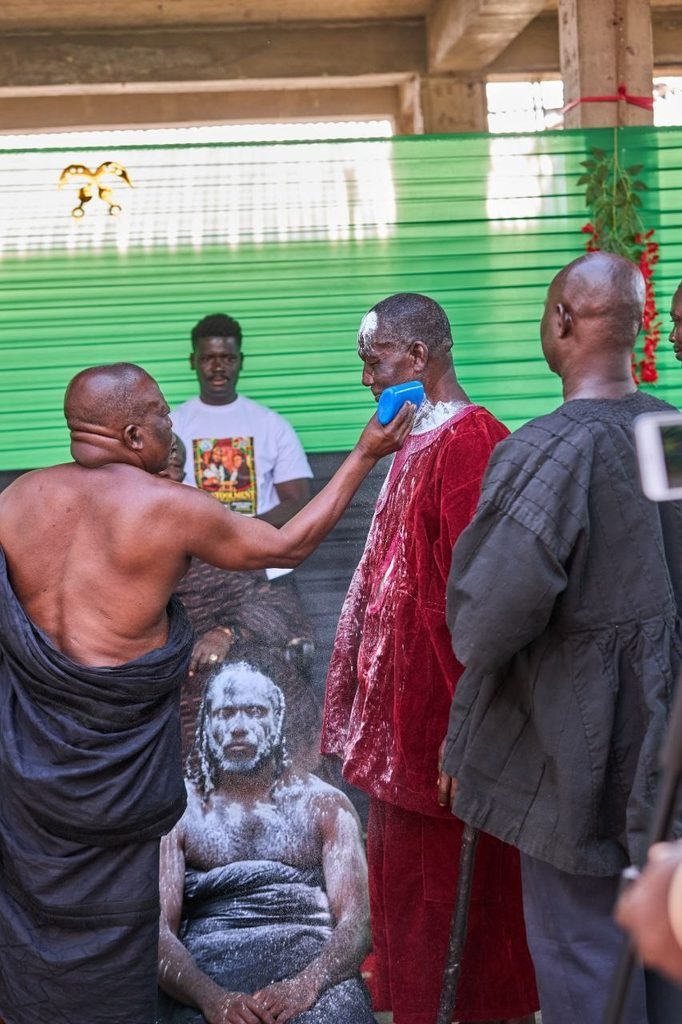
For the professor, the moment placed family achievement alongside his own professional and traditional milestones.
Kambon had already established a place in the traditional life of Akuapem Mampɔn through an earlier installation as Banmuhene Kyidɔmhene, recorded in 2017.
His latest enstoolment adds another chapter to that relationship.
In Akuapem Mampɔn, the day brought together the university, the palace and the family table in one celebration. And for Kambon, the journey from the lecture room to the traditional procession showed how scholarship, cultural responsibility and family achievement could converge in a single memorable occasion.
By Enoch Ntiamoah Siaw
SKIP THE QUEUE, TAP THE NEWS
You can now read the Ghanaian Times and The Spectator newspapers from the comfort of your device via TimesNewsPlus.
Join our WhatsApp Channel: https://whatsapp.com/channel/0029VbBElzjInlqHhl1aTU27