Hot!
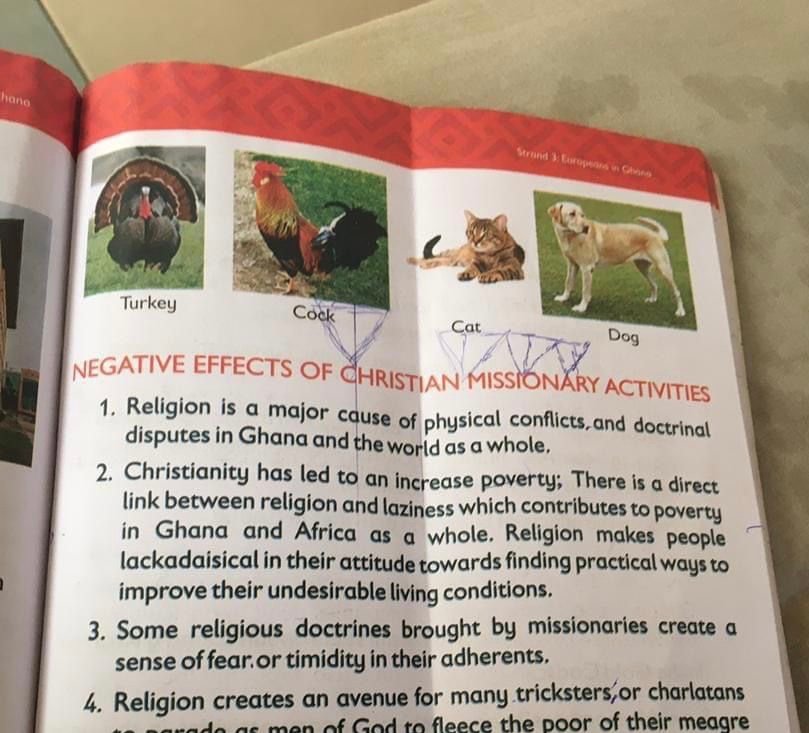
Ghanaian textbook sparks uproar over ‘disadvantages of Christianity’ content

- /home/u249204778/domains/spectator.com.gh/public_html/wp-content/plugins/mvp-social-buttons/mvp-social-buttons.php on line 27
https://spectator.com.gh/wp-content/uploads/2023/05/c05148f2-7471-41cd-a104-d07646eccd3d.jpeg&description=Ghanaian textbook sparks uproar over ‘disadvantages of Christianity’ content', 'pinterestShare', 'width=750,height=350'); return false;" title="Pin This Post">
- Share
- Tweet /home/u249204778/domains/spectator.com.gh/public_html/wp-content/plugins/mvp-social-buttons/mvp-social-buttons.php on line 72
https://spectator.com.gh/wp-content/uploads/2023/05/c05148f2-7471-41cd-a104-d07646eccd3d.jpeg&description=Ghanaian textbook sparks uproar over ‘disadvantages of Christianity’ content', 'pinterestShare', 'width=750,height=350'); return false;" title="Pin This Post">
Some parents are raising concerns about the contents of a history textbook for basic 4 pupils on religion, specifically Christianity. In the book entitled History of Ghana for Basic Schools, authored by Francis Benjamin Appiah and Henry David Appiah, a section lists some points about the negative effects of Christian missionary activities. Among the points listed, it is stated that Christianity has led to an increase in poverty in Ghana. In addition to the given points, it is opined in the book that religion is a major cause of physical and doctrinal disputes in Ghana. In addition to the given points, it is opined in the book that religion is a major cause of physical and doctrinal disputes in Ghana. This has ignited a debate with some parents expressing worry about how a book approved by the National Council for Curriculum and Assessment (NaCCA) portrays religion and Christianity. Some experts from Eduwatch and the Institute for Education Studies (IFEST) have also raised concerns about the book’s approval by NaCCA. Eduwatch’s Programmes Director, Divine Kpe said the purpose of that section of the book is to enable students to generate ideas for debate on the effect of European missionaries in Ghana. “When you look at the basic 4 curriculum for Religious and Moral Education, that particular objective for which the authors are writing to is about the pupils debating the effect of Christian missionaries or European missionaries in Ghana, some of their effects. “So it’s actually expected to be a debate that the pupils were to have. In so doing, I think the authors were trying to generate ideas that the people can raise in terms of their debate,” he said on JoyNews’ AM Show on Thursday. Mr Kpe, however, contended that there were inaccuracies in some of the points. He also said the inaccuracies breached some standard NaCCA guidelines given to publishers who submit their books for validation. This includes the criteria of accuracy, currency of the content matter, and relevance of the content to the curriculum. Mr Kpe criticised the authors for their subpar work and noted that the existence of such a book on the market was a result of NaCCa’s failure to fulfill its mandate. But speaking on the same show, a Deputy Spokesperson for the Ministry of Education, Yaw Opoku Mensah asserted that the book in question was not the official one approved by the NaCCA. He claimed that per the information provided to him by NaCCA, the approved version of the book did not have the section in question. However, another panelist on the show, Executive Director of IFEST, Dr Peter Anti would not have any of those claims. Dr Anti insisted that the book in question had been approved by NaCCA “There is a published document of about 66 pages that lists all the books that have been approved by NaCCA and this document is there. It’s on page 56, so this book is approved,” he stressed. Dr Anti added that the publishers should be placed on a blacklist by the NaCCA and given the appropriate punishment if, indeed, the book in circulation on the market was not the one that had been approved by NaCCA. Credit : Myjoyonline.come



The Tema Regional Police Command has arrested a 32-year-old man for allegedly posing as a soldier and extorting money from unsuspecting members of the public at Ashaiman.
The suspect, identified as Bright Atsu Kudiabor, was arrested by the Ashaiman Police on Wednesday, September 16, 2026, at about 7:00 a.m.
According to the Police, he was arrested at an area known as “I Shall Return”, where he was allegedly parading himself as a soldier and demanding money from people.
The Police said Kudiabor, who is an ex-convict, was initially arrested by personnel of the Ghana National Fire Service in Ashaiman with assistance from other members of the public.
A search conducted on him after he was handed over to the Police reportedly led to the recovery of a set of military camouflage uniform.
The suspect is currently in Police custody and assisting with investigations.
The Tema Regional Police Command said he would be processed for court after investigations are completed.
The Police urged the public to remain vigilant and report anyone who falsely presents themselves as a soldier or a member of another security agency to deceive or extort money from the public.
By: Jacob Aggrey
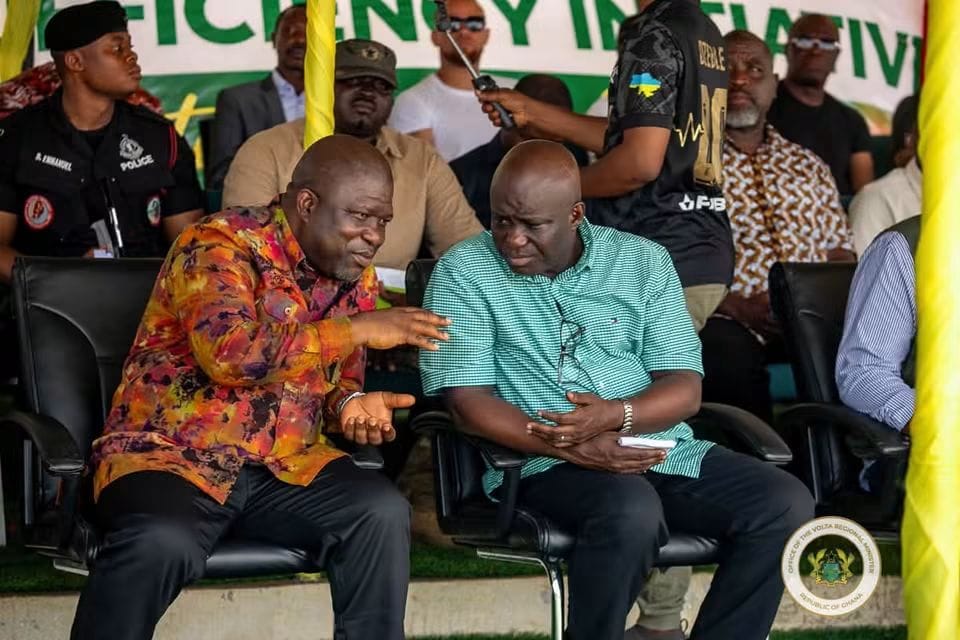
Volta Regional Minister, James Gunu, says the Volta Region holds enormous agricultural potential and efforts must be geared towards connecting farmers to the needed resources to unlock that potential.
He said focus must be on linking farmers to resources, technology, financing and markets to increase production, create jobs and build sustainable livelihoods.
Hon. Gunu made the remarks at the national launch of the Ghana Tomato Self-Sufficiency Initiative (GHATSI) held at Anloga in the Volta Region on Tuesday, September 15.
The initiative, under the theme “Produce at Home. Feed the Nation. Export the Surplus,” seeks to boost local tomato production, processing and marketing while reducing Ghana’s heavy reliance on imported tomatoes.
The launch was attended by the Minister for Food and Agriculture, Eric Opoku, his Deputy, John Setor Dumelo, Feed Ghana Coordinator, Bright Demordzi, Members of Parliament, traditional leaders, MMDCEs, farmers and other stakeholders.
Mr.Gunu expressed appreciation to the Minister for Food and Agriculture for the support announced for the region, including two excavators, 200 cartons of organic fertiliser, and GH¢200,000 for Ms. Kuatudzo Esther Dela, a tomato farmer and processor from Ziope.
He described the initiative as an important step towards making agriculture a stronger driver of food security, job creation and economic growth in the Volta Region.
By Edem Mensah-Tsotorme