Hot!
Ghana card database: 148,000 employees missing and multiple identities uncovered on payroll

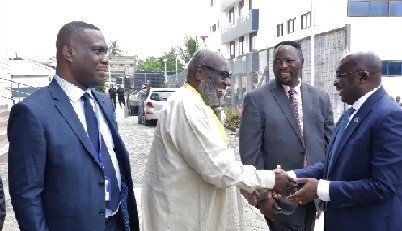
Five hundred and thirty-three people on the Controller and Accountant-Generals Department (CAGD) payroll database have been found to have multiple identities.
In addition, 148,060 out of the about 601,000 employees on the database did not match any of the names on the national identification register, the Ghana Card database.
The Vice-President, Dr Mahamudu Bawumia, who made this known, said that was the outcome of the first phase of an exercise completed by the CAGD last week.
Addressing the opening of this year’s Internal Audit Conference organised by the Internal Audit Agency (IAA) in Accra yesterday, the Vice-President said the government would rely on the IAA to get to the bottom of the corruption associated with ‘ghost’ names on the government payroll.
The three-day conference, which is being attended by internal auditors from across the country, is on the theme: “Injecting fiscal discipline into resource mobilisation and utilisation for sustainable development: The role of internal auditors.”
“We were matching employees on the CAGD database with the Ghana Card ID and they completed the first phase last week. In all of cases of multiple identities, the employees have more than one CAGD’s accounts, with different employee numbers,” Dr Bawumia said.
“We are going to triangulate by checking from the Social Security and National Insurance Trust (SSNIT) biometric database to see how we can match all of these,” he added.
Corruption
The Vice-President said even if the 148,000 people on the CAGD database who had so far not matched anybody on the Ghana Card register had not yet registered for the Ghana Card, they should be paying SSNIT, since they were on the CAGD database.
“It is also possible that some of those without these matching biometrics could also have multiple employee accounts, but we have to see. I have heard of ‘ghost’ workers, I have never heard of ghosts who are twins or triplets,” Dr Bawumia said.
To cut waste from the compensation budget, he said, the government was also working with the IAA to eliminate ‘ghost’ workers from the government payroll.
In that regard, he said, all public institutions had been directed to submit headcount copies of their monthly salary validation report to the IAA and the CAGD by the 15th day of every month for validation.
He said the IAA would, in turn, follow up on those reports and authenticate the existence of the staff and connect their productivity to the remuneration being paid by the government.
Through that, the Vice-President explained, the government was taking steps to save a lot of money from ‘ghost’ names and pursue those who did not work but got paid.
These and other strategic measures adopted by the government, he said, were to ensure fiscal discipline in the financial systems of the country and anchor economic sustainability.
Revenue mobilisation
As part of revenue mobilisation efforts, the Vice-President said the government was embarking on key reforms, including widening the tax net to increase tax revenue.
“The holistic digitalisation of the public sector service delivery of key institutions, as well as working to develop an audit information management system for internal auditors across the country, is a measure to seal loopholes, prevent corruption and enhance value for money in public spending,” he said.
Internal auditors
Touching on the role of internal auditors, Vice-President Bawumia said their preventive role across the public sector had enhanced fiscal discipline and saved the nation millions of cedis.
He said by their advice and vigilance, public sector waste and abuses had been minimised, while annual infractions reported by the Auditor-General had seen some level of decline between 2019 and 2020.
Dr Bawumia said the government would continue to restructure and reposition public sector internal audit as an important public financial management institution to put public officers on their toes towards observing fiscal discipline in spending public funds.
Going forward, he said, all internal auditors would be brought under the management, administrative and technical control and supervision of the new Internal Audit Service (IAS).
“The bill to establish the IAS has been developed and will be considered by Parliament soon. If we are able to resource internal auditors well, external auditors will have nothing or less to report on.
“So if I were the head of any government entity, I would err on the side of caution and apply the preventive approach to corruption by resourcing internal auditors to enable them to give of their best,” Vice-President Bawumia pointed out.
Payroll cleaning
The Director-General of the IAA, Dr Eric Oduro Osae, said the IAA, working through its internal auditors, had ensured that payroll fraud, ‘ghost’ names, unnecessary expenditure and waste in the public sector payroll were being reduced gradually.
To that end, he said, the IAA was collaborating with the CAGD, under the umbrella of the Ministry of Finance, to clean up the payroll on a monthly basis.
Office allocation
Dr Osae commended the government for allocating an office to the agency.
He said the passage of the Internal Audit Service Bill would bring all internal auditors under a single unit to properly position the agency to fight corruption.
He appealed for the rationalisation of the salaries of internal auditors, particularly those with metropolitan, municipal and district assembles (MMDAs), adding that if the government wanted to fight corruption, it must resource internal auditors.
Moral values
The Chairperson for the conference, Prof. Olivia A.T. Frimpong Kwapong, stressed the need to inculcate moral values in both adults and the younger generation in relation to money.
“If we are able to contain that and are content to live within our means, we can be sure of fiscal discipline among all stakeholders for sustainable development,” she said.
Source: www.graphic.com.gh

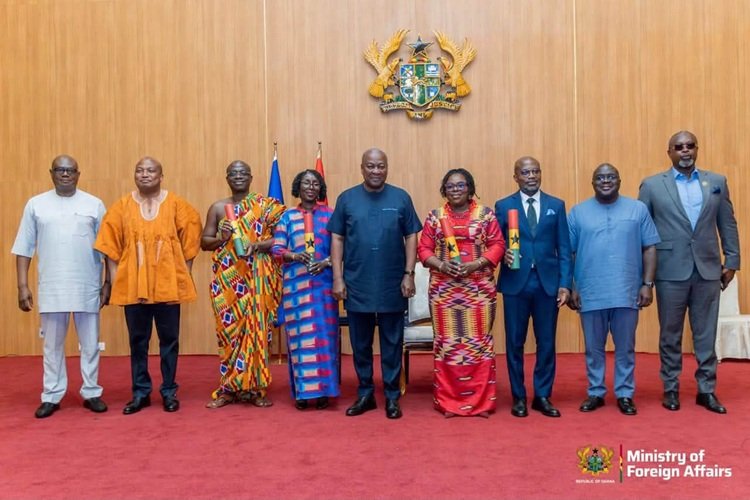
President John Dramani Mahama has commissioned four career diplomats as ambassador-designates to represent Ghana in four countries.
The commissioning ceremony took place on Friday, October 16, 2026.
The new envoys are Her Excellency Nana Antwiwaa Dodoo, Ambassador-Designate to Angola; His Excellency Louis Kwame Obeng, Ambassador-Designate to Qatar; Her Excellency Evelyn Korantemaa Ofosu-Amable, Ambassador-Designate to Israel; and His Excellency Jedidiah Reuben Adogla, Permanent Representative-Designate to Switzerland.
President Mahama charged them to advance Ghana’s national interests through strategic partnerships, economic diplomacy, investment mobilization, and expanded access to international markets.
He said Ghana’s diplomatic engagements must deliver tangible economic benefits, create jobs, and strengthen the country’s standing on the international stage.
The four envoys are career diplomats with over 27 years of experience.
On behalf of her colleagues, Her Excellency Nana Antwiwaa Dodoo thanked the President for the confidence reposed in them and pledged their commitment to emulate his leadership and deliver on the mandate given to them.
By Edem Mensah-Tsotorme
The professor who spends his days exploring the intricacies of African languages found himself at the centre of a different kind of lesson on Friday, October 2, 2026. 
This time, there were no lecture notes, academic arguments or university classrooms. Instead, there was the weight of tradition, the rhythm of a community celebration and the solemnity of an oath at a royal palace.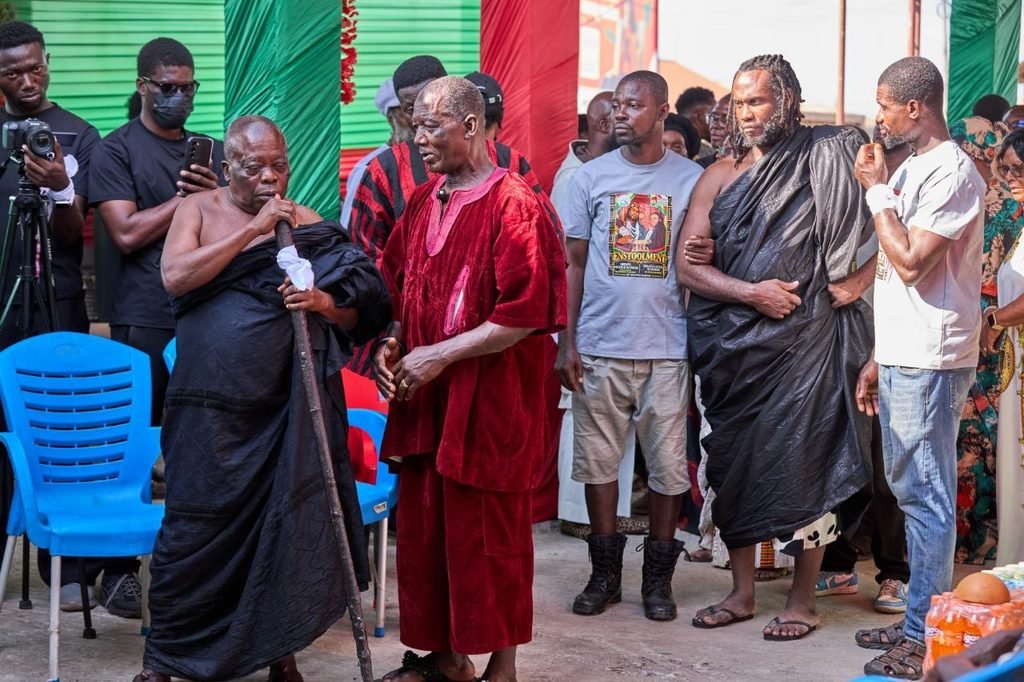
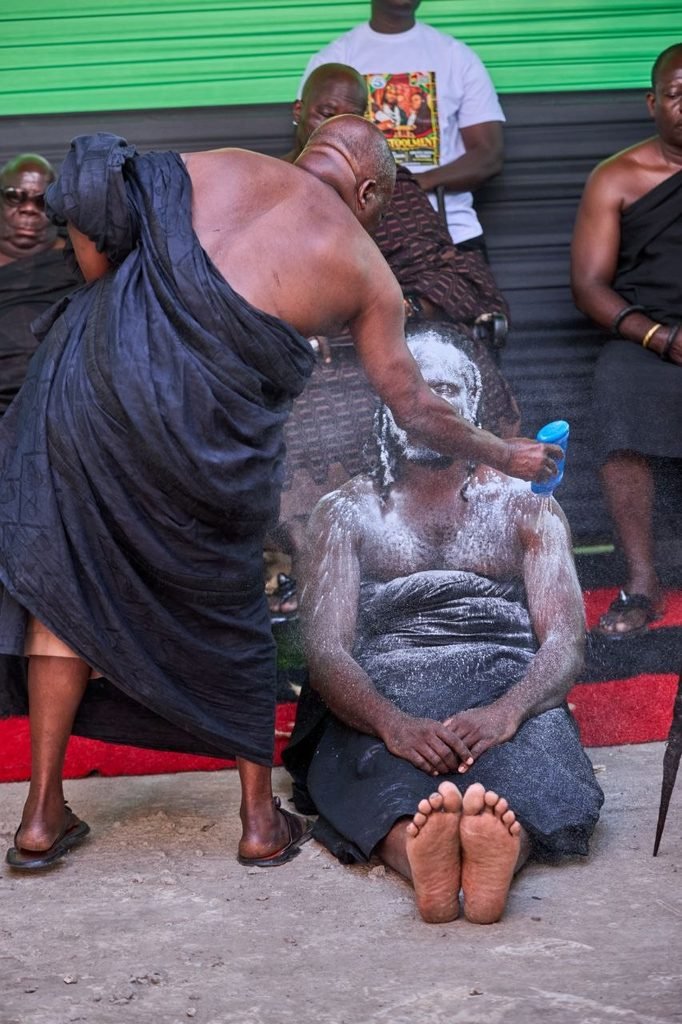
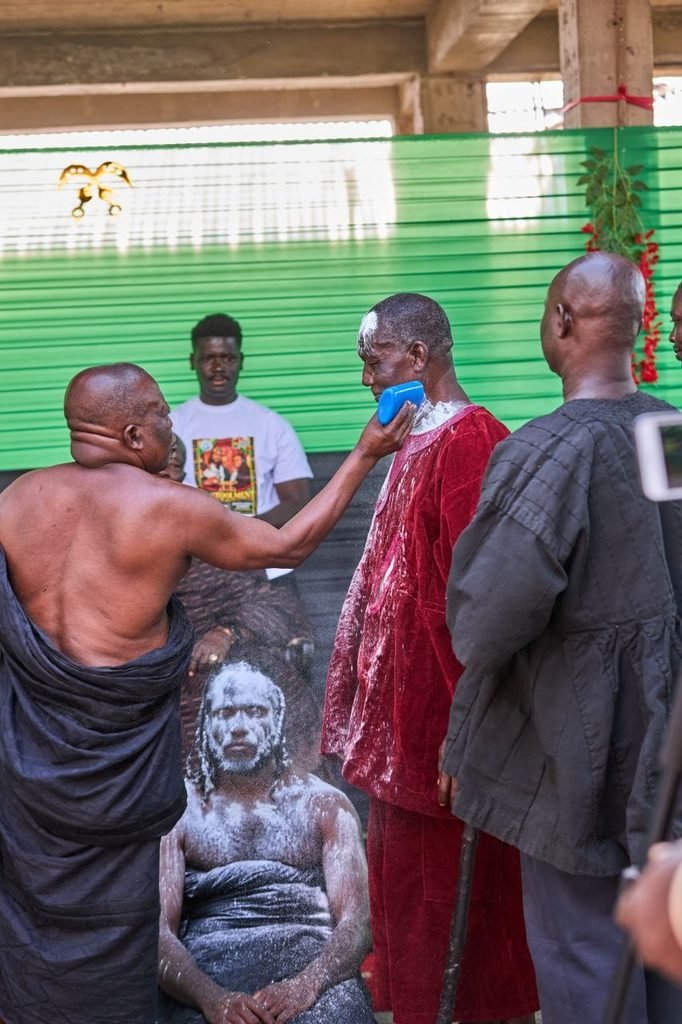
Professor Ọbádélé Kambon, a full Professor of African Linguistics at the University of Ghana, was enstooled as Apagyahene and Sunsum Ɔsahene of Akuapem Mampong in the Eastern Region in a ceremony that brought academia and traditional authority together.
For the professor, the occasion was more than a new title. It was a moment that connected his academic interests in African languages and indigenous knowledge with the living traditions of an Akan community.
The day’s events unfolded through a series of customary observances. Kambon was first taken to the compounds of the Ɔkyeamehene and Gyasehene, where the preparations for his installation continued.
Then came the application of hyire, the white kaolin powder associated with traditional rites.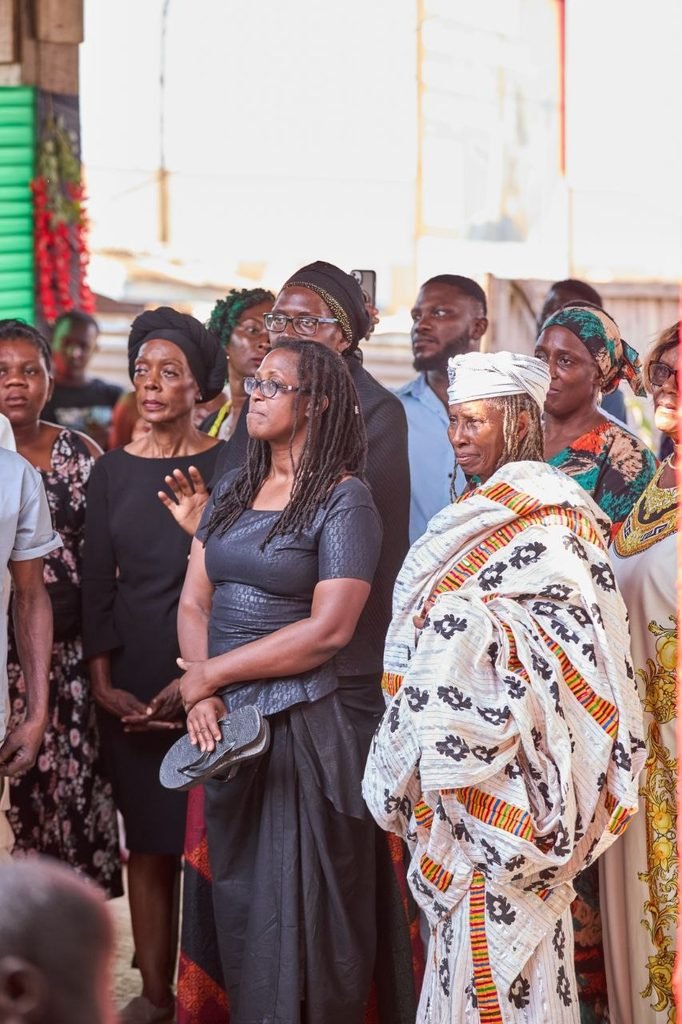
With the customary proceedings underway, the new chief was lifted onto the shoulders of celebrants and carried along the main thoroughfare of Akuapem Mampong.
The procession transformed the streets into a public stage for a ceremony rooted in the community’s traditional institutions.
There was something striking about the image, a university professor, accustomed to the measured language of academic discourse, being carried through the town in a display of traditional recognition.
Yet the celebration was not complete with the procession.
A ram was sacrificed at the Mamponghene’s compound before Kambon was taken to the palace, to swear the oath associated with his new offices.

The ceremony brought him formally into his roles as Apagyahene and Sunsum Ɔsahene.
Beyond the colourful proceedings, the titles themselves carry layers of historical meaning.
Kambon in his research explores the historical connections between Apagya and Akan political and military organisation.
Accounts cited in his work linked Apagya to an asafo, or military company, while historical writing traces an Apagya stool in Asante to the reign of Opoku Ware I in the eighteenth century.
These historical associations offer a glimpse into the institutions that have shaped Akan society over generations, although they do not automatically define the precise responsibilities of the office in Akuapem Mampong.
Kambon’s own professional life reflects a similar interest in preserving and examining African knowledge.
His work encompasses Akan language structure, naming practices across the Black world, proverbs and indigenous intellectual traditions.
Through Abibitumi, the platform he founded, he also promotes language learning, scholarship and cultural engagement.
But tradition was only one part of the story that day.
When the formal ceremony gave way to a reception, the occasion expanded into a celebration of three milestones: Kambon’s enstoolment, his promotion to full professor and his daughter Ama’s admission to the University of Ghana.
The gathering therefore carried a personal significance that went beyond the honours bestowed on one man. 
It celebrated professional advancement, the continuation of family aspirations and a connection to cultural heritage.
For a father, seeing a daughter gain admission to the same university where he holds a distinguished academic position offered another reason to celebrate.
For the professor, the moment placed family achievement alongside his own professional and traditional milestones.
Kambon had already established a place in the traditional life of Akuapem Mampɔn through an earlier installation as Banmuhene Kyidɔmhene, recorded in 2017.
His latest enstoolment adds another chapter to that relationship.
In Akuapem Mampɔn, the day brought together the university, the palace and the family table in one celebration. And for Kambon, the journey from the lecture room to the traditional procession showed how scholarship, cultural responsibility and family achievement could converge in a single memorable occasion.
By Enoch Ntiamoah Siaw
SKIP THE QUEUE, TAP THE NEWS
You can now read the Ghanaian Times and The Spectator newspapers from the comfort of your device via TimesNewsPlus.
Join our WhatsApp Channel: https://whatsapp.com/channel/0029VbBElzjInlqHhl1aTU27