News
Germany re-focuses development partnership on food processing

- /home/u249204778/domains/spectator.com.gh/public_html/wp-content/plugins/mvp-social-buttons/mvp-social-buttons.php on line 27
Warning: Trying to access array offset on false in /home/u249204778/domains/spectator.com.gh/public_html/wp-content/plugins/mvp-social-buttons/mvp-social-buttons.php on line 27
&description=Germany re-focuses development partnership on food processing', 'pinterestShare', 'width=750,height=350'); return false;" title="Pin This Post">
- Share
- Tweet /home/u249204778/domains/spectator.com.gh/public_html/wp-content/plugins/mvp-social-buttons/mvp-social-buttons.php on line 72
Warning: Trying to access array offset on false in /home/u249204778/domains/spectator.com.gh/public_html/wp-content/plugins/mvp-social-buttons/mvp-social-buttons.php on line 72
&description=Germany re-focuses development partnership on food processing', 'pinterestShare', 'width=750,height=350'); return false;" title="Pin This Post">
One major problem facing the country is in the inability to add value or processed its products, leading to post-harvest losses and paltry earning on such resources.
Several decades after independence the country continues to export natural and raw materials in their raw state, thus earning little on such products.
For example, cocoa, the main cash crop and a major foreign exchange earner, is largely continued to be exported in its raw form.
Particularly in the areas of agriculture, the lack of processing make a lot of food go waste during the periods of glut and create shortages during the lean season.
A visit to the tomato and water melon producing communities during the major season is a pity sight to behold.
The farmers out of frustration sell their produce at a cheaper price or allow them to rot on the farm.
Efforts by successive governments, for example, to create silos and storage facilities, to store food products such as grains, appear to have done little to address post-harvest-losses.
The 2020 Food Security Analysis conducted by the Ghana Statistical Service (GSS) indicate that about 3.6 million (12 per cent of the population) are food insecure.
It said 2.8 million people, representing 78 per cent of the sampled population) lived in the rural area, while 0.8 million representing 22 per cent of the sample households lived in the rural areas.
Per, the report, food insecurity does not mean there is hunger in Ghana, but that people do not have food at the righty time, price and place with the required nutritional value.
It defined food insecurity as the lack of consistent access to enough food an active healthy life, and food security as the physical and economic access to sufficient, safe and nutritious food, by all people at all times to meet their dietary and food preference for an active and healthy life.
The survey conducted by the Ghana Statistical Service between November and December 2020, covered 65,309 households across all the districts of the 16 regions of the country.
As the report explained, food insecurity did not mean hunger in Ghana, but that people do not have food at the right time, prices and place.
Post-harvest losses could account for the food insecurity situation in the country since farmers do not have storage facilities, or processing plants and technology to preserve their food.
Advanced economies such as Switzerland, US, Canada, Japan, United Kingdom and Germany, for example, do not produce cocoa, but exports chocolate to the rest of the world.
This is because they have mastered in food processing and develop technology and machinery for food preservation.
While, the global chocolate industry is worth $150 billion, Ghana and Cote d’Ivoire, who a account 60 per cent of the global cocoa production, earn less than $6 billion in a year.
This is because, the two major cocoa producers, continue to export the cocoa beans in their raw form.
Thus, it is, encouraging that the new focus of Germany’s bilateral and economic co-operation relations with Ghana is going to focus on food processing.
In an interview with the German Ambassador to Ghana National Agricultural Capacity Building Roadshow organised by Agrihouse Foundation in Accra last week, Daniel Krull, said his country has been a great development partner of Ghana.
He said for the past 20 years, the German government had supported development projects to the tune of 700 million Euros.
He said the German government has approved 50 million Euros to, among others, support good governance projects and revenue collection.
Mr Krull said the Germany had supported agricultural production for the past 20 twenty years and now want to move from food production to support food processing.
According to him, food processing would help create jobs for the youth and address food insecurity in the country.
Mr Krull said Germany did not produce coffee but export coffee and coffee products to the global market.
“Germany is able to export coffee because one of our strength is technology and competence in food processing and we believe if Ghana want to participate more in food processing that has to do with building more industries here in Ghana,” he said.
He said Germany was supporting private enterprises in Ghana enterprises like in Ghana in Tomato Processing Plants, stressing this “is our main focus.”
Apart from supporting Tomato Processing Plants in Ghana, the German government is supporting to farmers to use solar-powered water pumps.
The German government and for that matter the German Embassy is commended for their efforts to refocus their development priority with Ghana to food processing.
Paying emphasis on food processing has become so important, now that Ghana is playing host to the African Continental Free Trade Area (AfCFTA).
Ghana can harness the benefits AfCFTA presents if is able to process its raw materials for exports and also to earn for value for its.
According to the World Bank, the African Continental Free Trade Area (AfCFTA) agreement would create the largest free trade area in the world measured by the number of countries participating.
It said the pact projects to connect 1.3 billion people across 55 countries with a combined gross domestic product (GDP) valued at US$3.4 trillion and has the potential to lift 30 million people out of extreme poverty.
With the country’s arable lands, it could become the food basket for Africa.
This goal can be achieved if attention is given to value addition and food processing to help add value to the country’s food products to ensure their longer shelf life.
Thus under the government’s One District, One Factory initiative, it should support private sector investment on food processing to help add value to the country’s numerous food crops for export.
In this vein, incentives and tax holidays should be given to companies which intend to venture into food processing. Such incentives would encourage other investors to invest in food processing to address post-harvest losses and food insecurity in the country.
It is also suggested that government should develop policies and programmes aimed at supporting value addition.
In conclusion, we on this paper commends Germany for its continuous development assistance to the country and immense support to the private sector.
We also congratulate the new German Ambassador to Ghana, Mr Krull and wish him a fruitful in Ghana and believe his service in Ghana would further deepen and cement the diplomatic and bilateral, and economic bond between the two countries.
Writer’s email: gbetomenyo81@gmail.com
(0246943864)
BY KINGSLEY ASARE


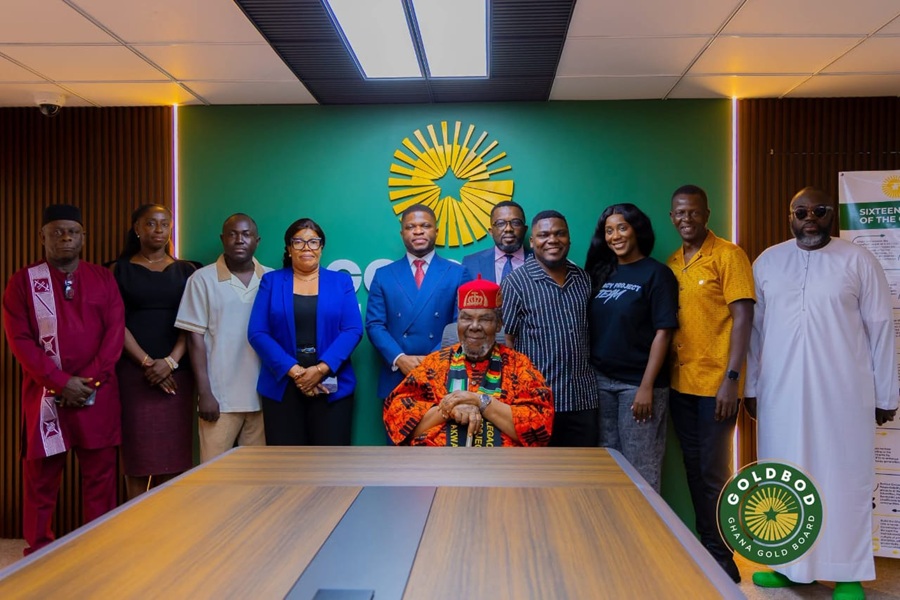
Veteran Nigerian actor and African screen legend, Pete Edochie, has paid a courtesy call on the Chief Executive Officer of the Ghana Gold Board (GoldBod), Sammy Gyamfi, during his visit to Ghana.
Edochie is in Ghana to launch the African Legacy Project, which includes a book, documentary film and an African Youth Mentorship Initiative targeting about 500,000 young people across the continent.
Mr. Gyamfi welcomed the opportunity for GoldBod to support the mentorship initiative, noting that it aligns with the Board’s Special Intervention Programme and its focus on social impact and economic empowerment.
GoldBod’s work is also referenced in Pete Edochie’s new book, which highlights Ghana’s efforts to ensure its gold resources contribute to national development.
By Edem Mensah-Tsotorme
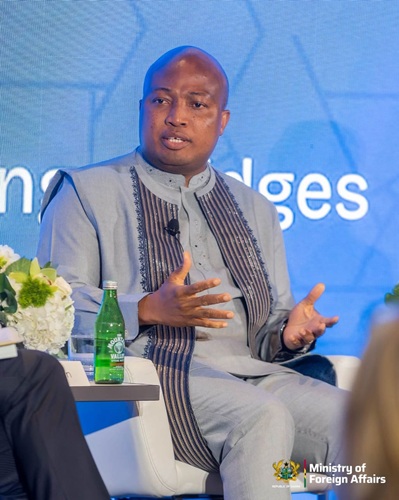
The Ministry of Foreign Affairs has warned Ghanaians seeking employment in Zambia to be cautious of fraudulent job offers that could expose them to human trafficking and forced involvement in cybercrime.
The warning follows the arrest of six Ghanaians in Lusaka, Zambia, during a joint operation by the Zambia Police Service, the Drug Enforcement Commission and the Department of Immigration on August 23, 2026.
According to the Ministry, the operation targeted a facility suspected of being involved in organised cybercrime activities and led to the arrest of 79 people, including 10 Zambians and 69 foreign nationals.
The Ministry said six of the foreign nationals arrested were Ghanaians.
It explained that reports received by the Ghana High Commission in Lusaka indicated that some of those arrested had been recruited through what appeared to be legitimate employment opportunities, including online data entry jobs.
However, the Ministry said some were allegedly forced into online scam activities after their passports were confiscated by their employers.
It warned that the situation highlights how human trafficking groups are using fake employment opportunities to lure unsuspecting job seekers into illegal activities.
The Ministry has therefore advised Ghanaians travelling to Zambia or seeking employment there to thoroughly verify job offers, recruitment agencies and prospective employers before travelling.
Ghanaians living in Zambia have also been urged to remain vigilant when responding to online job opportunities and maintain regular contact with the Ghana High Commission in Lusaka for consular assistance when necessary.
The Ministry said the government remains committed to protecting the welfare and interests of Ghanaians travelling to or living outside the country.
By: Jacob Aggrey