Hot!
“Fare thee well, Aba; Adieu, my dearest love!” – Kufuor’s heartfelt tribute to Theresa


- /home/u249204778/domains/spectator.com.gh/public_html/wp-content/plugins/mvp-social-buttons/mvp-social-buttons.php on line 27
https://spectator.com.gh/wp-content/uploads/2023/11/image-192-657x4241-1.png&description=“Fare thee well, Aba; Adieu, my dearest love!” – Kufuor’s heartfelt tribute to Theresa', 'pinterestShare', 'width=750,height=350'); return false;" title="Pin This Post">
- Share
- Tweet /home/u249204778/domains/spectator.com.gh/public_html/wp-content/plugins/mvp-social-buttons/mvp-social-buttons.php on line 72
https://spectator.com.gh/wp-content/uploads/2023/11/image-192-657x4241-1.png&description=“Fare thee well, Aba; Adieu, my dearest love!” – Kufuor’s heartfelt tribute to Theresa', 'pinterestShare', 'width=750,height=350'); return false;" title="Pin This Post">
Shortly after what I now perceive as a clearly fore-ordained introduction by our mutual friend Dr Kwame Appiah-Poku, Aba and I met in person on 1 July 1961 at a ball at Battersea Town Hall in London, to celebrate Ghana’s first anniversary as a republic.
Aba had just completed nursing school in Edinburgh and was on her way to pursue a midwifery course at the Radcliffe Infirmary, part of Oxford University. I was also on my way to Exeter College, Oxford, having just passed my Bar exams at Lincoln’s Inn in London.
My first impressions of my beautiful Aba were that of a soft-spoken and well-mannered lady; and
within a year of bonding and courting, we both discovered that we very much enjoyed each other’s
company. We had the same cultural tastes in art, music and cinema and shared similar social
preferences. Consequently, we decided to tie the knot; and this we did at Brompton Oratory in
Knightsbridge, London, on 8 September 1962.
We were joined by Chief, our first male child, on 6 September 1963. By mid-1964, shortly after
completing our studies in Oxford, we moved to London to pursue our respective careers. Our second
child and first daughter, Nana Ama, was born in Golders Green in London on 29 November 1964.
However, due to overwhelming pressure from my family in Kumasi, we decided to return home to
Ghana.
Shortly after our return to Kumasi in January 1965, I joined Okomfo Anokye Chambers as a junior
lawyer with Victor Owusu as senior partner. Aba later joined the Kwame Nkrumah University
hospital as a nurse/midwife. Soon after that, on 4 November 1965, Aba and I welcomed our third
child, Saah, into our rapidly growing family.
Our fourth child, Agyekum, was born on 16 February 1968. By the time he arrived, I was already
embroiled in the web of public service. I had been appointed in 1967 as the chief legal officer and
city manager of the second city of Ghana, Kumasi. That was our entry into civic and public life in
Ghana.
Aba had a very confident personality that fitted in with ease everywhere we went, and which also
allowed her to cope under the most challenging of pressures.
In 1969, I got elected as a Member of Parliament of the Second Republic (for Atwima Nwabiagya
in the Ashanti Region). I then also got appointed as Ghana’s Deputy Minister of Foreign Affairs
under the premiership of the late Professor Kofi Abrefa Busia. So, our young family had to relocate
from Kumasi to Accra. Aba, to my delight, took our evolving life in her stride as she adjusted
effortlessly, and with confidence, to our new milieu of a life in national politics and diplomacy.
Between 1969 and 1971, with both Aba and me in our early thirties, our lives seemed to be on an
upward trajectory. But this was to be truncated with a shocking and unexpected coup d’état on 13
January 1972, which arrested practically all the members of the government and threw us in prison.
Our world had crashed.
Fifty-four of us, including cabinet ministers, junior ministers and some Members of Parliament,
would remain in jail for a minimum period of between 12 and 15 months each; having initially
endured – incommunicado, for almost eight weeks – denial of any contact with family or the outside
world at Ussher Fort prison. This angel of a woman, to my amazement, would survive the ordeal
of raising five children on her own – in my absence, Aba gave birth to our fifth and last child, Kofi,
as a single parent on 16 June 1972. Her strong and exceptionally disciplined personality did indeed
come to the rescue of our family.
I could not have foreseen the crash that befell us and could not, therefore, have made any provision
for our ordeal. However, Aba rose above that. With her strong, prayerful faith in God, Aba’s spirit
would not and could not be broken. She survived on very little then; and she truly kept our hopes
alive. When allowed to visit me in prison, she left me with a sense of optimism that was most
assuring. I survived my incarceration of 15 months largely because of Aba. She was a woman of
sacrifice, devotion, humanity and resilience.
After my release from detention, she returned to practice nursing at Cocoa Clinic, where she rose
to the position of the clinic’s first-ever matron. Only once did Aba strongly protest about my absence
from home, as my entrepreneurial businesses kept me away for extended periods of time. Her
commitment to our marriage and her exceptional will to be a loving wife, a caring home-maker and
a firm but loving parent have produced the fruit of what our children have become today. She was
firm, yet tender.
When I was elected to office as the second President of the Fourth Republic of Ghana, Aba would
play a pivotal but quiet role in shaping key social interventions, such as including the kindergarten
stage for all the children of Ghana in the Free Compulsory Universal Basic Education policy; the
provision of one hot meal a day to primary school children across the nation; the launch of the
National Health Insurance Scheme; and the introduction of free maternal care for all.
She also worked tirelessly as the founder of the Mother and Child Community Development
Foundation to support early childhood development programmes across the country. Her
Foundation built three schools and gifted them to communities in Nyanyanor in the Central Region,
and in Kotobabi and Amansaman in Accra.
Through her Foundation, she also provided a breast cancer screening unit to a health-care services
provider in Sunyani and she assisted bakers in Nsawam and Adoagyiri with baking equipment. She
established a phone-in counselling centre to support and combat the stigmatisation of HIV/Aids
patients. Remarkably, Aba rendered all her community action-based services without seeking any
publicity.
Aba and I shared a gleeful sense of humour, which meant we could laugh at each other; just as we
could naturally forgive each other for our unfailing human shortcomings.
She and I embarked on many trips together as I pursued my political career and after I became
President. However, what touched her most during our international trips was the recognition she
received from Pope Benedict XVI, who bestowed on her the prestigious Papal award of Dame of
St Gregory the Great. Throughout her life, she remained a devout Catholic; a passionate worshipper;
and a chorister of Christ the King Catholic Church in Accra.
Aba, your departure has left an unbridgeable void in my life; but I take solace from the many mercies
and blessings the good Lord has showered on our journey of 62 years: living long; the blessing of
beautiful children; 14 splendid grandchildren; the honour of having served our nation together; the
gift of loving; extended families; and a network of friends around the world.
I am so thankful to the good Lord God for giving you to me as my life partner. Aba, you have earned
your good rest and as the words of the Apostle Paul go: “You have fought the good fight, you have finished the race, you have kept the faith. Now there is in store for you the crown of righteousness, which the Lord, the righteous Judge, will award to you on that day – and not only to you but also to all who have longed for His appearing.”
Fare thee well, Aba. Adieu, my dearest love!


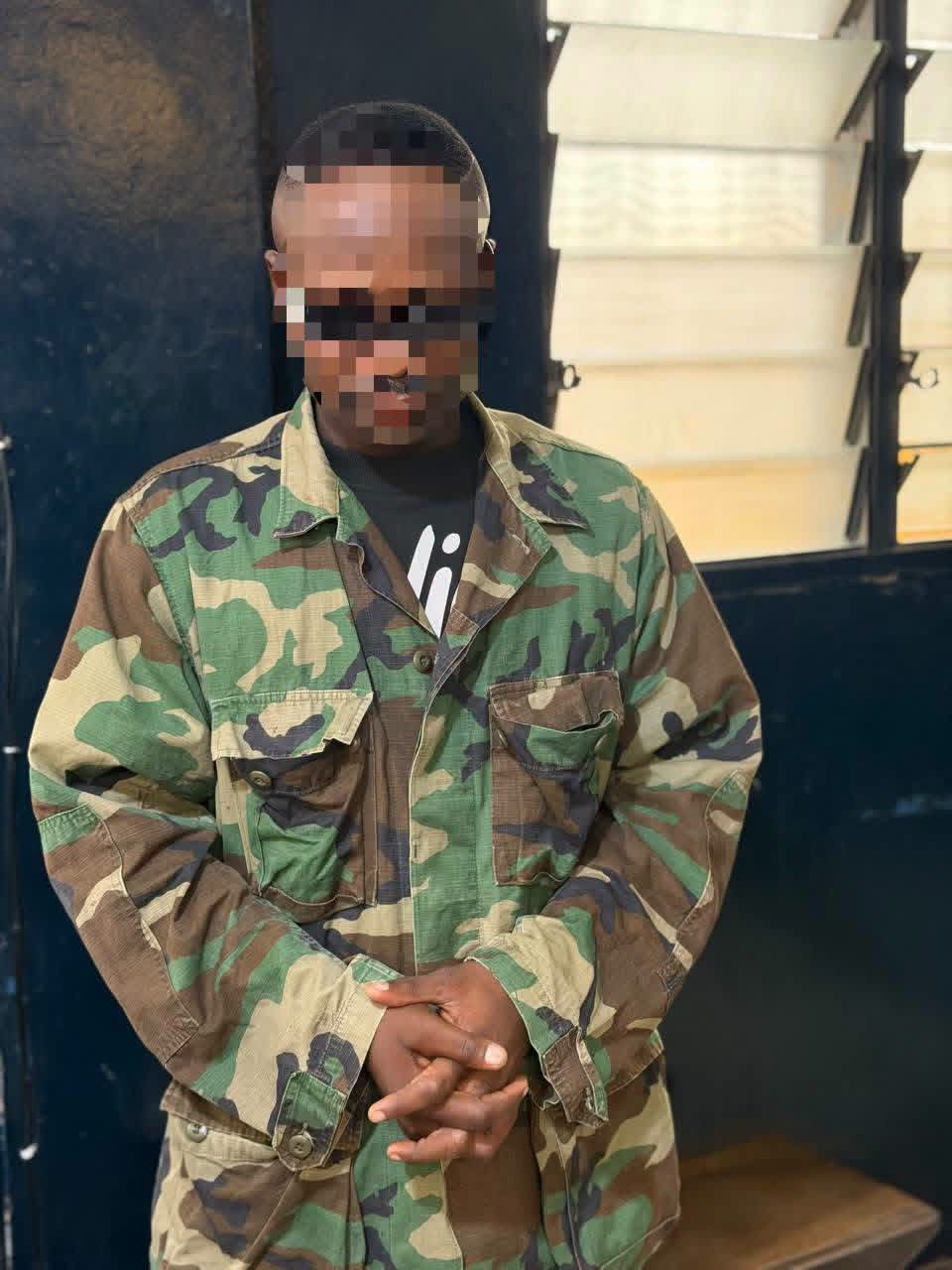
The Tema Regional Police Command has arrested a 32-year-old man for allegedly posing as a soldier and extorting money from unsuspecting members of the public at Ashaiman.
The suspect, identified as Bright Atsu Kudiabor, was arrested by the Ashaiman Police on Wednesday, September 16, 2026, at about 7:00 a.m.
According to the Police, he was arrested at an area known as “I Shall Return”, where he was allegedly parading himself as a soldier and demanding money from people.
The Police said Kudiabor, who is an ex-convict, was initially arrested by personnel of the Ghana National Fire Service in Ashaiman with assistance from other members of the public.
A search conducted on him after he was handed over to the Police reportedly led to the recovery of a set of military camouflage uniform.
The suspect is currently in Police custody and assisting with investigations.
The Tema Regional Police Command said he would be processed for court after investigations are completed.
The Police urged the public to remain vigilant and report anyone who falsely presents themselves as a soldier or a member of another security agency to deceive or extort money from the public.
By: Jacob Aggrey
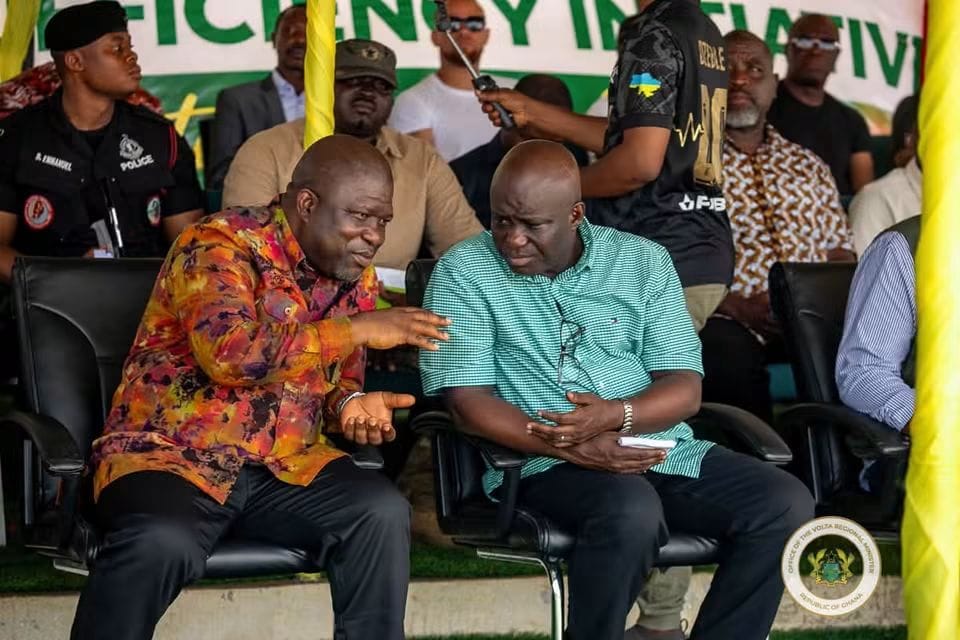
Volta Regional Minister, James Gunu, says the Volta Region holds enormous agricultural potential and efforts must be geared towards connecting farmers to the needed resources to unlock that potential.
He said focus must be on linking farmers to resources, technology, financing and markets to increase production, create jobs and build sustainable livelihoods.
Hon. Gunu made the remarks at the national launch of the Ghana Tomato Self-Sufficiency Initiative (GHATSI) held at Anloga in the Volta Region on Tuesday, September 15.
The initiative, under the theme “Produce at Home. Feed the Nation. Export the Surplus,” seeks to boost local tomato production, processing and marketing while reducing Ghana’s heavy reliance on imported tomatoes.
The launch was attended by the Minister for Food and Agriculture, Eric Opoku, his Deputy, John Setor Dumelo, Feed Ghana Coordinator, Bright Demordzi, Members of Parliament, traditional leaders, MMDCEs, farmers and other stakeholders.
Mr.Gunu expressed appreciation to the Minister for Food and Agriculture for the support announced for the region, including two excavators, 200 cartons of organic fertiliser, and GH¢200,000 for Ms. Kuatudzo Esther Dela, a tomato farmer and processor from Ziope.
He described the initiative as an important step towards making agriculture a stronger driver of food security, job creation and economic growth in the Volta Region.
By Edem Mensah-Tsotorme

 Entertainment1 week ago
Rhythms On Da Runway returns November 28 with 16th edition themed ‘Unbound’
- News1 week ago
48 Engineer Regiment to be major sub-contractor on Accra-Kumasi Expressway, $2bn ready- Prez Mahama
- Entertainment1 week ago
Ohemaa Mercy’s Tehillah Experience outfit was priestly regalia, not costume – Management clarifies