News
Fact sheet about agric equipment and machines in Ghana

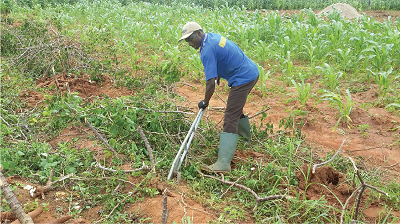
It is interesting to note that:
- Improved manual cassava harvester was released in 2017. Harvesting, one of the serious bottlenecks in the cassava production value chain, has received little attention in terms of mechanization. Earlier attempts at mechanising cassava harvesting have been challenged mainly by inappropriate method of planting, field topography and scale of cultivation.
Developing and adopting simple but efficient energy-saving manual harvesting tools and equipment is a sure way forward in overcoming these challenges in cassava harvesting. The cassava harvesting tool was constructed with the idea of reducing drudgery due to waist bending associated with existing manual harvesting tools which usually leads to waist pains and other bodily weaknesses.
The equipment is suitable for all cassava growing ecologies in Ghana. The improved hand-held tool can harvest cassava twice as fast with half the effort required when using existing manual harvesting options. Farmers have increased their production area and yield by 15-25 per cent after being introduced to the harvester.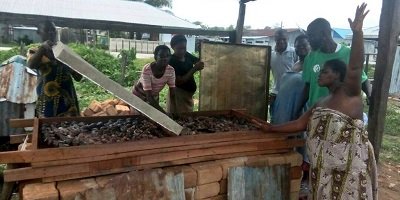
• Ahotor oven for fish smokers in Delta State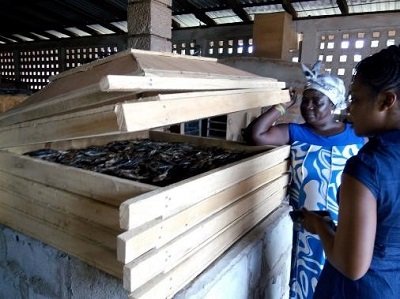
- Recirculating aquaculture technology was released in 2015. Simple raised tanks that can be set in the backyard with minimal skill requirement. This technology is an aquaculture system composed of a raised tank structure (rectangular, circular or ellipsoid) made of either a cement block or wooden frame and lined with a canvas material to make. It is applicable to all cassava growing parts of the country. It can be done in homes.
- New oven for smoking fish (AFSMO-150)/ Ahotor stove was released in 2007. A brick oven which reduces tar deposition on smoked fish with increased fish smoking capacity. Ahotor stove is applicable in all fishing communities in Ghana. It is less laborious to operate, has higher smoking capacity, it is more economical to use because it consumes less fuel, and it deposits less tar on the fish and, therefore, produces better quality smoked fish.
- Improved Chorkor smoker (AFSMO) was released in 2005. This technology is to help to reduce Poly-aromatic Hydrocarbons (PAHs) in smoked fish and reduce the drudgery involved in the other means of smoking fish. The use of fuel wood is reduced. Chorkor smoker is applicable in all fishing communities in Ghana. It reduces PAH in smoked fish which makes it healthy.
- Flash Dryer– drying of root crops cakes, was released in 2004. A typical flash-drying process consists of a modified pneumatic conveyor in which the wet solids are introduced. They go through a chute where they are transported in a high velocity hot air stream. Particles fall under high velocity and pressure through a cyclone (in some instances 2, 4 or 6 cyclones). Thermal contact time between the conveying air and the solids is usually very short and, therefore, flash dryers are most suitable for removal of external moisture.
It is applicable in all parts of the country. Compared to solar drying (two days for drying) and cabinet drying (12-15hrs), the flash dryer dries one ton of cassava (for example) in 1hr 30mins. Flash dryer dries in a flash. Flash Dryer is fast, and temperature build-up after an hour is enough to keep on drying without fuel. It can utilise either LPG or diesel in operating. Capacity is between 250- 500kg/hr output 7. It requires little oversight after temperature build-up
Source: Manual of Agricultural Technologies developed by
CSIR, MAG and MoFA
Page: 133-136

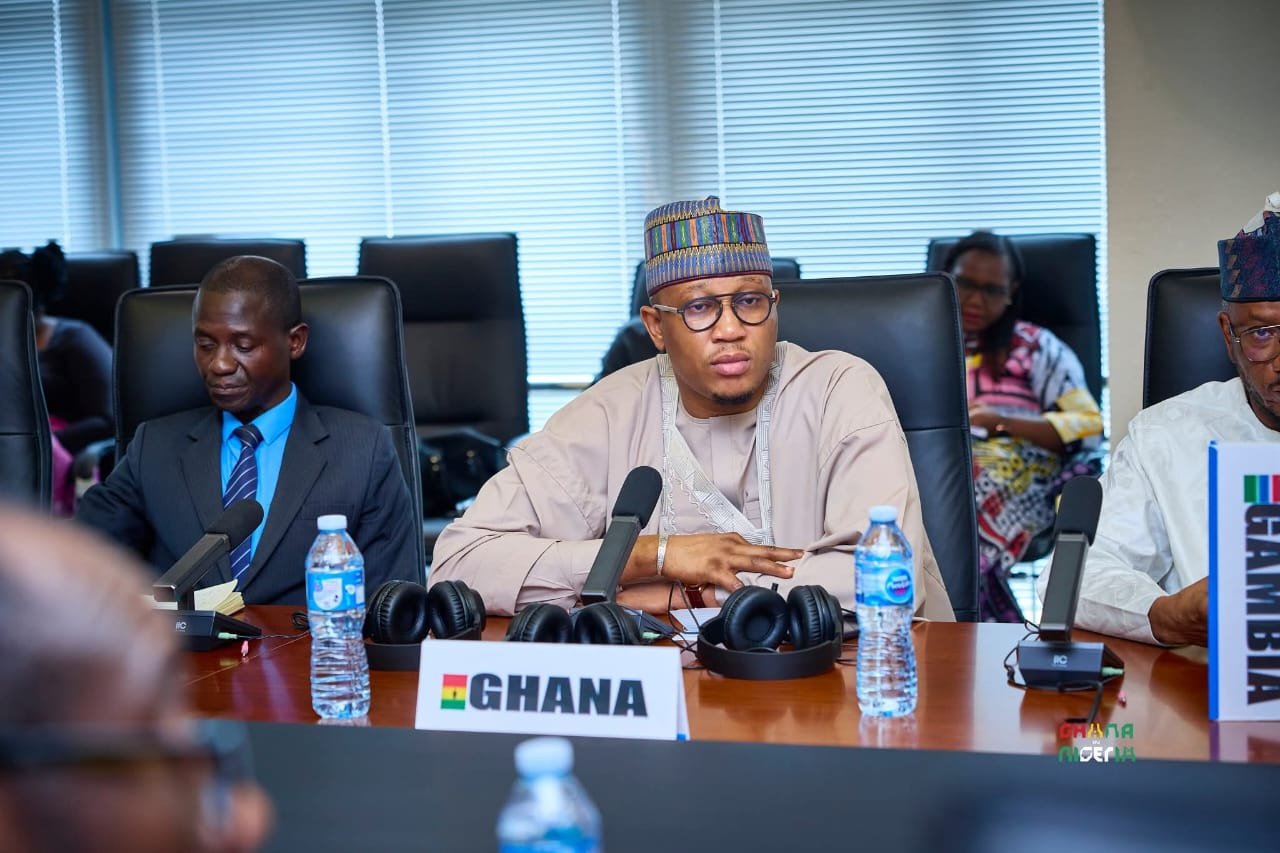
The Ghana High Commission in Abuja, Nigeria, is appealing to the public to help trace the relatives or next of kin of Apia Solomon, a Ghanaian national believed to be from Osu, Accra.
According to a public announcement by the High Commission, Mr. Solomon, born on March 6, 1960, in Accra, died on July 5, 2021, from cardiopulmonary failure.
He worked as a temporary civilian staff member at the National Defence College in Nigeria. His remains are currently being kept at the Nigerian Air Force Hospital morgue in Abuja, pending burial arrangements.
The High Commission says efforts to locate his relatives have so far been unsuccessful and is urging anyone with information about his family, friends or next of kin to come forward.
Anyone with relevant information is encouraged to contact the Ghana High Commission in Abuja.
By: Jacob Aggrey
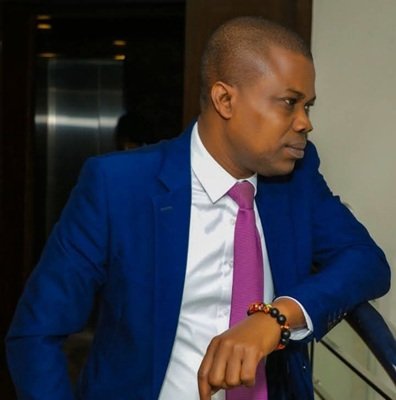
Security consultant Richard Kumadoe has blamed what he describes as flawed recruitment and incomplete background checks for some of the problems facing the Bureau of National Intelligence (BNI).
He has called on the leadership of the BNI to review the backgrounds of officers recruited during specific periods, particularly those who entered the agency under recent recruitment processes.
Speaking on the issue on TV3 yesterday, Mr Kumadoe alleged that some individuals were recruited into the intelligence agency without proper background checks and completed vetting.
“Certain categories of persons were dumped into the BNI, whose backgrounds were not checked, and whose vettings were not completed,” he stated.
He said some of the officers linked to the concerns appeared to have been recruited within the same period, making it necessary for the agency to examine the recruitment records and backgrounds of those who joined during that time.
Mr Kumadoe argued that the problems could be addressed by ensuring that recruitment procedures were properly followed and that all applicants underwent the required checks before being employed.
According to him, when the selection process is flawed, it can lead to problems within the institution.
He blamed the politicisation of security institutions, arguing that appointing people without the necessary intelligence experience and allowing political interests to influence recruitment could undermine their operations.
“When you have a selection procedure that was flawed because you politicised the place, brought in people to come and head the place when they have no business being there, they don’t know anything about being a BNI officer, they are not intelligence officers, and you flood the place with politicians and political artists, then you circumvent the standard procedure and you are going to have some of these problems,” he said.
Mr Kumadoe, however, defended the current leadership of the BNI, arguing that efforts to address longstanding problems within security institutions could bring such issues to light.
He said the leadership should be assessed in the context of the steps it is taking to improve the agency’s operations and uphold professional standards.
Drawing on his own experience in the intelligence field, he said the opportunity to serve under experienced officers had helped him develop the skills and integrity needed to contribute to national security.
By: Jacob Aggrey