Hot!
‘Excessive exposure of children to screens can cause autism’


- /home/u249204778/domains/spectator.com.gh/public_html/wp-content/plugins/mvp-social-buttons/mvp-social-buttons.php on line 27
https://spectator.com.gh/wp-content/uploads/2024/07/Autism-workshop-pix.jpg&description=‘Excessive exposure of children to screens can cause autism’', 'pinterestShare', 'width=750,height=350'); return false;" title="Pin This Post">
- Share
- Tweet /home/u249204778/domains/spectator.com.gh/public_html/wp-content/plugins/mvp-social-buttons/mvp-social-buttons.php on line 72
https://spectator.com.gh/wp-content/uploads/2024/07/Autism-workshop-pix.jpg&description=‘Excessive exposure of children to screens can cause autism’', 'pinterestShare', 'width=750,height=350'); return false;" title="Pin This Post">
Dr Yvonne NanaAma Brew speaking to the media
Prolonged exposure of children below five years to television sets and tablets put them at high risk of developing autism.
“This is because excessive screen time affects the brain development of a child, a situation that could cause growth disorders including autism.”
This came to light at the 3rd Annual Autism Workshop and Consultations in Accra on Tuesday.
A Resource Person, Dr Yvonne Nana Ama Brew, a Neurodevelopment Pediatrician at the Greater Accra Regional Hospital (GARH), explained that exposing the youngsters to those screens time could be very devastating.
According to her, the World Health Organisation (WHO) has recommended that children below two years must have zero screen time while those above three years, should have only one hour of screen time daily.
She said autism has become prevalent in Ghana over the past five years with a lot of children reporting to health facilities with signs of the disorder.
“At the GARH, only 10 per cent of the children coming into the facility had communication challenges in 2016 but subsequently, it has increased with 30 per cent of the children screened having communication issues.”
She recommended early developmental screening to help correct the disorder.
“If we are able to pick up the children early, then we would be able to put up some interventions,” she stated.
She also advised parents to have personal interactions with children and not leave them with tablets and phones.
Parents, she said, have the responsibility to decide which school they take their children, however, it was important to know that pre-schools and day-care centers must encourage outdoor plays and toys not screens.
The five-day workshop brought together doctors and experts to interact and share ideas with parents and teachers on autism.
The Managing Director of GTBank, organisers of the workshop, Mr Thomas John, said the bank decided to host the third edition this year following the success and impact of previous editions.
In his keynote address, Ag Director, Technical Coordination, Ministry of Health, Dr Hafez Adam Taher commended GTBank for the initiative, adding that it was important for the private sector to collaborate with the government to raise awareness on autism.
He said the government was finalising guidelines on disability inclusion so that children with special needs would thrive and given the support to grow and contribute to national development
Michael D. Abayateye


The Tema Regional Police Command has arrested a 32-year-old man for allegedly posing as a soldier and extorting money from unsuspecting members of the public at Ashaiman.
The suspect, identified as Bright Atsu Kudiabor, was arrested by the Ashaiman Police on Wednesday, September 16, 2026, at about 7:00 a.m.
According to the Police, he was arrested at an area known as “I Shall Return”, where he was allegedly parading himself as a soldier and demanding money from people.
The Police said Kudiabor, who is an ex-convict, was initially arrested by personnel of the Ghana National Fire Service in Ashaiman with assistance from other members of the public.
A search conducted on him after he was handed over to the Police reportedly led to the recovery of a set of military camouflage uniform.
The suspect is currently in Police custody and assisting with investigations.
The Tema Regional Police Command said he would be processed for court after investigations are completed.
The Police urged the public to remain vigilant and report anyone who falsely presents themselves as a soldier or a member of another security agency to deceive or extort money from the public.
By: Jacob Aggrey
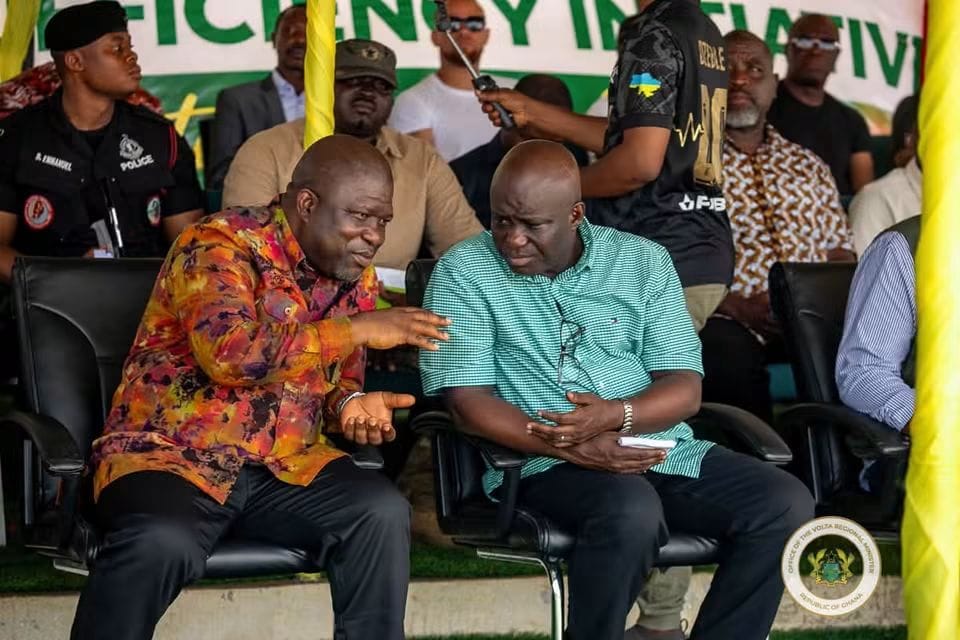
Volta Regional Minister, James Gunu, says the Volta Region holds enormous agricultural potential and efforts must be geared towards connecting farmers to the needed resources to unlock that potential.
He said focus must be on linking farmers to resources, technology, financing and markets to increase production, create jobs and build sustainable livelihoods.
Hon. Gunu made the remarks at the national launch of the Ghana Tomato Self-Sufficiency Initiative (GHATSI) held at Anloga in the Volta Region on Tuesday, September 15.
The initiative, under the theme “Produce at Home. Feed the Nation. Export the Surplus,” seeks to boost local tomato production, processing and marketing while reducing Ghana’s heavy reliance on imported tomatoes.
The launch was attended by the Minister for Food and Agriculture, Eric Opoku, his Deputy, John Setor Dumelo, Feed Ghana Coordinator, Bright Demordzi, Members of Parliament, traditional leaders, MMDCEs, farmers and other stakeholders.
Mr.Gunu expressed appreciation to the Minister for Food and Agriculture for the support announced for the region, including two excavators, 200 cartons of organic fertiliser, and GH¢200,000 for Ms. Kuatudzo Esther Dela, a tomato farmer and processor from Ziope.
He described the initiative as an important step towards making agriculture a stronger driver of food security, job creation and economic growth in the Volta Region.
By Edem Mensah-Tsotorme