Hot!
Empowering entrepreneurs: The local brands leaving international footprints


Last week, we published the story of a young entrepreneur using his software engineering skills to support players in the fashion industry. This week, we have discovered other young Ghanaian entrepreneurs who are adding value and breaking new grounds in their respective fields.
Two of such persons have developed skincare products while the rest are into shoe manufacturing and agric-tech. Here are excerpts of their stories.

Ms. Tutuwa Ahwoi
This young entrepreneur, born in Accra, is the Founder and CEO of Nokware Skincare. She started the business in 2017 after developing skin problems when she left Ghana to study in Paris for her Masters degree.
According to her, her body was unfamiliar with the climate, and the products she had used were not natural. While studying, she met her Botswana counterpart, Thato, and they quickly bonded as they were the only two black girls in their year group.
Tutuwa inadvertently introduced Thato to her great-black grandmother’s soap and shea butter, which Thato became obsessed with! In 2016, the couple returned to their respective countries, and Thato asked Tutuwa to send black soap to her and her friends.
Tutuwa thought she could take the skincare “recipe” passed down from her great-grandmother, to the rest of the world. She brainstormed about the product, packaging, and strategy before pitching the idea to Thato and in October 2017, the ‘Nokware’ brand was born.
“Our products are made with natural ingredients that are sourced from farms across Africa. We source our ingredients like shea butter and oils, and all our packaging like calabashes, raffia and jutes from local, Ghanaian women with whom we practise fair trade because economic inclusion is our ultimate goal.
“We believe together, we can use commerce as a means to empower females in the communities do business in a more beautiful way – with purpose,” she told Lioness of Africa recently.
The brand is run by a team of 11 Ghanaian women with ages ranging from 20 to 46 who handle marketing, finance, research, product formulation and production.

Ms. Violet Amoabeng
Similarly, Violet is the Founder and Chief Executive Officer of Skin Gourmet Limited. She founded the company after recognising “a demand for pure, high-quality body and skincare that was also safe to consume.”
The company which started in 2014 is currently visible in 17 countries across four continents, with a team of about 17 persons. The products are made using “traditional Ghanaian procedures that retain the product in its natural state while boosting the efficacy of the ingredients.”
As a supporter of Mother Nature, she aims to develop a sustainable product line that will propel Ghana ahead and encourage Africans to preserve their culture.
“Skincare enhances attractiveness, but true beauty goes beyond the surface. Skin Gourmet was established to address the true need for skincare: health and wellness, which can only be reached through a product that meets a person’s desire to be valued,” she says.

Mr. Fred Mawuli Deegbe
Fred, the son of a pastor and a teacher, is the Founder of “Heel The World,” a shoe manufacturing firm which sells leather goods and ‘Empowerment Beads.’
Despite several challenges, he is determined to take Ghanaian and African fashion to an international level. He started the company with his friend Vijay Manu while working at a bank.
He said a friend laughed at his shoes when he went to play video games a few years back and this prompted him to go to a local shoe store to find a new pair of shoes that would help him regain “social acceptance.”
A shoeshine boy went by as he examined the shoes he wanted to buy, so he dashed outside to inquire whether he (the shoeshine) could construct a similar pair of shoes but the response was in the negative.
The country’s overdependence on imported goods, therefore, became clearer to him and he thought of an indigenous innovation. He started the company with his friend who had no experience in shoe making but the brand has since become a high-end shoe firm which aims at encouraging local start-ups.
“Heel the World is more than a shoe firm; it’s a social venture that challenges stereotypes about Ghanaian craftsmanship’s quality and potential,” he says. Heel The World goes by the slogan: “We can if we try.”

Mr. Desmond Koney
Desmond Koney is the Founder and CEO of ‘Complete Farmer,’ a Ghana-based agri-tech firm formed in 2018 to build sustainable solutions to ensure food security in Africa in general, as well as to ensure that users earn money via remote farming.
In order to address challenges of existing farming methods, he and his team decided to create solutions based on technology that will lower the obstacles to farming in Ghana and Africa, help increase yields and maximise return on investment in farming.
Complete Farmer allows customers to “sponsor farm managers, monitor development from the comfort of their own homes and receive rewards upon harvest and completion.” Their goal is to enable agriculture to thrive in certain African locations.
By Spectator Reporter


The professor who spends his days exploring the intricacies of African languages found himself at the centre of a different kind of lesson on Friday, October 2, 2026. 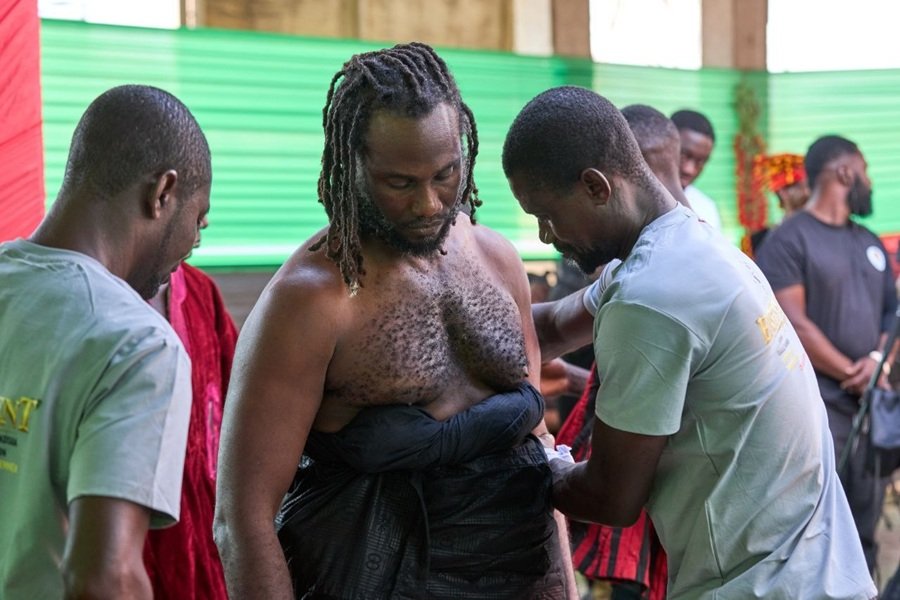
This time, there were no lecture notes, academic arguments or university classrooms. Instead, there was the weight of tradition, the rhythm of a community celebration and the solemnity of an oath at a royal palace.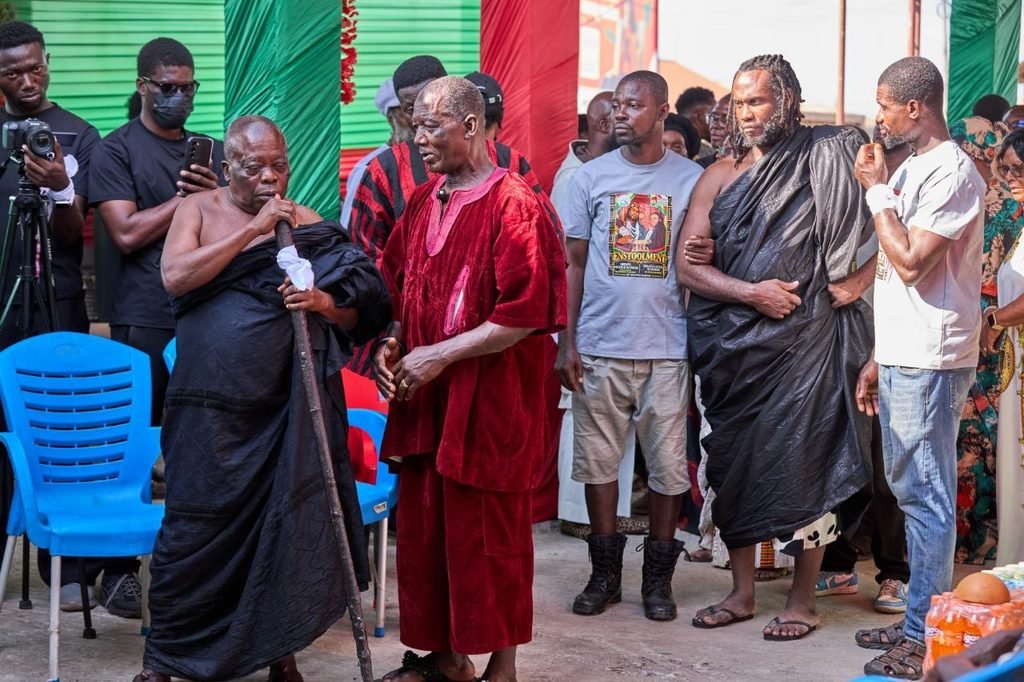
Professor Ọbádélé Kambon, a full Professor of African Linguistics at the University of Ghana, was enstooled as Apagyahene and Sunsum Ɔsahene of Akuapem Mampong in the Eastern Region in a ceremony that brought academia and traditional authority together.
For the professor, the occasion was more than a new title. It was a moment that connected his academic interests in African languages and indigenous knowledge with the living traditions of an Akan community.
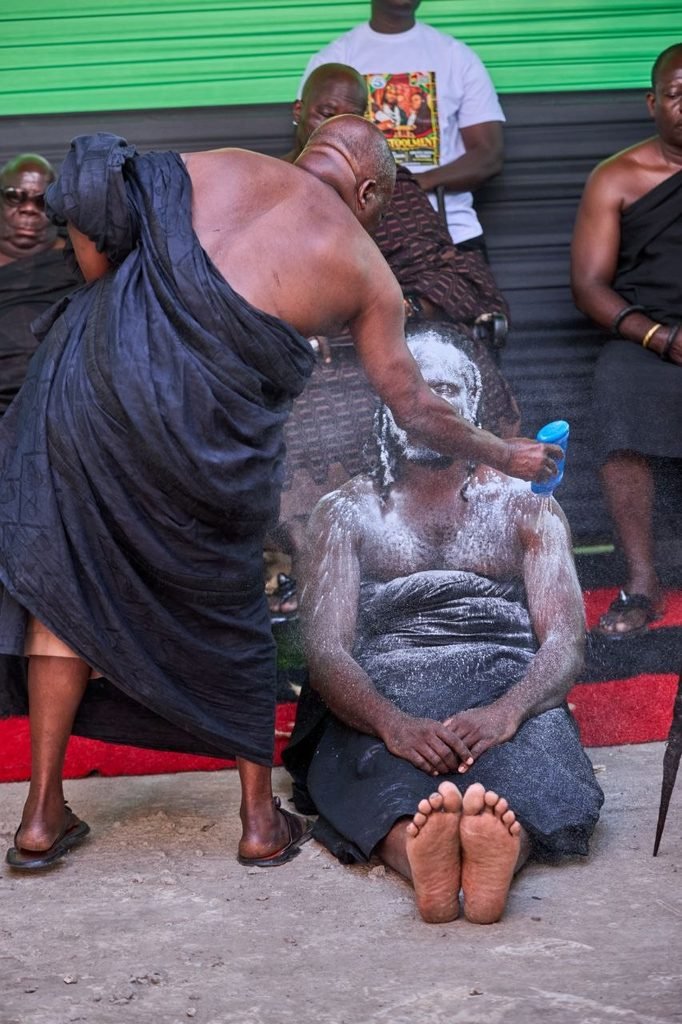
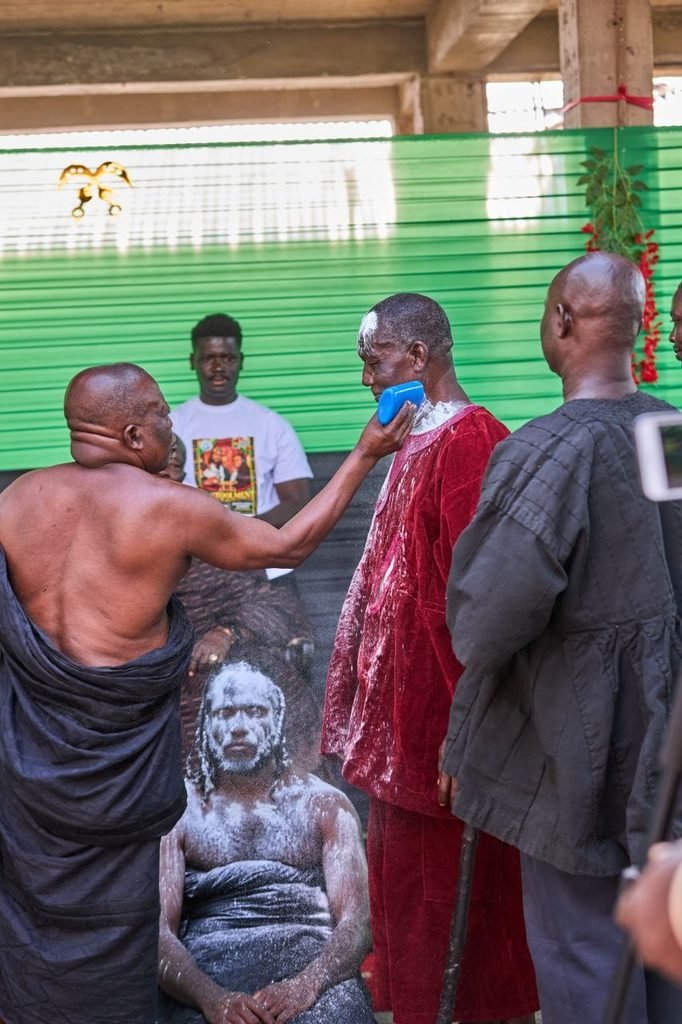
The day’s events unfolded through a series of customary observances. Kambon was first taken to the compounds of the Ɔkyeamehene and Gyasehene, where the preparations for his installation continued.
Then came the application of hyire, the white kaolin powder associated with traditional rites.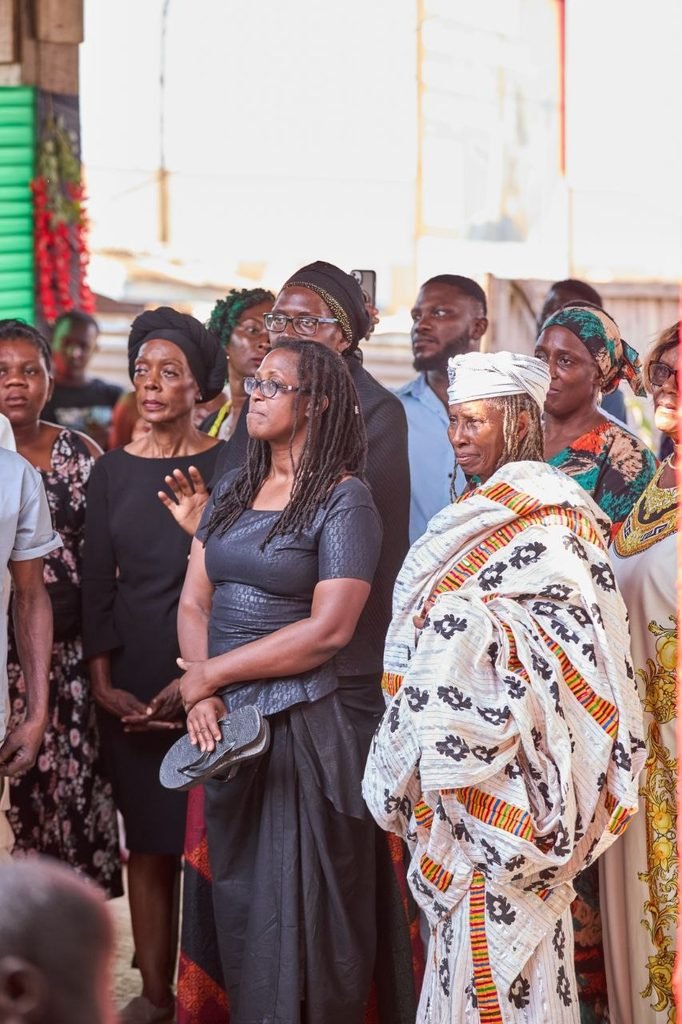
With the customary proceedings underway, the new chief was lifted onto the shoulders of celebrants and carried along the main thoroughfare of Akuapem Mampong.
The procession transformed the streets into a public stage for a ceremony rooted in the community’s traditional institutions.
There was something striking about the image, a university professor, accustomed to the measured language of academic discourse, being carried through the town in a display of traditional recognition.
Yet the celebration was not complete with the procession.
A ram was sacrificed at the Mamponghene’s compound before Kambon was taken to the palace, to swear the oath associated with his new offices.

The ceremony brought him formally into his roles as Apagyahene and Sunsum Ɔsahene.
Beyond the colourful proceedings, the titles themselves carry layers of historical meaning.
Kambon in his research explores the historical connections between Apagya and Akan political and military organisation.
Accounts cited in his work linked Apagya to an asafo, or military company, while historical writing traces an Apagya stool in Asante to the reign of Opoku Ware I in the eighteenth century.
These historical associations offer a glimpse into the institutions that have shaped Akan society over generations, although they do not automatically define the precise responsibilities of the office in Akuapem Mampong.
Kambon’s own professional life reflects a similar interest in preserving and examining African knowledge.
His work encompasses Akan language structure, naming practices across the Black world, proverbs and indigenous intellectual traditions.
Through Abibitumi, the platform he founded, he also promotes language learning, scholarship and cultural engagement.
But tradition was only one part of the story that day.
When the formal ceremony gave way to a reception, the occasion expanded into a celebration of three milestones: Kambon’s enstoolment, his promotion to full professor and his daughter Ama’s admission to the University of Ghana.
The gathering therefore carried a personal significance that went beyond the honours bestowed on one man. 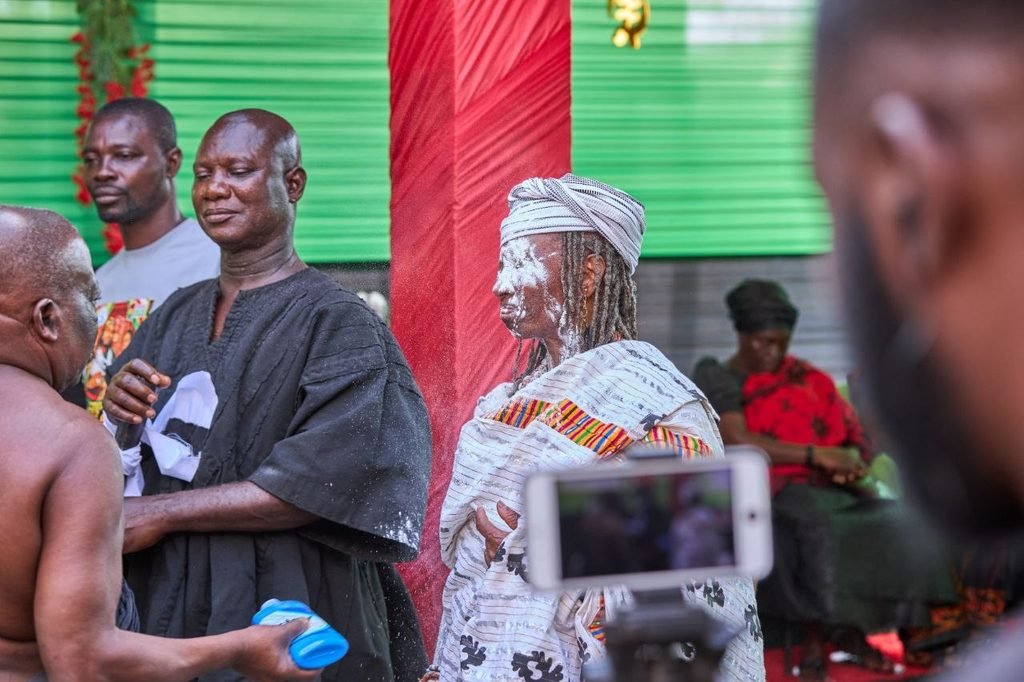
It celebrated professional advancement, the continuation of family aspirations and a connection to cultural heritage.
For a father, seeing a daughter gain admission to the same university where he holds a distinguished academic position offered another reason to celebrate.
For the professor, the moment placed family achievement alongside his own professional and traditional milestones.
Kambon had already established a place in the traditional life of Akuapem Mampɔn through an earlier installation as Banmuhene Kyidɔmhene, recorded in 2017.
His latest enstoolment adds another chapter to that relationship.
In Akuapem Mampɔn, the day brought together the university, the palace and the family table in one celebration. And for Kambon, the journey from the lecture room to the traditional procession showed how scholarship, cultural responsibility and family achievement could converge in a single memorable occasion.
By Enoch Ntiamoah Siaw
SKIP THE QUEUE, TAP THE NEWS
You can now read the Ghanaian Times and The Spectator newspapers from the comfort of your device via TimesNewsPlus.
Join our WhatsApp Channel: https://whatsapp.com/channel/0029VbBElzjInlqHhl1aTU27

Intercity STC Coaches Limited has interdicted a driver captured in a viral video allegedly hitting a Sprinter bus during an overtaking manoeuvre at Pokuase before driving away from the scene.
In a public notice, the company described the driver’s conduct as unacceptable, stressing that it did not reflect the safety standards and professionalism it upholds.
Management said it had commenced an immediate investigation into the incident and identified the driver, who has been interdicted pending the outcome of the disciplinary process.
The company added that it was awaiting an official report from the Pokuase Police Command to help establish the facts surrounding the incident.
STC reaffirmed its commitment to passenger safety and responsible road use, while thanking members of the public for bringing the incident to its attention.
Management assured the public that appropriate action would be taken following the investigation.
By: Jacob Aggrey