News
Elephantiasis still prevalent in eight districts… efforts are made to contain it – Experts

Over 120 million people are infected with Elephantiasis, according to WHO
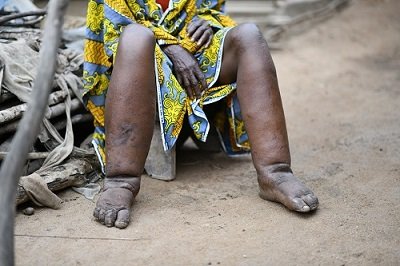
What started as a painful pinch on the leg of Madam AkuaAbokumaa, 20 years ago has now become a bigger swelling, despite numerous efforts to ease the bulge and the throbbing pain associated with it.
The 69-year-old woman is virtually immobile.
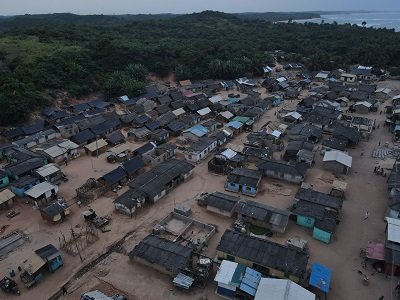
Pain is etched on her face as she struggles to walk around the mud houses in her remote village at Asemko, in the West Ahanta Municipal Assembly close to the shores of the Atlantic Ocean in the Western Region.
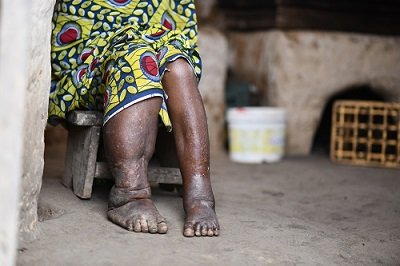
She is among over 120 million people who are infected and 40 million who are disfigured or incapacitated by microscopic larvae and microfilariae, which are transmitted to humans through mosquito bites, according to the World Health Organisation (WHO).
Madam Abokumaa said she had spent thousands of cedis generated from her small subsistence farming to visit hospitals and traditional healers in an attempt to treat the deadly sickness.
But the situation keeps getting worse.
Narrating her sad story to this reporter, she said that most of the traditional healers she visited,after taking money from her as consultation fees, told her that she had been bewitched.
Madam Abokumaa accused some of the healers of making the swelling worse, after making cuts on the leg with a razor blade and covering them with white powder.
She said the treatment rather caused more acute infections that spread to her entire body leaving her bed-bound and feverish.
“I have lost so much and even sold properties to pay the healers, or to get a taxi to the hospital when the pain is unbearable. Now it’s getting worse and my other leg is becoming swollen. It sometimes feels like I might just die,” she said.
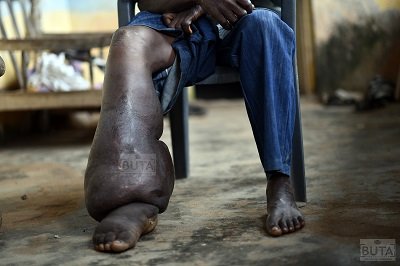
Another person suffering a similar fate is 56-year-old John Asmah, who developed the early stages of elephantiasis as an infant. The father of six can no longer work and struggles to pay her children’s secondary school fees, let alone medical bills.
According to him, the loneliness had wanedhis confidence. His family abandoned him when the swelling started in because they saw him as a disabled person.
“I sometimes feel like I’m the only one with this problem, people walking by always laugh at me. Sometimes when I meet a group of people, they just stand there staring at my leg, asking if I’m cursed,” he said.
MrBright Alomatu, the Desk Officer for Lymphatic Filariasis and a biologist of the Neglected Tropical Diseases Programme (NTDP) of Ghana in an interview said:“Lymphatic filariasis (LF), commonly known as elephantiasis, is a disabling and disfiguring disease where the lymph vessels and nodes are damaged by mosquito parasites and may result in massive lymphoedema.”
He said it was a widespread and major public health problem in many developing countries with warm and humid climates, including Ghana.
He said with the implementation of the Mass Drug Administration (MDA) with various support, significant progress had been made towards the elimination of the disease as a public health problem.
He said that out of the 114 hotspot districts, 106 had been contained leaving eight districts namely; Sawla-Tuna-Kalba and Bole in the Savannah Region, Ellembelle in the Western Region, Sunyani West in the Bono Region, Lawra, Wa East and West in Upper West Region and Nabdam in the Upper East Region.
“Those affected with symptoms are left with strangely swilling deformed limbs which had been as a result of several years without treatment, he said.
According to Dr Sylvester Coleman, an entomologist and a lecturer at the Department of Clinical Microbiology of the Kwame NkrumahUniversity of Science and Technology, “elephantiasis is a severe manifestation of lymphatic filariasis, a disease which could also trigger extensive scrotal swelling, or hydrocele, in men.”
It is one of the leading causes of disability worldwide and is endemic in 73 countries.
He said the infection was transmitted by mosquitoes carrying tiny, thread-like worms, which nest in and attack a person’s lymphatic system, though many of those infected with the parasite will not present any symptoms.
He warned patients against the use of herbs for treating elephantiasis as well as seeking treatment from traditional healers, but rather visit the nearest health centres.
From Geoffrey Buta, Asemko

News
GES directs Ashanti Regional, Obuasi Municipal Education Directors to step aside over Obuasi SHTS scandal
The Management of the Ghana Education Service (GES) has directed the Ashanti Regional Director of Education, Dr. William Amankrah Appiah, and the Obuasi Municipal Director of Education, Mr. Kwamena Owusu-Nketiah, to step aside with immediate effect.
The directive forms part of ongoing investigations into allegations of sexual misconduct involving the headmaster of Obuasi Senior High Technical School (SHTS), Mr. Zakaria Abdulai.
According to GES, the decision is intended to ensure that the investigations proceed without potential interference, nor the perception of it.
The two directors are to hand over their offices and all state property in their possession to the Deputy Ashanti Regional Director of Education, Mr. Thomas Kwame Boateng.
Management added that the headmaster, Mr. Zakaria Abdulai, also remains interdicted and therefore urged the public to ignore any news circulating that he has been cleared.
Management is calling for calm, support and cooperation as thorough investigations into the matter continue.
By Edem Mensah-Tsotorme
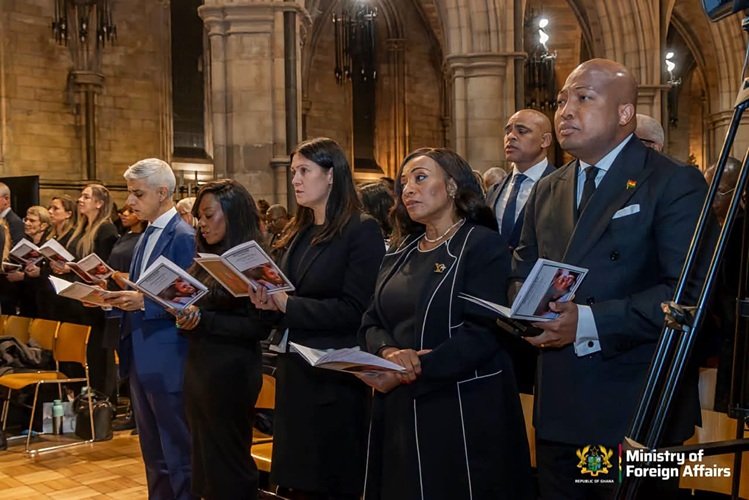
The Minister for Foreign Affairs, Samuel Okudzeto Ablakwa, has joined the family of the late Professor Jason Atta Kwei Arday, the Ghanaian community in the UK, and other dignitaries for a memorial service in Southwark, UK.
In a post, Mr. Ablakwa described the service as deeply moving and unforgettable, held in honour of the late professor’s memory.
According to him, in keeping with the government’s pledge, he joined the family, Ghana’s High Commissioner to London, British MPs, Ministers, the Mayor of London, Cambridge scholars, Prof. Arday’s students and loved ones to pay respects and honour his inspiring legacy.
Mr. Ablakwa noted that Prof. Arday’s accomplishments as the youngest Black professor appointed at the University of Cambridge and his widely appreciated charitable contributions will continue to inspire generations.
“The Government and People of Ghana will continue to stand by our compatriots everywhere they are in the world. As we do so, we profess our commitment to justice, equality and the creation of a new world,” he said.
He prayed for fortitude for the family in what he described as an extraordinarily difficult time.
“We shall always remember Prof. Arday for his response when asked what he will wish to do to change the world: ‘I would take a thread and a needle, and I’d interweave love into our society’,” Mr. Ablakwa added.
By Edem Mensah-Tsotorme