Features
ECG ‘meter-fraud’: Govt must act quickly!!!

Wikipidia defines ‘fraud’ as wrongful or criminal deception intended to result in financial or personal gain.
The synonyms for ‘fraud’ include, swindling, scam, hanky-panky, shenanigans, crookedness, embezzlement, deceit, monkey-business and rip-off.

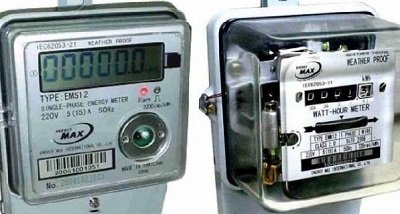
The Economic and Organised Crime Office (EOCO) is said to have forwarded a case docket involving an alleged $36 million procurement fraud of electric meters, to the office of the Attorney-General for prosecution.
The $36 million procurement fraud is reported to have taken place in the Republic of Ghana in 2016.
The submission of the case docket to the office of the Attorney-General follows the conclusion of over four good years of investigations into ‘the fraudulent matter’ by the EOCO and the National Security.
Many concerned Ghanaians and institutions have questioned the long delay in the investigations and prosecution of officials involved in the ‘procurement fraud’.
The fraud was alleged to have ‘germinated’ in September 2016 when L&R Investments and Trading Company, which is incorporated in China, entered into a contract with the Government of Ghana, to supply electric meters to the Electricity Company of Ghana. Reportedly, the contract was to be executed within a period of 26 weeks, and an advanced payment of $12 million was made to L&R Investments plus a Letter of Credit for $24 million.
The 2020 Auditor-General’s Report on state-owned institutions, however, revealed that the meters, which were procured at a huge cost to the state, were abandoned by the Electricity Company of Ghana (ECG) because they were not manufactured to meet the required specifications.
A brief background of the fraudulent deal dates back to September 2016, when the then Ministry of Power wrote to the Managing Director of the ECG , alerting him of a-$40-million financing, secured by the Government of Ghana for the procurement of electric meters.
Reportedly, the letter named Messrs L&R Investments, whose local representatives are Messrs First Grace Limited, to be given the contract to supply the meters.
The ECG management, upon the receipt of the letter from the Ministry of Power engaged Messrs L&R Investments and their local Ghanaian representatives. After ECG had evaluated the proposals from L&R Investments, a pre-contract meeting was said to have been held in October 2016 between the technical team of ECG and the Managing Director of L&R Investments Company. Reportedly, at that meeting, the scope of supply; technical classifications; due diligence; pilot studies; factory acceptance tests and training of ECG metering staff were agreed upon.
Indeed, the two key conditions before the supply of the meters after signing the contract were; the pilot studies to assess the meters for two months and the factory acceptance tests. Sources, however, say :”The 200 electric meters that were to be provided as samples for the pilot studies were not taken to the ECG and the agreed travel of three representatives from ECG to undertake the factory acceptance tests in China before manufacturing of the said meters , did not take place.”
The Executive Director of the Institute for Energy Policies and Research (INSTEPR), Mr Kwadwo Poku, insists that; “without any of these conditions being met, the management of ECG was sent shipping documents for containers of meters at the Tema Port.” Expectedly, the ECG management notified L&R Investments that they could not accept the meters because the processes agreed upon per the contract had not been followed.
Disturbingly, the meters in the containers were not the specifications as per the supply contract, when the containers were cleared at the Tema Port. According to the Executive Director of INSTEPR, the contract was terminated in 2017 after legal consultations but strangely, the company was able to discount the $24 million Letters of Credit given to them under the contract. “We have sighted documents that state that on the 16th of August 2017, at a time when Capital Bank had ceased to be a bank under the laws of Ghana; Capital Bank discounted the Letters of Credit and made a payment of $22.5 million to L&R Investments”, the Executive Director of INSTEPR, has said.
For instance, Mr. Kwadwo Poku is asking the following relevant questions: “Why has it taken four years for the state security agencies in investigating this transaction? “Who are the people behind L&R Investments and Trading Company in Ghana? “The initial $12 million was paid to First Grace Limited, their local representatives in Ghana.
Who are the people behind the Ghanaian company? “Why is the management of Capital Bank not being prosecuted for the illegal discounting of the Letters of Credit?” Readers, the initial investigation into the fraudulent electric meter-deal was reportedly carried out by Kroll and Associates; a corporate investigations and risk consulting firm contracted by the government to investigate various transactions under former President Mahama’s administration.
Readers, remember? How Mr Yao Domelovo, the immediate past Auditor-General was angered by the audits of Kroll and Associates, sanctioned by the then Senior Minister, Mr Yaw Osafo Maafo ? The $36 million fraudulent deal was among other deals uncovered by Kroll and Associates.
A lot of well-meaning Ghanaians, however, hold the view that our government has been ‘very slow’ in taking action about this very disturbing fraudulent act. And this column challenges the government to quickly do the needful!!! Contact email/ WhatsApp of author: asmahfrankg@gmail.com (0505556179)
By G. Frank Asmah


Walk into any supermarket in Accra, Kumasi, or Tamale today, and you will see the modern Ghanaian diet packaged as ‘progress.’ You will see breakfast cereals with cartoon mascots, fruit drinks that are mostly sugar and colour, and snacks promising energy and happiness in bright fonts.
Even products loaded with salt and unhealthy fats often wear a health halo labeled as fortified or natural, while the real nutritional risk is hidden in tiny print on the back. This is not just a consumer inconvenience; it is a public health blind spot. Ghana is living through a silent surge of non-communicable diseases (NCDs) like hypertension, diabetes, and stroke.
These conditions quietly drain household income and steal productive years. According to the Ghana Health Service (GHS) and World Health Organisation (WHO) estimates, NCDs are now responsible for nearly 45 per cent of all deaths in Ghana.
We cannot build a healthy nation on a food environment designed to confuse people at the point of purchase. Ghana must mandate simple front-of-pack warning labels (FOPWL) on high-sugar, high-salt, and high-fat packaged foods because consumers deserve truth at a glance, and industry must be pushed to reformulate.
Why Back-of-Pack Labels Are Not Enough
In theory, consumers can read nutrition panels. In reality, most Ghanaians shop under pressure, limited time, rising prices, and children tugging at their sleeves. The back label is a relic that requires a high cognitive load to interpret—essentially, the seller knows what is inside, but the buyer cannot easily tell.
This ‘information asymmetry’ is not fair. It is not consumer choice when the information needed to choose well is deliberately difficult to find.
Simple warning labels like the black octagons used in the Chilean Model act as a ‘stop-and-think’ nudge. They do not ban products but they simply tell the truth so people can decide.
Reshaping Our Food Environment
A generation ago, Ghana’s meals were mostly home-prepared, like kenkey and banku with soups and stews. Today, ultra-processed foods have become the norm, especially in urban areas. Children are growing up with sugary drinks and salty snacks as everyday items, not occasional treats.
If Ghana is serious about prevention, we must act where decisions are made—thus, the shelf. Warning labels protect parents from sugar traps and pressure the market to improve. When warning labels are mandatory, manufacturers start to compete to make healthier recipes to avoid the stigma of the label.
Addressing the Pushback
Industry will argue that labels create fear or that education alone is enough. However, health education is slow; labels work immediately. While the informal street food sector is a challenge, regulating pre-packaged goods is the practical starting point because the supply chain is traceable. We cannot wait until the whole system is perfect; we must start where action is feasible.
A 2026 Implementation Roadmap for Ghana
To move from talk to action, Ghana needs this 5-step plan:
- Issue mandatory regulation: The Ministry of Health, Food and Drug Authority (FDA), and Ghana Standards Authority (GSA) must define the label format and nutrient thresholds for all pre-packaged foods.
- Simple, bold symbols: Use plain language and clear symbols, such as “HIGH IN SUGAR,” designed for busy families, not experts.
- Transparent thresholds: Adopt technically defensible standards adapted to the Ghanaian diet.
- Transition and enforce: Provide a 12–18 month period for manufacturers to reformulate, followed by firm enforcement at ports and retail centers.
- National literacy campaign: The Ghana Health Service must pair labels with public messages explaining why high salt or sugar increases disease risk.
Conclusion: Truth Is Not a Luxury
Prevention is cheaper than treatment. A warning label costs little compared to the price of dialysis, stroke rehabilitation, or lifelong diabetes complications. A black octagon on a box of biscuits is more than a label; it is a shield for the health of all Ghanaians. It is time to put the truth where we can see it, right on the front.
By Abigail Amoah Sarfo
Join our WhatsApp Channel now!
https://whatsapp.com/channel/0029VbBElzjInlqHhl1aTU27

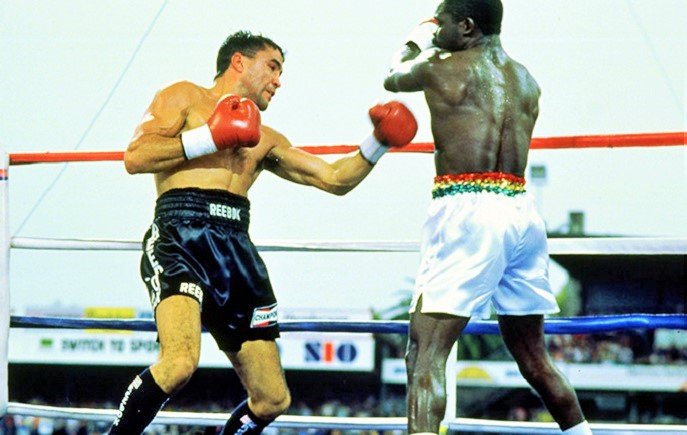
Natives of the Kenkey Kingdom were mad with joy. They were still recovering from the hangover of the kingdom’s loss of the African Cup when their spirits were rekindled. Their great warrior, Zoom Zoom, stormed Melbourne and made sure that every Australian refused food. And that was after he had drawn contour lines on the face of their idol, Jeff Fenech.
Not only did the terrible warrior transform Old Boy Jeff’s face into a contour map useful for geography lessons, but he also accomplished the feat of retaining the much-envied super-kenkeyweight title against all odds. The warrior had not been eating hot kenkey for nothing.
The Fight Against Fenech
When Jeff Fenech bit the dust in the eighth round, I was tempted to consider if Adanko Deka could not have faced him in any twelve-rounder, title or non-title bout. Adanko has improved tremendously, and soon he would be facing Pernell Whitaker.
Sincerely, I was pessimistic about Azumah’s man, who the last time took him through twelve grueling rounds of rough boxing. I expressed my fears to my colleague Christian Abbew, alias Gbonyo, who surprisingly had total confidence that the Australian brawler would fall, predictably in Round Five.
Gbonyo gave reasons for his contention, all of which I counteracted using the age factor. Fact is, I didn’t know that contrary to the laws of nature, Azumah was all the time growing younger.
When Fenech fell briefly in round one, I asked my brother whether it was the same Fenech that fought Azumah in Las Vegas. Sure, it was the same Fenech, all out to beat Azumah before his countrymen.
But the African Professor had no intention of making the Australian a hero. As he spun round the desperate Aussie, dancing and stinging out his jabs, it was not too long before I realized that the end was near.
The Eighth Round Showdown
Two minutes into the eighth round, the African ring-master proved to the whole world that he was a true son of Bukom. He himself was cornered, but like the tough nut he is, he managed to break free before overwhelming the panting Australian with several blows that made him crash headlong.
Moments after, the referee, expressing fatherly sympathy, stopped the fight to prevent an obituary. After the ordeal, Fenech’s fairly handsome face was full of newly constructed hills, valleys, ox-bow lakes—whatever. I noticed that his nose was very tired and had a miniature volcano sitting restlessly on it. Obviously, Jeff’s wife will have to nurse that nose back to its normal shape—but I’d advise her not to use iodine, otherwise her dear husband will wail like a banshee.
Reflections on Boxing
Because Mohammed Ali was the kind of boxer kids liked, many school-going kids often entertained the wish of becoming like him. I remember one day when I told my father I wanted to become a boxer, and he advised me to first complete my education to the highest level. Then, if I decided to become a boxer and was knocked out a couple of times, I’d fall back on my degrees and make a living.
Boxing used to be interesting when bouts were fought more with the mouth and tongue than with gloves. You had to brag well, psychologically belittling your opponent before beating him up physically. Mohammed Ali became a very successful pugilist because he also managed to become a poet. He often blew his horn across America, calling himself the “pretty boxer” and opponents like Joe Frazier “the gorilla.”
Ali made a living fighting hard fists like Joe Frazier, Ken Norton, Jerry Quarry, George Foreman, Leon Spinks, and Trevor Berbick. Twice he came back from retirement to fight just for money. It was Larry Holmes who finally pensioned him, and since then the great Ali has never been himself.
The Path Ahead for Azumah
When Azumah nailed Jeff Fenech on the cross and barked almost immediately that he was after the head of Pernell Whitaker, I was happy but concerned. I would have been happier if he had announced his resignation there and then—he would have been more of a hero. Beating Fenech in Australia is more newsworthy than facing Whitaker in the States.
With Whitaker, it might be a little difficult. The “Sweet Pea” is agile, has a crooked body like a snake with diarrhea, and stands awkwardly as a southpaw. He is known for having the fastest pair of fists and the rare ability to dodge punches no matter how close they may be.
Much as I do not doubt that Azumah can take his title, I also don’t want him to retire beaten. I want him to retire as a hero and live a fuller, healthy life.
As Azumah himself said after dishing Fenech, he is now a professor and has something to show for it. Like a true professor, I think it is time he resigned and took up training young talents who could draw inspiration from him and become like him in the future.
Closing Thoughts
I must say that although ageing boxers like Larry Holmes and George Foreman are making a name for themselves, boxing is not like the Civil Service, where you can even change your age and retire at 74. Zoom Zoom has delighted the hearts of the natives, and Sikaman will forever hold him in high esteem—but only when he retires as a hero.
This article was first published on Saturday, March 7, 1992.