Hot!
E-levy Delivering Only 10% of Estimated Revenues; Debt Levels Dangerously High – Gabby ‘Cries’ Over Economy

- /home/u249204778/domains/spectator.com.gh/public_html/wp-content/plugins/mvp-social-buttons/mvp-social-buttons.php on line 27
https://spectator.com.gh/wp-content/uploads/2022/06/56121978_815030.jpg&description=E-levy Delivering Only 10% of Estimated Revenues; Debt Levels Dangerously High – Gabby ‘Cries’ Over Economy', 'pinterestShare', 'width=750,height=350'); return false;" title="Pin This Post">
- Share
- Tweet /home/u249204778/domains/spectator.com.gh/public_html/wp-content/plugins/mvp-social-buttons/mvp-social-buttons.php on line 72
https://spectator.com.gh/wp-content/uploads/2022/06/56121978_815030.jpg&description=E-levy Delivering Only 10% of Estimated Revenues; Debt Levels Dangerously High – Gabby ‘Cries’ Over Economy', 'pinterestShare', 'width=750,height=350'); return false;" title="Pin This Post">
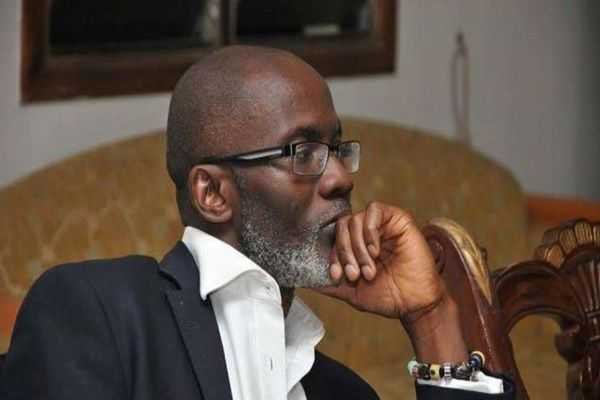
A member of the ruling New Patriotic Party Party (NPP), Gabby Otchere-Darko, has cried over the state of revenue generation in the country.
According to him in a tweet Monday morning, “after 5 months of stalemate and bashing, the e-levy, after implementation, is delivering only 10% of estimated revenues”.
” . . Our revenues remain very low as compared to the rest of the world; debt levels dangerously high, cedi like most currencies, struggling against the dollar . .” he tweeted.
IMANI Research
Researchers at IMANI Africa are predicting that government’s quest to raise some ¢4.5 billion from the Electronic Transactions Levy (e-levy) is not likely to be met.
This is because most Ghanaians sampled in a survey say they have drastically reduced their mobile money transactions since May 1, when the tax law was implemented.
The government pushed through the levy despite heated opposition with experts warning of a reduction in usage of mobile money platforms.
IMANI Africa, a think tank, has been investigating this. Data was collected through a survey of 1,677 people from May 31 to June 17.
According to IMANI, “85.9 per cent of pollsters indicated that they are not in support of the mobile money transaction, and 13 per cent indicated that they are somehow in support.”
King Carl Tornam Duho, a researcher at IMANI Africa, said, “only 7.6 per cent say they are not using Mobile money for transactions at all.”
Meanwhile, a Principal Revenue Officer and Head of the Project Management Unit for GRA, Isaac Kobina Amoako, say it is too early for firm conclusions to be drawn on the impact of the levy.
This, according to him, is because data is still being churned.
Ghana in a perilous debt situation under NPP – Kwabena Duffour
A former Governor of the Bank of Ghana (BoG), Dr. Kwabena Duffuor, has said the ruling NPP must be humble enough to admit that the country is currently facing a perilous debt situation.
In a note, he pointed out that the NPP government has borrowed more in the six years than the erstwhile NDC administration did in eight years.
Dr. Duffour was responding to claims made by the Majority Leader, Osei Kyei-Mensah-Bonsu, which suggested the NPP’s borrowing was better than the NDC’s.
“Ghana’s public debt stock stood at GH¢351.8 billion as at end-2021. The debt stock increased from GH¢9.8 billion in 2008 to GH¢36.0 billion in 2012 and then to GH¢122.3 billion at end-2016. By the end of 2021, the debt stock had reached GH¢351.8 billion,” he noted.
This, he said, means that “the NPP Government from 2001–2008 left a debt stock of GH¢9.8 billion in 2008 and that “under the current NPP Government, the debt stock has increased by GH¢229.5 billion from 2017–2021.”
He further stated: “Does the Majority Leader of Ghana’s Parliament not know these facts, and is this what supports his claim that the NPP has a better borrowing record than the NDC?
“Or is the Majority Leader peddling falsehoods in order to play politics during what can be considered one of the most dire times in our nation’s history? Whatever the reasoning behind the majority leader’s statements, the facts show that they are false and should be corrected as publicly as they were stated.”
Dr. Duffour, therefore, urged the NPP to be humble and admit that “things have not gone to plan over the last 5–6 years of the NPP Government and the country is in a more perilous debt situation today than at any time between 2009–2016.
“Such an admission would hopefully then establish a basis to rally all Ghanaians towards finding lasting solutions,” he added.
Source: Peacefmonline.com


General Secretary of the New Patriotic Party (NPP), Justin Kodua Frimpong, has filed his nomination to contest the position of General Secretary again as the party begins its rebuilding efforts ahead of the 2028 general elections.
He was accompanied by party stalwarts and supporters who were in high spirits, expressing confidence that he is the right person to hold the position.
Speaking after filing his nomination, Mr Kodua Frimpong assured the rank and file of the party that he would not disappoint them.
“I can assure you that the faith the rank and file of the party have had in me, I will never disappoint them,” he said.
He also pledged to run a clean campaign devoid of personal attacks.
“I can assure you that our internal campaign will be devoid of personal attacks,” he told his fellow contestants and the rank and file of the party as he seeks to retain his position.
His tenure has seen the party through the 2024 general elections, where the NPP lost power to the National Democratic Congress (NDC) after eight years in government.
The party is currently in a rebuilding phase, with internal elections scheduled to elect new national executives to lead its reorganization towards the 2028 polls.
The General Secretary position is considered one of the most influential in the party’s administrative structure, responsible for the day-to-day running of the party secretariat and implementation of party decisions.
By Edem Mensah-Tsotorme

The University of Ghana Medical Centre (UGMC) has disputed claims made on social media by comedian Michael Blackson concerning the treatment given to his late mother, saying a review found that the allegations did not accurately reflect what happened during her stay at the hospital.
In a statement issued in Accra on August 5, 2026, the management of UGMC expressed condolences to Mr. Blackson and his family over the death of his 83-year-old mother, who died at the facility on July 16, 2026.
The hospital said it had taken the concerns raised by Mr. Blackson seriously and conducted a thorough review in line with its clinical and administrative procedures.
According to the statement, the facts presented by Mr. Blackson on social media contained “numerous inaccuracies” and did not accurately reflect the medical care provided to his mother.
UGMC explained that she was referred to the facility from another hospital and received treatment there from May 27 to July 16, 2026, a period of about eight weeks.
The hospital stated that it would not release details of her diagnosis, treatment, medical records or other aspects of her care because it had a duty to protect patient confidentiality, even after death.
It said the decision was intended to respect the dignity of the deceased and the privacy of her family.
UGMC further stated that all clinical decisions at the facility are made by qualified healthcare professionals based on medical judgment, established standards of care and the best interests of the patient.
The statement added that such decisions are made in consultation with authorised family representatives where necessary and that billing and financial procedures are governed by institutional policies and are separate from clinical decision-making.
The hospital noted that it values feedback from patients and their families and considers both positive and negative comments important for improving the quality of care.
Mr. Blackson had earlier used social media to criticise the care his mother received at UGMC, prompting the hospital’s response.
By: Jacob Aggrey