Hot!
Dr.Bawumia unveils Ghana’s QR Code, buys waakye by the roadside

- /home/u249204778/domains/spectator.com.gh/public_html/wp-content/plugins/mvp-social-buttons/mvp-social-buttons.php on line 27
https://spectator.com.gh/wp-content/uploads/2020/11/pres.jpeg&description=Dr.Bawumia unveils Ghana’s QR Code, buys waakye by the roadside', 'pinterestShare', 'width=750,height=350'); return false;" title="Pin This Post">
- Share
- Tweet /home/u249204778/domains/spectator.com.gh/public_html/wp-content/plugins/mvp-social-buttons/mvp-social-buttons.php on line 72
https://spectator.com.gh/wp-content/uploads/2020/11/pres.jpeg&description=Dr.Bawumia unveils Ghana’s QR Code, buys waakye by the roadside', 'pinterestShare', 'width=750,height=350'); return false;" title="Pin This Post">
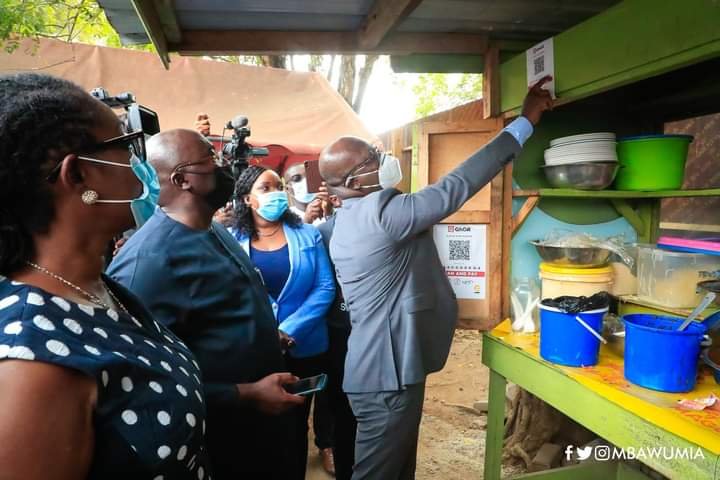
The vice President, Dr.Mahamoudu Bawumia has officially unveiled Ghana’s Quick Response (QR) as demonstrated by buying Waakye for Ghc60 from popular food vendor, Auntie Muni at Ridge.
The Veep who was accompanied by Minister of Communications,Ursula Owusu Ekuful paid for using the waakye using the QR Code.
Ghana’s QR code is a universal quick response payment system to aid bank and non bank customers.
The use of the universal QR code according to Dr.Bawumia, will improve Ghana’s cash-light system, adding that under it, merchants are expected to receive immediate payment from the buyer.
He urged all merchants in the informal and formal sectors to acquire and start using the all-new, all-inclusive Universal Quick Response Code (QR Code) system developed for Ghana, as part of efforts by the Akufo-Addo government, to migrate the economy from a cash-based one to a cash-lite one.
“We are here to formally outdoor the Ghana Quick Response Code system or the QR Code, as it is known for short. It’s a very very historic day because we are solving a major problem here in Ghana and it is historic because Ghana will be the first country in Africa, to launch a QR Code payment system; and not only are we the first in Africa, we are also, as far as I’m aware, the third country in the world to do a Universal Quick Response System after Singapore and India”, the Vice-President said.
According to him, even the QR Codes systems of Singapore and India “only cater for bank customers” but “Ghana’s QR Code system will cater for both bank and non-bank customers”, explaining: “That is those who use mobile money as well as have bank accounts”.
“So, you scan the QR Code and then you can confirm that this is the merchant and I’m paying this amount to the merchant, so, it’s very secure in that regard; it is very convenient”, he observed.
He noted that“We are solving a problem that has been with us practically since independence: we’re a cash-based economy and a cash-based economy is a very inefficient economy and we are cash-based because so many people are excluded from the financial system, so, we do a lot of financial transactions through cash, which means robberies can take place, as people carry cash around.”
According to him, in the era of COVID-19, technology comes in handy
“In this COVID environment, in fact, one of the ways you transmit the virus is by handling things like cash; e-commerce, too, doesn’t develop if you have a cash-based economy, so, we have been thinking, since we’ve been in office, of how to solve this problem: how do we move Ghana from this cash-based economy to an electronic payment-based economy?”



The Tema Regional Police Command has arrested a 32-year-old man for allegedly posing as a soldier and extorting money from unsuspecting members of the public at Ashaiman.
The suspect, identified as Bright Atsu Kudiabor, was arrested by the Ashaiman Police on Wednesday, September 16, 2026, at about 7:00 a.m.
According to the Police, he was arrested at an area known as “I Shall Return”, where he was allegedly parading himself as a soldier and demanding money from people.
The Police said Kudiabor, who is an ex-convict, was initially arrested by personnel of the Ghana National Fire Service in Ashaiman with assistance from other members of the public.
A search conducted on him after he was handed over to the Police reportedly led to the recovery of a set of military camouflage uniform.
The suspect is currently in Police custody and assisting with investigations.
The Tema Regional Police Command said he would be processed for court after investigations are completed.
The Police urged the public to remain vigilant and report anyone who falsely presents themselves as a soldier or a member of another security agency to deceive or extort money from the public.
By: Jacob Aggrey
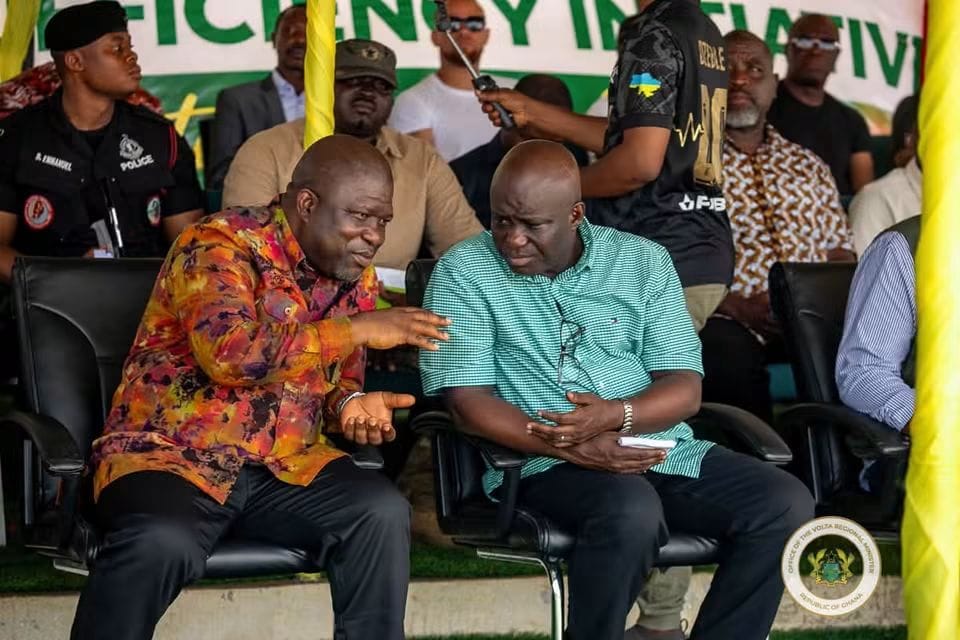
Volta Regional Minister, James Gunu, says the Volta Region holds enormous agricultural potential and efforts must be geared towards connecting farmers to the needed resources to unlock that potential.
He said focus must be on linking farmers to resources, technology, financing and markets to increase production, create jobs and build sustainable livelihoods.
Hon. Gunu made the remarks at the national launch of the Ghana Tomato Self-Sufficiency Initiative (GHATSI) held at Anloga in the Volta Region on Tuesday, September 15.
The initiative, under the theme “Produce at Home. Feed the Nation. Export the Surplus,” seeks to boost local tomato production, processing and marketing while reducing Ghana’s heavy reliance on imported tomatoes.
The launch was attended by the Minister for Food and Agriculture, Eric Opoku, his Deputy, John Setor Dumelo, Feed Ghana Coordinator, Bright Demordzi, Members of Parliament, traditional leaders, MMDCEs, farmers and other stakeholders.
Mr.Gunu expressed appreciation to the Minister for Food and Agriculture for the support announced for the region, including two excavators, 200 cartons of organic fertiliser, and GH¢200,000 for Ms. Kuatudzo Esther Dela, a tomato farmer and processor from Ziope.
He described the initiative as an important step towards making agriculture a stronger driver of food security, job creation and economic growth in the Volta Region.
By Edem Mensah-Tsotorme