News
Don’t use mosquito nets on trap doors

- /home/u249204778/domains/spectator.com.gh/public_html/wp-content/plugins/mvp-social-buttons/mvp-social-buttons.php on line 27
Warning: Trying to access array offset on false in /home/u249204778/domains/spectator.com.gh/public_html/wp-content/plugins/mvp-social-buttons/mvp-social-buttons.php on line 27
&description= Don’t use mosquito nets on trap doors', 'pinterestShare', 'width=750,height=350'); return false;" title="Pin This Post">
- Share
- Tweet /home/u249204778/domains/spectator.com.gh/public_html/wp-content/plugins/mvp-social-buttons/mvp-social-buttons.php on line 72
Warning: Trying to access array offset on false in /home/u249204778/domains/spectator.com.gh/public_html/wp-content/plugins/mvp-social-buttons/mvp-social-buttons.php on line 72
&description= Don’t use mosquito nets on trap doors', 'pinterestShare', 'width=750,height=350'); return false;" title="Pin This Post">
Madam Eunice Teah Dzagli, Health Promotion Officer at the Greater Accra Regional Health Directorate (GARHD), says the use of mosquito nets on trap doors and as window nets does not keep mosquitoes away.
She said, “If mosquito nets are exposed to the sun, it loses its efficacy within three days of installation.”
“In Ghana, some residents creatively use mosquito nets as screening material for doors and windows, hoping to prevent mosquito entry and reduce the risk of malaria.”
Speaking at a planning meeting on the mass distribution of Long-Lasting Insecticide Treated Mosquito Nets (LLIN) in Accra on Tuesday, she said mosquito nets could last for three years when used in room without any wash but were no longer effective after 20 washes.
Madam Dzagli emphasied that the proper use of LLINs in rooms was a critical component in the fight against malaria and urged the public to use their mosquito nets properly.
Madam Evelyn Tabi, Deputy Director, Nursing Services at the GARHD, also added that the Greater Accra Region would from April 9 to 13, begin a mass registration exercise to precede the distribution of LLIN to households in all 29 districts across the region from May 2 to 6.
She said the Greater Accra had been selected among other regions for Ghana’s malaria elimination programme and the GARHD was mandated to ensure that at least for three consecutive years, no malaria transmission would be recorded.
The World Health Organisation (WHO) says sleeping under a LLIN is one of the best ways to prevent malaria, as they form a physical and chemical barrier against mosquitoes.
According to the global body, when mosquitoes try to bite someone sleeping under a LLIN, they are not only blocked by the netting but also killed by the insecticide coating.
“Studies show that the use of LLINs reduced malaria incidence by 50 per cent in sub-Saharan Africa, a region which accounts for more than 90 per cent of global cases.”
According to WHO, LLINs are much more effective than untreated mosquito nets because they are produced with netting that contains a WHO-recommended insecticide.
The insecticide effect lasts longer, and the nets can be used for up to three years or 20 washes, the global body declares.
Dr Linda Baafi, Regional Malaria Focal Person, GARHD, stated that the mass net distribution campaign would distribute at least 90 per cent of the LLIN to households in Accra.
She said the registration would be done by Registered Assistants (RA) in person and online through a NetApp with a valid National Identification Card. –GNA

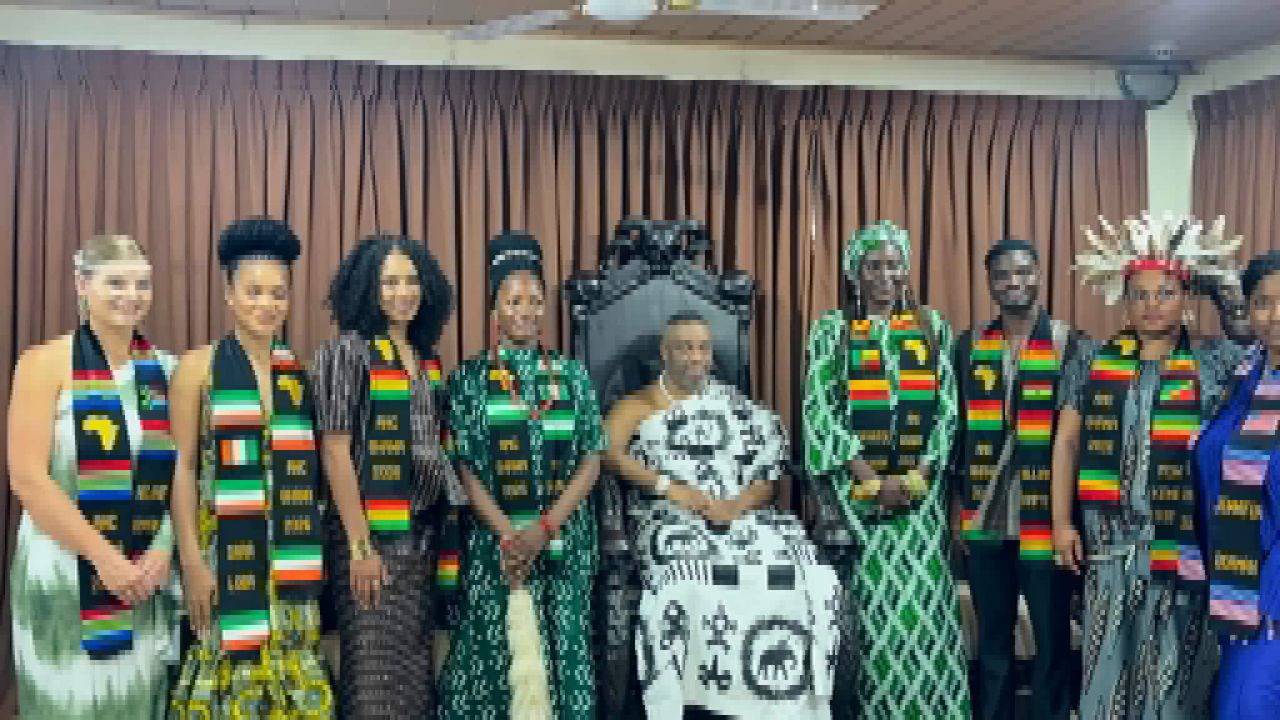
His Royal Majesty King Tackie Teiko Tsuru II, the Ga Mantse, has announced plans to confer new traditional titles on the 12 finalists of the Africa Monologue Challenge (AMC) Season Three before they leave Ghana.
The announcement was made when the finalists paid a courtesy call on the Ga Mantse at his residence as part of activities for the competition.
The visit gave the contestants an opportunity to experience and learn about the rich traditions, culture and heritage of the Ga people.
Addressing the contestants, King Tackie Teiko Tsuru II welcomed them to Ghana and wished them success in the competition.
He encouraged them to give their best and remain proud of their journey, regardless of who eventually emerges as the winner.
The Ga Mantse noted that participating in the competition and travelling to Ghana to connect with the continent’s culture and heritage was already a significant achievement.
He further expressed admiration for the contestants’ commitment to Africa and their role in promoting the continent’s stories through storytelling.
King Tackie Teiko Tsuru II indicated that he would engage the organisers of the Africa Monologue Challenge to set aside a special day to honour the contestants and confer the new titles on them before their departure.
The 12 finalists are representing Ghana, Nigeria, South Africa, Zambia, Kenya, Botswana, the Republic of Congo, Benin, Senegal, Côte d’Ivoire, Cameroon and the United States, which is representing the African Diaspora.
The finalists were selected from more than 2,000 entries for a month-long Pan-African House residency in Ghana.
Speaking during the visit, the President of the African Chamber of Content Producers and Chief Operating Officer of the Africa Monologue Challenge explained that the finalists were no longer viewed simply as individuals but as representatives of their respective countries.
He noted that at the Pan-African House, each contestant’s room symbolically represents a country.
Mawuko Kuadzi, Chief Executive Officer of MK Casting and the Africa Monologue Challenge, expressed optimism that the third edition would be more exciting than the previous two editions.
He noted that the competition had continued to grow since the first edition in Ghana and the second edition in Uganda.
Mr Kuadzi attributed the expected success of this year’s competition to the support of sponsors and partners.
He explained that the Africa Monologue Challenge was an important platform for projecting Africa in a positive light and telling the continent’s stories to the world.
“We believe this is a tool we are going to use to project Africa in a positive light,” he stated.
The Chairman of the AMC Season Three Planning Committee, Roger Quartey, also highlighted the importance of the competition in showcasing African talent to the world.
He noted that the challenge would provide a platform for the finalists to demonstrate their talents while promoting their respective countries and Africa as a whole.
The Africa Monologue Challenge Season Three brings together young storytellers from across Africa and the diaspora to promote the continent’s rich culture, history and stories.
The finalists are currently in Accra for the competition and other activities designed to expose them to Ghanaian and African culture and heritage.
By: Jacob Aggrey
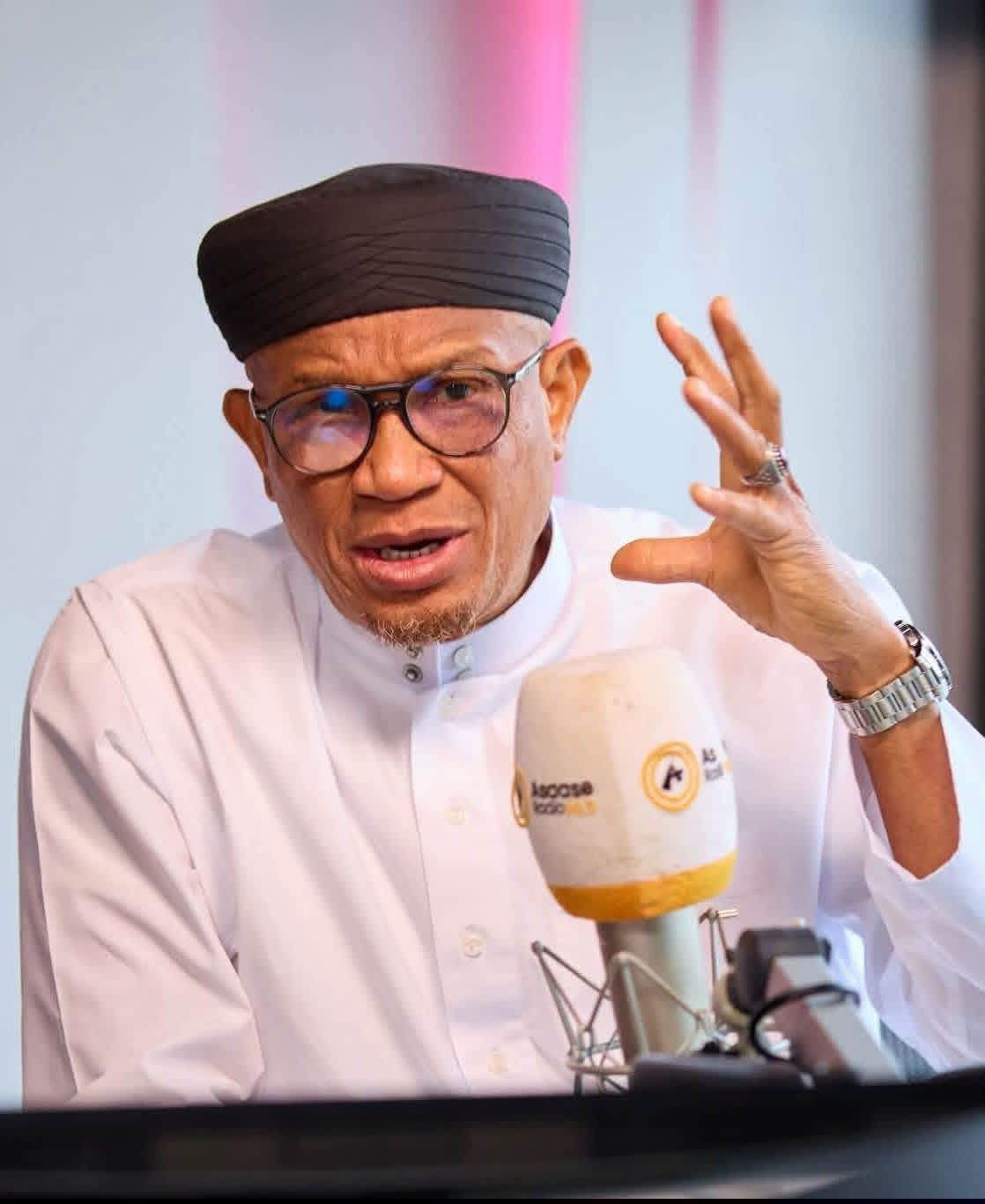
The High Court has dismissed an application by the accused persons in the ongoing National Petroleum Authority (NPA) and Unified Petroleum Pricing Fund (UPPF) corruption case seeking to have the charges against them struck out.
The ruling means the substantive trial will continue.
The case involves former Chief Executive Officer of the NPA, Mustapha Abdul-Hamid; former UPPF Coordinator, Jacob Kwamina Amuah; NPA staff member, Wendy Newman; Bright Bediako-Mensah; Kwaku Aboagye Acquaah; and three companies, Propnest Limited, Kel Logistics Limited and Kings Energy Limited.
The accused persons had asked the Court to strike out the charges brought against them.
However, the High Court dismissed the application, describing it as without merit.
The Republic has filed 54 charges against the accused persons, including corruption and corruption-related offences, extortion, money laundering and conspiracy to commit a crime.
According to the Republic, approximately GH¢291.57 million and US$332,407 was allegedly unlawfully obtained through a scheme involving officials of the NPA between 2022 and December 2024.
The prosecution further alleges that portions of the funds were channelled through companies linked to some of the accused persons.
It maintains that some of the money was subsequently used in transactions involving land, buildings, trucks and fuel stations.
With the Court dismissing the application to strike out the charges, the accused persons will now proceed with the substantive trial.
By: Jacob Aggrey