News
Don’t kill vultures…they’re natural environment cleaners

- /home/u249204778/domains/spectator.com.gh/public_html/wp-content/plugins/mvp-social-buttons/mvp-social-buttons.php on line 27
Warning: Trying to access array offset on false in /home/u249204778/domains/spectator.com.gh/public_html/wp-content/plugins/mvp-social-buttons/mvp-social-buttons.php on line 27
&description=Don’t kill vultures…they’re natural environment cleaners', 'pinterestShare', 'width=750,height=350'); return false;" title="Pin This Post">
- Share
- Tweet /home/u249204778/domains/spectator.com.gh/public_html/wp-content/plugins/mvp-social-buttons/mvp-social-buttons.php on line 72
Warning: Trying to access array offset on false in /home/u249204778/domains/spectator.com.gh/public_html/wp-content/plugins/mvp-social-buttons/mvp-social-buttons.php on line 72
&description=Don’t kill vultures…they’re natural environment cleaners', 'pinterestShare', 'width=750,height=350'); return false;" title="Pin This Post">
Vultures are very useful birds and should not be killed because they are “natural environment cleaners” and killing them poses a threat to wildlife conservation.
“Vultures are neither evil creatures nor a source of bad luck. Some wild animals were “worshipped” by our ancestors with the ultimate aim of preserving their lives not because they were demonic.”
Mr Thomas Gyimah, Acting Manager, Biodiversity Research and Conservation of the Ghana Wildlife Society, said these in an exclusive interview with this reporter ahead of International Vulture Awareness Day which falls on September 5, 2021.
He said that in spite of their environmental benefits, the population of vultures continued to dwindle due to constant attacks on their habitats thus forcing them to move into human settlements to find food to survive.
“The threats against these birds are increasing and if nothing is done we can lose them all. There is the need to raise awareness to help protect and stop the decline in Vultures’ population”, he emphasised.
Mr Gyimah, making reference to Research Work, said that about 2,900 vultures were killed daily in South and East Africa due to poisoning but was quick to add that this scenario was not so serious in Ghana.
He again said that persons who considered vultures a delicacy also contributed to the gradual extinction of the wild birds and advised such people to find better alternatives and leave the vultures in peace.
He said that it was wrong for people to associate some birds and other wild animals with evil spirits or bad omen when they were encounted and urged society to stop treating such animals and birds with disdain.
Vultures are carnivorous and eat both fresh meat and carcasses that might be rotten.
They play a unique and essential ecological role in their contribution to the prevention of the spread of diseases from decaying corpses.
“If you poison a rat, do well to bury it, so that vultures and other scavengers do not feed on them and more importantly, it is essential to get a professional when using rodents and pest control chemicals at homes, farms and other places” he added.
By Portia Hutton-Mills


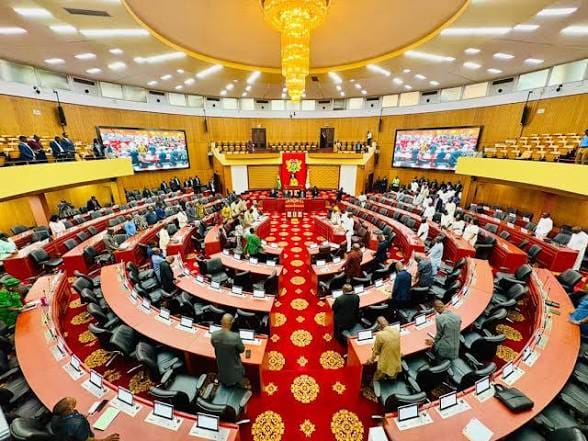
Parliament has clarified public commentary on social media regarding a notice on its notice board that read “No Vacancy for National Service Personnel 2026/2027. Kindly go for reposting.”
In a statement, signed by the Director of Media Relations, David Sebastian Damoah, Parliament said the notice has been misconstrued and was not a policy statement, a freeze on national service placements, or a change in its support for the National Service Scheme.
According to Parliament, the notice was a routine administrative message to prospective personnel who reported to the House, informing them that it has received more personnel than it can accommodate for the 2026/2027 service year and that they should seek reposting to other institutions.
It said it remains committed to the National Service Scheme and values the contribution of service personnel to its work, and regrets any confusion or inconvenience the wording may have caused.
By Edem Mensah-Tsotorme
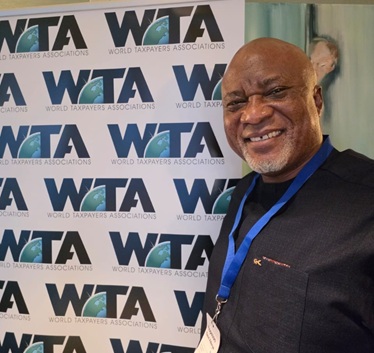
Ghanaian public advocate Hopeson Yaovi Adorye has been elected to the Board of Directors of the World Taxpayers Association (WTA).
The election took place on Sunday, October 5, 2026, during the Association’s conference in Kraków, Poland.
His election marks a significant addition to his international leadership portfolio and provides a platform for Ghanaian and African perspectives to contribute to global discussions on taxpayer rights, responsible taxation, transparency and prudent management of public resources.
Reacting to his election, Mr. Adorye expressed appreciation to the leadership and members of the WTA for the confidence reposed in him.
“I am deeply honoured by this confidence and conscious of the responsibility that comes with it. Taxpayers are at the heart of every economy, and they deserve fairness, transparency, accountability and value for the taxes they pay. I look forward to working with colleagues from across the world to strengthen the voice of taxpayers and promote responsible fiscal governance,” he said.
According to him, taxation should not be viewed solely as a mechanism for raising government revenue, but also as an important component of the social contract between citizens and the state.
Mr. Adorye said governments have a responsibility to ensure taxes are collected fairly and public resources are utilised efficiently to deliver quality infrastructure, healthcare, education, security and other essential services.
His election also creates an opportunity to bring African experiences into international conversations on taxation and public expenditure.
Mr. Adorye, who is Executive Director of Taxpayers League Ghana, has previously served as Global Board Chairman of the International Youth Network for UN Security Council Resolution 2250, an NGO associated with the United Nations Economic and Social Council (ECOSOC).
He is expected to use his new role to champion fiscal accountability, taxpayer education, good governance and stronger citizen participation in public financial management.