Hot!
Don’t compromise standards in nation-building – Prof Dodoo


- /home/u249204778/domains/spectator.com.gh/public_html/wp-content/plugins/mvp-social-buttons/mvp-social-buttons.php on line 27
https://spectator.com.gh/wp-content/uploads/2021/11/Prof.-Dodoo-speaking-at-the-forum.jpg&description=Don’t compromise standards in nation-building – Prof Dodoo', 'pinterestShare', 'width=750,height=350'); return false;" title="Pin This Post">
- Share
- Tweet /home/u249204778/domains/spectator.com.gh/public_html/wp-content/plugins/mvp-social-buttons/mvp-social-buttons.php on line 72
https://spectator.com.gh/wp-content/uploads/2021/11/Prof.-Dodoo-speaking-at-the-forum.jpg&description=Don’t compromise standards in nation-building – Prof Dodoo', 'pinterestShare', 'width=750,height=350'); return false;" title="Pin This Post">
The Director-General of Ghana Standards Authority (GSA), Prof. Alexander Dodoo, has said that honesty, truth and standards are the ingredients Ghana needs to build a just, solid society and industry not half truths and double- standards.
“Standards are key in every life but deception and lies don’t help our conditions.

“We need standards and not double- standards as individuals and institutions. We need consistency and reliability. Investment must yield benefits. Leadership is by example; job creation is not about talking.” Prof. Dodoo stressed.
He made these remarks on Wednesday when he chaired a ceremony in Takoradi at the signing of a Memorandum of Understanding (MOU) between Design Technology Institute (DTI) and Takoradi Technical University (TTU) to champion precision quality, standards and excellence in Ghana’s academia and industry.
The MOU aimed also at equipping young people with precision fabrication skills to boost the competency based learning in technical universities and improve Technical and Vocational Education and Training (TVET) in Ghana.
Prof. Dodoo again said that enforcement must not be seen in law and order but also in standards stressing “we need to start the transformation now about quality and precision.”
He noted that, God believed in standards and specifications as captured in Gen 1: 28, and, therefore, it was about time Ghanaians began to do the right things for right results in trade and commerce.
The precision advocate added that, providing precision quality skills for students was a sure way to help them enter the job market, saying “I feel ashamed that the right measurements are not being used by industry captains, because everybody is cheating.”
Prof Dodoo wondered why dishonest behaviour seemed to be winning over rights in society, although christians and Muslim had faith and beliefs which could promote standards and for leadership to set good examples.
Quality assurance, he explained, should be applied by industry to promote honesty, excellence and accountability.
“Why do we use ‘olonka’ in this country when weighing scales should be the order of the day? The filling stations are no different. The conversation on standards must be on rules and regulations. Consumers must also hold the powers that be accountable to get results,” Prof. Dodoo stressed.
The Western Regional Minister,Mr Kwabena Okyere Darko-Mensah, advocated a change of the mindset to transform academia, technology, innovations, industry, work ethics and attitude towards development.
The Chief Executive Officer of DTI, Ms Constance Elizabeth Swaniker, reiterated that precison quality was the wheel for the transformation of mindset, saying that “TTU is sitting on gold mine and ought to take a step back and reflect on the new journey for excellence.”
From Clement Adzei Boye, Takoradi



The Tema Regional Police Command has arrested a 32-year-old man for allegedly posing as a soldier and extorting money from unsuspecting members of the public at Ashaiman.
The suspect, identified as Bright Atsu Kudiabor, was arrested by the Ashaiman Police on Wednesday, September 16, 2026, at about 7:00 a.m.
According to the Police, he was arrested at an area known as “I Shall Return”, where he was allegedly parading himself as a soldier and demanding money from people.
The Police said Kudiabor, who is an ex-convict, was initially arrested by personnel of the Ghana National Fire Service in Ashaiman with assistance from other members of the public.
A search conducted on him after he was handed over to the Police reportedly led to the recovery of a set of military camouflage uniform.
The suspect is currently in Police custody and assisting with investigations.
The Tema Regional Police Command said he would be processed for court after investigations are completed.
The Police urged the public to remain vigilant and report anyone who falsely presents themselves as a soldier or a member of another security agency to deceive or extort money from the public.
By: Jacob Aggrey
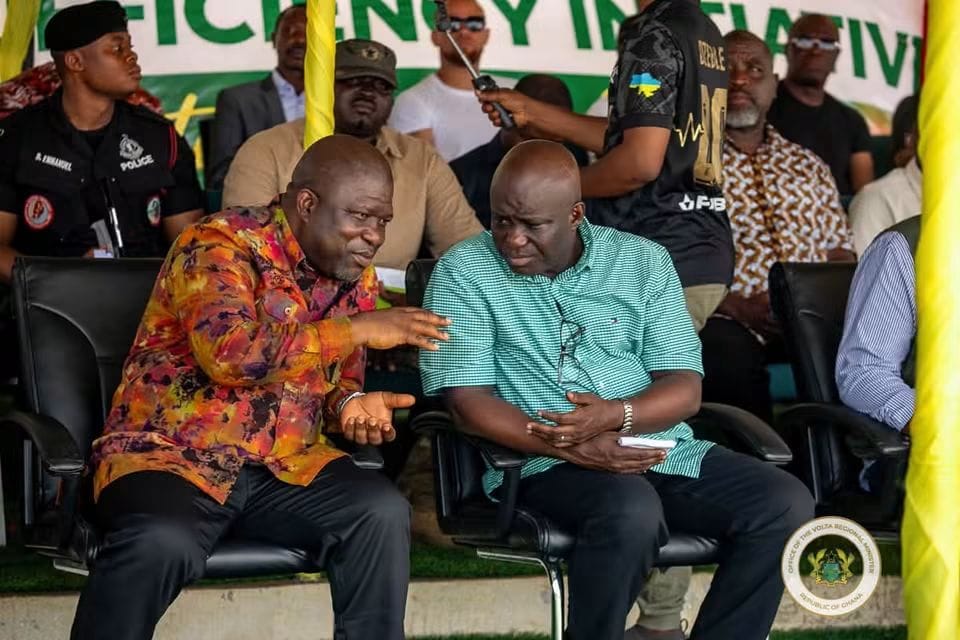
Volta Regional Minister, James Gunu, says the Volta Region holds enormous agricultural potential and efforts must be geared towards connecting farmers to the needed resources to unlock that potential.
He said focus must be on linking farmers to resources, technology, financing and markets to increase production, create jobs and build sustainable livelihoods.
Hon. Gunu made the remarks at the national launch of the Ghana Tomato Self-Sufficiency Initiative (GHATSI) held at Anloga in the Volta Region on Tuesday, September 15.
The initiative, under the theme “Produce at Home. Feed the Nation. Export the Surplus,” seeks to boost local tomato production, processing and marketing while reducing Ghana’s heavy reliance on imported tomatoes.
The launch was attended by the Minister for Food and Agriculture, Eric Opoku, his Deputy, John Setor Dumelo, Feed Ghana Coordinator, Bright Demordzi, Members of Parliament, traditional leaders, MMDCEs, farmers and other stakeholders.
Mr.Gunu expressed appreciation to the Minister for Food and Agriculture for the support announced for the region, including two excavators, 200 cartons of organic fertiliser, and GH¢200,000 for Ms. Kuatudzo Esther Dela, a tomato farmer and processor from Ziope.
He described the initiative as an important step towards making agriculture a stronger driver of food security, job creation and economic growth in the Volta Region.
By Edem Mensah-Tsotorme

 Entertainment1 week ago
Rhythms On Da Runway returns November 28 with 16th edition themed ‘Unbound’
- News1 week ago
48 Engineer Regiment to be major sub-contractor on Accra-Kumasi Expressway, $2bn ready- Prez Mahama
- Entertainment1 week ago
Ohemaa Mercy’s Tehillah Experience outfit was priestly regalia, not costume – Management clarifies