Profile
Donald Gwira: Martial arts legend, corporate communications giant


- /home/u249204778/domains/spectator.com.gh/public_html/wp-content/plugins/mvp-social-buttons/mvp-social-buttons.php on line 27
https://spectator.com.gh/wp-content/uploads/2021/12/Mr.Gwira-was-named-was-named-one-of-the-‘Most-Impactful-CSR-Leader-in-2017.jpg&description=Donald Gwira: Martial arts legend, corporate communications giant', 'pinterestShare', 'width=750,height=350'); return false;" title="Pin This Post">
- Share
- Tweet /home/u249204778/domains/spectator.com.gh/public_html/wp-content/plugins/mvp-social-buttons/mvp-social-buttons.php on line 72
https://spectator.com.gh/wp-content/uploads/2021/12/Mr.Gwira-was-named-was-named-one-of-the-‘Most-Impactful-CSR-Leader-in-2017.jpg&description=Donald Gwira: Martial arts legend, corporate communications giant', 'pinterestShare', 'width=750,height=350'); return false;" title="Pin This Post">
Mr. Donald Gwira might not need much introduction in corporate circles. He is an astute professional with solid background in Corporate Communication, Development, Advocacy and Project Management.
But this is not all that he is made of. He is a force to reckon with and cannot be underestimated in the art of self-defence as he holds fifth degree black belt in African Goju.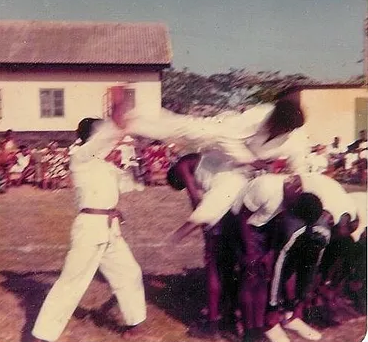
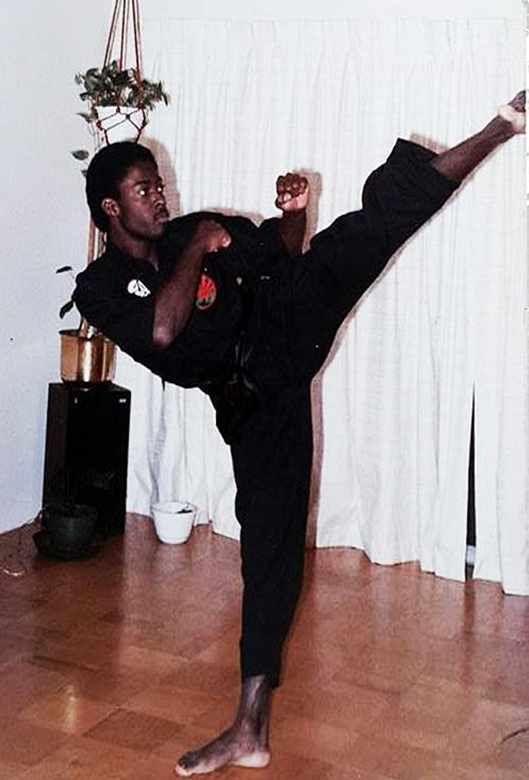

The Spectator recently interacted with the legend who has earned the title “Great Warrior” for his exceptional tactics and contribution to the sport in Ghana and abroad.
Exposure
Highlighting his progression through various forms of martial art, Mr. Gwira acknowledged the influence of his three siblings who were all well-versed in the sport.
According to him, the interest grew at age 12 following his exposure to Kunfu movies and had to study under his elder brother, Danny Gwira, in the early 70s at Adisadel College.
“When my brother left, I took over and started teaching [martial arts] in form two at Adisadel College. We organised martial art competitions, did a lot of demonstrations and started spreading martial arts in schools in Cape Coast,” he recalled.
After secondary school, he continued his education at American College in France (now American University of Paris) where he started a martial art institute before proceeding to Howard University in the United States of America (USA) for his Master’s Degree.
At Howard University, he again formed clubs and continued teaching and sharpening his skills until he returned to Ghana.
“I started with Taekwondo, moved on to Shotokan (Japanese form of martial art), and then to Chinese Goju and later migrated to African Goju, which was started by my brother,” he noted.
In 1979, young Donald obtained his first degree black belt and kept training until he secured his fifth degree black belt in 1995. He stopped teaching martial art in 1998 but continued to maintain regular exercise and fitness regime at home to enhance his health and physique.
“The more I trained, the better I became. At my age, I still keep fit; I do a lot of walks every day and I sometimes do sit ups and push ups at home or at the gym to stay active,” he said.
Achievement
The flying kick specialist set an unbeaten record in 1979 after jumping over 12 people to break a two-inch-thick tile at the Burma Camp when the Martial Art Institute did a demonstration for the Ghana Army.
That same year, he was crowned ‘Martial Artist of the Year’ and went ahead to be adjudged the ‘Best Kata’ and ‘Best Breaking’ in 1980 and 1981 respectively. ‘Kata’, he explained, “are a series of leg and hand movements that help one defend him or herself from more than one attacker.”
In 2010, he was named Life Patron and inducted into the Hall of Fame of the Martial Arts Institute for his ‘’outstanding and appreciable’’ contribution to African Goju in France, the USA and Ghana.
He and his three brothers, on separate occasions, were responsible for training the personal body guards of former Head of State, General Kutu Acheampong.
With over 40 years experience in the art, Mr. Gwira continues to attend karate and martial arts tournaments organised locally and looks forward to training more young people to accomplish more than he has achieved.
Corporate Experience
The fighter holds a Bachelor’s Degree in International Affairs from American University in Paris, and a Master’s in Political Science from Howard University, USA.
Currently an Independent Communications Consultant, he worked at Airtel Ghana, Guinness Ghana Breweries, International Agency for the Prevention of Blindness (IABP), among other organisations and served also on boards of some public institutions, including New Times Corporation, publishers of Ghanaian Times and The Spectator.
In 2017, he was named one of the ‘Most Impactful Corporate Social Responsibility (CSR) Leader’ while at Afriwave Telecom as Corporate Affairs Director.
He said the philosophies of martial art which became useful in aspects of his career, could be applied to personal and business endeavours, stressing that discipline, timeliness and preparation should guide young people in the corporate world.
“In martial art, you have to get your timing right; if you miss a split second, you get hit. When you transfer this into real life, it helps you to be more productive,” he said.
The powerhouse of martial arts, therefore, advocates that Martial Arts should be taught in basic schools while efforts be made to develop other forms of sport, apart from football.
Other Engagements
Mr. Gwira, from Elmina in the Central Region, is married to Mrs. Frances Gwira with four children. He is a member of the Agape Church at East Legon, Accra.
All his children, he said, had taken up one form of sport or the other with the youngest, a promising swimmer, aiming to win Gold for the Black Dolphins at future Olympics.
Admitting the rewards of martial art, he noted that those willing to take up the art should be ready to train everyday adding that progress depended on how fast one was able to learn the techniques.
Asked how long one must study martial art, he said: “There is no stopping; the only ingredient is to keep practising everyday.”
All things being equal, the 61-year-old would want to attain a Ninth Degree Black Belt in Martial Art.
By Ernest Nutsugah


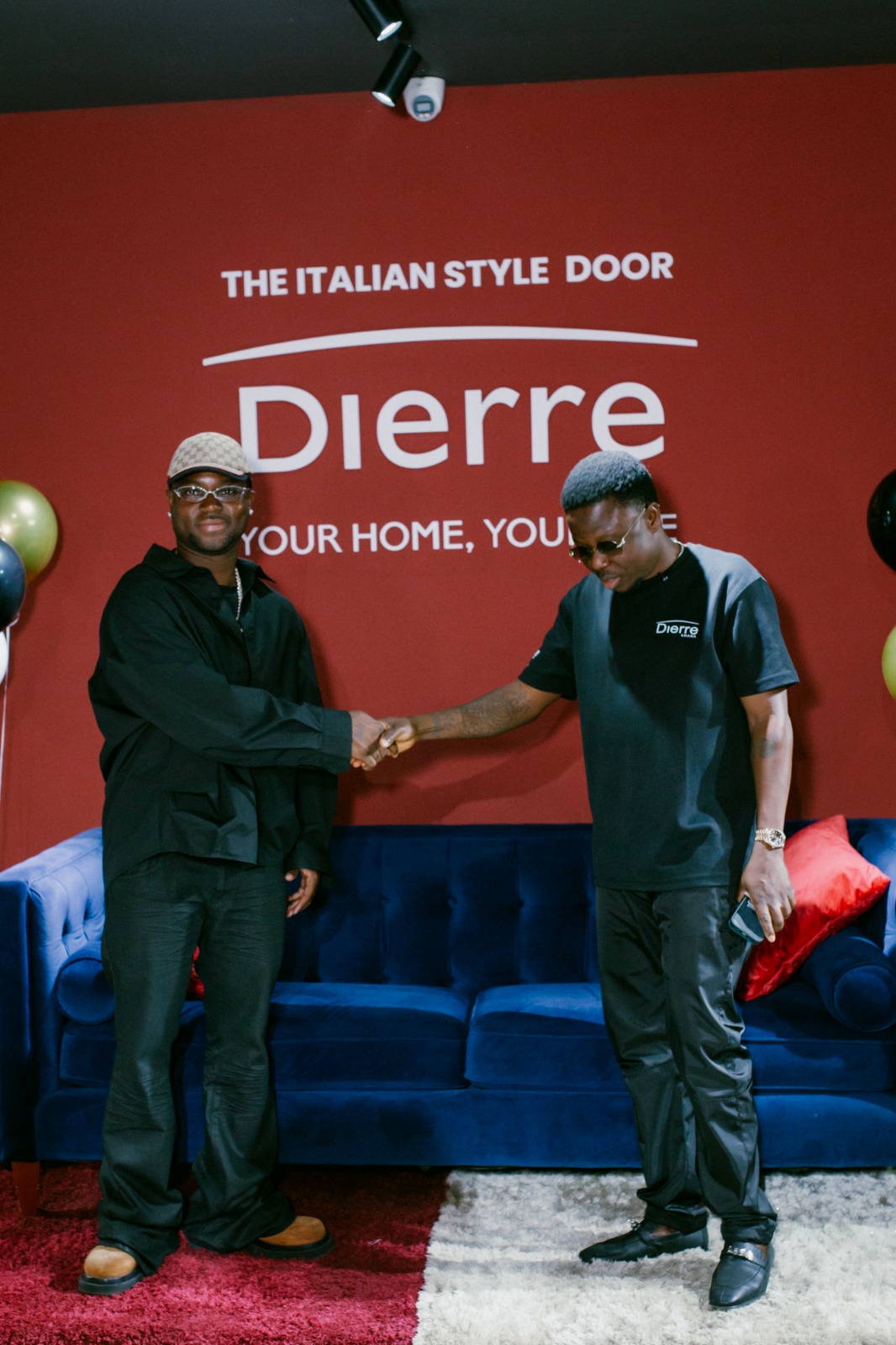
Italian premium security door manufacturer Dierre S.p.A. has named award-winning Ghanaian Afrobeats and Highlife artiste King Promise (Gregory Bortey Newman) as the face of its new Ghana and West Africa marketing campaign.
The partnership, managed by Regiments Management Company Limited, forms part of Dierre’s efforts to strengthen its presence in the West African market.
The two-week campaign, themed “Secure What Matters,” will run across digital, outdoor and influencer platforms, with King Promise featuring in a campaign film showcasing Dierre’s Prestige and Synergy security door ranges.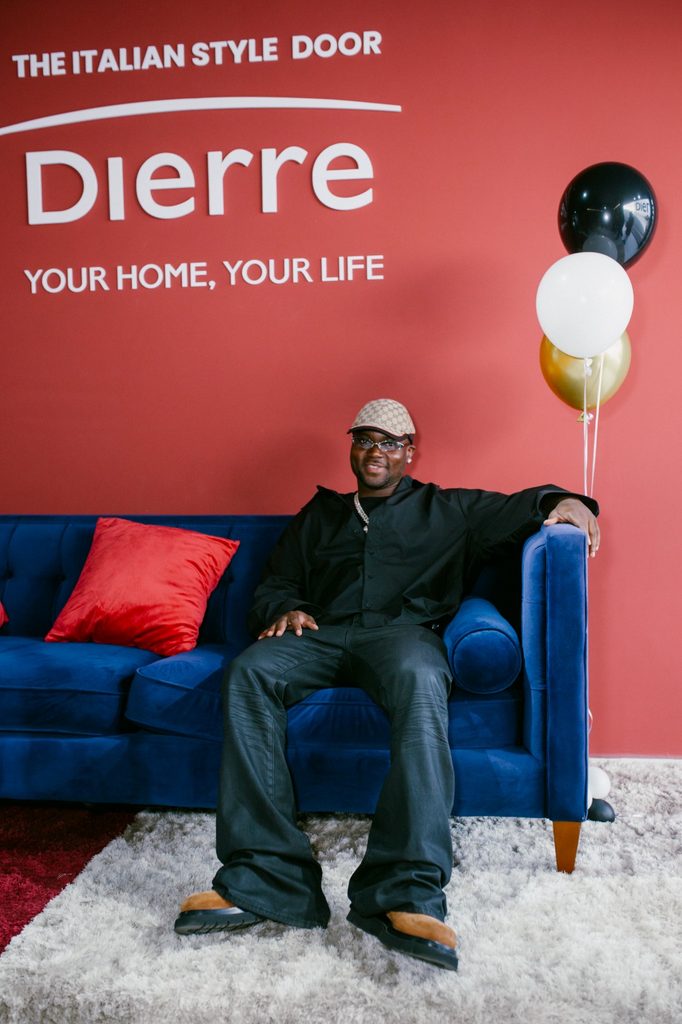
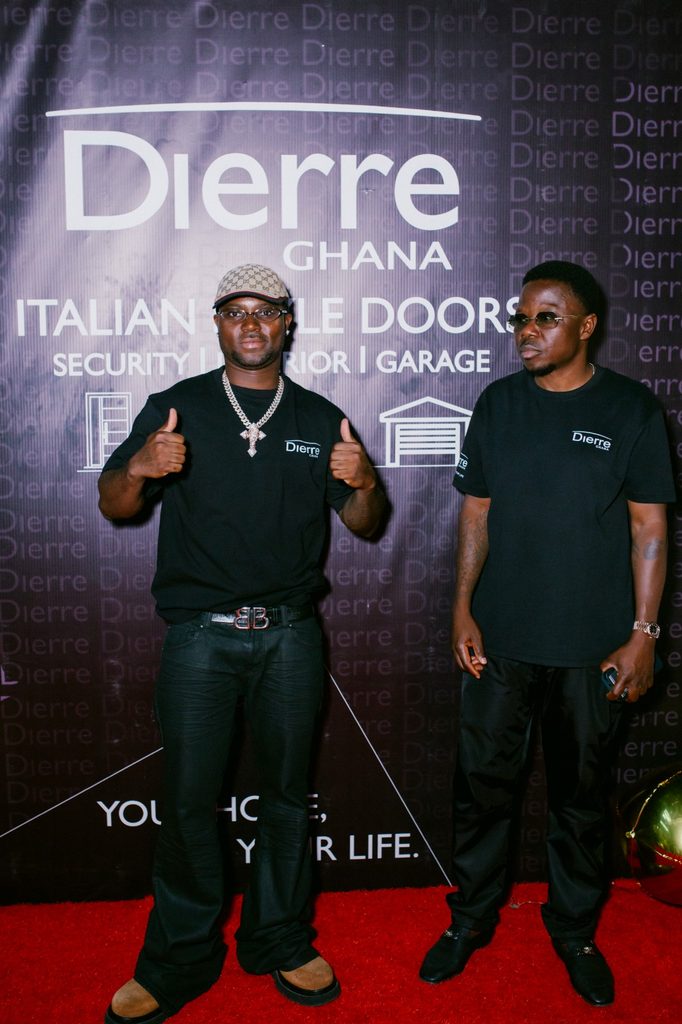
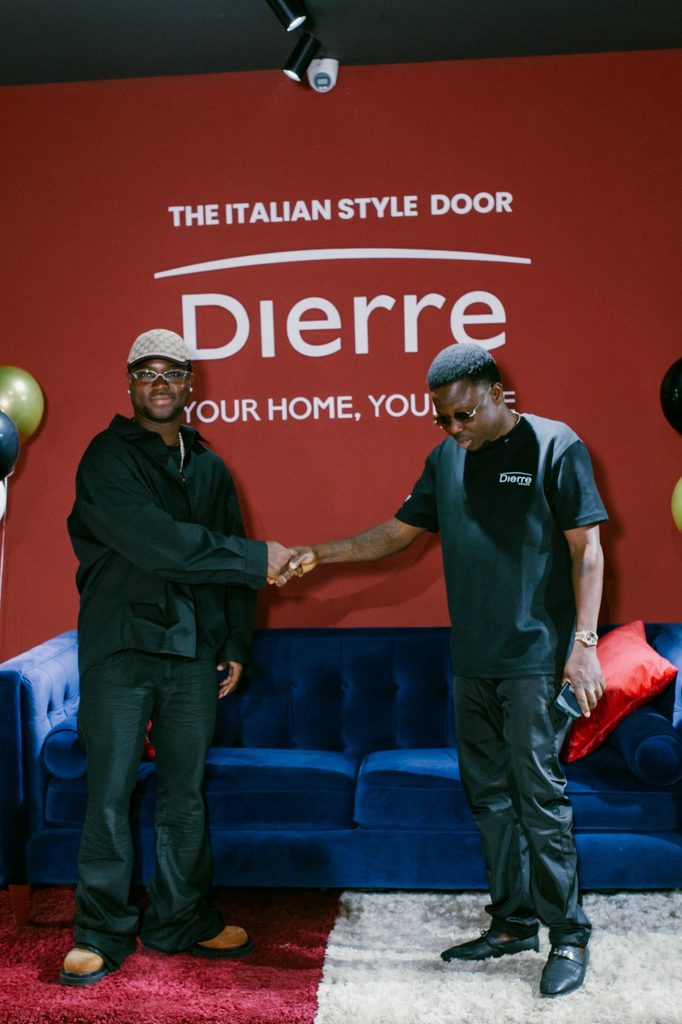
“Home is everything. It is where you protect the people and things that matter most. Dierre builds doors that reflect exactly that security, quality and style without compromise. I am proud to represent a brand that stands for those values,” King Promise said.
Founded in Italy, Dierre is a global manufacturer of armoured security doors, interior doors and fire-protection systems. Its products carry international anti-burglary certifications across Classes 3, 4 and 5, with the company producing hundreds of thousands of doors, locks and safes annually.
King Promise is one of Ghana’s leading Afrobeats and Highlife artistes, known for his distinctive sound, international collaborations and growing global audience.
The partnership combines Dierre’s security and design expertise with King Promise’s influence in contemporary African music and culture, as the brand expands its consumer engagement in Ghana and across West Africa.
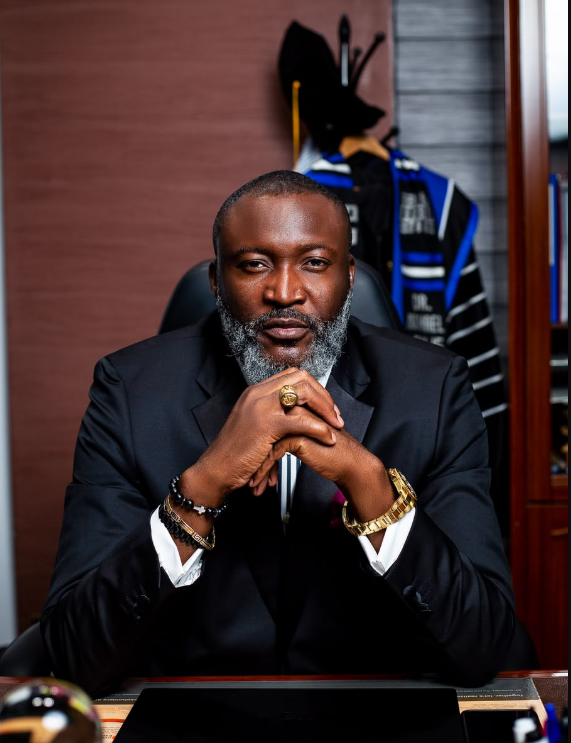
From humble beginnings to building an enterprise with global ambitions, Michael L. Bartlett-Vanderpuye’s journey is a story of discipline, independence, resilience and the belief that businesses should be built to outlive their founders.
Long before he became the Group Chairman of M&C Group, Michael L. Bartlett-Vanderpuye was building from modest beginnings.
His entrepreneurial journey did not start in a sophisticated corporate office or with a large team behind him.
At one stage, he was working from his room with limited resources, focused on turning an idea into a viable business.
That beginning became an important part of his philosophy: build the business first, then let the infrastructure grow with it.
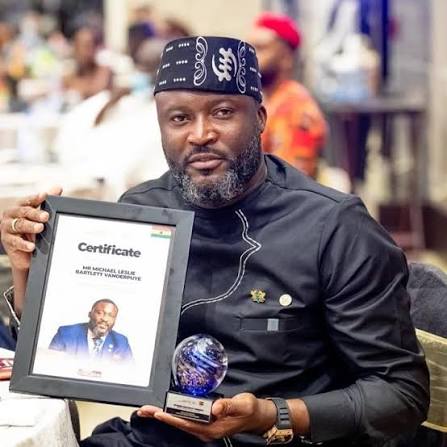
Michael’s early experiences shaped his determination to become an entrepreneur. After university and periods of professional employment, including banking, accounting, marketing, packaging and logistics, he developed a deeper understanding of how businesses operate and how different industries connect.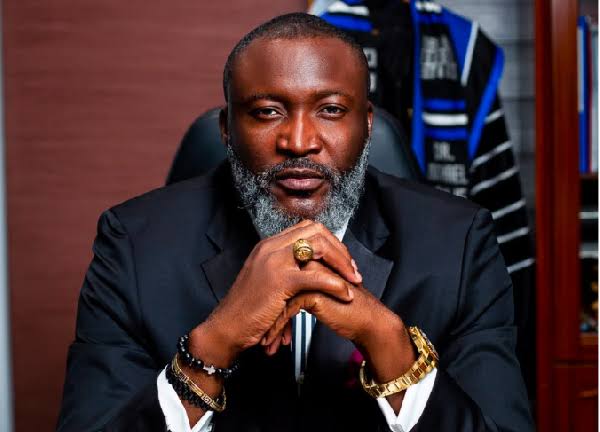
His exposure to mining advisory work, property and other commercial opportunities broadened his perspective and helped him identify opportunities beyond a single sector.
But the journey was far from easy.
He recalls the uncertainty of sending proposal after proposal without knowing which one would eventually open a door.
Even after establishing an office in East Legon, some people assumed he was working for someone else because they could not imagine that the business belonged to him.
The confidence and corporate presence associated with success today were built through years of uncertainty, rejection, experimentation and persistence.
His evolution from working out of a room to leading M&C Group reflects a broader philosophy that has guided his business life: do not build an image before you build the substance.
For Michael, entrepreneurship is not simply about owning a company. It is about learning how to turn knowledge, relationships, opportunities and resources into sustainable value.
He believes professionals in every field can develop an entrepreneurial mindset by creating assets, building networks, investing in opportunities and developing additional sources of value alongside their careers.
That philosophy has influenced the way he approaches business expansion. Rather than viewing companies as isolated entities, Michael sees opportunities to create connections between industries, people and services.
Strategic partnerships, in his view, can create greater value than treating every other business as a competitor.
His approach has also been shaped by research and international exposure. He argues that entrepreneurs must understand the markets they enter rather than simply copy businesses they see succeeding elsewhere.
Behind every successful enterprise, he believes, are structures, regulations, relationships, research and decisions that may not be immediately visible from the outside.
As his business interests have grown, so has his ambition. M&C Group represents a significant chapter in that evolution, reflecting his drive to build an enterprise that extends beyond a single venture.
His vision is rooted not merely in personal wealth, but in creating businesses capable of generating employment, developing people, building partnerships and contributing to the wider economy.
Michael is particularly concerned about the role of the private sector in addressing unemployment and creating sustainable opportunities. For him, a successful business should ultimately do more than enrich its owner. It should employ people, develop skills, support suppliers and create opportunities that extend beyond the founder.
That long-term perspective is central to his understanding of success.
He is cautious about equating visibility with achievement. In an age where social media can make a business appear larger than it is, Michael believes the real measure of an enterprise lies in its systems, customers, assets, operations and results. The brand should be supported by substance.
His personal journey has therefore become a lesson in patience and discipline. The man who once had to convince people that the business was actually his now speaks about building systems, protecting capital, understanding markets and thinking beyond the immediate reward.
And his ambitions do not stop with the present generation.
Michael describes legacy as something that should extend beyond his children to future generations. His objective is to build something sustainable-something that can continue creating value after he is no longer at the centre of it.
From a modest room and limited resources to the boardroom and the development of a growing business group, Michael L. Bartlett-Vanderpuye’s story is ultimately about building before displaying, learning before expanding and creating something designed to last.
His journey is a reminder that global ambition does not necessarily begin with global resources. Sometimes, it begins with little more than an idea, discipline, persistence and the willingness to start where you are. – MyStoryMagazine