Sports
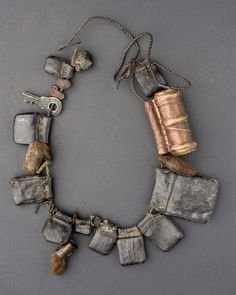
Do we still believe juju wins the game?

- /home/u249204778/domains/spectator.com.gh/public_html/wp-content/plugins/mvp-social-buttons/mvp-social-buttons.php on line 27
https://spectator.com.gh/wp-content/uploads/2021/05/Juju.jpg&description=Do we still believe juju wins the game?', 'pinterestShare', 'width=750,height=350'); return false;" title="Pin This Post">
- Share
- Tweet /home/u249204778/domains/spectator.com.gh/public_html/wp-content/plugins/mvp-social-buttons/mvp-social-buttons.php on line 72
https://spectator.com.gh/wp-content/uploads/2021/05/Juju.jpg&description=Do we still believe juju wins the game?', 'pinterestShare', 'width=750,height=350'); return false;" title="Pin This Post">
Years back – especially in the 1980s and 1990s, Ghanaian club officials and players alike, had no iota of shame talking about their involvement in juju.
They believed that juju has what it takes to win games; their belief more enlarged when a ‘magical’ goal zooms out of the blue – perhaps, by way of deflection or through a horrendous blunder in the area.
So, what is juju?
According to Ibo Cbanga, a contributor to SAGE Publications’s Encyclopedia of African Religion, juju is an object that has been deliberately infused with magical power or the magical power itself.
He says the word juju is believed to be derived from the French joujou (plaything), though some sources claim it is from the Hausa language, meaning “fetish” or “evil spirit.”
“Amulets, charms, and mascots are all common forms of juju. Usually worn for protective purposes, those objects have been infused with a particular type of energy, and wearing them is expected to create paths and possibilities for the wearer, as well as guard them against ill fortunes and evil spirits,” he added.
Though the practice is still furtively prevalent, some decent number of Ghanaian football fans now see hard-work, adequate preparation, athlete development, logistical support, et al, as some of the indispensable ingredients that can guarantee success.
Indeed, club officials particularly, the player and to some extent – supporters, assert that it takes more than ‘black magic’ to win games.
It, therefore, came as huge stunner when supporters of Berekum Chelsea sadistically attacked head coach of Ebusua Dwarfs, Ernest Thompson Quartey, during a Premier League game at Berekum Golden City Park, a fortnight ago – on suspicion of carrying juju on him into the game. After all the savage beatings, nothing was found on the clean-handed man.
That is the extent to which some of the fans dread and revere juju – instead of looking for ways to motivate their players; and instead of thinking about providing the intrinsic and extrinsic motivation to their players to deliver the goods.
When at all are our people going to rid their minds of this juju farce? It is sickening and becoming too much of an embarrassment.
On Wednesday February 19, 2019, something strange happened at the Nana Agyemang Badu Park during a premier league clash between home team Aduana Stars and Asante Kotoko.
It goes without saying that the two teams stunningly started the game with 10 men for the entire opening half whilst their 11th players sat out at the touchline bewildered. Aduana’s Farouk Adams and Kotoko’s Martin Antwi were supposed to be the 11th players for their teams.
Yes, the two clubs did not break any of the rules of the game. Indeed, a club is permitted to start with as low as seven players.
But it is quite bizarre and grotesque to imagine that professional clubs – for whatever reasons, will want to start a Premier League game with a man short of the normal list – when they had all their substitutes hanging out at the dungeon.
Desperate for victory, we are told the two clubs had separately consulted some oracles (juju) that had predicted victory if only they started the game with 10 men. Interesting, not so?
It is shameful, primitive, and totally senseless!
True, we have got to a stage where such superstitions ought to be hurled all-too quickly out in place of professionalism.
What lessons are the two clubs imparting ontheir players by engaging in this metaphysical theatrics? That juju or superstition is the way to go instead of working their fingers to the bone?
King of Vodoo in neighbouring Togo, Anthony Kodjo Djifan, once told this writer that vodoo and juju share similar traits, believing juju plays football; but then it would take the effort of the team or player to put the ball into the net.
“I can confirm that teams from within Togo as well as neighbouring countries and regions come to seek help from me. However, I always advise them that hardwork on the field is the adrenaline to make the juju work,” he said.
Having said that it is incumbent on the Ghana Football Association (GFA) to investigate into the Berekum incident where Coach Thompson Quarteywas brutalised, and bring the perpetrators to book. Heartily, the GFA had its cameras at the Golden City Park and may have captured the sordid incident.
We must make sure incidents of this nature do not go unpunished; otherwise, we would only be endorsing its brutality and savagery in the long run, and this does not auger well for the development of our football.
PlainTalk with JOHN VIGAH


Two games with six maximum points in the Ghana Premier League should come as a surprise for fans that joined Accra Hearts of Oak in the last decade.
Within that period, the Phobians have endured the pain of starting their season on a slippery path, either losing or drawing their opening or second games.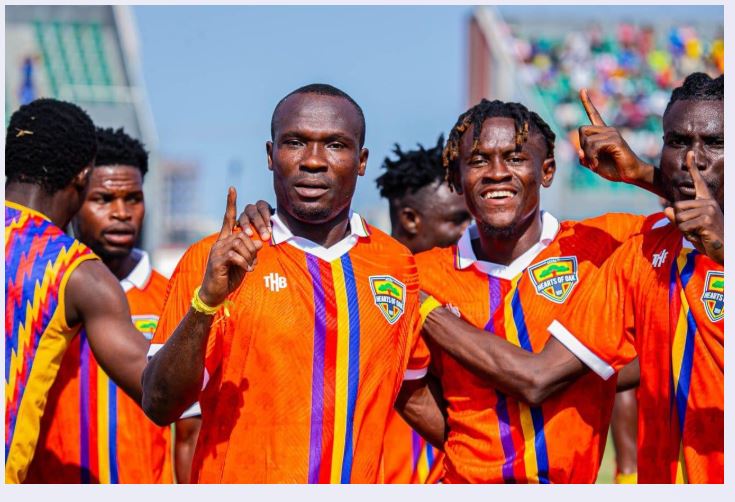
There were cases too where they suffered defeats as in the case of Basake Holy Stars who won their maiden Premier League game over Hearts in Accra.
Perhaps, it was the reason why the opening day win of the 2026/27 season was massively celebrated and considered historic because it came as a first opening victory in the last 10 years.
Pleasantly, the Phobians stormed one of the most difficult venues, that is, Bibiani where GoldStars have established themselves as tormentors; yet came out victorious to the surprise of many, including the staunch Phobian faithful.
Now celebrity goalkeeper, Benjamin Asare, whose performance in the penalty shoot-out loss to Asante Kotoko in Kumasi in the season-opening Democracy Cup match was questionable, made the Bibiani feat possible.
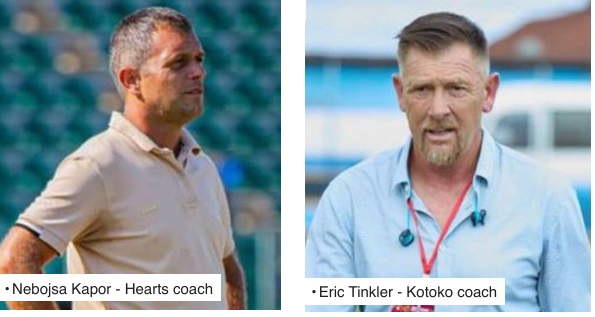
He proved his critics wrong by saving a late penalty awarded the home team to hand the Phobians a perfect run. Whatever Coach Bebojsa Kapor is doing with the Phobians seem to be attracting the applause from many quarters, but would what has been seen so far be enough to guarantee them the title this season?
Back to the University of Ghana Stadium in Accra, tomorrow, Hearts would seek to provide answers to those concerns when they welcome Bechem United in a third week Ghana Premier League (GPL) clash.
It would be one game that should attract quite a huge number of their followers to the stadium considering the team’s performance so far. Hearts remain one of just two clubs yet to drop a point. The other is FC Samartex, currently occupying second position with an inferior goal aggregate.
Bechem endured a torrid time in the previous season and survived the drop by a hair’s breadth. They appear to have done a good recruitment this season and are performing better than last season.
Again, Accra has been a difficult place for them although it has often provided some verve to attempt to upset the apple-cart.
But against a highly-spirited Hearts of Oak side inspired by a rejuvenated attack spearheaded by experienced striker John Antwi, Hearts would obviously be too strong for the visitors.
Former coach Didi Dramani’s replacement, Kapor appears to have discovered the team’s mojo, blending both new and old players to grind results that surpassed what were seen from them last season.
It may be early days yet but the urge of players to get the nod of the new manager, culminating in the competition for places in the first team seem to be driving the team to its desired direction.
So far, John Antwi has proven to be a great replacement for Mawuli Wayo who is currently playing in the Egyptian league.
Against Bechem, Hearts face a challenge to prove their doubters wrong by snatching all three points to not just keep the path of perfection but also, drum home the announcement that they are ready to be crowned as champions again.
FC Samartex face a challenge similar to that of the Phobians when they welcome Asante Kotoko at the Nsenkyire Sports Arena in Samreboi in what promises to be a fierce exchange.
Kotoko, just like the Phobians, have also altered the technical direction of the club, bringing in former South Africa international, Eric Tinkler whose first major achievement was the Democracy Cup win over their fierce rivals.
That game-though a glorified or over-hyped friendly, gave him a fair idea of what the fans’ expectations are and what the rivalry means to them.
Just like others, the Porcupine Warriors have done a very good recruitment this season to strengthen the team.
That has seen them annex four points from the two matches played so far.
Beating Heart of Lions last week came with great joy to their followers due to the bad record they have against them. The win, therefore speaks volumes about their intent for the season.
But engaging Samartex away would undoubtedly be a huge task they must confront with care. In the ‘absence’ of the giants, Samartex and other relatively new clubs have shown what they are made up.
It is, therefore understandable the caution with which the Porcupine Warriors are approaching the game. They stand as favourites although a Samartex shock for them would come with little surprise.
New entrants, Port City would engage Berekum Chelsea at the Nana Boamah Darko II Park in Kukurantumi, tomorrow.
The visitors gave an impression that they did not recover well from the previous season’s challenges that nearly got them relegated after losing massively to Hearts of Oak at the UG Stadium.
They, however recovered well to record a 3-1 victory in the second game to bag their first three points in the competition.
Coming up against Port City would be a game of equals but despite playing away, Chelsea must use their rich experience to at least earn a point.
The Nana Agyeman Badu II Park in Dormaa would be another exciting venue to be as Aduana FC welcome Karela United.
Another debutant, Debibi United FC would also host Young Apostles at the Debibi Presby Park while Dreams FC and Basake Holy Stars remain at home against GoldStars and FC AshantiGold, respectively at the Tuba Astro Turf and AAK II Arena, Basake.
Meanwhile, Vision FC and Heart of Lions are expected to kick off the weekend’s games today with dicey clashes against Medeama SC at the Nii Adjei Kraku II Sports Complex in Tema New Town and Swedru All Blacks at the Kpando Stadium.
By Andrew Nortey
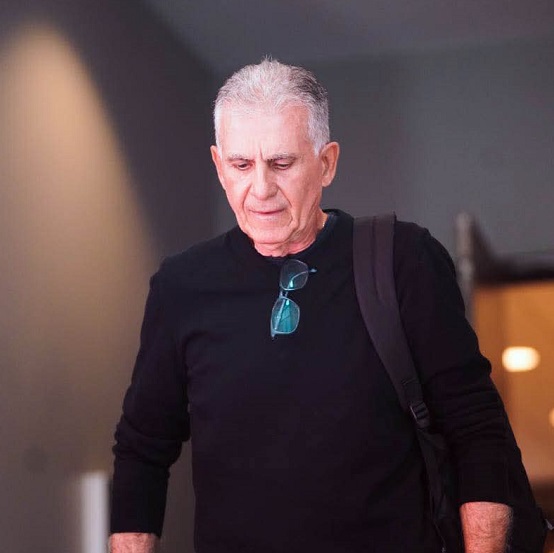
Black Stars head coach Carlos Queiroz says his immediate focus is securing qualification for the Africa Cup of Nations, while laying the foundation for a bigger dream building a Ghana side capable of honouring the nation’s legacy at the 2030 World Cup.
Speaking to the Ghana Football Association’s official website ahead of the AFCON qualifiers, the Portuguese tactician described the current moment as the start of a new cycle for the national team.
“Hands on the present, eyes on the future. The priority is very clear: absolute focus on AFCON qualification, with our eyes set on the 2030 World Cup,” Queiroz said.
“We have an immediate objective that demands our full concentration, but we also have a greater destination ahead of us. This is the moment to start building the team for 2030.”
The experienced coach, however, cautioned against premature title talk, insisting Ghana must first earn its place at the tournament.
“We must have ambition, but also humility. We know our recent history and we cannot talk about winning AFCON when we have not yet qualified. We have to work, grow, compete and earn our destiny,” he noted.
Queiroz was candid about where Ghana stands compared to Africa’s top sides, admitting that many of the continent’s leading teams have established squads with players featuring regularly in the UEFA Champions League.
“That is the competitive reality we must recognise and the level we must pursue,” he said.
Reflecting on the recent World Cup campaign, Queiroz said the experience was crucial for understanding the character and quality within the squad, adding that he is proud to lead “a fantastic group and a fantastic national-team culture.”
On squad selection, he explained that competitive form and physical readiness remain non-negotiable.
“There is always one general principle that we consider fundamental: players should be in competitive action, physically prepared and fully ready to play for the national team,” Queiroz stressed.
He concluded with a message of hard work and humility, urging the team to outwork the best on the continent if Ghana is to achieve its ambitions.
“Every squad selection, every training session and every match must contribute to building a better team. If we want to compete with the best, it is not enough to work as hard as they do. We have to work even harder and better,” he concluded.
By Edem Mensah-Tsotorme

 Entertainment1 week ago
Fiifi Coleman Productions adapt ‘I Told You So’ stage play into feature film
- News6 days ago
48 Engineer Regiment to be major sub-contractor on Accra-Kumasi Expressway, $2bn ready- Prez Mahama
- News1 week ago
Ghanaian journalist celebrates Texas town’s ‘Eden of the Far West’ tag after mayor’s nod