Bussiness
Crude oil production declined on an average of 10 percent per annum for three consecutive years – PIAC

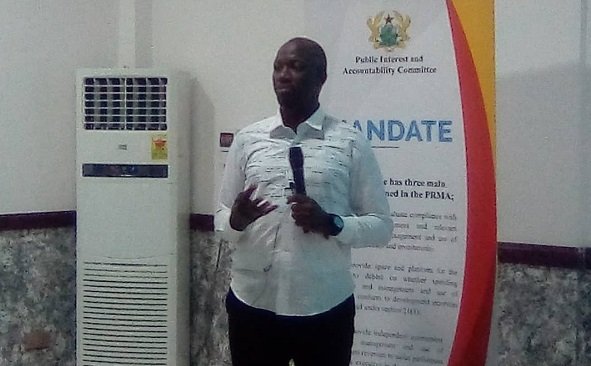
The Public Interest and Accountability Committee (PIAC) has revealed that there has been a decline in crude oil production on an average of 10 percent per annum for three consecutive years
A volume of 71,439,585 barrels was produced in 2019 but declined to 66,926,806 barrels in 2020 representing 6.32 percent
It further declined to 55,050,391 barrels in 2021 representing 17.75 percent and reduced again to 51,756,481 barrels in 2022 representing 5.98 percent.
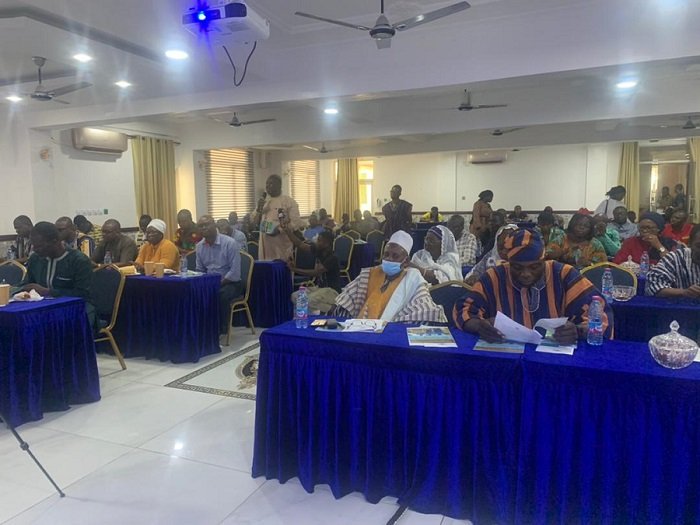
The Vice Chairman of the Public Interest and Accountability Committee (PIAC) Mr. Nasir Alfa Mohammed disclosed this at their regional public forum on the management of Ghana’s petroleum revenues last Wednesday at Wa in the Upper West Region.
The forum was organized in line with PIAC’s mandate of providing a platform for public debate on the management of petroleum revenue which brought together stakeholders across the region.
The Vice Chairman said there was a need to speed up the sustainable development of its petroleum resources to reverse the decline in petroleum production through the attraction of new investors as well as early completion of ongoing projects.
He said it was important for policymakers to formulate a long-term national development plan to help guide the spending of oil revenue in the country.
He mentioned some of the development projects that were funded through petroleum revenues in the region, which include the construction of the rehabilitation of the irrigation dam at Guo in the Nandom District, the construction of two dams at Yebilpe and Kadowli in the Wa Central Constituency, upgrading of Wa-Bulenga-Yaala Road and the construction of a warehouse at Bulenga.
The Chairman of the forum Professor Emmanuel Kanchebe Derbile expressed gratitude to the committee for giving such an opportunity to the people of the Upper West Region to contribute and discuss the management and use of Ghana’s petroleum revenue.
“The petroleum industry in the country is relatively new and it is important that we all show interest in it for the betterment of our understanding in the sector, “ he said.
Participants were allowed to debate, ask questions and give their suggestions on how to manage the country’s petroleum revenue.
The Public Interest and Accountability Committee (PIAC) is a stationary committee established under section 56 of the petroleum revenue management Act 2011 (Act 815).
FROM RAFIA ABDUL RAZAK WA


Ghanaian dancehall artiste Charles Nii Armah Mensah, known as Shatta Wale, has won two awards at the 43rd International Reggae and World Music Awards (IRAWMA) held in Florida over the weekend.
He picked up the Best African Dancehall Entertainer award as well as Concert of the Year for ShattaFest.
In a statement, Shatta Wale’s management expressed appreciation to the organisers and supporters of the awards.
“Management would like to sincerely appreciate the organisers of the IRAWMA awards for the recognition and continuous support for African music on the global stage.
“We also extend our deepest gratitude to fans across the world, especially the Shatta Movement fraternity, for their unwavering support, votes, and dedication throughout the years,” the statement said.
The statement added that the latest wins reaffirm the artiste’s position as one of Africa’s leading musical exports and a prominent figure in global dancehall culture.
The awards bring Shatta Wale’s total haul at the IRAWMA to 11, highlighting his continued presence on the international reggae and dancehall scene.
At last year’s edition, he won three awards: Best African Dancehall Entertainer, Best Music Video for “Killa Ji Mi”, and Best Crossover Song for “Commando” featuring Bounty Killer. -GNA
Bussiness
Global Market Volatility: Gov’t absorb GH¢2.00 per litre on diesel and GH¢0.36 per litre on petrol
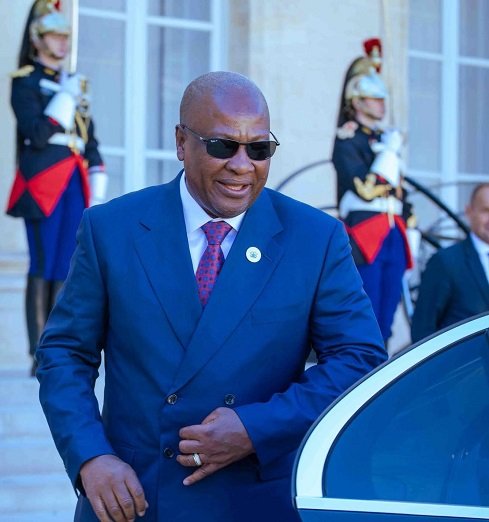
Effective Thursday, April 16, 2026, which is the next pricing window, the Government will absorb GH¢2.00 per litre on diesel and GH¢ 0.36 per litre on petrol.
This intervention is intended to cushion customers and ease the cost burden on households, transport operators, and businesses.
The measure, approved by Cabinet, is in response to rising prices of petroleum products on the international market, which have significantly impacted ex-pump prices in Ghana.
This temporary intervention will remain in force for a period of one (1) month.
During this period government will continue to closely monitor developments in the global oil market and assess the need for further policy adjustments.
A statement signed by Minister of Government Communications, Felix Ofosu Kwakye noted that they remain commited to maintaining price stability, protecting livelihoods, and supporting Ghana’s economic recovery in the face of external shocks.