Sports
Corruption trial of Diack begins

- /home/u249204778/domains/spectator.com.gh/public_html/wp-content/plugins/mvp-social-buttons/mvp-social-buttons.php on line 27
https://spectator.com.gh/wp-content/uploads/2020/06/Diack.jpg&description=Corruption trial of Diack begins', 'pinterestShare', 'width=750,height=350'); return false;" title="Pin This Post">
- Share
- Tweet /home/u249204778/domains/spectator.com.gh/public_html/wp-content/plugins/mvp-social-buttons/mvp-social-buttons.php on line 72
https://spectator.com.gh/wp-content/uploads/2020/06/Diack.jpg&description=Corruption trial of Diack begins', 'pinterestShare', 'width=750,height=350'); return false;" title="Pin This Post">
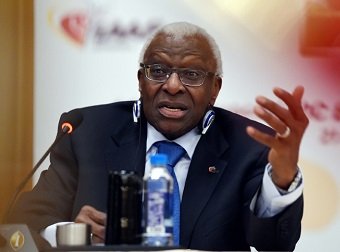
Lamine Diack, the former head of athletics’ governing body, arrived in court in Paris yesterday to stand trial on charges of corruption, money laundering and breach of trust linked to a Russian doping scandal.
Prosecutors allege he solicited 3.45 million euros from athletes suspected of doping to cover up the allegations and allow them to continue competing, including in the 2012 London Olympics.
Wearing a dark grey suit, Diack, who turned 87 on Sunday, read through his files as he awaited the arrival of the judges.
He has previously denied wrongdoing. His lawyers have said the accusations are baseless.
Diack, from Senegal, led the governing International Association of Athletics Federations (IAAF), now renamed World Athletics, from 1999-2015 and was among the most influential men in the sport. He lives under house arrest in Paris and faces a jail sentence of up to 10 years if convicted.
The trial had been due to start in January but was postponed after new documents containing testimony from his son and co-defendant, Papa Massata Diack, were submitted to the court.
Senegal has refused to extradite Papa Massata, who worked as a marketing consultant for the IAAF. He also faces charges of money laundering, corruption and breach of trust, according to the indictment, and will be tried in absentia.
The other defendants are Habib Cisse, Diack’s former lawyer at the IAAF; Gabriel Dolle, who oversaw doping tests at the IAAF; and Russians Valentin Balakhnitchev and Alexei Melnikov, who were Russia’s athletics’ federation chief and head athletics coach respectively at the time of the alleged cover-up.
Balakhnitchev and Melnikov were not in court.
Investigators at the French National Financial Prosecutor’s Office (PNF) describe a web of corruption in world athletics under Diack’s leadership.
In a separate case, French prosecutors are investigating alleged bribes related to the Olympics and World Athletics Championships.
They suspect Tokyo’s bidding committee bribed the Diacks in 2013 to secure votes, which the committee has denied.
Sebastian Coe, Diack’s successor, has undertaken to rebuild trust in athletics and has introduced changes to the sport’s governance. – Reuters



With the 2026/27 Ghana Premier League season set to kick off on September 4, clubs have continued to fine-tune their squads, with a number of late additions and free-agent deals shaping up ahead of the new campaign.
From established Premier League sides such as Asante Kotoko, Hearts of Oak, Medeama, Aduana FC, FC Samartex and Berekum Chelsea to ambitious lower-tier clubs, there has been significant movement in the transfer market.
Here is a rundown of the notable deals involving Ghana Premier League clubs:
Medeama SC strengthen across the pitch
Medeama have been among the busiest clubs, adding depth in midfield, defence and attack. The Mauve and Yellows have brought in Etse Dogli from Heart of Lions on a three-year deal, while Emmanuel Boateng arrives from Eleven Wonders on a two-year contract. Dominic Frimpong, a free agent, has also joined to bolster the attack on a three-year deal. Other additions include Usman Safianu, Abdul Rahman Yaya, Emmanuel Annor from Nations FC, and winger Emmanuel Fobi, who arrives from Georgia’s Dila Gori on a three-year deal.
Medeama have also recruited Issah Ibrahim from Latvia, Sudanese goalkeeper Monged Abuzaid Salman, midfielder Blessing Kwabena Dwamena, Jelillu Osman from New Edubiase, Emmanuel Anokye from Sporting Club Accra, and right-back Ebenezer Adade from Dreams FC.
Port City FC add experience and attacking options
Port City have also been active, bringing in several players to strengthen their squad. Kwabena Adu Meider and Francis Gyetuah arrive as free agents, while Stephen Diyou joins from Hohoe United.
The club have also secured Gideon Waja from WAFA, Ishak Suraj from Lebanese side Al Ahly, free-agent defender Samuel Gyimah, goalkeeper Daniel Amissah on a two-year deal, and Elliot Affotey from Heart of Lions on a three-year contract. Daniel Osei Snr., a defensive midfielder from Hohoe United, completes another addition to the squad.
Hearts of Oak bring in several young talents
Hearts of Oak have invested heavily in young players, including a number of long-term deals. Abdul Aziz arrives from Swedru All Blacks on a three-year deal, while free agent Ebenezer Amoh joins on a two-year contract. The Phobians have also secured Rockson Kyeremeh and centre-back Manuel Osei Djan from PAC Academy, both on five-year contracts.
Other arrivals include Caleb Koranteng from Victory Club Warriors, Alex Banso from Namoro FC, free-agent right-back Prince Amevor, goalkeeper Vicente Anane, Ivorian forward Mamadou Kader Kourouma, and free-agent defensive midfielder Dominic Nsobila.
Swedru All Blacks continue recruitment drive
Swedru All Blacks have added a sizeable group of players. Among them are Mohammed Musah Salifu from Tamale City, David Lartey from Dreams Chasers, Prince Arthur and Kelvin Ampoful from Nations FC, and winger Samuel Osei Kofi from Nsuopun Fidelity.
Free agent Faisal Chawetey, forward Vincent Baah Jnr from Tema Faith, centre-back Michael Abrokwa from Nations FC, forward John Ahuma Ocansey, midfielder Godfred Yartey from Cheetah FC, winger Andy Koramoah from Auroras, right-back Kojo Quansah from Samartex, and defender Latif Blessing from Cheetah FC have also joined.
Samartex add four
FC Samartex have strengthened with four additions. Ebenezer Okrah and Prince Affum arrive from Sefwi All Stars, while Joshua Fuseini joins from Golden Kick. Meshack Adjetey Sowah also arrives from Vision FC on a three-year deal.
Aduana FC bolster defence and attack
Aduana FC have brought in several players, including free agent Shawkan Hunalf Mohammed, defensive midfielder Samuel Tenedu from Berekum Chelsea, and centre-back Boa-At Regain from Bechem United. They have also signed free agent Stephen Amankona, right-back Abdul Latif Mohammed from Victory Club Warriors, winger Emmanuel Abban from Bechem United, Zakaria Fuseini from Techiman Liberty Youth, and free-agent left-back Bismark Anim on a two-year deal.
AshantiGold make international additions
FC Ashantigold have recruited from both Ghana and abroad. Raphael Kodjo Etchonou arrives from ESA Academy in Togo, while Burkina Faso defender Ben Yamine Nassirou Kabore joins from Etoile Filante. The club have also signed free-agent right-back Kamal Suraje on a three-year deal and goalkeeper Kwaku Musah, also on a three-year contract.
Other additions include Fatao Seidu, Sirinu Huzaifah from Skyy FC, Saddick Ibrahim Abubakar from Skyy, Ishmael Acquah from Skyy, William Addo from Unity FC, free-agent winger Alhassan Benny, and goalkeeper Thomas Kwabena Osei from Heart of Lions.
Gold Stars add attacking firepower
Gold Stars have brought in Nicholas Amekpewu from Elmina Sharks on a three-year deal, while centre-back Claude Shooting Bortey arrives as a free agent. They have also signed Kwame Opoku, another free agent, on a two-year deal.
Heart of Lions build new-look squad
Heart of Lions have also been busy, with several free-agent signings. Francis Odoom from Hohoe United joins on a two-year deal, alongside centre-back Abdul Jalilu, goalkeeper Edmund Wireko, winger William Oduro, centre-back Pius Baffuor, winger Sena Ati, and forward Mustapha Yakubu. Stephen Afoakwa from Faith Football Academy is another addition.
Other notable movements
Berekum Chelsea have recruited forward Jamal Haruna on a three-year deal, while Diawisie Taylor, Awuah Dramani, Chyereme Shadirac, Fuseini Zakaria, goalkeeper Zulka Massawudu, and Augustine Boakye have also joined.
At Asante Kotoko SC, goalkeeper Danlad Ibrahim arrives on a two-year deal, while the Porcupine Warriors have also added Emmanuel Mamah, Ivorian centre-back Koffi Marius Ange Bini, free agent Isaac Opoku Agyemang, Burkina Faso midfielder Abdoul Kader Tarnagda, Cameroonian midfielder Solomon Nsor Asaah, Moroccan goalkeeper Abdel Wadie Mourad, and Albanian defender Umar Ali from Partizani.
Karela United have signed Wisdom Jonas Manyina from RTU on a three-year deal, alongside Frank Ackom from Nsuopun Fidelity, Iddi Mahfuz, Edmund Afurapoe from Eleven Wonders, goalkeeper Kwaku Musah, Angel Ewulla, Collins Ntiful from Okwawu United, Issah Abdul Basit from Golden Warriors, forward Mohammed Alhassan Mankuyeli, Ebenezer Amegah from Hohoe United, and free-agent forward Prince Opoku Agyemang. Vision FC have also added Kwadwo Boamah from Hohoe United and Faruk Mohammed from Nations FC.
The final preparations begin
With the transfer deadline now passed and the Ghana Premier League scheduled to begin on September 4, attention will turn from recruitment to preparation.
The sheer volume of movement suggests that several clubs will enter the new campaign with significantly different squads. For coaches, the immediate challenge will be turning these new arrivals into cohesive teams before the opening whistle of the new Premier League season.

The Black Princesses will play Polish side Sleza Wroclaw, a team in the Orlen Ekstraliga Kobiet, in their first international friendly match in Wroclaw, Poland.
The game will be held behind closed doors as Ghana continue preparations ahead of the FIFA U-20 Women’s World Cup.
The friendly offers Black Princesses head coach Charles Sampson another valuable opportunity to assess his squad, build cohesion and sharpen tactics.
The game will be played on Tuesday, August 25, 2026, at the Stadion Sportowy Olawka in Wroclaw at 14:00 GMT.
The Black Princesses are making their eighth consecutive appearance at the biennial tournament, aiming to make it past the group stage for the first time in their history.