Hot!
Compilation of new voters register: SC to deliver judgement on June 23


The Supreme Court will on June 23, 2020 deliver judgement on whether or not the existing voters’ identification card should be used as form of identification in the upcoming mass voters’ registration exercise later this month.
On March 26, 2020, the National Democratic Congress (NDC) dragged the Attorney-General and the EC to the apex court over the decision by the Commission to compile a fresh electoral roll for the December 7, 2020 polls.
A seven-member panel of the court presided over by the Chief Justice Anin Yeboah adjourned the case after lawyers for the NDC, the EC and the A-G made legal arguments to support their case.
The EC had stated that it would compile a new voters’ register for the presidential and parliamentary elections because the existing register was incurably defective for the purpose.
But the NDC, the biggest opposition political party in Ghana insisted that the exclusion of existing voters’ ID card as a form of identification to obtain a new voters’ ID card was unconstitutional.
At proceedings yesterday, counsel for the NDC, Godwin Tamakloe said the SC had held in the Abu Ramadan case that the existing voters’ register for all practical purposes was a prima facie evidence of one’s identity.
That assertion he said had not been rebutted by defendants and that it does not lie in the mouth of the A-G to state that all elections held in the country are tainted with illegality.
The NDC withdrew its relief on the contention that the EC cannot compile a new voters’ register when its attention was drawn by the court that it was against the rules of court to seek a relief and asked the court to grant another relief in the alternative.
Mr Godfred Yeboah Dame, a Deputy Attorney-General argued that the case of the NDC is unmeritorious.
Justin Amenuvor, counsel for the EC had earlier told the court that the legal basis for excluding the existing voters’ identification card was because it was a “fruit of a poisoned tree”.
In its writ which seeks to invoke the original jurisdiction of the SC, the NDC asked the court to declare that upon a true and proper interpretation of Article 45(a) of the 1992 Constitution, the EC has the constitutional power to, and can, compile a register of voters only once, and thereafter revise it periodically, as may be determined by law.
The plaintiff urged the court to order the EC to include all existing voter identification cards duly issued by the EC as one of the documents serving as proof of identification for registration for the purposes of public elections.
The writ, filed by counsel for the NDC, Mr Godwin Kudzo Tamakloe further asked the SC for a declaration that upon a true and proper interpretation of the provisions of the constitution, specifically article 51 read conjointly with article 42 of the constitution, the power of the EC to compile and review the voters’ register must be exercised subject to respect for and the protection of the right to vote.
The party want the court to hold that, upon a true and proper interpretation of the provisions of the constitution, particularly article 42, upon the registration of and issuance of a voter identification card to a person, that person has an accrued right to vote which cannot be divested in an arbitrary and capricious manner.
A declaration that, upon a true and proper interpretation of the provisions of the constitution, particularly Article 42 of the constitution, all existing voter identification cards duly issued by the EC to registered voters is valid for purposes of identifying such persons in the exercise of their right to vote.
It urged the court to declare that upon a true and proper interpretation of the constitution, specifically Article 42, the 2nd Defendant’s purported amendment of Regulation 1 sub-regulation 3 of the Public Elections (Registration of Voters) Regulations, 2016 (C.I 91) through the Public Elections (Registration of Voters)(Amendment) Regulations, 2020 to exclude existing voter identification cards as proof of identification to enable a person apply for registration as a voter is unconstitutional, null and void and of no effect whatsoever.
Meanwhile, the A-G in its response filed by Mr Godfred Yeboah Dame, a Deputy A-G stated that the reliefs endorsed on the plaintiff’s writ of summons are not only procedurally incompetent, but also not cognisable as reliefs that may properly be applied for pursuant “to this court’s original jurisdiction under articles 2(1) and 130(1) of the constitution, and therefore ought to be struck out.
The defendant contended that the instant action neither raises any real issue(s) for constitutional interpretation nor properly invokes the enforcement jurisdiction of the court.
“Further, we find support in the prohibition contained in the rules of this court for a relief pursuant to this court’s original jurisdiction, to be nebulous and argumentative.”
The defendant argued that the first palpable absurdity with the plaintiff’s difficult endeavor to raise a strained constitutional issue “in this matter is the plaintiff’s proposition that the words “….at such periods as may be determined by law” in article 45(a) apply to only the revision of the voters register, and not its compilation”.
BY MALIK SULLEMANA


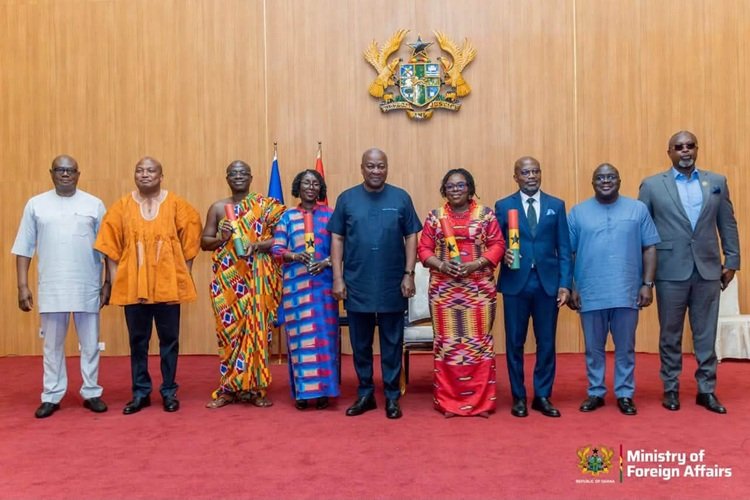
President John Dramani Mahama has commissioned four career diplomats as ambassador-designates to represent Ghana in four countries.
The commissioning ceremony took place on Friday, October 16, 2026.
The new envoys are Her Excellency Nana Antwiwaa Dodoo, Ambassador-Designate to Angola; His Excellency Louis Kwame Obeng, Ambassador-Designate to Qatar; Her Excellency Evelyn Korantemaa Ofosu-Amable, Ambassador-Designate to Israel; and His Excellency Jedidiah Reuben Adogla, Permanent Representative-Designate to Switzerland.
President Mahama charged them to advance Ghana’s national interests through strategic partnerships, economic diplomacy, investment mobilization, and expanded access to international markets.
He said Ghana’s diplomatic engagements must deliver tangible economic benefits, create jobs, and strengthen the country’s standing on the international stage.
The four envoys are career diplomats with over 27 years of experience.
On behalf of her colleagues, Her Excellency Nana Antwiwaa Dodoo thanked the President for the confidence reposed in them and pledged their commitment to emulate his leadership and deliver on the mandate given to them.
By Edem Mensah-Tsotorme
The professor who spends his days exploring the intricacies of African languages found himself at the centre of a different kind of lesson on Friday, October 2, 2026. 
This time, there were no lecture notes, academic arguments or university classrooms. Instead, there was the weight of tradition, the rhythm of a community celebration and the solemnity of an oath at a royal palace.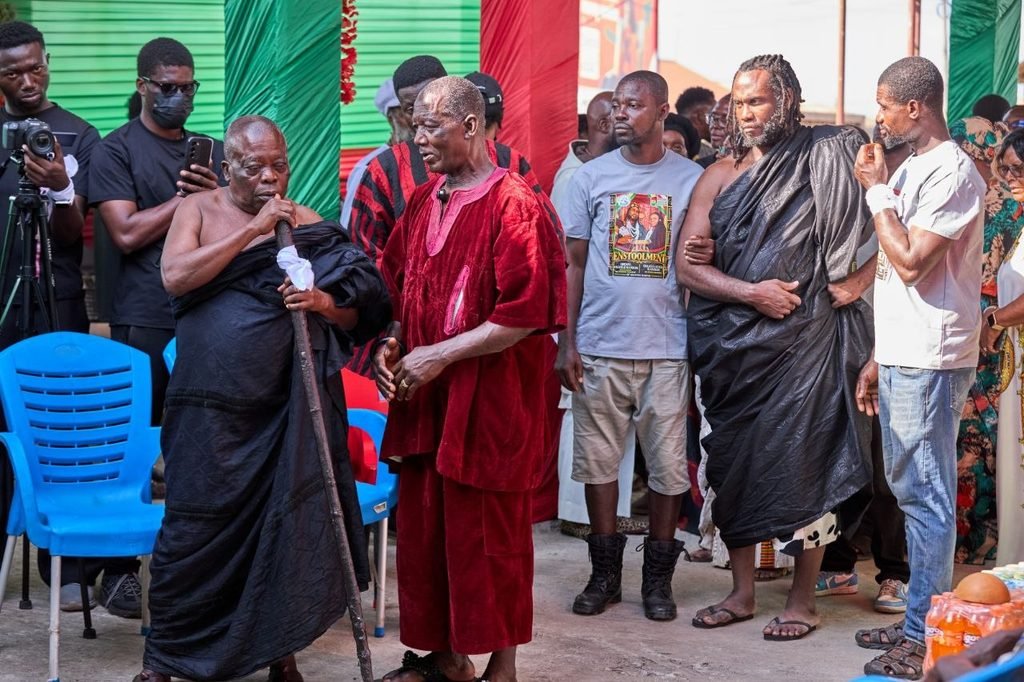
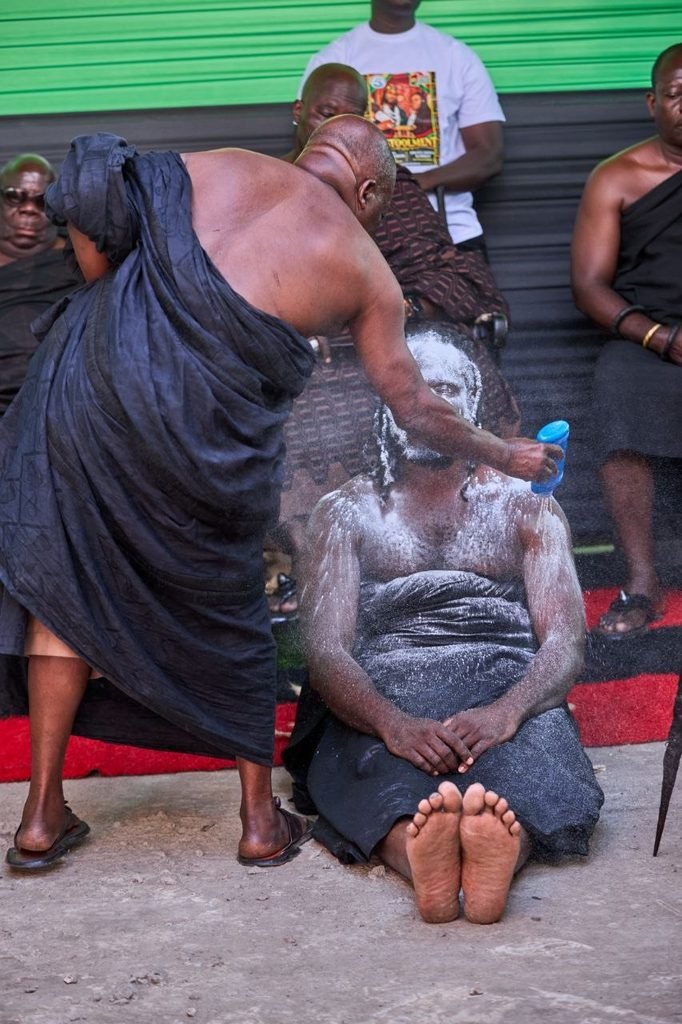
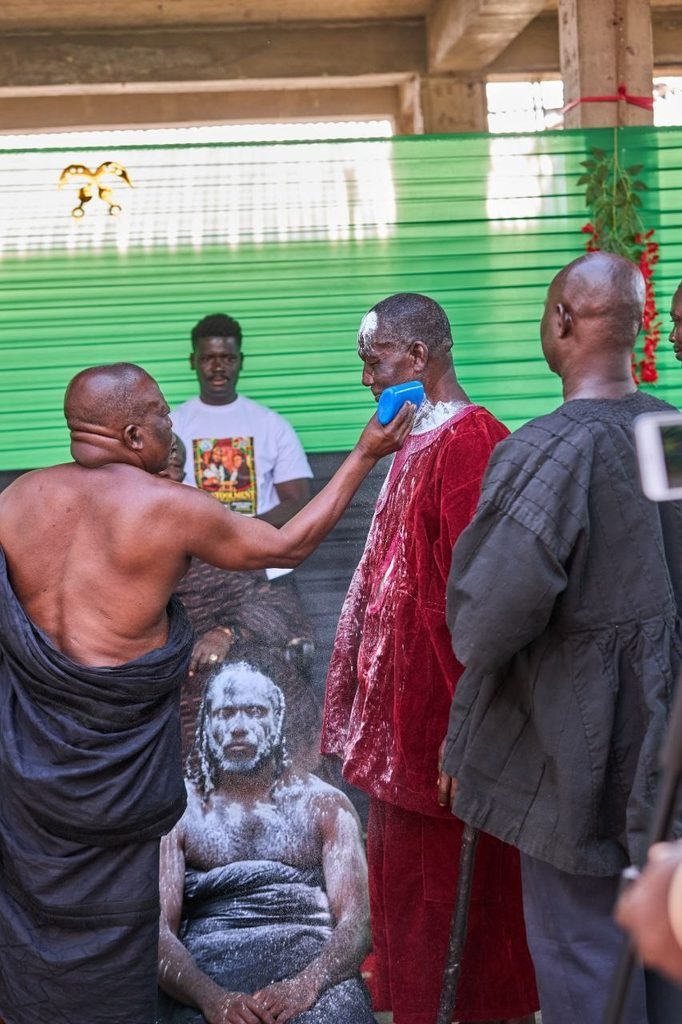
Professor Ọbádélé Kambon, a full Professor of African Linguistics at the University of Ghana, was enstooled as Apagyahene and Sunsum Ɔsahene of Akuapem Mampong in the Eastern Region in a ceremony that brought academia and traditional authority together.
For the professor, the occasion was more than a new title. It was a moment that connected his academic interests in African languages and indigenous knowledge with the living traditions of an Akan community.
The day’s events unfolded through a series of customary observances. Kambon was first taken to the compounds of the Ɔkyeamehene and Gyasehene, where the preparations for his installation continued.
Then came the application of hyire, the white kaolin powder associated with traditional rites.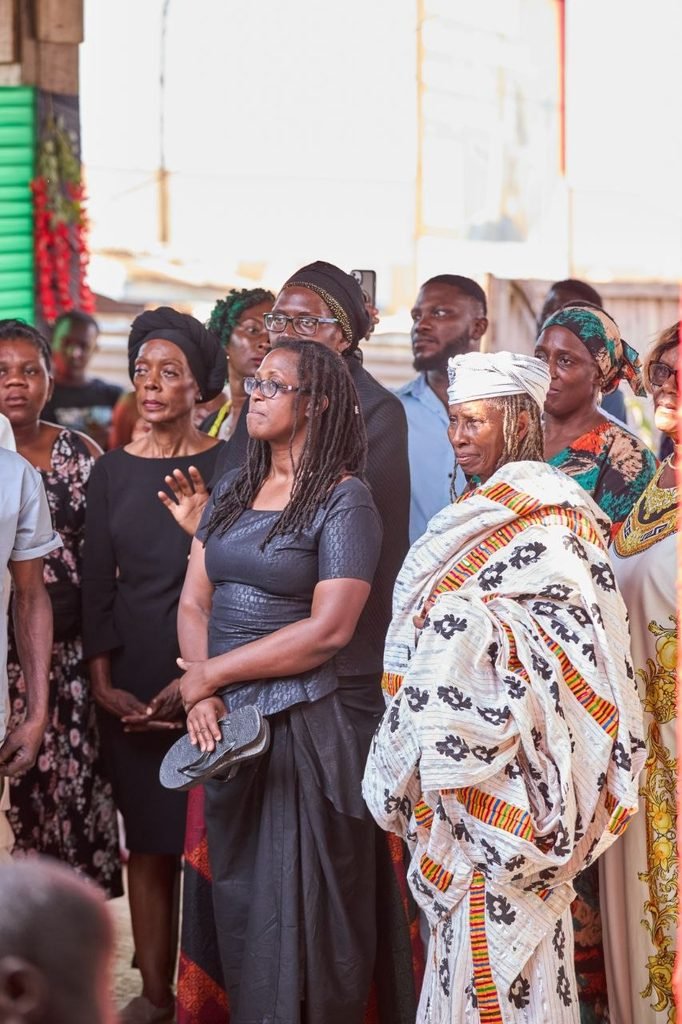
With the customary proceedings underway, the new chief was lifted onto the shoulders of celebrants and carried along the main thoroughfare of Akuapem Mampong.
The procession transformed the streets into a public stage for a ceremony rooted in the community’s traditional institutions.
There was something striking about the image, a university professor, accustomed to the measured language of academic discourse, being carried through the town in a display of traditional recognition.
Yet the celebration was not complete with the procession.
A ram was sacrificed at the Mamponghene’s compound before Kambon was taken to the palace, to swear the oath associated with his new offices.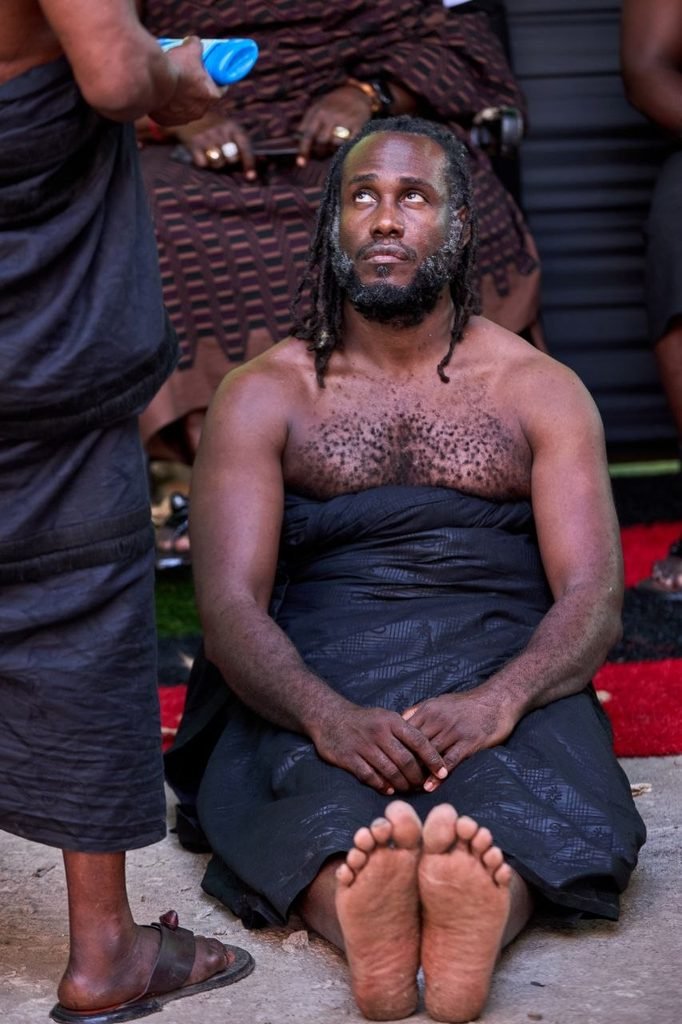

The ceremony brought him formally into his roles as Apagyahene and Sunsum Ɔsahene.
Beyond the colourful proceedings, the titles themselves carry layers of historical meaning.
Kambon in his research explores the historical connections between Apagya and Akan political and military organisation.
Accounts cited in his work linked Apagya to an asafo, or military company, while historical writing traces an Apagya stool in Asante to the reign of Opoku Ware I in the eighteenth century.
These historical associations offer a glimpse into the institutions that have shaped Akan society over generations, although they do not automatically define the precise responsibilities of the office in Akuapem Mampong.
Kambon’s own professional life reflects a similar interest in preserving and examining African knowledge.
His work encompasses Akan language structure, naming practices across the Black world, proverbs and indigenous intellectual traditions.
Through Abibitumi, the platform he founded, he also promotes language learning, scholarship and cultural engagement.
But tradition was only one part of the story that day.
When the formal ceremony gave way to a reception, the occasion expanded into a celebration of three milestones: Kambon’s enstoolment, his promotion to full professor and his daughter Ama’s admission to the University of Ghana.
The gathering therefore carried a personal significance that went beyond the honours bestowed on one man. 
It celebrated professional advancement, the continuation of family aspirations and a connection to cultural heritage.
For a father, seeing a daughter gain admission to the same university where he holds a distinguished academic position offered another reason to celebrate.
For the professor, the moment placed family achievement alongside his own professional and traditional milestones.
Kambon had already established a place in the traditional life of Akuapem Mampɔn through an earlier installation as Banmuhene Kyidɔmhene, recorded in 2017.
His latest enstoolment adds another chapter to that relationship.
In Akuapem Mampɔn, the day brought together the university, the palace and the family table in one celebration. And for Kambon, the journey from the lecture room to the traditional procession showed how scholarship, cultural responsibility and family achievement could converge in a single memorable occasion.
By Enoch Ntiamoah Siaw
SKIP THE QUEUE, TAP THE NEWS
You can now read the Ghanaian Times and The Spectator newspapers from the comfort of your device via TimesNewsPlus.
Join our WhatsApp Channel: https://whatsapp.com/channel/0029VbBElzjInlqHhl1aTU27