Editorial
Changing the narrative of sex through sex education

- /home/u249204778/domains/spectator.com.gh/public_html/wp-content/plugins/mvp-social-buttons/mvp-social-buttons.php on line 27
https://spectator.com.gh/wp-content/uploads/2023/08/Lets-make-sex-education-compulsory.jpg&description=Changing the narrative of sex through sex education', 'pinterestShare', 'width=750,height=350'); return false;" title="Pin This Post">
- Share
- Tweet /home/u249204778/domains/spectator.com.gh/public_html/wp-content/plugins/mvp-social-buttons/mvp-social-buttons.php on line 72
https://spectator.com.gh/wp-content/uploads/2023/08/Lets-make-sex-education-compulsory.jpg&description=Changing the narrative of sex through sex education', 'pinterestShare', 'width=750,height=350'); return false;" title="Pin This Post">
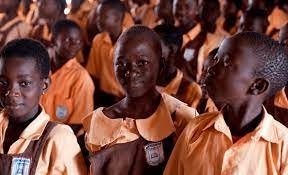
Let’s make sex education compulsory
Dear Editor,
In Ghanaian society, issues relating to sex are not often talked about in our homes: Just, the mention of sex then you will see mama looking sternly at you. In some societies the mention of it is a taboo, but the question is if these issues are not addressed by our own parents, then who should we run to, to make informed decisions on sexual matters. Is it when the girl-child is being influenced by peers to practise it as a form of satisfying her curiosity? Or when the boy-child under the influence of friends practises it to show how manly he is?
This is a million-dollar question begging for an answer. According to research, comprehensive sex education, (which emphasises the benefits of abstinence while also teaching about contraceptives and disease-prevention methods) has been proven to reduce teen pregnancy and STD infection. Thus, sex education explores values and beliefs about those topics and helps people gain the skills that are needed to navigate relationships with self, partners, community and manage one’s own sexual health and to create awareness of its consequences of unwanted pregnancy, early parenting and others if not done safely.
Sex education highlights hygiene issues. It becomes more important for young people to keep their bodies clean at puberty. Comprehensive sexual education provides essential information about how people can maintain their hygiene. Since not all parents can instruct their children on these methods and may be embarrassing to talk about these issues with children. Sex education helps young people to understand what is normal. Adolescents do face a hard time when hitting puberty. They often take certain things as abnormal. Sex education helps them to understand that their body is changing physically.
In an interview with Mrs Helena Dickson, a Counsellor and Midwife with Pentecost Hospital at Tarkwa in the Western Region, she states that “not only does sex education have to be introduced at the early stage in adolescent life but its abstinence, too. She explained further that, at that stage they were so eager to engage in boyfriend-girlfriend relationship with the aim of knowing and feeling what sex entailed and this occurred because of the hormonal change in adolescents. Adolescents need to be educated about the consequences of sex so they don’t become pregnant”.
She added that this education would alert the young girls to be extra careful in their lives and slow down the eagerness to feel for sex. The education will let them know that these feelings they sometimes experience are normal but it behoves on them to control themselves not to fall into temptation.
She concluded that diversional therapy like playing football, ampe, ludo, oware and others could be introduced when they felt for sex.
In conclusion, sex education is an important aspect in every adolescent life, so parents should be open for discussion when issues about sex are introduced by their wards. It should be made a subject in the secondary school just as physical education.
Alice Mensah
Ghana Institute of Journalism (GIJ)


Dear Editor,
The recent death of Nana Yaw, also known as Dinero/Terry, has left various communities deeply shaken over the circumstances under which a life was lost.
Reports suggest that he went missing after a phone transaction in Teshie and was later found dead. Allegations have circulated that he visited a female friend despite having a pregnant wife at home.
Even if such allegations were true, does that mean he deserved to die? The answer is no. Infidelity is a moral failing, but it is not a crime punishable by death. To suggest otherwise is to normalize violence and diminish the value of human life.
This tragedy should remind us of the urgent need for justice and accountability. His family especially his expectant wife deserves compassion, not judgment. As a community, we must reject victim‑blaming and focus on preventing such senseless losses in the future.
Nana Yaw’s death is not just a personal tragedy, it is a call to action.
We must demand thorough investigation, ensure those responsible are held accountable, and commit ourselves to building a society where disagreements and mistakes do not end in violence.
Princess Wonovi,
Dansoman
The situation at Percheyire R/C Basic School in the Yilo Krobo district is a warning concerning Ghana’s rural education facilities as pupils in Primary four through six are forced to learn inside a building of mud walls, worn-out roofing sheets, and rotting wooden pillars.
It is more than just an infrastructural shortfall. It indicates a fundamental failing of public safety and educational justice.
Every day, when pupils and teachers arrive at school, their safety is in danger because a school building has such fundamental flaws that it could collapse during a storm.
The classroom is now a hazard rather than a haven for learning for the 30 upper primary pupils and their teachers. A single extreme weather event could cause a mud construction to fall dangerously because it depends on makeshift timber pillars.
These children are routinely deprived of the instructional hours that the national curriculum promises them when the arrival of rain inevitably necessitates the suspension of classes to save lives, books, and furniture.
A deeper systemic problem is revealed when Rev. Elizabeth Korasare, a former teacher, reveals that this identical arrangement has not changed in 38 years.
Some proponents contend that local government institutions like the Ghana Education Service (GES) and the District Assembly are solely to blame for the main failure. Actual rehabilitation has been postponed due to administrative inactivity, despite official site visits and reports submitted by the school administration.
According to this viewpoint, there is a problem with the way emergency educational funds are allocated and prioritised when a community school is left in a dangerous condition for decades while waiting for budgetary allocations.
This point of view highlights the necessity of corporate social responsibility (CSR) programmes, non-governmental organisations (NGOs), and public-private collaborations. When state machinery fails, supporters contend that combining corporate money with citizen mobilisation provides a more flexible way to replace deteriorating structures.
It is a pity that Percheyire R/C Basic School’s surrounding infrastructure worsens the school’s structural deterioration. Children travelling from nearby communities like Togodo are severely restricted in their access due to an inadequate road network.
When more than 60 school-aged children in a single nearby town are cut off from regular attendance due to distance and bad roads, the school’s capacity to raise the district is substantially limited. A contemporary classroom block will only be successful if students can get there safely.
The lives of Percheyire’s pupils and teachers are at risk, therefore the Spectator is pleading with the Yilo Krobo District Assembly and other interested parties to rebuild the primary block.