News
Cerebral Palsy not contagious – concerned parent

- /home/u249204778/domains/spectator.com.gh/public_html/wp-content/plugins/mvp-social-buttons/mvp-social-buttons.php on line 27
Warning: Trying to access array offset on false in /home/u249204778/domains/spectator.com.gh/public_html/wp-content/plugins/mvp-social-buttons/mvp-social-buttons.php on line 27
&description=Cerebral Palsy not contagious – concerned parent', 'pinterestShare', 'width=750,height=350'); return false;" title="Pin This Post">
- Share
- Tweet /home/u249204778/domains/spectator.com.gh/public_html/wp-content/plugins/mvp-social-buttons/mvp-social-buttons.php on line 72
Warning: Trying to access array offset on false in /home/u249204778/domains/spectator.com.gh/public_html/wp-content/plugins/mvp-social-buttons/mvp-social-buttons.php on line 72
&description=Cerebral Palsy not contagious – concerned parent', 'pinterestShare', 'width=750,height=350'); return false;" title="Pin This Post">
A 35-year-old mother of a cerebral palsy child has debunked the claims that people who help in taking care of children with such condition risked giving birth to same because such children are cursed either by the gods or evil spirits.
She says that cerebral palsy childfen are often referred to as “nsuo ba” or “water children” literally meaning their mothers went to a water deity for them.
“In my case I was blamed for not keeping myself away from evil spirits when I was pregnant” the worried mother said this on condition of anonymity in an interview with The Spectator on Wednesday.
She has a six-year-old daughter with cerebral palsy.
Cerebral palsy is a congenital disorder of movement, muscle tone or posture and is usually due to abnormal brain development often before birth but could also occur at birth or in early infancy. Meanwhile the cause, according to health personnel, is not known.
She said she was fortunate to have in-laws who understood the situation and helped her and the daughter.
“However, in her early years it was tough for me to find a person willing to take good care of her so I found myself stuck at home on many occasions and this affected my mental health, ” she disclosed.
The woman said such children took various medications, (needed therapy or even sometimes surgeries) to control seizures and other factors which were expensive, therefore, placing financial burden on parents and guardians of such children.
She said there was the need for the government to put some, if not all, of such medications on the National Health Insurance Scheme (NHIS) to cushion parents.
She again said taking care of such children was emotionally draining and it was sad to note that society was not doing much to help parents and guardians of such unfortunate children by accepting them and offering the necessary support to ease their burden.
“There must even be centres where parents and guardians of such children could go for counselling to help their mental health” she said stressing that finding appropriate caregivers was also a major challenge.
On education, she expressed concern that children with cerebral palsy did not get basic education because majority of schools, (both public and private), did not accept them into their fold.
“Schools are not willing to put in the necessary structures which ensure that such children get education and therapy that meet their need or tailored to them.
“Even inclusive education as things stand now, only seems to be on paper but not actually practised. Government should show commitment by initiating measures to actualise the practice of inclusive education especially at the basic level, “she said.
She further advocated conscious effort to get an appreciable number of young men and women to read courses on Special Education to help with the overall care and management of such children.
From Dzifa Tetteh Tay, Tema.



Veteran Nigerian actor and African screen legend, Pete Edochie, has paid a courtesy call on the Chief Executive Officer of the Ghana Gold Board (GoldBod), Sammy Gyamfi, during his visit to Ghana.
Edochie is in Ghana to launch the African Legacy Project, which includes a book, documentary film and an African Youth Mentorship Initiative targeting about 500,000 young people across the continent.
Mr. Gyamfi welcomed the opportunity for GoldBod to support the mentorship initiative, noting that it aligns with the Board’s Special Intervention Programme and its focus on social impact and economic empowerment.
GoldBod’s work is also referenced in Pete Edochie’s new book, which highlights Ghana’s efforts to ensure its gold resources contribute to national development.
By Edem Mensah-Tsotorme
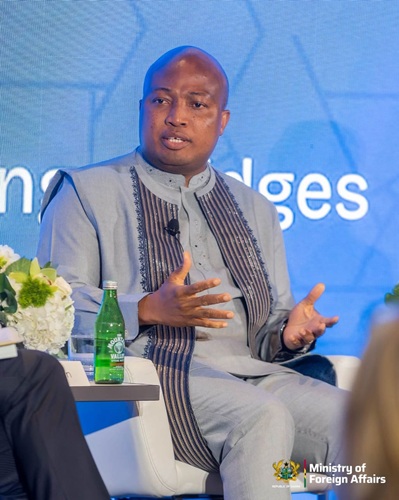
The Ministry of Foreign Affairs has warned Ghanaians seeking employment in Zambia to be cautious of fraudulent job offers that could expose them to human trafficking and forced involvement in cybercrime.
The warning follows the arrest of six Ghanaians in Lusaka, Zambia, during a joint operation by the Zambia Police Service, the Drug Enforcement Commission and the Department of Immigration on August 23, 2026.
According to the Ministry, the operation targeted a facility suspected of being involved in organised cybercrime activities and led to the arrest of 79 people, including 10 Zambians and 69 foreign nationals.
The Ministry said six of the foreign nationals arrested were Ghanaians.
It explained that reports received by the Ghana High Commission in Lusaka indicated that some of those arrested had been recruited through what appeared to be legitimate employment opportunities, including online data entry jobs.
However, the Ministry said some were allegedly forced into online scam activities after their passports were confiscated by their employers.
It warned that the situation highlights how human trafficking groups are using fake employment opportunities to lure unsuspecting job seekers into illegal activities.
The Ministry has therefore advised Ghanaians travelling to Zambia or seeking employment there to thoroughly verify job offers, recruitment agencies and prospective employers before travelling.
Ghanaians living in Zambia have also been urged to remain vigilant when responding to online job opportunities and maintain regular contact with the Ghana High Commission in Lusaka for consular assistance when necessary.
The Ministry said the government remains committed to protecting the welfare and interests of Ghanaians travelling to or living outside the country.
By: Jacob Aggrey