Gender
Beyond the flavours: the hidden dangers of shisha smoking

On a hot Sunday afternoon, the Labadi beach or other leading beaches are filled with people from all walks of life, both foreigners and Ghanaians alike.
Children are seen playing in the sand while adults enjoy some food and drinks or bath in the sea amidst loud music.
Traders, horse riders and pub owners would also cash in, pitching their business to revellers at the beach.
As dusk settles in, some people would leave while others troop in, with the place becoming livelier as the beach is filled with a lot more people.
The atmosphere is choked with an unusual smell of smoke; a smoke emanating from random tables on the beach.
It is usually from a flavoured water pipe popularly known as shisha, sitting on the tables and used mostly by women who shared the same tube with friends on the same table.
This is often the sight at most beaches on holidays or weekends.
An attendant at the Labadi beach, told this writer that, shisha was mostly taken by women and the price ranges from GH¢50 to GH¢70 at the beach.
She also said the price is higher at other places saying “you can also get it from GH¢100 to GH¢200.
This mirrors what happens at other beaches, clubs, pubs and social gatherings across the capital and the country at large.
Shisha, also known as hookah or water pipe, is another form of combustible smoking of tobacco, where flavoured tobacco is burned with charcoal, while the smoke is guided through water via tube before it is inhaled by the smoker.
The intention behind the passage of tobacco smoke through water is to filter the smoke to make it safer. Also, the added flavour, mostly fruity, is to enhance the packaging and improve desirability.
This type of smoking was invented in ancient India, and it has remained a tradition to the Middle East, and a common practice for hundreds of years.
It is estimated that, globally, about 100 million people smoke shisha on a daily basis and most of these are adolescents, high school students, and university students.
Shisha smoking has become a common practice in social gatherings, generally shared in a group of four and five individuals and usually lasts from 20 to 80 minutes with 50–200 puffs per session.
The use of Shisha with tobacco products leads to particulate matter such as nicotine, carbon monoxide, and nitrogen oxide. The presence of nicotine in smoke is the primary cause of dependence on tobacco-related products, hence its addiction.
The Ghanaian Times newspaper reported on November 6, 2024 that a new survey by the World Health Organisation (WHO) has revealed that more young women in the country were engaged in various forms of smoking on a daily basis than their male counterparts, resulting in cancer, heart and lung-related diseases in recent times.
It said WHO noted that while traditional cigarette smoking may be on the low, ‘Shisha,’ was rife particularly among persons 18 to 29 years, across the country.
“More than half of current tobacco smokers report smoking on a daily basis. Among daily smokers, 73.6 per cent smoked manufactured cigarette with individuals consuming three sticks of manufactured cigarettes per day on the average.
Among daily smokers, younger persons began smoking at an earlier age compared to their older counterparts. The proportion of current smokers who smoke shisha is 7.8 per cent, which is more prevalent among age group 18 to 29 years and highest among women,” it revealed.
Principal Investigator and Deputy Director of Disease Surveillance at the Ghana Health Service (GHS), Dr Dennis Laryea, expressed concern over the increasing rate of females smoking shisha in the country which holds dire consequences for the future.
“Once females take up something, it’s easier to drag the males along. And once we’re seeing this in younger women, it also means that they are likely to grow up with it and that is a potential risk for our development,” he stated.
Dr Laryea disclosed that while ‘Shisha’ may be portrayed as a trendy, favourable substance, it was highly harmful as it contained chemical which could be more dangerous to one’s health due to the longer smoking sessions. In an interview with the Principal Regulatory Officer with the Tobacco Products Department of the Food and Drugs Authority (FDA), Mavis Danso on Friday, she said Shisha is legal because it is a tobacco product but its smoking is not allowed in public areas.
She explained that smoking of shisha is only allowed in designated areas, adding that it is so because tobacco products are scientifically known to cause a lot of illnesses which includes Non-Communicable Diseases (NCDs).
“Once you smoke as an individual, you put yourself at risk and also endanger the people around you who also inhale your smoke which is called second-hand smoke,” she stated.
She again explained that the smoke coming out of the nostrils of the one smoking and also from the end of the cigarette or from the Shisha device, inhaled by those around is known as secondary smoking and also endangers the lives of the latter.
So in order for government to protect its citizenry, there is a law on ban of smoking at public places except in designated smoking area saying “you are not supposed to endanger other people once you are smoking.”
Ms Danso said, the department often engage in routine monitoring which includes at night as well as public education to ensure enforcement of the law
She mentioned that, her department also relies on voluntary complains from the public, stating that, citizens were expected to be enforcers of the law by reporting to the FDA or question the owner of the place.
She was optimistic of Ghana becoming a Shisha free country but said it will not only depend on enforcers but also on facility owners and vigilant individuals who ensure that the right thing was done.
Ms Danso said there was a high prevalence of shisha smoking among women as well as a misconception that shisha was better than smoking, a notion she described as untrue.
She mentioned that an hour use of shisha was equivalent to smoking 200 sticks of cigarettes.
Ms Danso also mentioned that the idea that it passes through water and the contaminants remained in the water was false and that once the substance is taken, it affects the entire body.
According to her, there was the tendency of it being additive due to nicotine found in it and also has risk factors such as heart and lung diseases and also cancers, adding that “there is no safe form of tobacco, whether smoked, inhaled or whatever forms it comes in, it is harmful and can cause serious health implications to the body.”
According to the World Health Organisation (WHO), shisha also known as water pipe tobacco smoking was probably associated with oral, oesophageal and lung cancers and possibly with gastric and bladder cancers.
It said, shisha has also been associated with respiratory disease, cardiovascular disease, periodontal disease, low birth weight, perennial rhinitis, male infertility, gastro-oesophageal reflux disease and impairment of mental health.
With women, shisha can cause higher risk of preterm menstrual pause, reduced bone mineral density, infertility, and ectopic pregnancy; it is also associated with a higher rate of infant mortality and can lead to intrauterine growth restriction and the rise of certain chromosomal anomalies.
The Sustainable Development Goal (SDG) three which states “good health and well-being” targets reduction in the global maternal mortality ratio to less than 70 per 100,000 live births, reduce by one third premature mortality from non-communicable diseases through prevention and treatment and promote mental health and well-being by 2030.
This can be achieved when government and its health agencies, non-governmental organisations and individuals help enforce existing laws on shisha smoking.
Also, workshops, seminars should be organised by various stakeholders for young women focusing on the dangers of shisha, utilise social media platforms to raise awareness about risks of Shisha while sharing engaging content and personal stories and also create safe space and engaging recreational spaces for young women offering alternatives to shisha cafes and bars.
More so, it is important for facility owners to obey the laws on shisha smoking while the citizenry reports offenders to the FDA for appropriate punishments.
By Jemima Esinam Kuatsinu

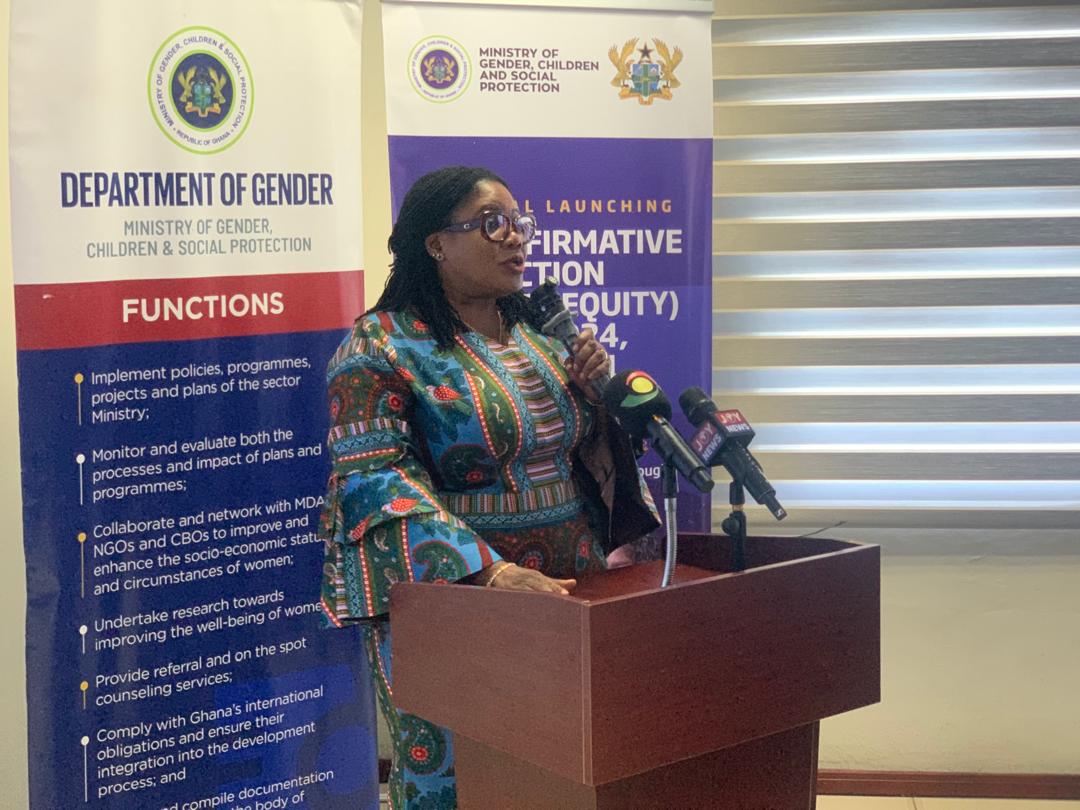
Gender equality should not be left to women alone, but requires the active participation of men and other stakeholders, the Minister for Gender, Children and Social Protection, Dr Agnes Naa Momo Lartey, has said.
She said gender equality was a national development issue and not a matter concerning only women, stressing that both men and women had important roles to play in creating an inclusive society.
Dr Lartey said this last Thursday in Accra at a capacity workshop on the implementation of the Affirmative Action (Gender Equity) Act, 2024.
The workshop was aimed at helping journalists understand the provisions of the Act, strengthen their capacity to communicate gender equity issues and promote accurate, balance reporting on the implementation of the Act.
Ghana could not achieve meaningful development if one section of society was excluded from participating fully in leadership, decision-making and other areas of national development.
“It is not about a group of people. It is not about one of the sexes. It is about the nation. It is about the country,” she said.
She called for stronger commitment to translating the Affirmative Action (Gender Equity) Act, 2024 (Act 1121), into practical action to improve women’s participation in leadership and decision-making.
She said the passage of the law should not be considered the end of the process, but rather the beginning of deliberate efforts to ensure that its objectives were achieved.
Dr Lartey said increasing the number of women in leadership was important, but their participation must also have a meaningful impact on national development.
“We want it to count,” she stressed, calling for practical initiatives that would move the affirmative action agenda from policy to implementation.
The Executive Director of Women, Media and Change (WOMEC), Dr Charity Binka, also urged the media to play a critical role in ensuring the effective implementation of the Act.
She said Ghana had taken an important step by passing the law after 13 years of efforts, but the real test was its implementation.
According to Dr Binka, the Act requires 30 per cent representation of women in leadership and decision-making by 2026, rising to 50 per cent by 2030.
She urged the media to inform the public about the law, monitor institutions’ compliance and challenge stereotypes that undermine women’s leadership.
Dr Binka urged journalists to ensure institutions were complying with requirements, including Gender Equity Policies, Compliance Certificates and annual reports.
She said affirmative action was not about replacing merit with gender, but addressing structural barriers that had historically limited qualified women’s opportunities to participate and lead.
She called for stronger collaboration among government, civil society, traditional and religious leaders, the private sector, the media and other stakeholders to turn the law into measurable results for women and girls.
By Esinam Jemima Kuatsinu
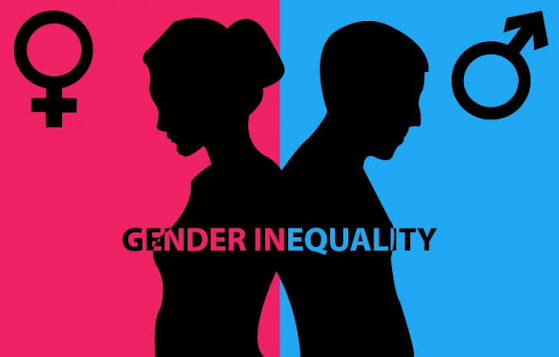
The United Nations has warned, that Gender equality is “woefully off track.”
At the current rate of progress, gender equality would take 171 years to achieve, the UN’s Gender Snapshot report said.
The number of countries with a woman as head of state or government has increased from 2020 to 2026. “Yet six in seven countries are still led by men.
Women’s representation in national cabinets declined to 22.4 per cent in 2026, after peaking at 23.3 per cent in 2024,” the report said. “The decline is a warning sign that gains cannot be taken for granted, and that progress towards equal political power remains fragile.”
Funding for gender equality has fallen to its lowest level since 2021, the report found. At the same time, 42 per cent of UN agencies reported that their efforts to promote gender equality had been weakened, as a result of budget cuts.
Millions of women also continued to endure some extremely severe forms of violence and discrimination across the globe, the UN said. Nearly one in five girls is married before the age of 18, and nearly one in three women globally have survived partner or sexual violence in their lifetime.
In the past year, 316 million women experienced physical or sexual violence by an intimate partner, the report said.
UN Under-Secretary-General for Economic and Social Affairs, Li Junhua, said the statistics were not inevitable. “It is the result of choices, made visible through data. Investing in gender equality, institutions, and the statistical systems that hold them to account is not a cost. It is the fastest route back to the 2030 Agenda’s promise of equal power for all.”-GNA
SKIP THE QUEUE, TAP THE NEWS
You can now read the Ghanaian Times and The Spectator newspapers from the comfort of your device via TimesNewsPlus.
Join our WhatsApp Channel: https://whatsapp.com/channel/0029VbBElzjInlqHhl1aTU27