News
Asenso Boakye slams government for abandoning the Accra-Kumasi dualisation project


- /home/u249204778/domains/spectator.com.gh/public_html/wp-content/plugins/mvp-social-buttons/mvp-social-buttons.php on line 27
https://spectator.com.gh/wp-content/uploads/2025/08/WhatsApp-Image-2025-08-05-at-10.15.32.jpeg&description=Asenso Boakye slams government for abandoning the Accra-Kumasi dualisation project', 'pinterestShare', 'width=750,height=350'); return false;" title="Pin This Post">
- Share
- Tweet /home/u249204778/domains/spectator.com.gh/public_html/wp-content/plugins/mvp-social-buttons/mvp-social-buttons.php on line 72
https://spectator.com.gh/wp-content/uploads/2025/08/WhatsApp-Image-2025-08-05-at-10.15.32.jpeg&description=Asenso Boakye slams government for abandoning the Accra-Kumasi dualisation project', 'pinterestShare', 'width=750,height=350'); return false;" title="Pin This Post">
The former Minister for Roads and Highways and Member of Parliament for Bantama, Francis Asenso-Boakye, has criticised the government’s decision to abandon the ongoing Accra-Kumasi dualisation project in favour of a new six-lane expressway.
Mr. Asenso-Boakye described the move as “misguided,” arguing that the current administration was shifting focus from a strategic and economically viable project to an undefined and unfunded one.
He said the government’s decision lacked proper planning, transparency, and continuity.
According to him, the Accra-Kumasi corridor is the country’s most critical transport link, connecting major regions including Ashanti, Bono East, Northern, North East, and Upper East.
He noted that Kumasi serves as a central node for travelers heading to Bono, Savanna, Upper West, Western North, and Ahafo regions.
Mr. Asenso-Boakye revealed that the dualisation project, which began under the Kufuor administration, had seen significant progress under the Akufo-Addo-led government after being neglected during the Mills/Mahama era.
He stated that over 100 kilometers of the 240km stretch had already been dualised, with an additional 46 kilometers under active construction at sites such as Anyinam, Osino, Enyiresi, and Konongo.
He added that only 94 kilometers remained to complete the project.
He questioned the rationale behind abandoning a project with a known cost, scope, and design, for a new expressway which, according to him, does not yet have a completed feasibility study, confirmed funding, or a clear design.
He cited an admission by the current Minister for Roads and Highways that a consultant was yet to be hired for the feasibility study.
Mr. Asenso-Boakye argued that such a decision defied logic and prudent planning, and represented a breach of Article 35(7) of the 1992 Constitution, which mandates successive governments to continue projects initiated by previous administrations.
He warned that starting a new expressway would come with huge financial implications, including new compensations, environmental assessments, and procurement processes at a time when government is already struggling to fund ongoing projects across the country.
Responding to claims of cost overruns on the dualisation project, Mr. Asenso-Boakye said such issues were common in major infrastructure developments and can be addressed through proper contractual and legal means.
He stressed that variations should not be used as a pretext to discontinue a critical national project.
The MP emphasised that while he supports infrastructure development, it must be strategic, cost-effective, and guided by long-term national interests, not short-term political gains.
He urged the government to reconsider its decision and focus on completing the existing dualisation project to ensure value for money and continuity in national development.
“Ghana deserves better. Our people deserve better. Let us stay the course, not start over for political showmanship,” he stated.
By: Jacob Aggrey









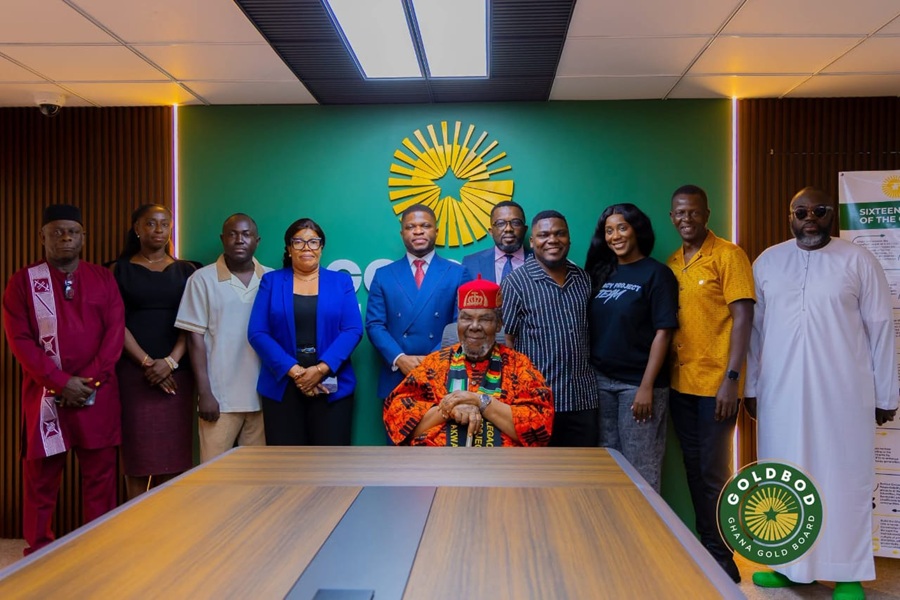
Veteran Nigerian actor and African screen legend, Pete Edochie, has paid a courtesy call on the Chief Executive Officer of the Ghana Gold Board (GoldBod), Sammy Gyamfi, during his visit to Ghana.
Edochie is in Ghana to launch the African Legacy Project, which includes a book, documentary film and an African Youth Mentorship Initiative targeting about 500,000 young people across the continent.
Mr. Gyamfi welcomed the opportunity for GoldBod to support the mentorship initiative, noting that it aligns with the Board’s Special Intervention Programme and its focus on social impact and economic empowerment.
GoldBod’s work is also referenced in Pete Edochie’s new book, which highlights Ghana’s efforts to ensure its gold resources contribute to national development.
By Edem Mensah-Tsotorme
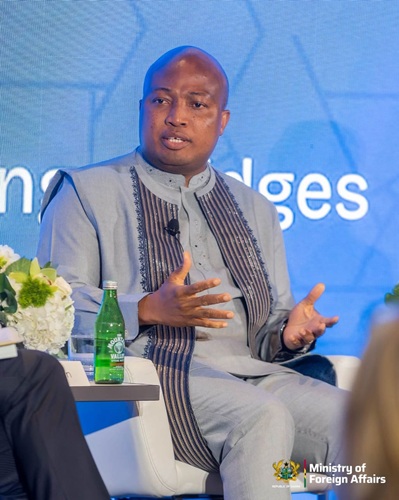
The Ministry of Foreign Affairs has warned Ghanaians seeking employment in Zambia to be cautious of fraudulent job offers that could expose them to human trafficking and forced involvement in cybercrime.
The warning follows the arrest of six Ghanaians in Lusaka, Zambia, during a joint operation by the Zambia Police Service, the Drug Enforcement Commission and the Department of Immigration on August 23, 2026.
According to the Ministry, the operation targeted a facility suspected of being involved in organised cybercrime activities and led to the arrest of 79 people, including 10 Zambians and 69 foreign nationals.
The Ministry said six of the foreign nationals arrested were Ghanaians.
It explained that reports received by the Ghana High Commission in Lusaka indicated that some of those arrested had been recruited through what appeared to be legitimate employment opportunities, including online data entry jobs.
However, the Ministry said some were allegedly forced into online scam activities after their passports were confiscated by their employers.
It warned that the situation highlights how human trafficking groups are using fake employment opportunities to lure unsuspecting job seekers into illegal activities.
The Ministry has therefore advised Ghanaians travelling to Zambia or seeking employment there to thoroughly verify job offers, recruitment agencies and prospective employers before travelling.
Ghanaians living in Zambia have also been urged to remain vigilant when responding to online job opportunities and maintain regular contact with the Ghana High Commission in Lusaka for consular assistance when necessary.
The Ministry said the government remains committed to protecting the welfare and interests of Ghanaians travelling to or living outside the country.
By: Jacob Aggrey