News
Alhaji Raji enstooled new Oba of Yoruba community

- /home/u249204778/domains/spectator.com.gh/public_html/wp-content/plugins/mvp-social-buttons/mvp-social-buttons.php on line 27
Warning: Trying to access array offset on false in /home/u249204778/domains/spectator.com.gh/public_html/wp-content/plugins/mvp-social-buttons/mvp-social-buttons.php on line 27
&description=Alhaji Raji enstooled new Oba of Yoruba community', 'pinterestShare', 'width=750,height=350'); return false;" title="Pin This Post">
- Share
- Tweet /home/u249204778/domains/spectator.com.gh/public_html/wp-content/plugins/mvp-social-buttons/mvp-social-buttons.php on line 72
Warning: Trying to access array offset on false in /home/u249204778/domains/spectator.com.gh/public_html/wp-content/plugins/mvp-social-buttons/mvp-social-buttons.php on line 72
&description=Alhaji Raji enstooled new Oba of Yoruba community', 'pinterestShare', 'width=750,height=350'); return false;" title="Pin This Post">
Yorubas in Ghana last Saturday stormed Chief Braimah Avenue at Sekondi to coronate Chief Raji V, an astute sports administrator, as the new Oba of the Yoruba community in the Western Region.
Although COVID-19 protocols were strictly observed, it did not take away the joy from the fair Yorubas, who graced the occasion and also to savour the joy of the day. Even, the six hours of rains that heralded Raji’s coronation, did not prevent anxious guests from attending.
handkerchief at the crowd
Peregrino Braimah VIII and his council members
turbaned by Imams
members receiving homage from a Yoruba woman
Showcasing colour, pomp and style, the coronation witnessed profused Yoruba tradition from preparation of variety of Yoruba cuisine, bounty dresses through to the turbaning of Raji V, amidst Muslim tradition.
What added the ceremonial touch to the event was the presence of the cream of Yoruba community in Ghana including Oba Alhaji Hamza Peregrino Braimah V111, Chairman of the Yoruba Council of Obas, Oba Alhaji Saka Salami (Olu Kasoa 1), from the Central Region.
The mood of the guests broke bounds when at exactly 12.30pm, Chief Raji V, dressed in an all-white attire, emerged from the palace waving a white handkerchief signifying his victory.
Spontaneously, the Chief Braimah Avenue at Sekondi burst into ecstasy as the Yorubas shouted ‘Raji’, ‘Raji’,Raji, ‘All hail our Oba’, ‘May Allah bless your reign!”
Before his installation, the National Chief Imam of the Yoruba community, Sheikh Mustapha Hussein Diko and the Western Regional Chief Imam, Sheikh Alhaji Ali Hassan, led the congregation to recite prayers for the soul of late Chief Raji 1V, climaxing the 40-day Adua.
Later, the Elder of the Raji family, Alhaji Mustapha Raji, the Imams and Muslim chiefs, presented Chief Raji V with a Koran and turbaned the head to signify his office.
In a chat with The Spectator, Chief Raji V, also known as Alhaji Ali Omola Braimah Raji, pledged to unify the Raji family and the Yoruba community to ensure the peace and development of Sekondi-Takoradi and the entire Western Region.
Born on September 26, 1956, Chief Raji V, began his education at St Peters Anglican Primary School, Sekondi and completed at the St Peters Anglican Middle School, Ketan, in 1971.
He had his secondary school education at the Sekondi College, and, later enrolled at the Kwara State College of Technology, Ilorin, in Nigeria. From there, he worked as the Client Service Manager at Project Monitors.
Chief Raji V returned to Ghana and took over the late father’s business, situated at the Market Circle, Takoradi, and also established Raji Timbers Limited, engaging in the export of wood products.
He established First Pole Limited to deal in general contracts and the marketing of agricultural products.
His interest in sports led him to become a director and team manager as well as the chairman of Sekondi Eleven Wise Football Club, and subsequently, elected unopposed as the chairman of Ghana League Clubs Association (GHALCA) from 2010 to 2016.
With zeal, dedication and commitment, the experienced sports administrator led GHALCA for six good years, and, undoubtedly, got a triple, as he was appointed the vice chairman of the Player Status Committee, a member of the under-17 national team and a member of the senior female football team.
From Clement Adzei Boye, Sekondi


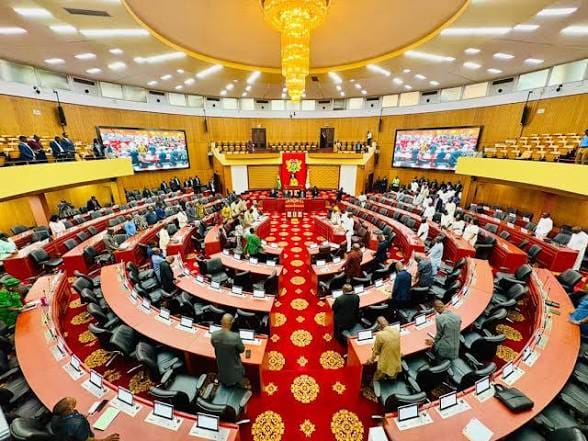
Parliament has clarified public commentary on social media regarding a notice on its notice board that read “No Vacancy for National Service Personnel 2026/2027. Kindly go for reposting.”
In a statement, signed by the Director of Media Relations, David Sebastian Damoah, Parliament said the notice has been misconstrued and was not a policy statement, a freeze on national service placements, or a change in its support for the National Service Scheme.
According to Parliament, the notice was a routine administrative message to prospective personnel who reported to the House, informing them that it has received more personnel than it can accommodate for the 2026/2027 service year and that they should seek reposting to other institutions.
It said it remains committed to the National Service Scheme and values the contribution of service personnel to its work, and regrets any confusion or inconvenience the wording may have caused.
By Edem Mensah-Tsotorme
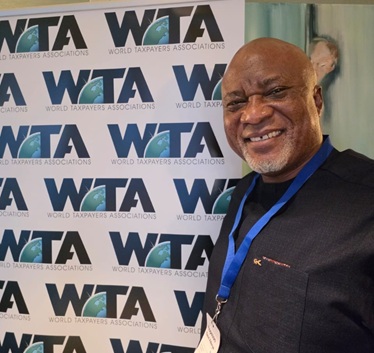
Ghanaian public advocate Hopeson Yaovi Adorye has been elected to the Board of Directors of the World Taxpayers Association (WTA).
The election took place on Sunday, October 5, 2026, during the Association’s conference in Kraków, Poland.
His election marks a significant addition to his international leadership portfolio and provides a platform for Ghanaian and African perspectives to contribute to global discussions on taxpayer rights, responsible taxation, transparency and prudent management of public resources.
Reacting to his election, Mr. Adorye expressed appreciation to the leadership and members of the WTA for the confidence reposed in him.
“I am deeply honoured by this confidence and conscious of the responsibility that comes with it. Taxpayers are at the heart of every economy, and they deserve fairness, transparency, accountability and value for the taxes they pay. I look forward to working with colleagues from across the world to strengthen the voice of taxpayers and promote responsible fiscal governance,” he said.
According to him, taxation should not be viewed solely as a mechanism for raising government revenue, but also as an important component of the social contract between citizens and the state.
Mr. Adorye said governments have a responsibility to ensure taxes are collected fairly and public resources are utilised efficiently to deliver quality infrastructure, healthcare, education, security and other essential services.
His election also creates an opportunity to bring African experiences into international conversations on taxation and public expenditure.
Mr. Adorye, who is Executive Director of Taxpayers League Ghana, has previously served as Global Board Chairman of the International Youth Network for UN Security Council Resolution 2250, an NGO associated with the United Nations Economic and Social Council (ECOSOC).
He is expected to use his new role to champion fiscal accountability, taxpayer education, good governance and stronger citizen participation in public financial management.