Hot!
AG 2023: Win medals to justify expenditure


- /home/u249204778/domains/spectator.com.gh/public_html/wp-content/plugins/mvp-social-buttons/mvp-social-buttons.php on line 27
https://spectator.com.gh/wp-content/uploads/2024/03/Benjamin-Kwaku-Azamati-to-lead-Ghanas-medal-charge.jpeg&description=AG 2023: Win medals to justify expenditure', 'pinterestShare', 'width=750,height=350'); return false;" title="Pin This Post">
- Share
- Tweet /home/u249204778/domains/spectator.com.gh/public_html/wp-content/plugins/mvp-social-buttons/mvp-social-buttons.php on line 72
https://spectator.com.gh/wp-content/uploads/2024/03/Benjamin-Kwaku-Azamati-to-lead-Ghanas-medal-charge.jpeg&description=AG 2023: Win medals to justify expenditure', 'pinterestShare', 'width=750,height=350'); return false;" title="Pin This Post">
Benjamin Kwaku Azamati – to lead Ghana’s medal charge
Spectacular ceremony kicked into motion yesterday the 13th edition of the African Games (AG) on Ghanaian soil for the first time in the history of the competition.
The Games would have in attendance over 7,000 world-class athletes from every part of the continent of Africa, in addition to other thousands made up of officials, technical delegates and many other stakeholders.
And as host nation, Ghanaians have every reason to be optimistic that her medal haul at the competition would improve.
Officials of the respective teams of Ghana are aware of this expectation of Ghanaians who have been made to understand that past failures were because few athletes participated as a result of the cost involved.
Gladly, the Games are happening right on our soil and every discipline code chosen for the Games must have no room for excuses.
Already, comments urging Ghanaians to be modest in their expectation have started flying with others even attempting to introduce Olympic values of mere participation and not winning at all cost into the fray.
It may be tolerable to sound cautious but one may then ask why a country should spend so much to provide infrastructure and other logistics to host such a high profile event and win nothing.
Exact figures of expenditure so far has been difficult to sight but those made available by the Minister of Youth and Sports, Mustapha Ussif, indicates that the government has so far spent a total of $195 million on the provision of infrastructure for the Games.
That represents the amount approved by Parliament although a few members of the same house are beginning to raise concerns over the Games’ expenditure.
In the Minister’s breakdown, he disclosed that an amount of $145,086,057.54 was spent on the Borteyman Sports Complex, which was constructed by Contracta Construction UK Limited; a total of $34,102,135.00 on the upgrade of the 11,000-seater University of Ghana Stadium with a track, a warm-up area for athletes, and a rugby pitch constructed by Consar Limited and a Games Village put up by Mawums Limited at a cost of $16,066,961.20.
That is a huge amount of money and the only justification for that expenditure should be a good medal haul and the quality of facilities Ghana would be left with.
That should make our athletes aware that Ghanaians would not accept any mediocre show on home soil and it is the reason they would enjoy the maximum support to deliver.
There is high expectation for the male and female football teams that would be competing at the Accra and Cape Coast Sports stadiums, the boxing team (Black Bombers), athletics, armwrestling team, taekwondo and others.
The African Games, without doubt, represents a platform to celebrate the traditions and cultures of the various countries and must be preserved at all cost.
However, the rising cost of hosting it will soon become its biggest demon due to the current state of the economies of member nations.
The story of Malawi has been very pathetic and must be a concern to all.
Despite the many talented youth in the country, Malawi could only afford to send two boxers to Accra for the African Games after her boxing association named eight boxers for the Games because the Malawian government was cash-strapped.
The duo includes light-welterweight, Elias Bonzo, and welterweight, Lewis Zakeyu.
Scarcity of funds has been a major stumbling block not only for Malawi. Many other countries are in similar financial quagmire, for which reason they may limit the number of athletes to sponsor for the Games.
In Ghana, there was division at certain points following the delay in construction works, leading to calls from a section of the political elites to abandon the hosting.
That should send signals to members of the African Union Sports Council (AUSC), the Association of National Olympic Committees of Africa (ANOCA), and the Association of African Sports Confederations (AASC/UCSA), owners of the Games to find ways to raise funds to sustain the event instead of leaving a chunk of the task on governments with ailing economies.
By Andrew Nortey


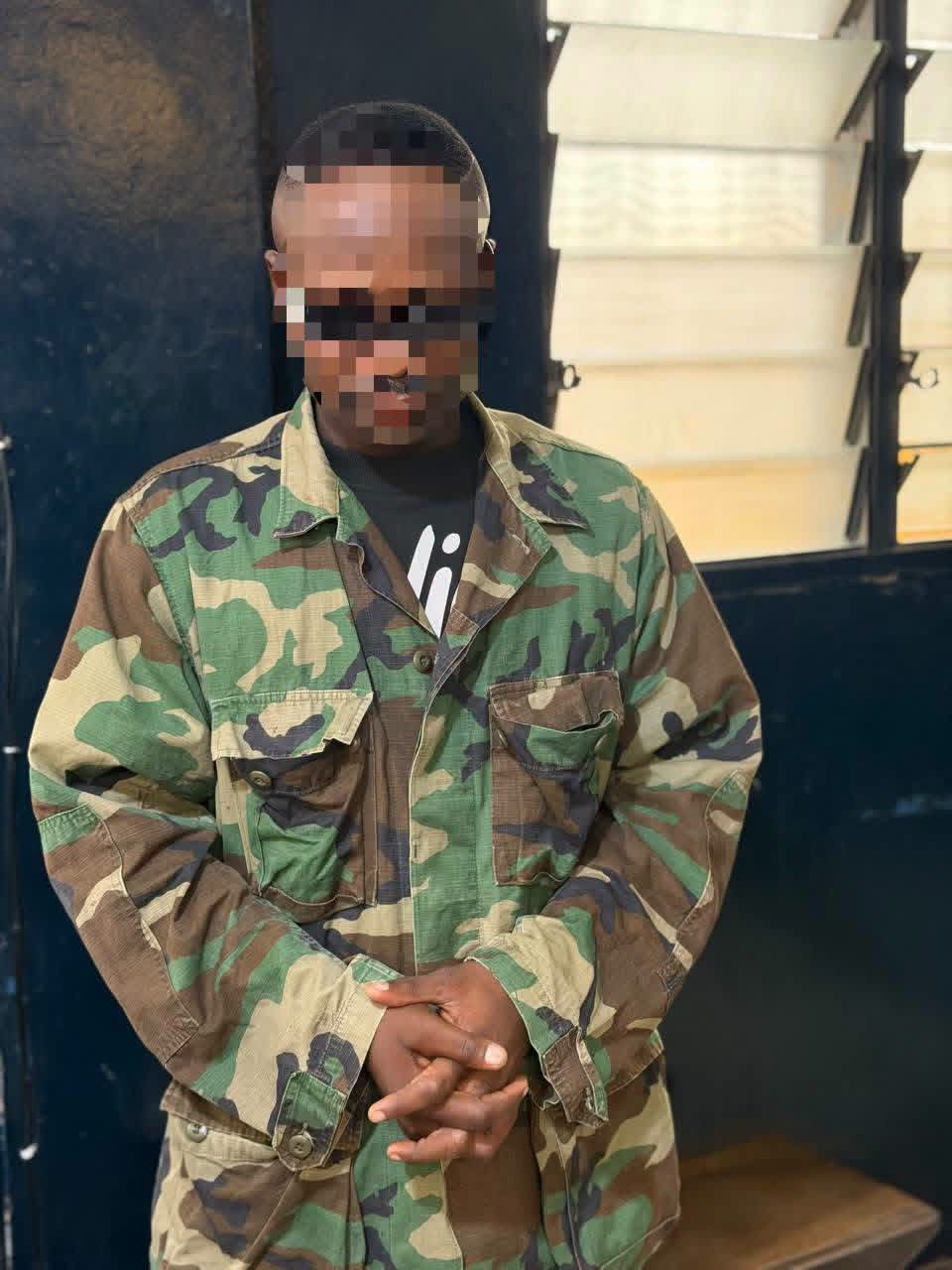
The Tema Regional Police Command has arrested a 32-year-old man for allegedly posing as a soldier and extorting money from unsuspecting members of the public at Ashaiman.
The suspect, identified as Bright Atsu Kudiabor, was arrested by the Ashaiman Police on Wednesday, September 16, 2026, at about 7:00 a.m.
According to the Police, he was arrested at an area known as “I Shall Return”, where he was allegedly parading himself as a soldier and demanding money from people.
The Police said Kudiabor, who is an ex-convict, was initially arrested by personnel of the Ghana National Fire Service in Ashaiman with assistance from other members of the public.
A search conducted on him after he was handed over to the Police reportedly led to the recovery of a set of military camouflage uniform.
The suspect is currently in Police custody and assisting with investigations.
The Tema Regional Police Command said he would be processed for court after investigations are completed.
The Police urged the public to remain vigilant and report anyone who falsely presents themselves as a soldier or a member of another security agency to deceive or extort money from the public.
By: Jacob Aggrey
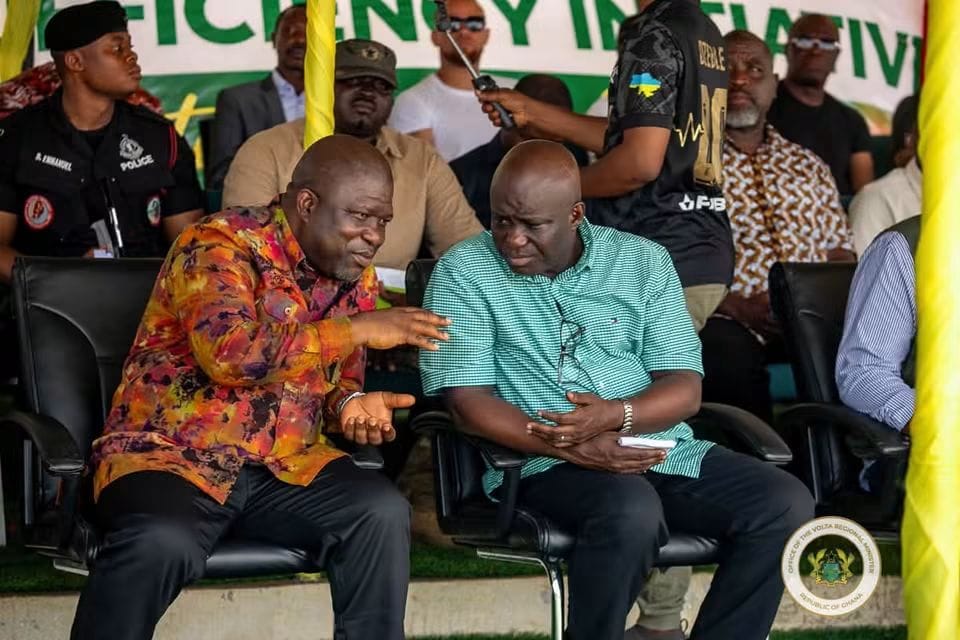
Volta Regional Minister, James Gunu, says the Volta Region holds enormous agricultural potential and efforts must be geared towards connecting farmers to the needed resources to unlock that potential.
He said focus must be on linking farmers to resources, technology, financing and markets to increase production, create jobs and build sustainable livelihoods.
Hon. Gunu made the remarks at the national launch of the Ghana Tomato Self-Sufficiency Initiative (GHATSI) held at Anloga in the Volta Region on Tuesday, September 15.
The initiative, under the theme “Produce at Home. Feed the Nation. Export the Surplus,” seeks to boost local tomato production, processing and marketing while reducing Ghana’s heavy reliance on imported tomatoes.
The launch was attended by the Minister for Food and Agriculture, Eric Opoku, his Deputy, John Setor Dumelo, Feed Ghana Coordinator, Bright Demordzi, Members of Parliament, traditional leaders, MMDCEs, farmers and other stakeholders.
Mr.Gunu expressed appreciation to the Minister for Food and Agriculture for the support announced for the region, including two excavators, 200 cartons of organic fertiliser, and GH¢200,000 for Ms. Kuatudzo Esther Dela, a tomato farmer and processor from Ziope.
He described the initiative as an important step towards making agriculture a stronger driver of food security, job creation and economic growth in the Volta Region.
By Edem Mensah-Tsotorme