Entertainment
African fantasy series Blood Psalms premieres on Showmax with glowing reviews

- /home/u249204778/domains/spectator.com.gh/public_html/wp-content/plugins/mvp-social-buttons/mvp-social-buttons.php on line 27
https://spectator.com.gh/wp-content/uploads/2022/11/image_2022-11-01_103354968-696x385-1.png&description=African fantasy series Blood Psalms premieres on Showmax with glowing reviews', 'pinterestShare', 'width=750,height=350'); return false;" title="Pin This Post">
- Share
- Tweet /home/u249204778/domains/spectator.com.gh/public_html/wp-content/plugins/mvp-social-buttons/mvp-social-buttons.php on line 72
https://spectator.com.gh/wp-content/uploads/2022/11/image_2022-11-01_103354968-696x385-1.png&description=African fantasy series Blood Psalms premieres on Showmax with glowing reviews', 'pinterestShare', 'width=750,height=350'); return false;" title="Pin This Post">
African fantasy series Blood Psalms premieres on Showmax with glowing reviews
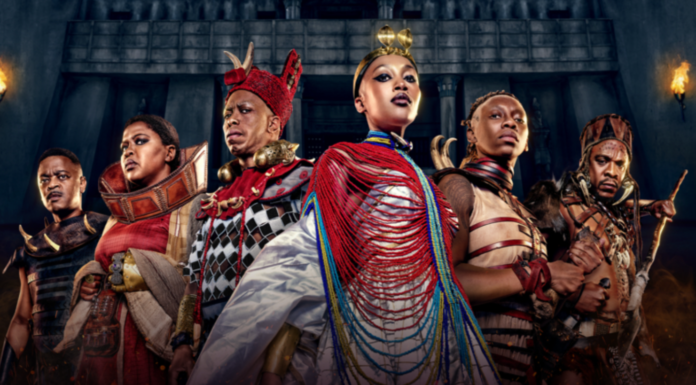
The first two episodes of Blood Psalms, the first Showmax Original fantasy series, are now streaming.
Early reviews are glowing, with TVMzansi calling it, “Without doubt, the best TV show ever created in Africa”; Leon van Nierop “the biggest and most spectacular production of a local series yet” and TimesLive “African fantasy at its finest.”
Set in ancient Africa, the action-packed epic follows Princess Zazi (Bokang Phelane) as she battles a world-ending prophecy to navigate her people through ancient curses, long-standing tribal vendettas and the wrath of the gods.
“Watching it feels as thrilling as being an astronaut exploring new worlds,” says Genevieve Terblanche from tvplus. “The sheer scope of Blood Psalms is breathtaking.”
On TVSA, Movies And Things With Tha-Bang writes, “What Jahmil XT Qubeka and Layla Swart have achieved with Blood Psalms is something that will go down on SA TV history books like the Yizo Yizo and Intersexions of the world, series that came and changed the game when folks least expected it.”
Swart and Qubeka were responsible for South African Oscar entries Knuckle City and Sew The Winter To My Skin. Qubeka also directed Of Good Report, which won seven SAFTAs, including Best Film and Best Director, and Stillborn, which won the SAFTA for Best Short Film.
They’ve assembled an incomparable cast, with nine SAFTA winners – Bongile Mantsai, Hamilton Dlamini, Hlubi Mboya, Mothusi Magano, S’dumo Mtshali, Siv Ngesi, Thishiwe Ziqubu, Warren Masemola and Zolisa Xaluva – and all your faves, from Enhle Mbali Mlotshwa to Lemogang Tsipa, Faith Baloyi to Faniswa Yisa, Mandisa Nduna to Niza Jay, Richard Lukunku to Sello Maake Ka Ncube, Thabo Rametsi to Thando Thabethe, Thembikile Komani to Zikhona Sodlaka, and many more.
We caught up with the most ambitious filmmakers in Africa to find out more about Yellowbone Entertainment’s first Showmax Original, which is already topping the charts on Africa’s homegrown streaming service:
Where did the idea for Blood Psalms come from?
Qubeka: I was just always extremely curious about our continent. The question mark around the history of Africa, and where we come from, has been a great platform for us to be able to build this world.
Swart: I think Blood Psalms is a yearning more than anything else. It’s a look at a history that has never been depicted before, that we always wanted to see.
When is Blood Psalms set?
Qubeka: 11 000 years ago. Blood Psalms is an action adventure series that invites us into a world that no longer exists, a time before the Great Flood changed the world.
Swart: Blood Psalms draws from elements of a multitude of African mythologies and looks at various different tribes in Season 1 – the Akachi, the Uchawi, the Ku’ua, the Chini, and Great Nziwemabwe – as they migrated south from Kemet, which is now Egypt, and formed their cultures.
Qubeka:These tribes moved southward, running away from the calamity that was happening in Kemet and Kush, which is what we now know as northern Sudan. There are remnants even today that show that there was a great civilization and a great culture that comes from that space.
Which tribe do you focus on the most?
Swart: The tribal focus in season one is House Akachi, run by the eccentric King Letsha [four-time SAFTA winner Mothusi Magano].
Qubeka: We look at this world through the eyes of his daughter, a young Akachi princess by the name of Zazi [Bokang Phelane], as she goes on her own quest to find a sense of self in a rapidly evaporating world.
How do you feel about the inevitable Game of Thrones comparisons?
Qubeka: If they want to call it the African Game of Thrones, I’ll take that mantle on. If you love Game of Thrones, you’re gonna love this show.
But what we really want to do is create heroic archetypes for the African child. If you look across the entire landscape of cinema and television, there are no archetypes for the African child.
Swart: It’s a pioneering show that attempts to redefine our very perception of our identity as Africans. What we’re trying to do is to reclaim the continent’s history from an African perspective. The goal, for us, is to ensure that the golden thread of Africa’s stunning history really shines.
Qubeka: If we don’t start to project an image of how we see ourselves, someone else is going to do that for us.
There are very few references for Africa 11,000 years ago. Was this freeing or challenging?
Swart: Building a world that doesn’t exist has been enormously creative. Doing something set 11,000 years ago has really given us all collectively the scope to just play.
But it’s also enormously challenging. Every single costume, every single piece of the set had to be conceived and made from scratch.
Qubeka: I’m very excited to see how audiences engage this world. There’s a lot of things that people are going to look at and be like, ‘What are you talking about? Did they have guns in that time? Do they have electricity?’ There’s all sorts of things that we challenge in terms of conventions, of what people understand of our glorious past.
Where did you shoot in the Eastern Cape?
Qubeka: So the Akachi Citadel actually sits above the Hole in the Wall but we shot parts of the Citadel in different locations. For example, the big dam in Graaff-Reinet is incorporated as the Citadel dam, situated at the back end of the city.
What I really loved about shooting in the Eastern Cape is that it just brought a whole other dimension to what we were intending to achieve.
The epic scale of places like Coffee Bay and the Valley of Desolation – just the size and scale of these places – makes you feel so insignificant, so small, so we’re able to get an essence of what it could have been like 11,000 years ago on this continent.
Why should audiences watch your show?
Qubeka: It’s a sweeping epic adventure that doesn’t hold back. It is definitely a large canvas, one that I personally have not seen from this continent. This thing is big.
Now streaming, first on Showmax
Shot in the Eastern Cape, Gauteng and North West provinces, Blood Psalms is a Showmax Original in partnership with CANAL+, the Department of Trade, Industry and Competition, the Eastern Cape Economic Development Corporation (ECDC), the National Film and Video Foundation (NFVF) and the MultiChoice Innovation Fund, which supports South Africa’s most exciting entrepreneurs, enabling them to bring their unique, innovative and creative business ideas to life.
Showmax will drop new episodes of Blood Psalms every Wednesday until the end of November 2022.
Source: showmax

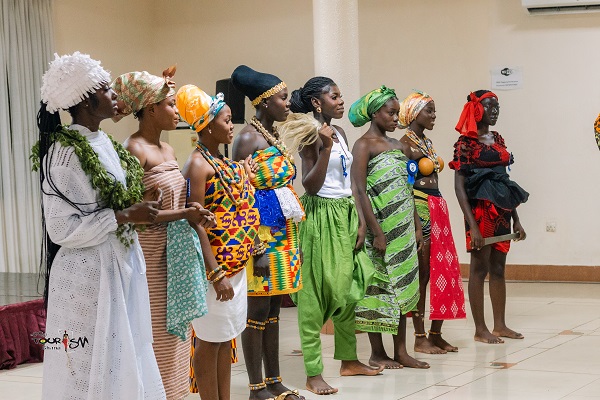
It was a night of intellect, eloquence and culture as contestants of the 2026 Miss Tourism Ghana took centre stage at the Coconut Grove Regency Hotel for the Debate and Culture Night last Saturday.
The event, which forms part of activities leading up to the grand finale, saw the ladies move beyond beauty to battle with ideas, facts and opinions on a topic critical to the tourism industry.
The contestants debated the topic: The Importance of Traditional and Digital Media on Promotion of Tourism.
For the debate, the contestants were grouped into two teams of four, each tasked with defending a side of the argument.
It was a fierce but respectful exchange. The team arguing for traditional media described it as the trust builder, emphasising its credibility, mass reach, and its power to tell in-depth, emotional stories through television documentaries, radio and newspaper features.
They argued that traditional media still shapes public opinion and influences policy decisions in the tourism sector.
On the other side, the proponents of digital media raised salient points about its unmatched advantages in the modern era.
They highlighted its global reach at low cost, its two-way interaction that allows tourists to share real experiences and reviews, its ability to target specific audiences, and its measurable results where clicks, views and bookings can be tracked.
After heated arguments and rebuttals, both teams arrived at a powerful consensus that drew applause from the audience.
They concluded that without traditional media, tourism promotion lacks credibility and depth, and without digital media, it lacks reach, engagement and sales.
The judges and patrons agreed that the debate underscored a crucial lesson for Ghana’s tourism drive: for a country blessed with rich cultural heritage, colourful festivals, historic forts and castles, diverse wildlife and pristine beaches, the winning formula lies in combining the storytelling power of traditional media with the viral power of digital media to attract both domestic and international tourists.
The night was not only about debate, as the contestants also dazzled in cultural wear, showcasing the beauty and diversity of Ghanaian culture.
By Edem Mensah-Tsotorme
SKIP THE QUEUE, TAP THE NEWS
You can now read the Ghanaian Times and The Spectator newspapers from the comfort of your device via TimesNewsPlus.
Join our WhatsApp Channel: https://whatsapp.com/channel/0029VbBElzjInlqHhl1aTU27
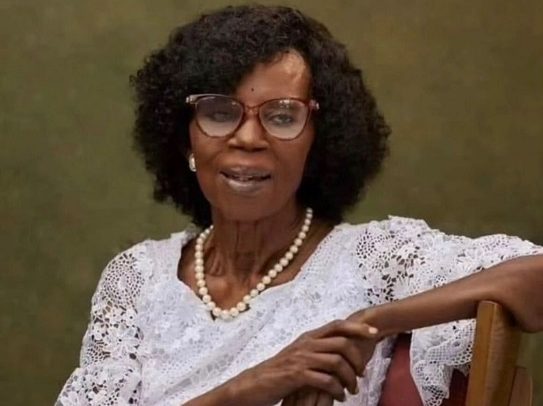
Veteran Ghanaian Actress Grace Nortey has reportedly passed away on Wednesday August 26, 2026.
According to reports she passed away at University of Ghana Medical Centre (UGMC) at age 89.
Born in 1937, she embarked on her acting journey in 1970, establishing herself as one of the pioneers of theatre and drama in Ghana.
Over four decades, Grace Nortey has been a consistent source of joy for Ghanaian TV audiences through her acting prowess.
A distinctive feature of Grace Nortey’s performances was her adept incorporation of the Ga language into her roles, adding an authentic touch to her portrayals.
Her acting journey kicked off with the 1985 release, “Nana Akoto,” and she went on to contribute to notable films such as “Sinking Sands,” “The Other Side of the Rich,” “Ties that Bind,” and “Beasts of No Nation,” where she shared the screen with Idris Elba, Fred Amugi, and Ama K. Abebrese.
She earned the Best Cameo Actress at the 2011 Ghana Movie Awards.
SKIP THE QUEUE, TAP THE NEWS
You can now read the Ghanaian Times and The Spectator newspapers from the comfort of your device via TimesNewsPlus.
Join our WhatsApp Channel: https://whatsapp.com/channel/0029VbBElzjInlqHhl1aTU27