News
African countries seek UN racism debate in wake of global protests

African countries called Friday on the UN Human Rights Council to urgently debate racism and police brutality in the wake of the global protests that followed George Floyd’s killing by an officer in the US.
In a letter written on behalf of 54 African countries, Burkina Faso’s ambassador to the UN in Geneva asked the UN’s top rights body for an “urgent debate” on “racially inspired human rights violations, police brutality against people of African descent and the violence against the peaceful protests that call for these injustices to stop.”
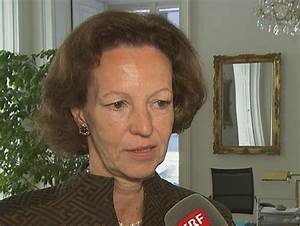
The letter, addressed to rights council president Elisabeth Tichy-Fisslberger of Austria, requested that this debate be held next week, when the council’s 43rd session resumes, after it was interrupted in March due to the COVID-19 pandemic.
It pointed to the case of George Floyd, a 46-year-old black man who died in police custody in Minneapolis on May 25 after a white officer, who has since been charged with murder, pressed his knee on his neck for nearly nine minutes.
call came after Floyd’s family, along with the families of other victims of police violence and over 600 NGOs this week called on the council to urgently address systemic racism and police impunity in the US.
For the council to consider such a request, it needs to have the backing of at least one country.
With the request now coming from a large group of states, “that increases the chances” it will take place, a council spokesman told AFP. Floyd’s death, which was caught on video and has sparked massive protests across the United States and around the world, “is unfortunately not an isolated incident, with many previous cases of unarmed persons of African descent suffering the same fate due to unchecked police brutality,” the letter said.
“Sadly, the fates of many other victims attracted no attention, as they were not captured on social media for all to see,” Ambassador Dieudonne Desire Sougouri wrote on behalf of the African Group at the council.
While the letter called for a debate on racism around the globe, it in particular highlighted the situation in the United States.
“The protests the world is witnessing are a rejection of the fundamental racial inequality and discrimination that characterise life in the United States for black people, and other people of colour,” it said.
A number of countries are expected to address Floyd’s killing and concerns about police violence and racism in the United States during the resumed 43rd council session even without a special debate.
But since the deadline for tabling fresh resolutions during this session expired back in March, they will only be able to call for concrete actions within the confines of this extraordinary debate.
FRANCE 24 with AFP


The Managing Director of the Tema Oil Refinery (TOR), Edmond Kombat, has revealed that crude processing at the refinery has resumed after years of dormancy.
Speaking at the Government Accountability Series, Mr. Kombat said crude processing started on December 19, 2025, with all product streams going to storage for the first time in years.
He disclosed that since May 2026, TOR has received four five-million-barrel crude cargoes: Bonga, Baleine, Bonnie Light, followed on July 15 by Ghana’s Jubilee Medium Sweet crude, an indigenous crude delivered aboard MT Apache.
According to him, TOR paid for the Jubilee cargo in full, making it the refinery’s first Jubilee cargo in a decade.
Mr. Kombat added that on August 1, 2026, the President commissioned the refurbished Crude Distillation Unit.
The refinery, he said, then received another parcel of Ghanaian indigenous crude of 950,000 barrels of Sankofa crude on September 25, 2026, from its sister agency, the Ghana National Petroleum Corporation (GNPC).
By Edem Mensah-Tsotorme
News
GTA CEO and deputy’s clash sends the wrong signal; both parties should resolve their differences – Fiifi Boafo

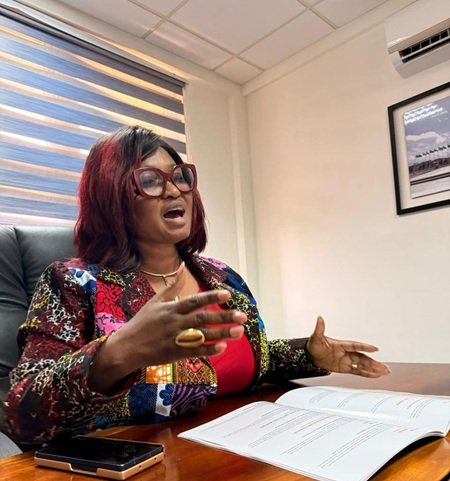
Former Head of Public Affairs at COCOBOD, Fiifi Boafo, has called for an immediate resolution of the reported communication dispute between the Chief Executive Officer (CEO) of the Ghana Tourism Authority (GTA), Maame Efua Houadjeto, and her deputy, Abeiku Santana.
Speaking on Joy News on Monday, October 26, 2026, Mr Boafo questioned the circumstances that led to the deputy CEO raising concerns about his access to the chief executive with the sector minister.
He described Abeiku Santana as a pleasant person who relates well with others and expressed concern about the situation, which he said sends the wrong signal about the authority’s leadership.
“I am wondering what is happening at the GTA that the woman doesn’t want to see Abeiku, to the extent that you write to the minister,” he said.
Mr Boafo indicated that the matter required urgent attention to ensure both officials could work together effectively. He added that if the deputy CEO’s concerns were justified, steps should be taken to address them. However, if the problem was also coming from the deputy CEO, the chief executive had the responsibility to address that as well.
His comments follow a letter dated October 22, 2026, in which Abeiku Santana, the GTA Deputy CEO in charge of Marketing and Special Duties, asked the Minister of Tourism, Culture and Creative Arts, Abla Dzifa Gomashie, to intervene over what he described as recurring difficulties in securing meetings with the CEO.
In the letter, Mr Santana explained that he had repeatedly requested meetings through the CEO’s secretary or personal assistant but was informed that she was unavailable.
He said the situation had made it difficult to obtain timely guidance, approvals and decisions needed to perform his duties, sometimes resulting in delays in operations, stakeholder engagements and the implementation of key assignments.
He stressed that his intention was not to make a personal complaint but to draw attention to a communication gap that required attention in the interest of effective management and institutional efficiency.
However, in a response dated October 24, 2026, addressed to the GTA Board Chairperson, Ms Houadjeto expressed surprise and disappointment over the concerns raised by her deputy, insisting that she operated an open-door policy, particularly for executive and senior management officers.
The CEO acknowledged the importance of effective communication and timely decision-making and proposed measures to strengthen coordination between the two offices.
These included scheduled executive consultations, a clear procedure for escalating urgent matters, improved coordination of meeting requests, clearer delegation of responsibilities and regular engagement among members of the executive management team.
She proposed an early meeting with her deputy to agree on practical arrangements for implementing the measures.
By: Jacob Aggrey