Profile
Celebrating youth excellence …summary profile of some FortyUnder40 achievers

- /home/u249204778/domains/spectator.com.gh/public_html/wp-content/plugins/mvp-social-buttons/mvp-social-buttons.php on line 27
Warning: Trying to access array offset on false in /home/u249204778/domains/spectator.com.gh/public_html/wp-content/plugins/mvp-social-buttons/mvp-social-buttons.php on line 27
&description=Celebrating youth excellence …summary profile of some FortyUnder40 achievers', 'pinterestShare', 'width=750,height=350'); return false;" title="Pin This Post">
- Share
- Tweet /home/u249204778/domains/spectator.com.gh/public_html/wp-content/plugins/mvp-social-buttons/mvp-social-buttons.php on line 72
Warning: Trying to access array offset on false in /home/u249204778/domains/spectator.com.gh/public_html/wp-content/plugins/mvp-social-buttons/mvp-social-buttons.php on line 72
&description=Celebrating youth excellence …summary profile of some FortyUnder40 achievers', 'pinterestShare', 'width=750,height=350'); return false;" title="Pin This Post">

Ms. Eunice Mawuena Kloe is a 23-year-old Social Entrepreneur who topped the Social Enterprise category. Before graduating from the Kwame Nkrumah University of Science and Technology in 2020, she was a Junior Ambassador of Trade at the World Trade Centre Association Foundation in 2018 and worked on Community Development Projects in over six communities of Ghana. As the team President of Enactus KNUST, the Project ‘Reecoplast’ won the Ford C3 Grant of $3000. In 2019, she was awarded Top Female Entrepreneur of the Year by Total Petroleum, Ghana — an award which came with a GH¢ 90,000 business expansion funding. She is the Co-Founder of BidiGreen Ghana Limited, a company that positively contributes to the UN Sustainable Development Goal 13. Her eco-friendly agro waste sourced charcoal product is helping save lives and putting an end to deforestation. As the Project Development Assistant of a World Bank-funded project, she helps drive entrepreneurship and innovation by addressing some development challenges such as sustainability, poverty reduction and inclusive growth. Mawuena is a Jim Leech MasterCard Fellow and the Senior Project Director at the Inclab Foundation, an organisation championing entrepreneurship and encouraging young graduates and individuals to explore a career in entrepreneurship.

Mr. Isaac Kofi Nketiah took home the ultimate prize in Agriculture category. He is the Co-founder of Shamfield Ventures, a fast growing pineapple export company. He partnered a friend to go into pineapple farming after several attempts to land a job in the petroleum sector proved futile. The company owns over 20 acres of pineapple plantation with over 50 workers. The farm creates direct and indirect jobs for a lot of young people in the Pokrom community and its environs. It again provides assistance to individuals who have the passion for farming but lack the technical know-how or capital.

Nana Owusu Odum emerged victorious in the Agro-processing category. He is described as a versatile, focused and visionary leader. He is a Strategist and Financial Analyst with extensive experience in oil and gas as well as the food industry for over a decade. He has led the successful initiating, planning and execution of the brand visibility and revenue generation of the Sankofa brand and is equipped with skill for engaging stakeholders across multiple industries. He has employed about 10 porters who serve as support for transporting Sankofa products when they get to various markets.

Valerie Lawson stood out in the Beauty and Lifestyle category. She has 11 years experience in the beauty industry. Valerie was appointed Artistic Director of Maybelline NY, first appointment to be given a Ghanaian and had since gained global recognition and won multiple awards. She is the creator of ‘The Makeup Masterclass’ designed to educate, empower existing makeup artists to better their skills as artists while equipping them with tools to turn their passion and skill into thriving business.

Wedam Kadoa Rhoda is the Founder and Chief Executive Officer (CEO) of the Song-Ba Empowerment Centre. She defeated other nominees in the Community Development category. With over five years experience in Social Enterprising, she focuses on supporting women/girls who have no formal education to identify decent sources of livelihoods. Through her projects, she has empowered 10 girls who are currently masters on their own in smock weaving and sewing. In 2018, she emerged the overall best female SDGs Achiever at the Africa Youth Summit held in Accra, Ghana. Rhoda intends to create at least one Empowerment Centre in each of the 16 regions of Ghana to enable her to reach out to more women and girls through her projects.

Mr. Michael Asiedu is a multiple award winning businessman in the travel and tourism industry. Born in December 1988, he graduated from the University of Cape Coast with Bachelor of Arts Degree in Economics and Geography. He again holds Masters in Logistics and Supply Chain Management from the Kwame Nkrumah University of Science and Technology. He is the Founder and CEO of Rebirth Travel and Tours, a company focused on providing high quality travel and tour services in Ghana and beyond. With eight years experience in tourism marketing, Mr. Asiedu continues to promote domestic tourism and has helped most hotels to increase sales through his marketing strategies and bookings. These and other achievements earned him the top prize in this category.


When Rev. Seth Kwame Ativor lost his sight at the age of two, few would have imagined that he would one day make history as the first visually impaired minister to be ordained in the Presbyterian Church of Ghana (PCG).
Through determination, faith and unwavering resilience, he has overcome numerous barriers to become an educator, minister and advocate for inclusion.
Born in 1981 at Afife in the Volta Region, Rev. Ativor grew up in a family whose spiritual journey would later influence his own path.
His father was a traditional priest who later converted to Christianity and joined the Evangelical Presbyterian Church.
As a young child, Rev. Ativor suddenly lost his sight. Although the exact cause was never established, the condition changed the course of his life.
The loss of vision brought educational and social challenges at a time when support systems and learning materials for visually impaired students were limited.
Despite these obstacles, he remained focused on his education. He attended Okuapeman Secondary School, where he successfully completed his secondary education before gaining admission to the University of Cape Coast (UCC), where he obtained his first degree.
His passion for learning did not end there. He furthered his studies at the University of Education, Winneba (UEW), earning two master’s degrees.
He is currently pursuing a Doctor of Philosophy (PhD), demonstrating his commitment to lifelong learning and personal development.
Today, Rev. Ativor serves as an Information and Communication Technology (ICT) teacher at Okuapeman Senior High School, where he continues to impact the lives of students through education and mentorship.
Although deeply involved in church activities, Rev. Ativor never envisioned himself becoming a minister.
His journey into ministry began after joining Christ Congregation of the Presbyterian Church of Ghana in 2002. It was during his time in the church that he felt a strong conviction that God was calling him into pastoral ministry.
Initially, he resisted the call.
“I never dreamt of becoming a minister. There was no pastoral background in my family and nothing in my life suggested that I would one day enter the ministry,” he recounted.
The challenge was not only personal. At the time, questions arose about whether a totally blind person could effectively serve as an ordained minister in the church.

Following extensive consultations and discussions among church leaders, Rev. Ativor was eventually granted the opportunity to sit for the church’s entrance examinations and interviews for ministerial training.
He excelled and was admitted to the Presbyterian theological training programme.
After years of theological education and preparation, he was ordained on July 15, becoming the first visually impaired minister in the history of the Presbyterian Church of Ghana.
Rev. Ativor’s ordination marked a significant milestone in the church’s efforts towards inclusion.
He explained that the Presbyterian Church has, over the years, made deliberate efforts to create opportunities for groups that were previously marginalised, including women and persons with disabilities.
For him, becoming the first visually impaired minister is not merely a personal achievement but a symbol of what is possible when institutions embrace diversity and equal opportunity.
“My prayer is that I will not remain the first. I hope many more persons with disabilities will be given the opportunity to serve God and society according to their gifts and calling,” he said.
As both an ICT teacher and minister, Rev. Ativor relies heavily on assistive technology to perform his duties.
Using specialised computer software, he is able to access the Bible, theological books, commentaries and other educational materials independently. Technology enables him to prepare sermons, conduct research and perform many of his responsibilities effectively.
He also acknowledges the support of his family, church members and colleagues who assist him when necessary.
His wife, children and siblings have been a constant source of encouragement throughout his educational, professional and ministerial journey.
According to Rev. Ativor, one of the greatest lessons blindness has taught him is humility.
While he values independence, he has learned that accepting help is sometimes necessary and that collaboration makes it possible to achieve greater things.
His experience has also deepened his understanding of the barriers faced by persons with disabilities.
“It is not blindness itself that disables me. It is inaccessible environments, inaccessible information and negative attitudes that create disability,” he emphasised.
He believes society must shift from viewing persons with disabilities as dependent individuals to recognising them as people with talents, skills and the capacity to contribute meaningfully to national development.
Rev. Ativor’s message to young people living with disabilities is to never allow limitations to define their future.
He encourages them to discover their talents, pursue education and remain determined despite challenges.
“Disability does not mean inability. God has given every person unique abilities and a purpose. Focus on what you can do and strive to make a difference,” he advised.
He also called on parents, schools, churches, policymakers and communities to create inclusive spaces that enable persons with disabilities to thrive.
By Esinam Jemima Kuatsinu

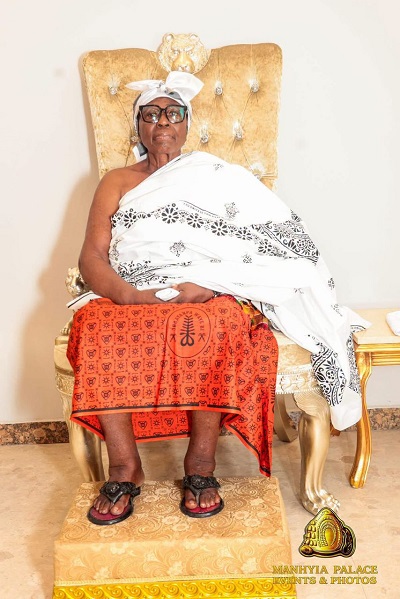
For nearly a year, one of the most revered stools in the Asante Kingdom remained vacant, leaving a quiet but unmistakable sense of expectation hanging over the Manhyia Palace.
Every sitting of Asanteman Council, every major traditional ceremony, and every conversation within royal circles carried the same lingering question: Who would become the next Asantehemaa?
Last Monday, that long wait finally gave way to certainty and historic celebration.
In a development warmly received across the length and breadth of the Asante Kingdom, the Asantehene, Otumfuo Osei Tutu II, formally accepted the nomination and welcomed the newly enstooled Asantehemaa in a grand ceremony steeped in age-old tradition at the Manhyia Palace.
Born Margaret Serebour, the 79-year-old retired educationist has ascended the revered Kusiamoah Stool. She has been enstooled under the stool name Nana Yaa Akyaa II, officially becoming the 15th Asantehemaa in the rich history of the Asante Kingdom.
The historic enstoolment marks the end of months of quiet consultations and meticulous traditional processes following the passing of Nana Ama Konadu Yiadom III in August 2025.
Since her demise, the prestigious office of Asantehemaa—one of the highest traditional institutions in Ghana—had remained vacant, with Asanteman patiently awaiting the customary selection of a worthy successor.
Nana Yaa Akyaa II brings an impeccable and deeply historic royal pedigree to the stool.
She is a direct granddaughter of Otumfuo Agyeman Prempeh I, the legendary Asante monarch who, alongside Nana Yaa Asantewaa, was exiled to the Seychelles islands by the British after the Anglo-Asante War.
Furthermore, she is a niece of Otumfuo Sir Osei Agyeman Prempeh II and a biological sister of the late Nana Akwasi Agyemang, the prominent, long-serving former Chief Executive of the Kumasi Metropolitan Assembly.
A devout Christian, the new Queen mother is also a well-known, dedicated worshipper at the Anglican Church in AshTown, Kumasi.
Palace sources describe Nana Yaa Akyaa II as a woman widely admired within the Royal family for her humility, patience, calm disposition, and unique ability to unite people.
These qualities are regarded as essential for the occupant of an office that seamlessly blends moral authority, cultural stewardship, and traditional leadership.
An opinion leader, speaking on condition of anonymity, noted that Manhyia is once again witnessing a moment of profound historical and cultural significance—one that closes a chapter of waiting and opens a vibrant new page in the centuries-old story of the Asante Kingdom.
Within the constitutional and cultural framework of the Asante Kingdom, the Asantehemaa occupies a position second only to the Asantehene.
She serves as the ultimate custodian of the royal matrilineal lineage and bears the singular responsibility of nominating a successor to the Golden Stool whenever the throne becomes vacant.
Beyond her critical role in succession, she operates as a trusted co-ruler and adviser to the Asantehene, acts as the ultimate leader of women in Asanteman, and serves as a vital arbiter in family and customary disputes.
With her formal customary rites completed on Thursday, July 9, and her acceptance by the Asantehene finalised, Nana Yaa Akyaa II begins her historic reign, anchoring the ancient traditions of Asanteman into a modern era.
The development also paves the way for the preparation of the final funeral rites of the late Nana Yaa Konadu Yiadom III, as ‘Dote Yie’ had already been observed.
From Kingsley E. Hope, Kumasi