Profile
Doris Deku: The professional tiler inspiring female artisans


- /home/u249204778/domains/spectator.com.gh/public_html/wp-content/plugins/mvp-social-buttons/mvp-social-buttons.php on line 27
https://spectator.com.gh/wp-content/uploads/2021/10/She-was-adjudged-the-Most-Inspiring-Artisan-of-the-Year.jpg&description=Doris Deku: The professional tiler inspiring female artisans', 'pinterestShare', 'width=750,height=350'); return false;" title="Pin This Post">
- Share
- Tweet /home/u249204778/domains/spectator.com.gh/public_html/wp-content/plugins/mvp-social-buttons/mvp-social-buttons.php on line 72
https://spectator.com.gh/wp-content/uploads/2021/10/She-was-adjudged-the-Most-Inspiring-Artisan-of-the-Year.jpg&description=Doris Deku: The professional tiler inspiring female artisans', 'pinterestShare', 'width=750,height=350'); return false;" title="Pin This Post">
She grew up in Suhum in the Eastern Region but lost both parents at a tender age. Her father died when she was 15 and her mother also passed on three years later.
Due to financial constraints, her dream of becoming a Lawyer could not materialise as she was unable to further her education beyond Junior High School.
Determined to make ends meet nonetheless, she took up petty trading while living with an elder sister at Madina in Accra. Many years on, she has found her way in construction as a professional tiler and is helping other young ladies tap the opportunities in this sector.
This is the story of Ms. Doris Deku, Chief Executive Officer (CEO) of Ansadee Ventures and Ambassador for Artisans Association of Ghana (AAG).
When The Spectator caught up with her last Friday, she and her team had started a tiling project on a three-storey building in Accra.
Options
Explaining how she has become a highly sought-after tiler in Accra, the 29-year-old said that she used to sell cooked food at construction sites in her area after completing basic education.
“On one of my rounds at the site, I interacted with a worker on how I could be trained as a tiler. I had been observing them for sometime and I thought it would be an easy job for me,” she recalled.
According to her, some of the workers had told her that “tiling is not for ladies and not the same as preparing food for sale.” This ridiculous comment, she noted, were meant to “kill her passion’ but it rather sparked her interest further and did not damper her spirit.
As fate would have it, on one of her food selling rounds, she chanced on an opportunity offered by the Youth Inclusive Entrepreneurial Development Initiative for Employment (YIEDIE).
The five-year project, implemented by Global Communities in partnership with Mastercard Foundation, is designed to “create economic opportunities in the construction sector for economically disadvantaged youth.”
Doris decided to join the programme but initially opted for training in interior decoration. Upon realising that a lot of her compatriots had chosen this particular course, she switched to learn the rudiments of tiling instead.
“I told myself I would try tiling because I have never seen a female doing this job,” she said.
Doubt
According to her, some pessimists had doubted her success in the field during the first week of training but she was bent on finishing what she had started.
“When my trainer was away some workers would tell me to quit and find a better alternative but I kept telling them that even if I did not succeed, the knowledge I acquired would be enough achievement for me,” she said.
Contract
After completing the six-month intensive training in 2016, Doris sat the National Vocational Training Institute (NVTI) proficiency test and continued to understudy her “Master”, Mr. Nicholas Agbotse, for another one-and-a-half years.
“On a visit to a construction site, a fellow artisan spoke to me about a tiling job. The building project was behind schedule so they needed more hands to complete the tiling project. I did not have all the tools for the job so I decided to partner other colleagues in order to use their tools,” she said.
This was how the tenacious woman executed her first contract successfully and had since been getting recommendations for other projects. Subsequently, she joined a real estate development company that relied on her expertise anytime there was a project.
Company
With an initial grant from YIEDIE, she registered her company in 2017 and currently has 14 trainees, comprising 11 girls and three boys, and seven other permanent workers.
In September this year, the company was recognised by the Ghana Chamber of Construction Industry as the “Most Distinguished Inspiring Artisan of the Year” at the Ghana Construction Industry Excellence Awards.
Future
Although she is impressed that more young ladies now look up to her, the AAG Ambassador said she would do more for herself and other young girls in the industry.
“I want to train more ladies in tiling and form an all women artisan group to encourage other women to tap the opportunities in the construction industry,” she said.
Doris says she now has many of the equipment required for the job but plans to get other mechanical ones to speed up her work.
Advice
The CEO maintains that there are opportunities in the construction sector, apart from tiling and that young people, especially females, should strive to make a mark in the sector.
She says that the initial hurdles are inevitable but the benefit would certainly come when ‘we put our minds to it.”
“Tiling is all about beautification so I am always proud of myself when people are satisfied with my work after completion,” she has said.
The graduate of Umabun Hatab Islamic School at Madina Zongo has urged artisans to remain committed to their task and allow their professionalism to “speak for them.”
Doris, the youngest of five siblings, has said that her progress is not by her might but by the “will of God,” and remains grateful to Mr. Agbotse who trained her at the initial stages at no cost.
By Ernest Nutsugah


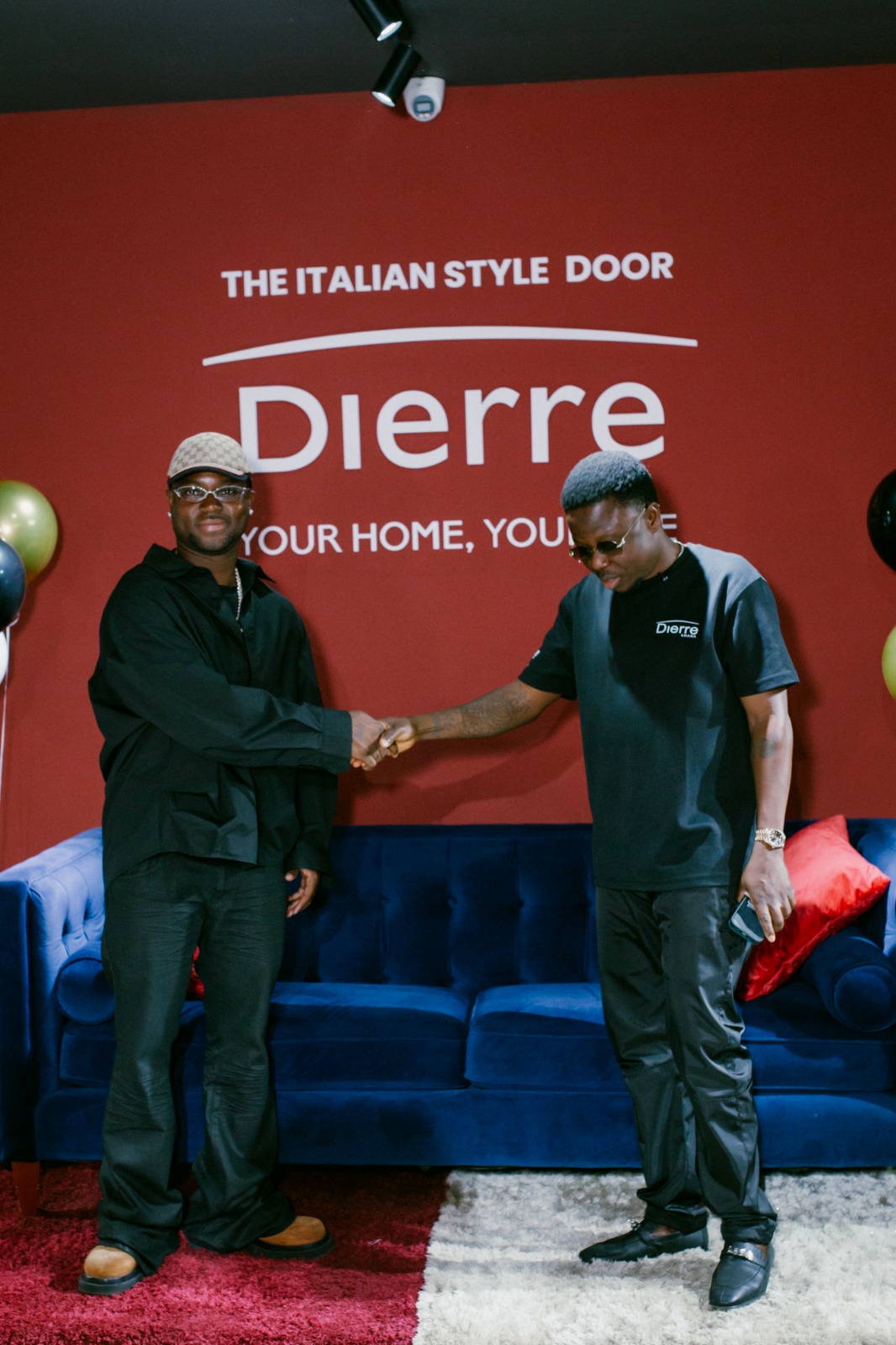
Italian premium security door manufacturer Dierre S.p.A. has named award-winning Ghanaian Afrobeats and Highlife artiste King Promise (Gregory Bortey Newman) as the face of its new Ghana and West Africa marketing campaign.
The partnership, managed by Regiments Management Company Limited, forms part of Dierre’s efforts to strengthen its presence in the West African market.
The two-week campaign, themed “Secure What Matters,” will run across digital, outdoor and influencer platforms, with King Promise featuring in a campaign film showcasing Dierre’s Prestige and Synergy security door ranges.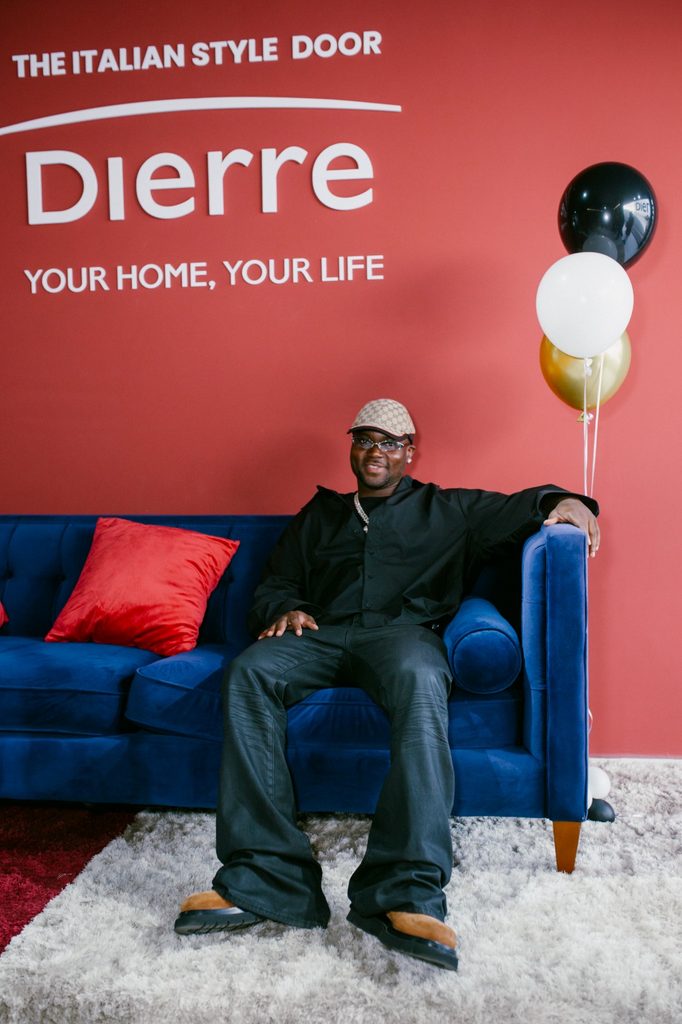
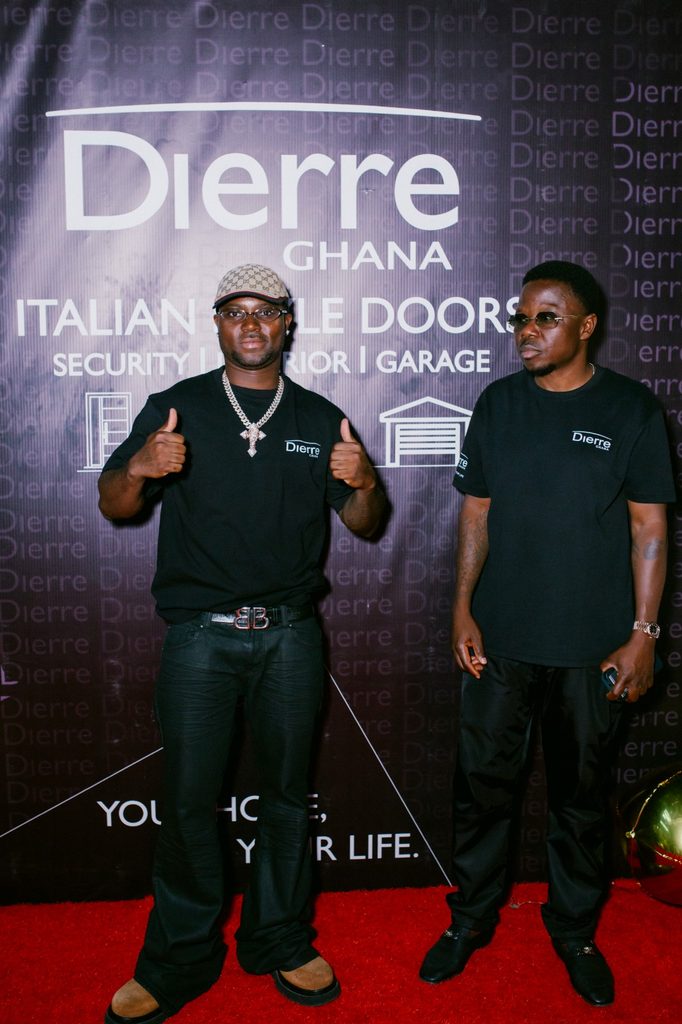
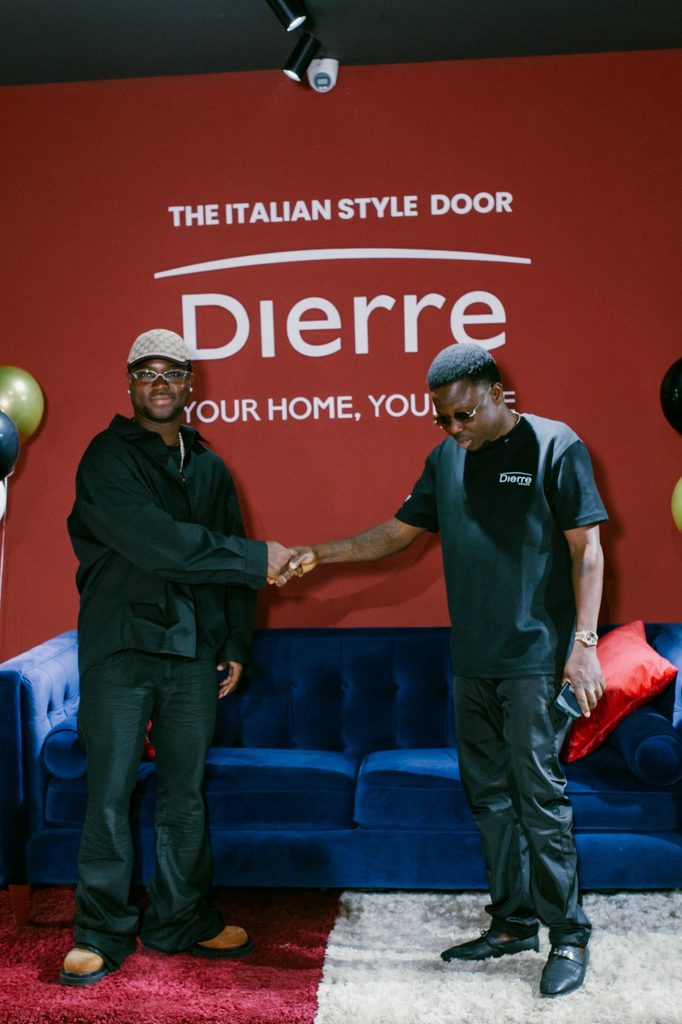

“Home is everything. It is where you protect the people and things that matter most. Dierre builds doors that reflect exactly that security, quality and style without compromise. I am proud to represent a brand that stands for those values,” King Promise said.
Founded in Italy, Dierre is a global manufacturer of armoured security doors, interior doors and fire-protection systems. Its products carry international anti-burglary certifications across Classes 3, 4 and 5, with the company producing hundreds of thousands of doors, locks and safes annually.
King Promise is one of Ghana’s leading Afrobeats and Highlife artistes, known for his distinctive sound, international collaborations and growing global audience.
The partnership combines Dierre’s security and design expertise with King Promise’s influence in contemporary African music and culture, as the brand expands its consumer engagement in Ghana and across West Africa.

From humble beginnings to building an enterprise with global ambitions, Michael L. Bartlett-Vanderpuye’s journey is a story of discipline, independence, resilience and the belief that businesses should be built to outlive their founders.
Long before he became the Group Chairman of M&C Group, Michael L. Bartlett-Vanderpuye was building from modest beginnings.
His entrepreneurial journey did not start in a sophisticated corporate office or with a large team behind him.
At one stage, he was working from his room with limited resources, focused on turning an idea into a viable business.
That beginning became an important part of his philosophy: build the business first, then let the infrastructure grow with it.
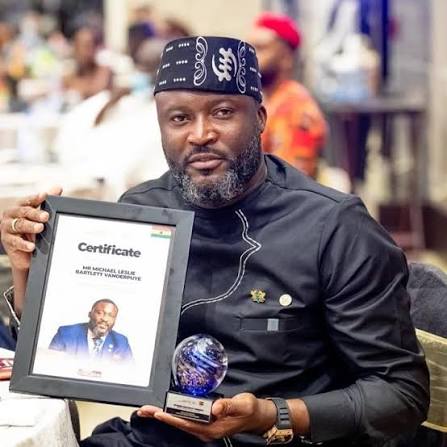
Michael’s early experiences shaped his determination to become an entrepreneur. After university and periods of professional employment, including banking, accounting, marketing, packaging and logistics, he developed a deeper understanding of how businesses operate and how different industries connect.
His exposure to mining advisory work, property and other commercial opportunities broadened his perspective and helped him identify opportunities beyond a single sector.
But the journey was far from easy.
He recalls the uncertainty of sending proposal after proposal without knowing which one would eventually open a door.
Even after establishing an office in East Legon, some people assumed he was working for someone else because they could not imagine that the business belonged to him.
The confidence and corporate presence associated with success today were built through years of uncertainty, rejection, experimentation and persistence.
His evolution from working out of a room to leading M&C Group reflects a broader philosophy that has guided his business life: do not build an image before you build the substance.
For Michael, entrepreneurship is not simply about owning a company. It is about learning how to turn knowledge, relationships, opportunities and resources into sustainable value.
He believes professionals in every field can develop an entrepreneurial mindset by creating assets, building networks, investing in opportunities and developing additional sources of value alongside their careers.
That philosophy has influenced the way he approaches business expansion. Rather than viewing companies as isolated entities, Michael sees opportunities to create connections between industries, people and services.
Strategic partnerships, in his view, can create greater value than treating every other business as a competitor.
His approach has also been shaped by research and international exposure. He argues that entrepreneurs must understand the markets they enter rather than simply copy businesses they see succeeding elsewhere.
Behind every successful enterprise, he believes, are structures, regulations, relationships, research and decisions that may not be immediately visible from the outside.
As his business interests have grown, so has his ambition. M&C Group represents a significant chapter in that evolution, reflecting his drive to build an enterprise that extends beyond a single venture.
His vision is rooted not merely in personal wealth, but in creating businesses capable of generating employment, developing people, building partnerships and contributing to the wider economy.
Michael is particularly concerned about the role of the private sector in addressing unemployment and creating sustainable opportunities. For him, a successful business should ultimately do more than enrich its owner. It should employ people, develop skills, support suppliers and create opportunities that extend beyond the founder.
That long-term perspective is central to his understanding of success.
He is cautious about equating visibility with achievement. In an age where social media can make a business appear larger than it is, Michael believes the real measure of an enterprise lies in its systems, customers, assets, operations and results. The brand should be supported by substance.
His personal journey has therefore become a lesson in patience and discipline. The man who once had to convince people that the business was actually his now speaks about building systems, protecting capital, understanding markets and thinking beyond the immediate reward.
And his ambitions do not stop with the present generation.
Michael describes legacy as something that should extend beyond his children to future generations. His objective is to build something sustainable-something that can continue creating value after he is no longer at the centre of it.
From a modest room and limited resources to the boardroom and the development of a growing business group, Michael L. Bartlett-Vanderpuye’s story is ultimately about building before displaying, learning before expanding and creating something designed to last.
His journey is a reminder that global ambition does not necessarily begin with global resources. Sometimes, it begins with little more than an idea, discipline, persistence and the willingness to start where you are. – MyStoryMagazine