News
‘Combine science, religion to protect environment’

- /home/u249204778/domains/spectator.com.gh/public_html/wp-content/plugins/mvp-social-buttons/mvp-social-buttons.php on line 27
https://spectator.com.gh/wp-content/uploads/2026/08/Prof-Debrah-500x600.jpg&description=‘Combine science, religion to protect environment’', 'pinterestShare', 'width=750,height=350'); return false;" title="Pin This Post">
- Share
- Tweet /home/u249204778/domains/spectator.com.gh/public_html/wp-content/plugins/mvp-social-buttons/mvp-social-buttons.php on line 72
https://spectator.com.gh/wp-content/uploads/2026/08/Prof-Debrah-500x600.jpg&description=‘Combine science, religion to protect environment’', 'pinterestShare', 'width=750,height=350'); return false;" title="Pin This Post">
Many people have heard or even repeated the popular claim that because God gave mankind dominion over the earth, humans are free to consume anything they find in nature.
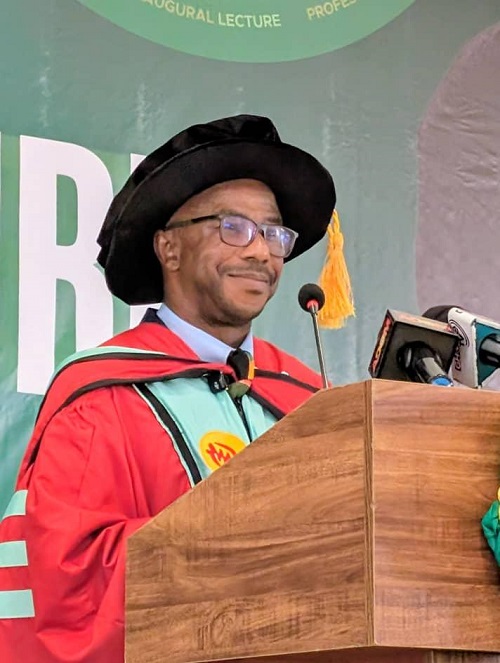
However, the Pro Vice-Chancellor of the University of Environment and Sustainable Development (UESD), Professor Edward Wiafe Debrah, says this widely held belief was a misconception that has contributed to the destruction of the environment and the depletion of natural resources.
Speaking on the relationship between religion, science and environmental conservation, Prof. Debrah explained to The Spectator in an exclusive interview that many Christians often cited Genesis 1:28, where God blessed humanity and instructed them to “be fruitful and multiply, fill the earth and subdue it; have dominion over the fish of the sea, the birds of the air and every living thing that moves on the earth.”
According to him, the verse had been wrongly interpreted to mean that people have unrestricted permission to consume every animal and natural resource on earth.
”The Bible did not ask mankind to destroy or exhaust creation. Dominion is about responsible leadership and stewardship, not exploitation,” he stressed.
He said God entrusted creation to humanity with the expectation that it would be managed wisely and preserved for future generations.
”Stewardship means nurturing what has been entrusted to you and being accountable to the Master one day. We must, therefore, use our natural resources wisely rather than consume everything without replacement,” he said.
Prof. Debrah pointed out that another misconception among some Christians was the belief that since the Bible spoke about the end of the world, there was little need to conserve the environment because no one knows when the earth would end.
He described this thinking as dangerous, explaining that no one knows when the end would come and, therefore, humanity had a responsibility to care for creation while it existed.
He also challenged the belief that animals cannot become extinct simply because human beings continue to exist despite people dying every day.
Drawing a distinction between human populations and wildlife, he explained that many animal species could disappear permanently if they were harvested without limits or conservation measures.
He cited indiscriminate hunting as an example, saying many hunters entered forests and killed whatever animals they found without considering whether the populations were sufficient to sustain future generations.
”If we continue consuming resources without strategic plans for replacement and conservation, we will eventually lose them,” he cautioned.
Prof. Debrah urged society to combine scientific knowledge with religious and cultural beliefs instead of relying solely on religious interpretations to address environmental challenges.
”We have to read and understand the Bible well while applying science to our culture and religion. Religious beliefs alone cannot solve all our environmental problems,” he stated.
He emphasised that biodiversity remained essential to human survival, noting that healthy ecosystems improve food quality, reduce diseases and help clean the air through trees that absorb carbon dioxide and other harmful gases.
Touching on agriculture, Prof. Debrah encouraged farmers to adopt sustainable farming practices that protect beneficial insects, especially bees, which naturally pollinate crops.
He mentioned that attempts at artificial pollination have proved costly, making natural pollination by insects a more practical and sustainable option.
”The irony is that we spray insecticides to kill every insect on our farms, including those that are beneficial. If we reduce indiscriminate use of insecticides, nature will regulate itself through the food chain, ensuring healthy ecosystems and improved crop production,” he said.
Prof. Debrah, therefore, appealed to the public to recognise that caring for nature was not contrary to faith but rather an important responsibility entrusted to humanity.
”The earth and its resources are gifts from God. Our responsibility is not to exhaust them but to protect and manage them wisely for ourselves and generations yet unborn,” he added.
By Ama Tekyiwaa Ampadu Agyeman, Koforidua





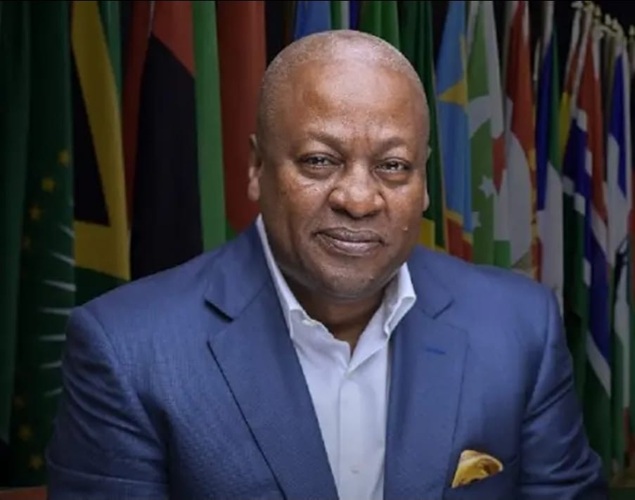
President John Dramani Mahama will be joining African heads of state, business leaders, investors and innovators shaping Africa’s next chapter, at the inaugural Alamein Africa Forum scheduled to take place from 2nd to 4th October 2026 in the historic city of Alamein on Egypt’s Mediterranean coast.
The three-day Alamein Africa Forum is established as a permanent African Business Forum to convene biennially in Egypt.
It is to become the continent’s premier gathering where political power meets entrepreneurial prowess, bridging the established engines of African growth with the new sectors defining its future.
Co-organised by the Government of Egypt, African Export – Import Bank (Afreximbank), the African Union and AUDA-NEPAD, it is expected to bring together more than twenty (20) heads of state and government representatives alongside business leaders, bankers and development institutions.
Ghana’s President, who on 23rd September 2026 declared Ghana is open for business in New York after ringing the ceremonial closing bell at the Nasdaq Stock Market will be leading the Ghanaian delegation, to include the Minister for Trade, Agribusiness, and Industry, Elizabeth Ofosu – Adjare, to the forum.
Other members of the Ghanaian delegation are the Head and Presidential Advisor for Ghana’s 24-Hour Economy and Accelerated Export Development Programme, Hon. Augustus Goosie Tanoh, Ghana’s Special Envoy to the Alliance of Sahel States, Colonel Larry Gbevlo – Lartey alongside key Ghanaian private sector players.
Bringing together leaders in politics, business and policy from across the continent, the Alamein Africa Forum will provide a unique opportunity to shape Africa’s growth agenda by aligning policy and investment priorities, mobilising partnerships for implementation and strengthening financing and investment pathways.
The private sector must become an integral part of Agenda 2063, the African Union’s strategic fifty-year masterplan to transform the continent. The private sector is the core economic engine required to turn the African 2063 from an aspirational government roadmap into realized infrastructure, jobs, and value-added trade.
By Chris KONEY
News
Contractors move to site to begin construction of 120-Bed Trauma Hospital at Bole – Felix Kwakye Ofosu
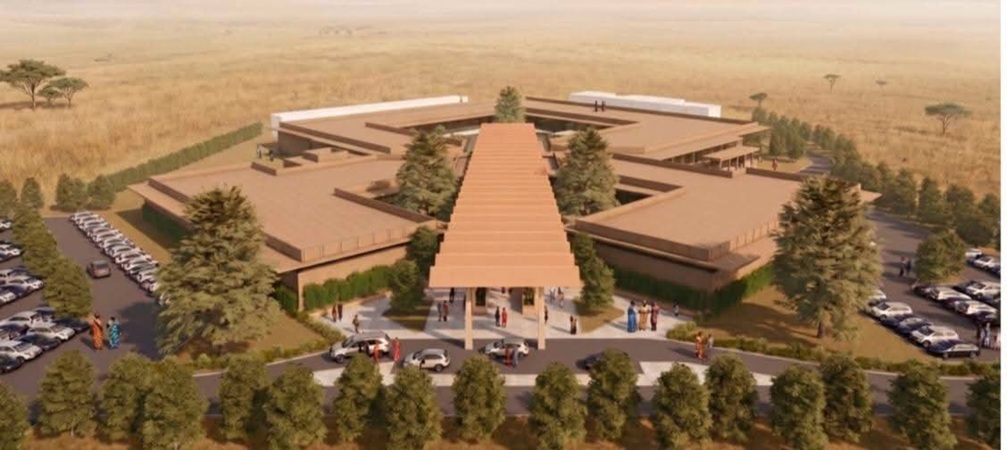
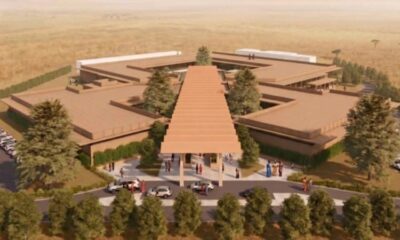
Minister for Government Communications, Felix Kwakye Ofosu, has revealed that contractors have moved to site to begin construction of a 120-bed Specialised Trauma and Emergency Hospital at Bole in the Savannah Region.
According to the Minister, the 16,000 square metre facility will be equipped with modern medical infrastructure to provide emergency and trauma care.
The hospital will have a 24-hour Accident and Emergency Unit, trauma resuscitation bays, emergency operating theatres, an Intensive Care Unit (ICU) and a High Dependency Unit (HDU).
It will also include specialised trauma wards, a burns treatment unit, orthopaedic and surgical units, as well as imaging and diagnostic facilities, among others.
By Edem Mensah-Tsotorme