News
Testicular cancer awareness: Report swelling, heaviness in testicles to doctor–Urologist

- /home/u249204778/domains/spectator.com.gh/public_html/wp-content/plugins/mvp-social-buttons/mvp-social-buttons.php on line 27
Warning: Trying to access array offset on false in /home/u249204778/domains/spectator.com.gh/public_html/wp-content/plugins/mvp-social-buttons/mvp-social-buttons.php on line 27
&description=Testicular cancer awareness: Report swelling, heaviness in testicles to doctor–Urologist', 'pinterestShare', 'width=750,height=350'); return false;" title="Pin This Post">
- Share
- Tweet /home/u249204778/domains/spectator.com.gh/public_html/wp-content/plugins/mvp-social-buttons/mvp-social-buttons.php on line 72
Warning: Trying to access array offset on false in /home/u249204778/domains/spectator.com.gh/public_html/wp-content/plugins/mvp-social-buttons/mvp-social-buttons.php on line 72
&description=Testicular cancer awareness: Report swelling, heaviness in testicles to doctor–Urologist', 'pinterestShare', 'width=750,height=350'); return false;" title="Pin This Post">
An urologist at the Greater Accra Regional Hospital (Ridge), Dr Kofi Boakye, has urged young men between the ages of 15 and 40 to visit a hospital for screening whenever they notice painless swelling or a feeling of heaviness in their testicles.
Speaking to The Spectator in an exclusive interview, Dr Boakye explained that most young men usually ignore this warning sign of testicular cancer because the swelling or heaviness was often painless.
Testicular cancer is one of the most common solid tumours affecting men between the above mentioned ages, making it the most common cancer within that age group.
Gladly, Dr Boakye, explained that the disease remains rare in the overall population and may explain its low awareness despite its existence and the problems it creates for men.
Questions posed to many young men on the streets of Accra on the disease, were met with nervous laughter, puzzled expressions and, in many cases, a straightforward “No.”
Only a handful of respondents were aware of the disease and some of its warning signs but were aware of others like breast cancer, prostate cancer and cervical cancer.
According to him, although advances in early diagnosis and effective treatment had significantly improved survival rates for testicular cancer over the years, the disease still posed a serious health risk when medical attention was delayed.
Dr Boakye, who has practiced for over 16 years, said symptoms often varied depending on the type of tumour, with more aggressive forms of the disease potentially causing breast enlargement due to increased hormone production, unexpected weight loss or swelling in other parts of the body.
“To gather more information, doctors also request blood tests to measure tumour markers, including Alpha-fetoprotein (AFP), Beta-human Chorionic Gonadotropin (beta-hCG) and Lactate Dehydrogenase (LDH). Although these blood tests cannot confirm cancer on their own, they provide important clues that help doctors diagnose the disease, determine how advanced it is and monitor a patient’s response to treatment.”
He identified family history and undescended testicles, a condition in which one or both testicles fail to descend into the scrotum before birth, as common risk factors.
“Young men should examine their testicles regularly. Any abnormal, generally painless swelling should prompt them to seek medical attention, ideally from an Urologist, though any practicing doctor in Ghana should be able to recognise the warning signs and refer appropriately. Do not self-medicate by going to a pharmacy or herbalist first,” Dr Boakye stated.
He added that men who had previously been treated for testicular cancer were also at increased risk, as the disease could develop in the remaining testicle.
Dr Boakye noted that while maintaining a healthy lifestyle was beneficial to overall wellbeing, it did not necessarily prevent testicular cancer, as the disease had not been linked to any specific food, diet or lifestyle habit.
He said once testicular cancer was suspected, patients would undergo a diagnostic process that included a physical examination and a scrotal ultrasound to determine the exact location and nature of any lumps.
Blood tests were also required as part of the diagnosis. Based on the findings from the physical examination, ultrasound and blood tests, the affected testicle might be surgically removed.
The removed testicle or tumour would then be sent to a pathologist for examination to determine its type and enable the oncology team to develop the most appropriate treatment.
Treatment, he explained, could involve chemotherapy, which might extend over several months, or radiotherapy, which could last about a month.
Dr Boakye stressed that patients needed to be monitored for five years before being considered fully cured, as cancer had no fixed ‘end date’ and could recur.
He further noted that chemotherapy and radiotherapy could cause side effects, including nausea and vomiting, reduced white blood cell counts, electrolyte imbalance and an increased risk of developing another cancer later in life.
He said the standard practice was to preserve sperm in a sperm bank before treatment began because of potential fertility problems.
By Musa Salamatu

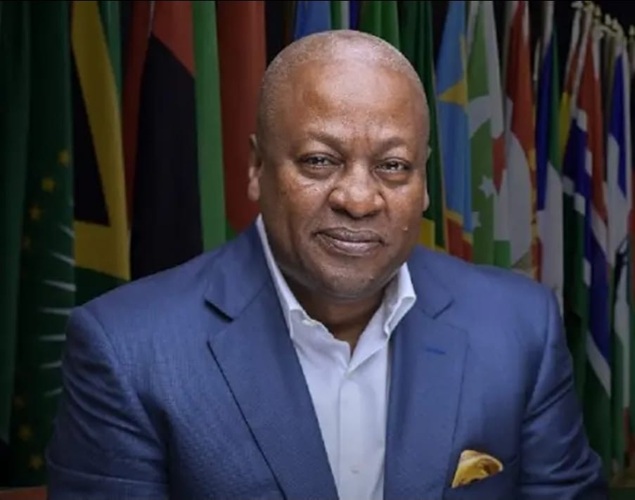
President John Dramani Mahama will be joining African heads of state, business leaders, investors and innovators shaping Africa’s next chapter, at the inaugural Alamein Africa Forum scheduled to take place from 2nd to 4th October 2026 in the historic city of Alamein on Egypt’s Mediterranean coast.
The three-day Alamein Africa Forum is established as a permanent African Business Forum to convene biennially in Egypt.
It is to become the continent’s premier gathering where political power meets entrepreneurial prowess, bridging the established engines of African growth with the new sectors defining its future.
Co-organised by the Government of Egypt, African Export – Import Bank (Afreximbank), the African Union and AUDA-NEPAD, it is expected to bring together more than twenty (20) heads of state and government representatives alongside business leaders, bankers and development institutions.
Ghana’s President, who on 23rd September 2026 declared Ghana is open for business in New York after ringing the ceremonial closing bell at the Nasdaq Stock Market will be leading the Ghanaian delegation, to include the Minister for Trade, Agribusiness, and Industry, Elizabeth Ofosu – Adjare, to the forum.
Other members of the Ghanaian delegation are the Head and Presidential Advisor for Ghana’s 24-Hour Economy and Accelerated Export Development Programme, Hon. Augustus Goosie Tanoh, Ghana’s Special Envoy to the Alliance of Sahel States, Colonel Larry Gbevlo – Lartey alongside key Ghanaian private sector players.
Bringing together leaders in politics, business and policy from across the continent, the Alamein Africa Forum will provide a unique opportunity to shape Africa’s growth agenda by aligning policy and investment priorities, mobilising partnerships for implementation and strengthening financing and investment pathways.
The private sector must become an integral part of Agenda 2063, the African Union’s strategic fifty-year masterplan to transform the continent. The private sector is the core economic engine required to turn the African 2063 from an aspirational government roadmap into realized infrastructure, jobs, and value-added trade.
By Chris KONEY
News
Contractors move to site to begin construction of 120-Bed Trauma Hospital at Bole – Felix Kwakye Ofosu

Minister for Government Communications, Felix Kwakye Ofosu, has revealed that contractors have moved to site to begin construction of a 120-bed Specialised Trauma and Emergency Hospital at Bole in the Savannah Region.
According to the Minister, the 16,000 square metre facility will be equipped with modern medical infrastructure to provide emergency and trauma care.
The hospital will have a 24-hour Accident and Emergency Unit, trauma resuscitation bays, emergency operating theatres, an Intensive Care Unit (ICU) and a High Dependency Unit (HDU).
It will also include specialised trauma wards, a burns treatment unit, orthopaedic and surgical units, as well as imaging and diagnostic facilities, among others.
By Edem Mensah-Tsotorme