News
French, Arabic and Chinese remain optional subjects-Education Ministry clarifies

- /home/u249204778/domains/spectator.com.gh/public_html/wp-content/plugins/mvp-social-buttons/mvp-social-buttons.php on line 27
https://spectator.com.gh/wp-content/uploads/2026/08/WhatsApp-Image-2026-08-03-at-12.54.48.jpeg&description=French, Arabic and Chinese remain optional subjects-Education Ministry clarifies', 'pinterestShare', 'width=750,height=350'); return false;" title="Pin This Post">
- Share
- Tweet /home/u249204778/domains/spectator.com.gh/public_html/wp-content/plugins/mvp-social-buttons/mvp-social-buttons.php on line 72
https://spectator.com.gh/wp-content/uploads/2026/08/WhatsApp-Image-2026-08-03-at-12.54.48.jpeg&description=French, Arabic and Chinese remain optional subjects-Education Ministry clarifies', 'pinterestShare', 'width=750,height=350'); return false;" title="Pin This Post">
The Ministry of Education has clarified that French, Arabic and Chinese will remain optional subjects under the proposed revised basic school curriculum, rejecting claims that the languages have been made compulsory.
In a statement issued on August 2, 2026, the Ministry said recent public discussions had created misconceptions about the language policy for basic schools.
It explained that Ghanaian languages would be used as the main medium of instruction from Kindergarten to Primary Three.
According to the Ministry, this is intended to help children develop literacy, numeracy, critical thinking and other basic learning skills in a language they understand well.
The statement added that from Primary Four to Primary Six, both Ghanaian languages and English would be used for teaching.
“This bilingual approach is designed to support a smooth transition to higher levels of education, where English assumes a greater role, while preserving learners’ competence in Ghanaian languages,” the Ministry stated.
The Ministry stressed that foreign languages, including French, Arabic and Chinese, would only be offered to pupils who choose to study them.
Their availability, it said, would depend on whether schools have qualified teachers and the necessary learning materials.
The Ministry said the policy is based on internationally accepted educational practices which show that children learn better when they begin their education in a familiar language before gradually learning additional languages.
It noted that the policy supports Ghana’s efforts to improve literacy, promote multilingualism and preserve the country’s linguistic and cultural heritage.
The Ministry urged parents, teachers, school authorities, media organisations and the public to disregard what it described as misinformation suggesting that foreign languages had been made compulsory.
Signed by the Press Secretary to the Minister of Education, Hashmin Mohammed, the statement said the Ministry remained committed to education policies that improve learning outcomes and prepare Ghanaian children for an increasingly interconnected world.
By:Jacob Aggrey






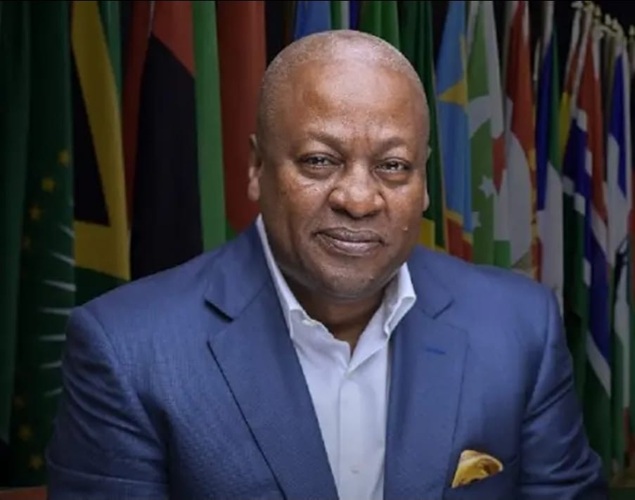
President John Dramani Mahama will be joining African heads of state, business leaders, investors and innovators shaping Africa’s next chapter, at the inaugural Alamein Africa Forum scheduled to take place from 2nd to 4th October 2026 in the historic city of Alamein on Egypt’s Mediterranean coast.
The three-day Alamein Africa Forum is established as a permanent African Business Forum to convene biennially in Egypt.
It is to become the continent’s premier gathering where political power meets entrepreneurial prowess, bridging the established engines of African growth with the new sectors defining its future.
Co-organised by the Government of Egypt, African Export – Import Bank (Afreximbank), the African Union and AUDA-NEPAD, it is expected to bring together more than twenty (20) heads of state and government representatives alongside business leaders, bankers and development institutions.
Ghana’s President, who on 23rd September 2026 declared Ghana is open for business in New York after ringing the ceremonial closing bell at the Nasdaq Stock Market will be leading the Ghanaian delegation, to include the Minister for Trade, Agribusiness, and Industry, Elizabeth Ofosu – Adjare, to the forum.
Other members of the Ghanaian delegation are the Head and Presidential Advisor for Ghana’s 24-Hour Economy and Accelerated Export Development Programme, Hon. Augustus Goosie Tanoh, Ghana’s Special Envoy to the Alliance of Sahel States, Colonel Larry Gbevlo – Lartey alongside key Ghanaian private sector players.
Bringing together leaders in politics, business and policy from across the continent, the Alamein Africa Forum will provide a unique opportunity to shape Africa’s growth agenda by aligning policy and investment priorities, mobilising partnerships for implementation and strengthening financing and investment pathways.
The private sector must become an integral part of Agenda 2063, the African Union’s strategic fifty-year masterplan to transform the continent. The private sector is the core economic engine required to turn the African 2063 from an aspirational government roadmap into realized infrastructure, jobs, and value-added trade.
By Chris KONEY
News
Contractors move to site to begin construction of 120-Bed Trauma Hospital at Bole – Felix Kwakye Ofosu
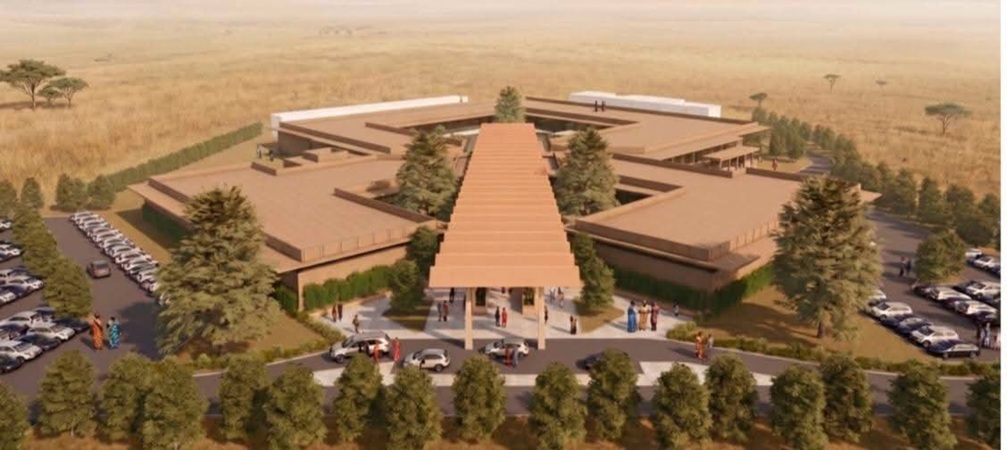
Minister for Government Communications, Felix Kwakye Ofosu, has revealed that contractors have moved to site to begin construction of a 120-bed Specialised Trauma and Emergency Hospital at Bole in the Savannah Region.
According to the Minister, the 16,000 square metre facility will be equipped with modern medical infrastructure to provide emergency and trauma care.
The hospital will have a 24-hour Accident and Emergency Unit, trauma resuscitation bays, emergency operating theatres, an Intensive Care Unit (ICU) and a High Dependency Unit (HDU).
It will also include specialised trauma wards, a burns treatment unit, orthopaedic and surgical units, as well as imaging and diagnostic facilities, among others.
By Edem Mensah-Tsotorme