News
Curbing piracy: Report suspicious persons to security agencies

- /home/u249204778/domains/spectator.com.gh/public_html/wp-content/plugins/mvp-social-buttons/mvp-social-buttons.php on line 27
Warning: Trying to access array offset on false in /home/u249204778/domains/spectator.com.gh/public_html/wp-content/plugins/mvp-social-buttons/mvp-social-buttons.php on line 27
&description=Curbing piracy: Report suspicious persons to security agencies', 'pinterestShare', 'width=750,height=350'); return false;" title="Pin This Post">
- Share
- Tweet /home/u249204778/domains/spectator.com.gh/public_html/wp-content/plugins/mvp-social-buttons/mvp-social-buttons.php on line 72
Warning: Trying to access array offset on false in /home/u249204778/domains/spectator.com.gh/public_html/wp-content/plugins/mvp-social-buttons/mvp-social-buttons.php on line 72
&description=Curbing piracy: Report suspicious persons to security agencies', 'pinterestShare', 'width=750,height=350'); return false;" title="Pin This Post">
The treat of pirates on the Coast of West Africa is of concern to the traditional rulers and people living along the Coasts of Ghana.
To this end, the Paramount Chief of Essikado Traditional Area in the Western Region, Nana Kobina Nketsia V, has asked fishermen along the nation’s coasts to promptly report suspicious characters to the navy or the security agencies for action in the fight against piracy
He said, the passage of such information twould help check the activities of pirates which were a threat to the security and safety of the West African sub-regional maritime domain.
“Let’s all be alert and collaborate with our security personnel to check piracy at sea,” he said.
Nana Nketsia made the appeal last Saturday during the official opening of the 2021 closed season at the Albert Bosumtwi Sam (ABS) fishing harbour, at Sekondi.
He said, the collective effort of all stakeholders was key to the protection and conservation of the marine resources.
He, however, told the gathering that selfishness and greed were critical issues that had undermined Ghana’s fisheries sector and believed that the enforcement of the fisheries laws would instil discipline in the sector, devoid of partisan politics.
“If you flout the rules, the law must take its course. The laws must be allowed to work in the interest of all stakeholders. Let’s embrace the closed season because we are one people”.
Historically, Essikado Omanhen noted that Ghana’s shores hauled abundant herrings especially during July and August , bringing joy to the fishing community, but, today, due to poverty, these potentials had eluded fishers.
“If we say on Tuesdays, there should be no fishing, it’s no fishing. But, because of greed and selfishness, we don’t comply. You are destroying your own future. We are destroying what our forefathers bequeathed to this generation.T hey knew why they declared that the sea must rest on that day,” he said.
Nana Nketsia called on stakeholders be resolute and check the activities of foreigners who engaged in illegal fishing to ensure discipline in the fisheries sector.
“Ghanaians are legally mandated to use the sea not Koreans or Chinese. It’s our future. Some of them come here fishing and depleting our fish stock. We need to be resolute on this issue.” he stressed.
Meanwhile, Mr Jojo Solomon a National Executive of the Ghana National Canoe Fishermen Council, applauded the success of the 2021 closed season and believed that with the cooperation of all stakeholders, Ghana was on the path of restoring sanity in the marine environment.
From Clement Adzei Boye, Sekondi


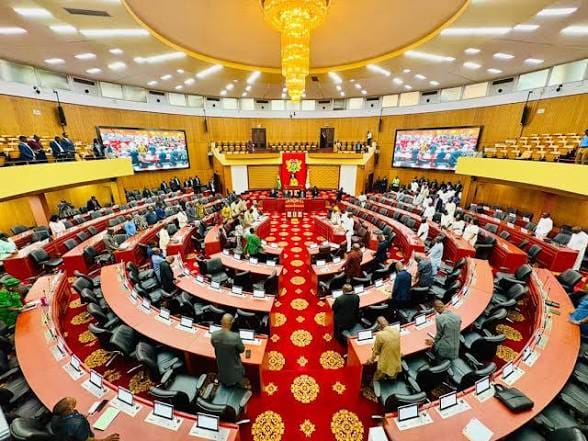
Parliament has clarified public commentary on social media regarding a notice on its notice board that read “No Vacancy for National Service Personnel 2026/2027. Kindly go for reposting.”
In a statement, signed by the Director of Media Relations, David Sebastian Damoah, Parliament said the notice has been misconstrued and was not a policy statement, a freeze on national service placements, or a change in its support for the National Service Scheme.
According to Parliament, the notice was a routine administrative message to prospective personnel who reported to the House, informing them that it has received more personnel than it can accommodate for the 2026/2027 service year and that they should seek reposting to other institutions.
It said it remains committed to the National Service Scheme and values the contribution of service personnel to its work, and regrets any confusion or inconvenience the wording may have caused.
By Edem Mensah-Tsotorme
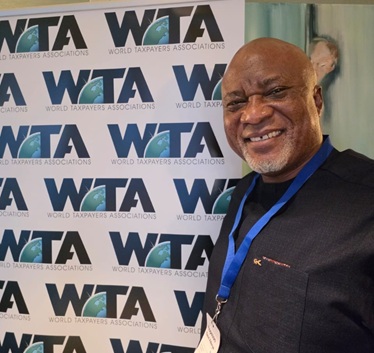
Ghanaian public advocate Hopeson Yaovi Adorye has been elected to the Board of Directors of the World Taxpayers Association (WTA).
The election took place on Sunday, October 5, 2026, during the Association’s conference in Kraków, Poland.
His election marks a significant addition to his international leadership portfolio and provides a platform for Ghanaian and African perspectives to contribute to global discussions on taxpayer rights, responsible taxation, transparency and prudent management of public resources.
Reacting to his election, Mr. Adorye expressed appreciation to the leadership and members of the WTA for the confidence reposed in him.
“I am deeply honoured by this confidence and conscious of the responsibility that comes with it. Taxpayers are at the heart of every economy, and they deserve fairness, transparency, accountability and value for the taxes they pay. I look forward to working with colleagues from across the world to strengthen the voice of taxpayers and promote responsible fiscal governance,” he said.
According to him, taxation should not be viewed solely as a mechanism for raising government revenue, but also as an important component of the social contract between citizens and the state.
Mr. Adorye said governments have a responsibility to ensure taxes are collected fairly and public resources are utilised efficiently to deliver quality infrastructure, healthcare, education, security and other essential services.
His election also creates an opportunity to bring African experiences into international conversations on taxation and public expenditure.
Mr. Adorye, who is Executive Director of Taxpayers League Ghana, has previously served as Global Board Chairman of the International Youth Network for UN Security Council Resolution 2250, an NGO associated with the United Nations Economic and Social Council (ECOSOC).
He is expected to use his new role to champion fiscal accountability, taxpayer education, good governance and stronger citizen participation in public financial management.