News
Elite Helping Hand Foundation feeds street families


- /home/u249204778/domains/spectator.com.gh/public_html/wp-content/plugins/mvp-social-buttons/mvp-social-buttons.php on line 27
https://spectator.com.gh/wp-content/uploads/2026/01/image0-810x600.jpeg&description=Elite Helping Hand Foundation feeds street families', 'pinterestShare', 'width=750,height=350'); return false;" title="Pin This Post">
- Share
- Tweet /home/u249204778/domains/spectator.com.gh/public_html/wp-content/plugins/mvp-social-buttons/mvp-social-buttons.php on line 72
https://spectator.com.gh/wp-content/uploads/2026/01/image0-810x600.jpeg&description=Elite Helping Hand Foundation feeds street families', 'pinterestShare', 'width=750,height=350'); return false;" title="Pin This Post">
As part of its annual generous initiative, the Elite Helping Hand Foundation, a non-governmental organization, in collaboration with KOFSA Construction and the Nyadu Addo Foundation, took to the streets of Kumasi to distribute food, drinks, and clothes to street families.
The exercise, dubbed “Feed the Streets 2.0,” marked the second consecutive year the foundation organized the event during the Christmas season.
In all, over 800 packs of food, drinks, and clothes were distributed to street families across Kumasi.
Founded four years ago by a group of compassionate friends, the Elite Helping Hand Foundation is committed to making a positive impact on individuals, communities, and the nation at large.
Speaking at the end of the exercise, Mr. Godwin Oppong Danso expressed appreciation to all individuals and organizations that donated and contributed to the success of the initiative. He noted that without their generous support, the foundation would not have been able to pursue such an ambitious and impactful vision.
Through donations to orphanages, support for underprivileged individuals, and outreach to vulnerable communities, the foundation continues to position itself as a force for positive change and a beacon of hope for many.
As the foundation prepares to celebrate five years of service, it is setting its sights on broader initiatives, including prison visits, hospital outreaches, street and community clean-up exercises, and support for deprived schools.
By Bright Lamptey
Join our WhatsApp Channel now!
https://whatsapp.com/channel/0029VbBElzjInlqHhl1aTU27


News
Mahama chairs security meeting over drug trafficking, orders formation of inter-agency task force
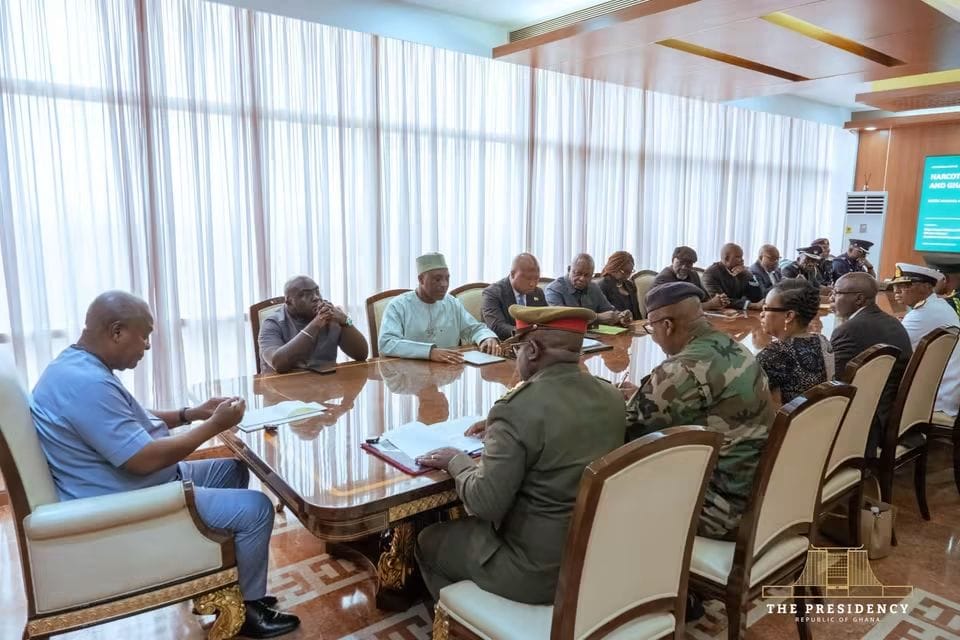
President John Dramani Mahama today chaired a meeting of security chiefs and received a detailed briefing on investigations into the recent trafficking of drugs out of Ghana’s ports.
The President was informed that ten individuals, including four officers of the Customs Division of the Ghana Revenue Authority (GRA), are being held while investigations continue.
The meeting reviewed the structure and security systems in place and recommended new actions.
President Mahama has directed that an inter-agency task force be formed to present a detailed roadmap, emanating from today’s meeting, on measures to prevent the trafficking of drugs through Ghana’s borders within two weeks.
By Edem Mensah-Tsotorme
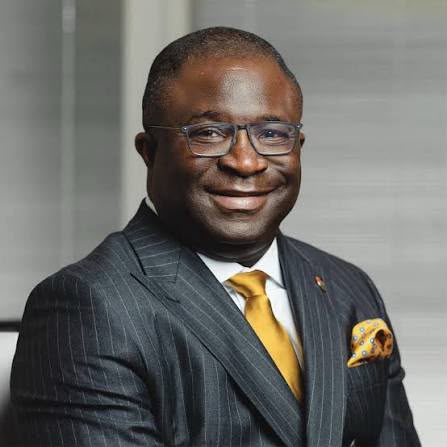
A University of Ghana research on the New Patriotic Party (NPP) National General Secretary election has found that 74.2% of surveyed delegates expect former Subin MP Eugene Boakye Antwi to win the October 3 election.
The research, conducted by a team of lecturers from the University of Ghana, Legon, led by Dr Chris Atadika, involved 889 NPP stakeholders.
According to the findings, 657 of the 889 respondents, representing 74.2%, identified Eugene Boakye Antwi as the candidate they expected to win the General Secretary position.
Incumbent General Secretary Justin Frimpong Kodua was identified by 223 respondents, representing 25.1%, while six respondents, or 0.7%, mentioned Sylvester Tetteh.
The researchers, however, stressed that the figures reflect the expectations of the respondents and should not be interpreted as an independent prediction of the election outcome.
The study also examined other areas of the contest, including candidate preference, perceived ability to help the NPP win the 2028 general election and name recognition.
On candidate preference, 76.6% of respondents identified Eugene Boakye Antwi as their preferred candidate, compared with 23.1% for Justin Frimpong Kodua.
When asked which candidate they believed could help the NPP win the 2028 election, 60.1% mentioned Eugene Boakye Antwi, while 39.2% chose Justin Frimpong Kodua.
The research further found that Eugene Boakye Antwi had an 82.7% name recognition among respondents when they were asked to identify candidates contesting the position. Justin Frimpong Kodua recorded 13%.
The respondents also identified good communication skills and boldness, the ability to help the party secure victory in 2028, and the ability to unite the party as some of the key qualities needed in the next General Secretary.
The study recorded 100% awareness of the General Secretary election among the respondents.
The research team, led by Dr Chris Atadika, is expected to brief the media on the full findings at the Department of Political Science at the University of Ghana, Legon.
The NPP will elect its National General Secretary on October 3, 2026.
By: Jacob Aggrey

 News1 week ago
Ghanaian journalist celebrates Texas town’s ‘Eden of the Far West’ tag after mayor’s nod
- News3 days ago
48 Engineer Regiment to be major sub-contractor on Accra-Kumasi Expressway, $2bn ready- Prez Mahama
- Entertainment6 days ago
Fiifi Coleman Productions adapt ‘I Told You So’ stage play into feature film