News
Experts call for greater economic freedom and sustainable fiscal policies to boost Ghana’s growth

- /home/u249204778/domains/spectator.com.gh/public_html/wp-content/plugins/mvp-social-buttons/mvp-social-buttons.php on line 27
https://spectator.com.gh/wp-content/uploads/2025/11/WhatsApp-Image-2025-11-12-at-11.02.09.jpeg&description=Experts call for greater economic freedom and sustainable fiscal policies to boost Ghana’s growth', 'pinterestShare', 'width=750,height=350'); return false;" title="Pin This Post">
- Share
- Tweet /home/u249204778/domains/spectator.com.gh/public_html/wp-content/plugins/mvp-social-buttons/mvp-social-buttons.php on line 72
https://spectator.com.gh/wp-content/uploads/2025/11/WhatsApp-Image-2025-11-12-at-11.02.09.jpeg&description=Experts call for greater economic freedom and sustainable fiscal policies to boost Ghana’s growth', 'pinterestShare', 'width=750,height=350'); return false;" title="Pin This Post">
Economists and policy experts have underscored the need for Ghana to promote economic freedom, reduce bureaucratic barriers, and sustain ongoing fiscal stability efforts to strengthen private sector growth.
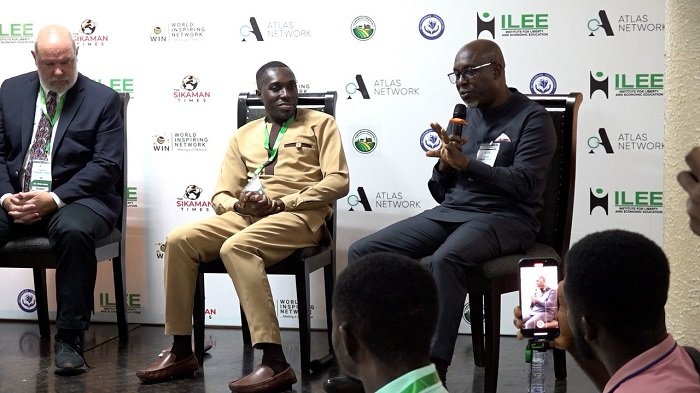
The call was made during a public discussion on economic freedom organised by the Institute for Liberty and Communication (ILC) in Accra, which brought together economists from the United States and Ghana to explore policies that can help small and medium enterprises (SMEs) grow and reduce poverty.
Director of Education and Senior Research Fellow at the American Institute for Economic Research (AIER), Ryan Young, urged governments to focus on creating an environment that allows individuals and businesses to take responsibility for improving their lives rather than relying on centralized plans.
“At the core, people have the potential to do great things when given the opportunity. The focus should be on removing rules and regulations that make it difficult for individuals to improve their own lives. Public policy should start from freedom, economic and personal, where individuals are empowered to make their own progress,” he explained.
Mr. Young emphasized that credit markets should be allowed to operate freely to support small businesses.
He noted that whenever governments set up new public funds or centrally managed loan schemes, they often compete with and weaken private lending systems.
“People should make lending decisions based on risk and reward, not administrators in an agency,” he said.
Director of Economics and Economic Freedom at AIER, Dr. Peter C. Earl, explained that economic development depends heavily on maintaining sound monetary policies, such as controlling inflation.
He commended Ghana’s recent decline in inflation to around 8–9%, calling it a positive sign that could lead to growth in employment and business activity if sustained.

“There’s no development without sound money. Ghana’s progress in reducing inflation is impressive. Stability in currency encourages investment and confidence. It’s important that the country doesn’t relax its efforts now,” Dr. Earl stressed.
He, however, warned that global trends, including the weakening of the U.S. dollar due to political and economic policies, could affect emerging economies like Ghana’s.
“A weaker dollar might make African exports to the U.S. more expensive, while U.S. goods become cheaper here. The long-term effects depend on how countries manage their local economies,” he added.
Vice President of IMANI Africa, Kofi Bentil, speaking on Ghana’s monetary outlook, said the Bank of Ghana’s interventions have helped stabilise the cedi but raised concerns about sustainability.
“The central bank’s responsibility is to stabilise the cedi, and they’ve done that well so far. The question is whether what they’re doing is sustainable. If the stability is artificial driven only by pumping dollars into the market then we will pay a heavy price when that stops,” he cautioned.

Mr. Bentil called for transparency in how the central bank manages its gold reserves and interventions, saying it would help build public confidence.
He also urged consistency in economic management, noting that stability over time is more important than short-term gains.
“Prices don’t immediately respond to changes in the exchange rate. What matters is a stable, predictable economic environment that allows businesses to plan ahead,” he explained.
He added that the programme was designed to promote ideas that encourage private sector participation and investment.
“Our aim is to promote economic freedom. People should be able to set up businesses, register them easily, and grow them without unnecessary barriers. The government’s role is to regulate fairly and create an environment where businesses can thrive,” he said.
He lamented that Ghana’s business registration and taxation processes remain cumbersome, describing the country’s bureaucracy as a major obstacle to entrepreneurship.
“Even though we’re not as bad as some socialist countries, starting a business in Ghana is still too difficult. The government must simplify the process to make it easier for small businesses to enter the market,” he urged.
By: Jacob Aggrey
🔗 Follow Ghanaian Times WhatsApp Channel today. https://whatsapp.com/channel/0029VbAjG7g3gvWajUAEX12Q
🌍 Trusted News. Real Stories. Anytime, Anywhere.
✅ Join our WhatsApp Channel now! https://whatsapp.com/channel/0029VbAjG7g3gvWajUAEX12Q









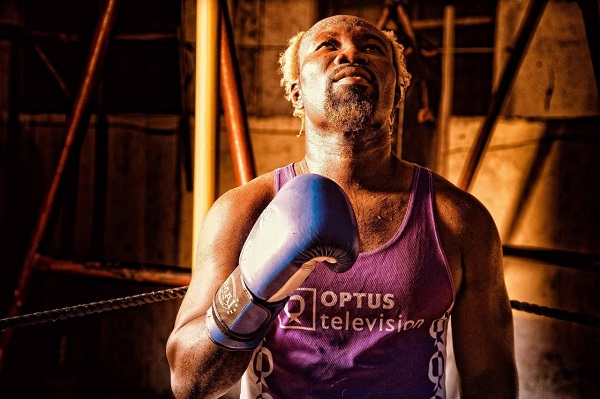
The Accra Regional Police Command has arrested former professional boxer Michael Ayitey Okai, popularly known as “Ayitey Powers,” over an alleged threat of death against the Director-General of the National Sports Authority, Yaw Ampofo.
According to the Police, the 46-year-old former boxer was arrested on Monday, August 24, 2026, in connection with the alleged threat.
The Police said the arrest followed a video circulating on social media in which Ayitey Powers is alleged to have issued the threat against Mr Ampofo.
He is currently in Police custody and is assisting with investigations.
The Accra Regional Police Command said investigations are ongoing to establish the circumstances surrounding the alleged threat and determine the appropriate action to be taken in accordance with the law.
The Command has urged the public to refrain from sharing unverified information about the matter while the investigation continues.
By: Jacob Aggrey
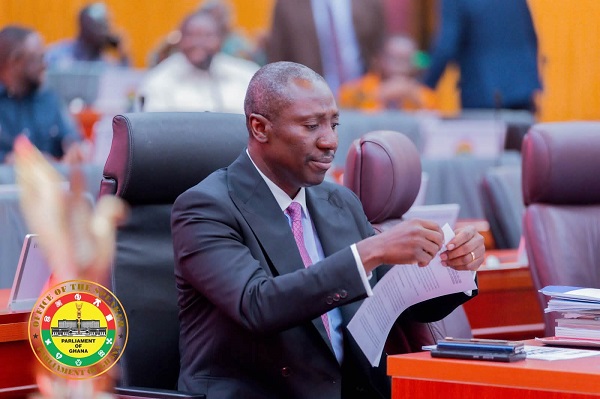
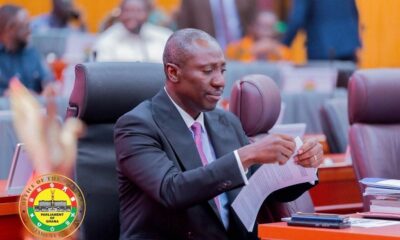
Minority Leader in Parliament Alexander Afenyo Markin has sued the Chief Executive Officer of the Ghana Gold Board (GoldBod), Sammy Gyamfi, and Multimedia Group Limited over alleged defamatory comments made against him on the Newsfile programme.
In a writ filed at the High Court in Accra, Mr Afenyo Markin is seeking GH¢15 million in damages, an apology and retraction of the statements, among other reliefs.
The suit follows comments allegedly made by Mr Gyamfi during the Saturday, August 22, 2026 edition of Newsfile, hosted by Samson Lardy Anyenini.
According to the statement of claim, Mr Gyamfi described Mr Afenyo Markin as an “extortionist” while responding to a question about GoldBod’s reported profits and its position on losses arising from its operations.
The plaintiff claims that Mr Gyamfi repeated the allegation when the host sought clarification on whether he stood by the description.
Mr Afenyo Markin further claims that Mr Gyamfi challenged him to sue him and insisted that the allegation was true.
The plaintiff argues that the statements created the impression that he engages in extortion, uses his political influence to put improper pressure on public institutions and officials, and conducts himself in a manner inconsistent with the standards expected of a lawyer and public office holder.
He denies the allegations and maintains that he is not an extortionist and has never engaged in the conduct alleged by Mr Gyamfi.
The Minority Leader also argues that the comments were made maliciously and were presented as facts without evidence being disclosed.
He claims the statements have damaged his reputation, professional standing and public image, particularly because of his position as a senior political figure and legal practitioner.
The suit also names Multimedia Group Limited as a defendant because, according to the plaintiff, the alleged defamatory comments were broadcast through JoyNews and subsequently circulated on social media platforms, including X, Facebook and YouTube.
Mr Afenyo Markin claims Multimedia failed to stop the comments or deactivate Mr Gyamfi’s microphone after the allegations were made.
He is therefore asking the court to award him general, aggravated and exemplary damages, as well as GH¢15 million in compensation and legal costs.
He is also seeking an order compelling the defendants to issue a full, unconditional and unequivocal retraction and public apology.
The plaintiff wants the apology and retraction to be given similar prominence and reach as the original publication, including through JoyNews and the social media platforms where the comments were disseminated.
He is further seeking a permanent injunction preventing the defendants from repeating the alleged defamatory statements or words with a similar meaning.
The writ requires the defendants to enter an appearance within eight days after being served.
It warns that failure to do so could result in judgment being entered in their absence.
The case was filed by lawyer Paa Kwesi Abaidoo of Dehyena Chambers on behalf of Mr Afenyo Markin.
By: Jacob Aggrey