News
Anglican Mothers’ Union donates food, essentials to Street Academy


- /home/u249204778/domains/spectator.com.gh/public_html/wp-content/plugins/mvp-social-buttons/mvp-social-buttons.php on line 27
https://spectator.com.gh/wp-content/uploads/2025/10/Mother-Wilhelmina-Graven-joined-by-other-members-to-present-the-items-to-the-Academys-Deputy-Director-Mrs-Irene-Attoh.jpg&description=Anglican Mothers’ Union donates food, essentials to Street Academy', 'pinterestShare', 'width=750,height=350'); return false;" title="Pin This Post">
- Share
- Tweet /home/u249204778/domains/spectator.com.gh/public_html/wp-content/plugins/mvp-social-buttons/mvp-social-buttons.php on line 72
https://spectator.com.gh/wp-content/uploads/2025/10/Mother-Wilhelmina-Graven-joined-by-other-members-to-present-the-items-to-the-Academys-Deputy-Director-Mrs-Irene-Attoh.jpg&description=Anglican Mothers’ Union donates food, essentials to Street Academy', 'pinterestShare', 'width=750,height=350'); return false;" title="Pin This Post">
The Mothers’ Union of the Anglican Church of Ghana has once again demonstrated its commitment to supporting the underprivileged, with their annual donation and visit to the Street Academy in Accra.
The Union, led by its President, Mother Wilhelmina Graven, presented a variety of food items and other essentials to the school in a bid to ease the burden on the children and their caretakers as the academic year begins.
Among the supplies donated were a bag of rice, a bag of beans, cartons of tomato paste, assorted drinks, biscuits, sugar, drugs, Oral Rehydration Salts (ORS), and other provisions meant to support the welfare of the children.
The visit was marked not only by the act of giving but also by an interactive session with the children.
Mother Graven expressed her delight at the warm welcome she received, noting that many of the pupils fondly remembered her from previous visits. She encouraged the children to hold on to the lessons they had been taught over the years and to remain disciplined in their studies and daily lives.
As part of the day’s activities, members of the Union delivered talks aimed at nurturing the holistic development of the children.
Mother Lauren Watson-Quartey addressed the pupils on the sensitive subject of sexual education, urging them to abstain and make responsible choices for their future.
Mother Hilda Commey also engaged the children on matters of health and hygiene, stressing the importance of personal cleanliness in preventing disease.
The event further featured a short but impactful sermon by Rev. Father K. B. Asante, who reminded the children of the value of obedience both at school and at home. He emphasised that obedience was the foundation of discipline and success, urging the children to listen to their teachers and parents as a way of preparing themselves for a brighter future.
The Mothers’ Union reaffirmed their commitment to continuing this annual tradition of service, pledging to remain a source of encouragement and support to the children of the Street Academy.
On behalf of the Street Academy, Mrs Irene Attoh, the Assistant Director, received the items and expressed heartfelt gratitude to the Mothers’ Union. She commended their consistency and kindness, noting that their annual donations go a long way in sustaining the children’s education and well-being.
“We at the Street Academy strongly believe in the act of giving, and we are deeply grateful to the Mothers’ Union for making this tradition part of their mission. Their generosity not only supports our children materially but also inspires them to live with hope and purpose,” Mrs Attoh remarked.
By Spectator Reporter
Join our WhatsApp Channel now!
https://whatsapp.com/channel/0029VbBElzjInlqHhl1aTU27



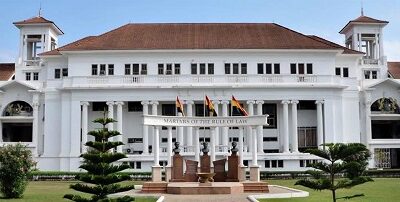



The Director of Legal Affairs of the New Patriotic Party (NPP), Gary Nimako Marfo, has questioned who will bear the cost of conducting presidential and parliamentary primaries following the Supreme Court’s ruling on the party’s delegate system.
Speaking to journalists, Mr. Nimako Marfo said he would not immediately comment on the ruling, adding that he wanted to wait for the full details before sharing his views.
“I don’t want to comment on it now. Let’s wait,” he said.
When asked about the Supreme Court’s decision that all members in good standing should vote in party elections, he shifted attention to the financial implications of implementing the ruling.
According to him, allowing all members in good standing to vote would increase the cost of organising internal party elections.
He questioned who would pay for the expanded electoral process.
“Who is going to pay for the cost of the elections?” he asked.
When a journalist suggested that political parties would bear the cost, Mr. Nimako Marfo replied, “Let’s wait and see.”
The comments come after the Supreme Court ruled that political parties should allow all members in good standing to vote in their internal elections, a decision that is expected to expand participation but also increase the financial and logistical demands of organising presidential and parliamentary primaries.
By: Jacob Aggrey
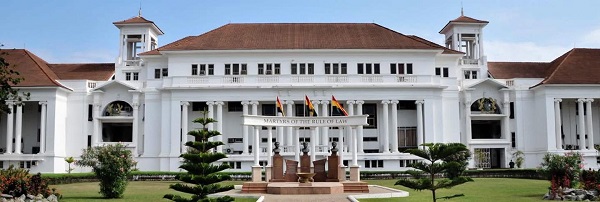
The Supreme Court of Ghana has declared the delegate system used by political parties to elect presidential and parliamentary candidates unconstitutional.
In a 5-2 majority decision delivered, the Court ruled that the long-standing system violates democratic principles and ordered all political parties to ensure every registered, card-bearing member participates in presidential and parliamentary primaries.
The ruling brings to an end decades of internal party elections conducted by a limited number of delegates.
The suit was filed by former Minister for Environment, Science, Technology and Innovation, Professor Kwabena Frimpong-Boateng; veteran politician Dr. Nyaho Nyaho-Tamakloe; and former Minister for Lands and Forestry, Dr. Christine Amoako-Nuamah.
The plaintiffs argued that the delegate system created inequality among party members by granting voting rights to a privileged minority while excluding ordinary members in good standing.
They told the Court that restricting voting rights to delegates was inconsistent with the democratic principles enshrined in the 1992 Constitution.
The Attorney-General’s Department supported the suit and urged the Court to adopt a “one member, one vote” approach.
In its submission, the State argued that political parties perform an important public function in Ghana’s democratic framework and that their internal electoral processes must reflect constitutional values of equality, participation and universal suffrage.
The Attorney-General further submitted that expanding voting rights to all registered members would strengthen accountability and deepen internal democracy within political parties.
The judgment means that going forward, presidential and parliamentary candidates will be selected by all registered members of a political party, instead of by delegates alone.
Political parties are expected to review their constitutions and structures to comply with the Court’s directive ahead of the 2028 general elections.
By Edem Mensah-Tsotorme