Nutrition
Accountability in Nutrition: Who holds Ghana’s leaders responsible?

- /home/u249204778/domains/spectator.com.gh/public_html/wp-content/plugins/mvp-social-buttons/mvp-social-buttons.php on line 27
Warning: Trying to access array offset on false in /home/u249204778/domains/spectator.com.gh/public_html/wp-content/plugins/mvp-social-buttons/mvp-social-buttons.php on line 27
&description= Accountability in Nutrition: Who holds Ghana’s leaders responsible?', 'pinterestShare', 'width=750,height=350'); return false;" title="Pin This Post">
- Share
- Tweet /home/u249204778/domains/spectator.com.gh/public_html/wp-content/plugins/mvp-social-buttons/mvp-social-buttons.php on line 72
Warning: Trying to access array offset on false in /home/u249204778/domains/spectator.com.gh/public_html/wp-content/plugins/mvp-social-buttons/mvp-social-buttons.php on line 72
&description= Accountability in Nutrition: Who holds Ghana’s leaders responsible?', 'pinterestShare', 'width=750,height=350'); return false;" title="Pin This Post">
Ghana’s fight against malnutrition is undermined not by a lack of knowledge, but by lack of accountability.
Nutrition experts and policymakers alike know what works: exclusive breastfeeding, micronutrient supplementation, food fortification, school feeding programs, and nutrition-sensitive agriculture.
Yet, programs stall, targets are missed, and resources are underfunded with little consequence for those responsible.
Who is responsible when exclusive breastfeeding stagnates below global targets? Who answers for the fact that nearly half of Ghanaian women suffer from anaemia despite repeated pledges to improve maternal nutrition? Who explains why stunting rates remain at 18 percent when the target was 15percent by 2025? Who ensures that Nutrition for Growth (N4G) commitments made at the international stage are translated into local budgets and services? Who accounts for nutrition budgets that fall short of the 2-3 percent allocation recommended for effective programming? Etc.
Accountability must be made non-negotiable. Parliament must demand annual nutrition accountability reports from the Ministry of Health, the Ministry of Agriculture, and the National Development Planning Commission (NDPC), tracking not only policy promises but also tangible outcomes.
The NDPC, as the apex planning body, must take the lead in monitoring nutrition indicators across all sectors and ensuring that district-level plans integrate nutrition targets.
Civil society must step up, using evidence and data to spotlight the gaps between rhetoric and reality. Tools such as nutrition scorecards and citizen report cards can empower communities to track progress and demand answers. Media outlets must treat nutrition as a governance issue, not just a health story buried in lifestyle pages.
District assemblies, as the frontline implementers of nutrition programmes, must be held accountable for translating national policies into community-level action. They should report regularly on the status of school feeding programmes, community-based management of acute malnutrition (CMAM) services and local food security initiatives.
The public also has a role to play. Citizens must demand better interventions that addresses their nutritional needs, by asking their representatives what concrete steps have been taken to improve nutrition in their communities. Communities can use vox pops, community radio, and grassroots dialogues to hold leaders accountable. The Food Systems Transformation and Nutrition Security (FSTNS) Cross-Sectoral Planning Group (CSPG), led by the National Development Planning Commission (NDPC), which serves as Multi-Sectoral Platform for Food Security and Nutrition should serve as a coordination hub where stakeholders review progress and identify bottlenecks in real time.
International partners must not shy away from asking tough questions about financing gaps and delayed reforms. Accountability should have teeth, public hearings for nutrition budget performance, independent audits of feeding programmes and performance-based funding mechanisms that reward results, not just promises.
Countries like Rwanda have shown that strong political commitment backed by rigorous accountability mechanisms can dramatically reduce malnutrition rates. Ghana can learn from such examples, adapting successful models to our own context.
Without accountability, nutrition will remain a political talking point instead of a development reality. Ghana cannot afford empty commitments. Our children deserve measurable results, and our leaders must be held responsible for delivering them.
Feature Article by Women, Media and Change under its Nourish Ghana: Advocating for Increased Leadership to Combat Malnutrition Project
Join our WhatsApp Channel now!
https://whatsapp.com/channel/0029VbBElzjInlqHhl1aTU27

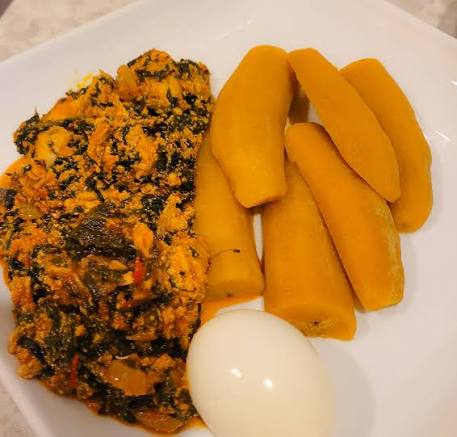
Ingredients
-Cocoyam leaves (Nkontomire)
-Palm oil
-Ripped Plantain
-2 Large smoked salmon
-1 cowhide (wele)
-1 cup of Egusi
– Momoni
-3 fresh eggs
-2 large onions
-2 large tomatoes
-Pepper
-Ginger
-Garlic
Method
-Wash cocoyam leaves thoroughly under running water
-Cut cocoyam leaves into stripes and wash for the second time
-Blend tomatoes, onion, pepper, ginger, and garlic together
-Put sauce pan on fire and heat palm oil
-Add blended ingredients and allow to cook for about 5 minutes
– Wash salmon, wele and cut into cubes and add to stew
-Add salt
-Add eggs to egusi in a bowl to form paste and add it to stew
-Add to stew and allow to simmer for seven minutes
-Add cocoyam leaves to stew and allow it to cook for sometime
-Wash, peel plantain and cut into shapes
-Cook for some time (Pour water out and serve with stew)
By Linda Abrefi Wadie
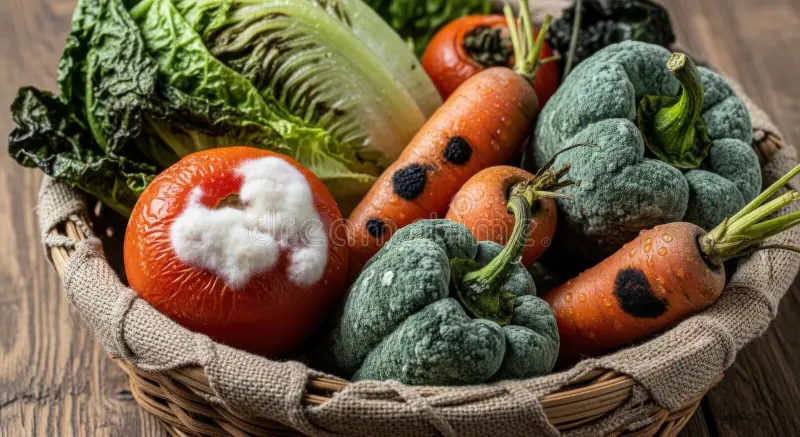
Every year, Ghana produces thousands of tonnes of nutritious food but a significant share of it never reaches a plate. Fruit spoils before it’s sold. Vegetables rot in transit. Grains are ruined by poor storage. Conversations about nutrition often focus on growing more food but reducing what’s lost or wasted after harvest may be one of the fastest ways to improve food security and nutrition, without farming a single extra acre.
The cost of losing nutritious food
Fresh fruit and vegetables spoil the fastest, and without adequate storage, cooling, or transport, farmers are often forced to sell at rock-bottom prices or watch their harvest go to waste. That squeezes farmers’ incomes and shrinks the supply of nutritious food reaching local markets. As supply falls, prices rise, pushing healthy food further out of reach for the low-income households that need it most.
Nutrition begins beyond the farm gate
Cutting post-harvest losses means more nutritious food reaches families without needing more farmland or higher yields. When tomatoes, mangoes, and leafy greens are preserved through better storage, drying, or processing, they stay available and affordable for longer. Better handling also protects nutritional quality itself, so the vitamins and minerals in food aren’t lost before it ever reaches a consumer.
Supporting farmers supports nutrition
Many farmers still lack access to storage facilities, cold chains, processing equipment, and reliable transport. Strengthening these systems is a win on both ends: farmers earn more from what they grow, and households gain more affordable access to nutritious food. Local processing, such as turning surplus fruit into juices, dried fruit, or purees, can extend shelf life and cut waste even further.
What needs to change?
Reducing food loss takes coordinated action:
• Government: invest in rural roads, storage infrastructure, irrigation, and agricultural extension services.
• Private sector: expand cold storage, food processing, and distribution networks.
• Research institutions: keep developing better post-harvest preservation technology.
• Consumers: plan meals, store food properly, and make safe use of leftovers.
Looking ahead
As Ghana works to tackle malnutrition in all its forms, cutting food loss deserves a place at the top of the agenda. Growing more food matters, but making sure the food already grown actually reaches families, safely and affordably, matters just as much.
Every basket of tomatoes saved, every crate of mangoes preserved, and every bag of grain protected from spoilage adds up to better nutrition, stronger livelihoods, and a more resilient food system for the future.
Feature article by Women, Media and Change under its Nourish Ghana: Advocating for Increased Leadership to Combat Malnutrition project