Editorial
Eat more fruits and veggies, less carbs

Poor nutrition causes illnesses and ultimately death worldwide, particularly in low-income nations according to research.
In Ghana, access to and the quality of food are becoming increasingly problematic.
“We are not eating well, and our diet has now become a source of disease and death for us,” stated Professor Anna Lartey, the former Director of Nutrition at the Food and Agriculture Organisation (FAO) of the United Nations in Rome, during a keynote speech.
Prof. Lartey disclosed this at the launch of the UG Nkabom Seminar Series, Honours Programme, and Mentorship/Internship Programme in Accra.
She also disclosed that over 3.1 billion people worldwide lack the financial means to maintain a healthy diet, with approximately 1 billion of those individuals living in Africa. In Ghana, roughly 65 percent of adults lack the financial means to maintain a wholesome diet.
People these days habitually consume junk food, so “if you live in an area where the foods around you are highly processed foods and junk foods, it is most likely to influence the kinds of foods you will choose.”
One of the main issues is that a lot of Ghanaians eat a lot of carbohydrates and not many fruits. In order to live a healthy life, people should eat more fruits and vegetables and less carbohydrates.
The Spectator praises the “Nkabom Collaborative,” a strategic project that aims to revolutionise Ghana’s agri-food system by enabling the youth to take advantage of opportunities in the food and nutrition value chain, notwithstanding the seriousness of the situation.
The goal of the programme was to prepare the young people to become the future generation of tech-enabled farmers, manufacturers, agritechpreneurs, and inventors of agrifood products.
Therefore, The Spectator exhorts young people to take advantage of the chance to gain employable skills and support the growth of the country.
Regarding the initiative, which aims to increase young women’s, people with disabilities’, and internally displaced people’s access to nutrition and agrifood systems, we think that with coordinated efforts, the programme’s goal of creating 55,000 jobs and 3,000 SME establishments over the next ten years will be accomplished.
The Food and Agriculture Organisation (FAO) has recommended that every Ghanaian eat five servings of fruits and vegetables each day, and we support this suggestion. This implies that output will fall short of our needs.
Nonetheless, we think that the demand would open up more doors for many Ghanaians, particularly young people, to pursue careers in agriculture in order to bring about a sustainable agri-food revolution in Ghana and beyond.
In order to promote a healthy lifestyle, this will cover food systems like production, processing, retail, consumption, and disposal with an emphasis on a clean food environment.
To solve issues with the food system and advance food security, concerted national initiatives are required.

Dear Editor,
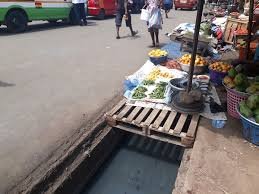
It is often said that a healthy nation is a wealthy nation. However, this saying becomes worrying when the health of citizens is threatened by the conditions under which the food they consume daily is sold.
In Ghana, the conditions under which food is sold is quite disturbing. Over the years, I have observed that the environments where food is prepared and sold are often unhygienic.
In many cases, containers holding food such as rice and waakye are left uncovered or not properly covered, exposing them to contamination.
While many Ghanaians paid little attention in the past to the conditions under which food was sold, the narrative seems to be changing in recent years.
I recall an incident during my days in Senior High School (S.H.S.) when my friends and I went out to buy food. At one location, some of us chose not to buy because we assumed the food would be expensive due to how neat the place looked.
Unfortunately, we ended up purchasing food from a different place that was somewhat unhygienic. We overlooked the poor conditions because we believed the quantity offered was better than at the cleaner location.
However, I am certain that my friends and I would not repeat such a mistake today, as we now understand the health implications of that decision.
While public education is important in addressing this issue, I believe it is time for regulatory and law enforcement agencies, such as the Food and Drug Authority (FDA), to crack the whip on food sellers and vendors who operate in unhygienic environments and conditions.
As citizens, we must also be mindful of where we buy our food to protect ourselves and our families from diseases and illnesses. We should choose ‘quality’ over ‘quantity’ and prioritize our health.
From Syram
Oyarifa
Dear Editor,
I write to express concern and call for improved security measures before and after every football match.
The recent robbery attack that led to the tragic death of a player, on their return from a Match day 29 game against Samartex, is both shocking and heartbreaking.
The incident, which reportedly occurred around 10:30 p.m., highlights the growing risks faced by players and team officials while traveling.
Football is meant to unite and entertain, not to expose lives to danger. It is therefore imperative that authorities, the Ghana Football Association, and security agencies put in place adequate protection for teams, especially during late-night travels.
I strongly urge all stakeholders to treat this matter with urgency to prevent such unfortunate incidents from recurring.
From Eugene Ampiaw
Accra