Features
The taxi driver

- /home/u249204778/domains/spectator.com.gh/public_html/wp-content/plugins/mvp-social-buttons/mvp-social-buttons.php on line 27
https://spectator.com.gh/wp-content/uploads/2025/02/taxi-driver.png&description=The taxi driver', 'pinterestShare', 'width=750,height=350'); return false;" title="Pin This Post">
- Share
- Tweet /home/u249204778/domains/spectator.com.gh/public_html/wp-content/plugins/mvp-social-buttons/mvp-social-buttons.php on line 72
https://spectator.com.gh/wp-content/uploads/2025/02/taxi-driver.png&description=The taxi driver', 'pinterestShare', 'width=750,height=350'); return false;" title="Pin This Post">
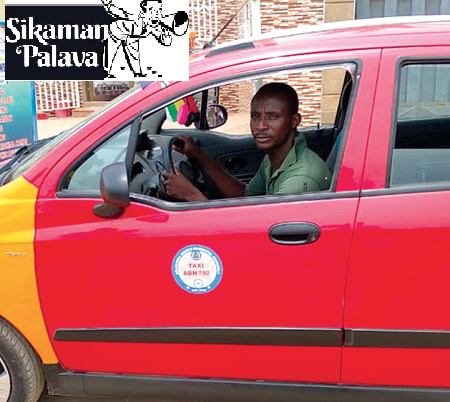
Taxi drivers are scared when passing near the Accra Sports Stadium. One has told me, he was driving past the stadium at around 10:30pm when he heard someone running football commentary through the nose. What! He levelled the gear to third, fourth and then fifth and fired the accelerator. The car dashed forward in full flight.
Then he saw someone in the distance stopping him for ‘dropping.’ The person looked like a soccer fan. Assuming he stopped and the guy turned out to be a ghost, could he control the steer and not end up in the sea?
He took a split-second decision. After all, ghosts did no harm unless you were responsible for turning them into ghosts. He’d stop and see if the gentleman spoke through the nose. He applied the brake and the car screeched to a halt.
“Take me to Labadi,” the man said, “how much?”
The taxi driver was too scared to answer. He did not know whether the man spoke through the nose or through the ears. Before he could say anything, the man open the front door and sat down. He banged the door hard! The driver wondered whether he was dealing with a human being or someone else; something transcendental. A ghost?
In his apprehension, he mistakenly put the gear into ‘third’ when it should have been in ‘first.’
He began moving the car. The wrong gear made the car jerk twice and the ignition went off. His first thought was that he’d picked a ghost who had just turned the engine off.
Wahallahi! Kakusunka!
Should he run and leave the car behind or simply scream for help? He did not know which would do under the circumstance. He shook like leaf, fiddled with the gear and sparked the car again. It sparked. The gear was at its right place.
He moved enroute to Labadi, glancing cheerfully at the man next to him on the front seat. When the man got down and paid for the short trip, the driver said he thanked his stars. Actually he nearly defecated in his ‘supporter.’
Next time, he’d not pick anyone around the disaster area. You wouldn’t know whether the passenger is a soccer fan in external glory, or true flesh and blood who eats salt and bread.
When he told me his story the day I chattered his car, I began thinking about ghosts. I haven’t seen any before and I don’t wish to. I don’t think it would be good for my health.
Fact is, I don’t want my blood pressure dangling like a pendulum. I am a simple man with no worries.
I went to a pastor friend and asked him about ghosts. They do not exist, he told me as a matter of fact. Every ghost is an impersonator, or an imposter.
“My friend get serious” I queried. “People say they see their dead friends, lovers, mothers, brothers, and so on.”
“That doesn’t mean there are ghosts,” he said. “The devil is only playing tricks. He impersonates people, using their faces to frighten others, to make them believe there are ghosts on earth, According to the Holy Scriptures, there are nothing like ghosts.”
“When you die,” I asked, “where will your spirit go?”
“To its Maker.”
“What for?”
“And before then, wouldn’t it hover on the earth?”
“What for?”
“So the so-called ghosts are in fact evil spirits and not human spirits?”
“That’s right
“Heard of the stadium disaster?”
“Yeah!”
“They say ghosts are displaying there basaa! You hear them at night shouting goa-a-l! ‘Offside! Penalty! and the rest. Aren’t they the spirits of the unlucky fans who died?”
“I don’t think so.”
“Meaning you are not sure.”
“I am sure dead people don’t shout.”
“But their spirits can.”
“Have your heard one shout.”
“No. But if they exorcise the place and there is no more shouting, doesn’t it means the ghosts have left?”
“It only means the evil spirits impersonating the dead people left. There are over one billion demons and principalities in the world .127 of them can easily be mobilised to be shouting at night to frighten people, to make them believe ghosts exists. That is no big deal for Satan.”
I was not quite convinced. Why would the devil want people to believe there are ghosts if they do not exist?
At any rate if the spirits were exorcised with cows, sheep, and fowls then it was not cost effective. The authorities should have hired the charismatic churches to do the job for them. They don’t need cows to chase spirits away.
The other day members of a church were attending a crusade and carried pestles and mortars on their heads to the crusade ground. I was amazed. I thought they were going to pound fufu mid-way during the programme.
When I asked one lady whether the fufu was going to be eaten with groundnut soup or aponkye nkrakra, she said they were going to pound the devil in the mortars and that it was no fufu festival. “The devil will confess today,” she assured me.
Before long, a man also carried a carpenter’s saw and hammer. He was going to saw Jimmy Satan into two halves; no two ways about that. There, he hammer his forehead and him to vamoose.
Before I left a little boy walked past with ten canes.” we are going to cane the devil,” he promptly announced. “He’d take 100 lashes on his bare-buttocks, then he’d learn sense.
Of course, Christianity is becoming more practical than theoretical. The devil must be attacked physically, battered and pounded. But it might be wasted effort. Christians must learn to speak the word and the devil will flee. As for pounding and sawing and caning, you might as well do it as a productive venture.
Sikama Palava takes this opportunity to express its deep-felt sympathy to the bereaved families of the stadium disaster. Not entirely belated, I hope!
This article was first published on Saturday, June 23, 2001

There is a scripture that is found in Matthew 6:22 which says that the lamp of the body is the eye and therefore the eye must see well to enable the body to get to its destination.
What most people do not know is that behind the scenes, there is a strong interaction between the eyes and the brain before a picture becomes clear. The state of mind therefore is crucial to the eye seeing clearly to enable the body to process accurately the information the eyes are feeding it for proper identification of what the eyes see.
This is similar to how a person behaves i.e. what informs the decisions that forms in the mind that results in the actions that a person performs. The actions of a person does not therefore just happen but is as a result of things that went on in the mind, which in most cases resulted from information passed on to it by the eyes either consciously or unconsciously.
There are so many issues that affect our society which makes one wonder, whether the people who displayed such acts were created by someone or something other than God.
How can a person see a beach created by God with beautiful beaches and fresh air blowing all around, decides to defecate at such places, and therefore desecrate the environment? lt is simply mind boggling?
When other people in other countries who dwell on the coast are using their beaches for tourist attraction purposes as a means of livelihood and also to promote environmental health, some people living around our beaches, have turned them into rubbish dumping sites and toilets.
It is a very sad situation and the earlier we did something about it the better. It is a national emergency that must engage the attention, first of the government and then the citizenry, where religious bodies and NGOs must play a critical role.
The things we focus on in this country, needs to be addressed. Our minds which processes the info the eyes send to the brain, must be disciplined. There are certain behaviours that a disciplined mind can ignore even when the eye has provided info to the brain. One of the things a disciplined mind does, is the avoidance of a second look, which is critical for every person who wants to avoid adultery or fornication.
Once a person is not blind, he will see things. The boobs, the ‘shankus’, the coca cola shapes, the light complexioned, the dark complexioned etc. the eyes will definitely see and report same to the brain. What the brain or the mind decides to do or instructs the eye to do is the issue.
It can decide to instruct the eye to take a second look and let the mind drool over it or say ignore it and that will be the end.
If the mind becomes trained to focus on environmental issues like clean environment, the eyes will automatically be reporting on insanitary conditions to the brain as and when it sees them. The mind will pay attention to such data and begin to process them and to identify solutions to deal with the reported insanitary conditions.
There is the need to encourage citizens to train the mind to focus on the right thing so that in tandem with the eyes, focus will be maintained. When the mind is so trained, it communicates with the eye to also focus on hood things that helps in both are spiritual life and our secular lives, for indeed the eyes are the lamp of the body. God bless.
THE relationship between New Times Corporation (NTC) and African Concrete Productions (ACP) is based entirely on matters of the stomach. Each depends on the other in a dietary symbiosis, reinforced by the close proximity of each other
At lunchtime, you’d see a particular set of Times workers marching regimentally to ACP to face the wall. You’d think they are soldiers. It has long been declared that the company manufactures the best kokonte in the Greater Accra Region. ACP is, therefore, a culinary haven for those NTC kokonte fans, both male and female.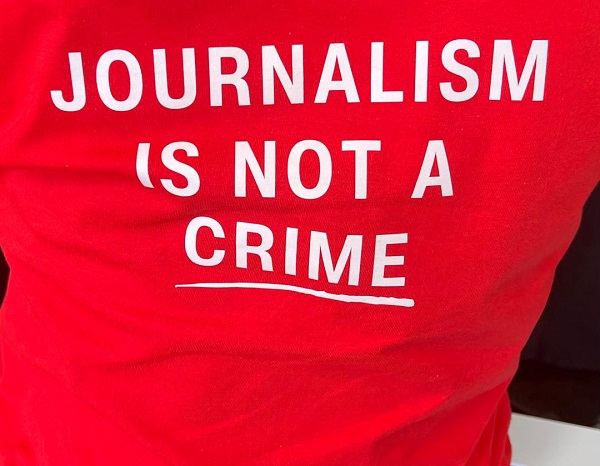
As the NTC kokonte warriors cross the border to ACP, you’d see some ACP banku fanatics dancing joyously to NTC. They are lucky folks because they do not have to obtain visa to enter into ‘Times’ to attack the balls of banku with precision and accuracy. They also claim that the lightsoup at ‘Times’ is arguably the best in West Africa.
So the relationship between the two entities was quite cordial and based practically on stomach palaver, until ACP workers staged an industrial revolution, whereupon the managing director, accountant and estate manager were allegedly stripped naked and locked up in a room. An insurgency had began in earnest.
An ACP worker came to ‘Times’, this time not to eat banku and okro. He had come to inform newsmen that juicy stuff awaited them at ACP. It could make a front page lead story.
A camerawoman and a female reporter were accordingly dispatched to go and bring back news, juicy news as juicy as kokonte and groundnut soup.
I was driving to work when I espied the familiar camerawoman clicking away outside the ACP premises. I didn’t see any ‘Times’ reporter but angry workers who were on the verge of getting violent. I slowed down and the driver behind blew his horn at me like a lunatic. I drove on.
Later, I heard the reporter and camerawoman were harassed and brutalised. The report came,. “The camerawoman, Mrs Salome Adonu-Agbottah and reporter Mrs Doreen Allotey, in an attempt to retrieve the camera which the workers had seized from them were severely beaten. They were manhandled and almost pushed into a big gutter opposite the company’s premises.
BRUISES
“….The camerawoman had bruises on her body, her hand bag was destroyed and the money in it stolen. Mrs Allotey’s watch was also snatched and her feet stamped on.”
Luckily, it was not her nose that was trampled upon. She has a beautiful nose.
The bad news was received with extreme sorrow. If the victims had been men, it would not have seemed too bad. But to brutalise women is just unacceptable. The New Times Corporation has not stopped mourning the incident which has been condemned in many circles.
Some people keep asking me why Times sent females to cover a potentially violent demonstration. I tell them they might as well ask why CNN’s amazon, Christina Amanpour, is assigned to cover the carnage in Bosnia-Herzegovina and Rwanda. She is always on the frontline in jeans and jacket.
Journalism is a potentially hazardous profession, and once you accept to study and practise the trade, you might as well bone up to face any assignment as long as your superiors feel you are capable of handling it or you have demonstrated the capacity to handle it. Both males and females can be assigned anywhere, anytime just like policemen and women are assigned.
The only difference between cops and pressmen is that the latter are armed only with a pen and the former with a gun. The question is should newsmen also arm themselves so that in any event of an assault they would not be found wanting in self-defence? They can’t adequately defend themselves with a pen and a jotter. A pen cannot even disfigure an opponent’s upper lip.
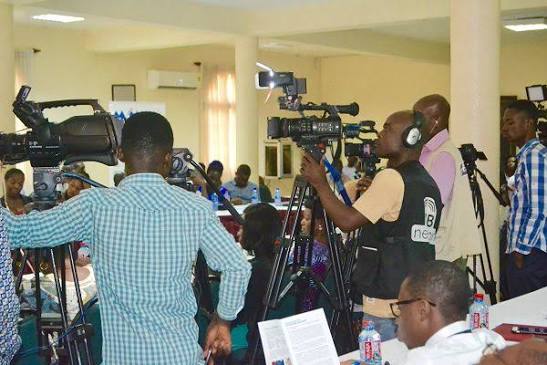
Photo-journalists have particularly suffered violence. Spectator ace-cameraman Vincent Dzatse was severely assaulted by AMA men when he attempted to take pictures of their indiscretions.
Sports cameraman, P. K. Arthur has been beaten more than once at the sports stadium when riots errupted and he wanted to capture it on his lenses.
Some sports journalists have been banned from entering the Accra Sports Stadium by supporters because in their comments, they didn’t write “sense”. Some supporters once nearly lynched Christian Abbew, Spectator Sports Editor, near a courtroom. He was stoned like the biblical Stephen. He had gone to defend a contempt charge.
I think it is time journalists met and discussed how best to defend themselves in any event of an attack by individuals or mobs. In the pursuance of their duty, they must be free from harassment and assault.
Some journalists go to work and return home with a black-eye or a double fore-head. It is just not right. Something has to be done about it. I think journalists should be armed. But first we must be trained in the use of firearms so that our warning shot do not hit below the belt. What about training in Kung Fu?
This article was first published on Saturday, October 17, 1998.