News
OccupyGhana expresses regret at Special Prosecutor’s resignation

- /home/u249204778/domains/spectator.com.gh/public_html/wp-content/plugins/mvp-social-buttons/mvp-social-buttons.php on line 27
https://spectator.com.gh/wp-content/uploads/2020/11/WhatsApp-Image-2020-11-17-at-23.21.05.jpeg&description=OccupyGhana expresses regret at Special Prosecutor’s resignation', 'pinterestShare', 'width=750,height=350'); return false;" title="Pin This Post">
- Share
- Tweet /home/u249204778/domains/spectator.com.gh/public_html/wp-content/plugins/mvp-social-buttons/mvp-social-buttons.php on line 72
https://spectator.com.gh/wp-content/uploads/2020/11/WhatsApp-Image-2020-11-17-at-23.21.05.jpeg&description=OccupyGhana expresses regret at Special Prosecutor’s resignation', 'pinterestShare', 'width=750,height=350'); return false;" title="Pin This Post">
OccupyGhana has read with considerable disquiet the letter from Mr Martin Amidu dated 16th November 2020, resigning from office as the Special Prosecutor, the Chief of Staff’s letter dated 17th November 2020 which accepted the resignation, and the letter from the President’s Executive Secretary responding to facts in the said resignation letter.
OccupyGhana and several Ghanaians were excited about the decision of the government to appoint a Special Prosecutor essentially to prosecute corruption and corruption-related offences in Ghana. Parliament had our full support when it passed the OFFICE OF THE SPECIAL PROSECUTOR ACT, 2017 (ACT 959). We were happy when Mr Martin Amidu, based on his impeccable credentials, was nominated, vetted and appointed to the position, and we have keenly followed developments relating to the office after he was appointed.
OccupyGhana has always believed that of all the provisions in the OSP Act, probably the most important is section 4(1) which guarantees the independence of the office in the following words:
“Except as otherwise provided in the Constitution, THE OFFICE IS NOT SUBJECT TO THE DIRECTION OR CONTROL OF A PERSON OR AN AUTHORITY in the performance of the functions of the Office” [emphasis ours.]
We believe that the grant and assertion of this independence is at the foundation of the entire Special Prosecutor experiment. It is in similar words that the Constitution guarantees the independence of the Judiciary and other Constitutionally-Established Independent Bodies such as the Auditor-General and Electoral Commission. It is our firm belief that those words vest in those relevant bodies political, financial and administrative independence from government and any other person or authority. This is what led us to successfully apply to be allowed to file an Amicus Brief in the pending case of ISAAC WILBERFORCE MENSAH V AUDITOR-GENERAL & 2 OTHERS (SUIT NO J1/2/2019). We await the final judgment of the Supreme Court on that matter.
Outside the Constitution, we note that Parliament has recognised that such independence is a critical attribute for certain national institutions. It has therefore deployed the same words in several statutes to grant independence to critical institutions and entities such as Commissions of Inquiry, Bank of Ghana, Public Utilities Regulatory Commission, National Petroleum Authority, National Peace Council, Legal Aid Commission, Witness Protection Commission, and the recently established Right to Information Commission. The OSP is part of this list of entities.
And the meaning of those words are not in doubt. In October 1992, which was even before this Constitution came into force, the High Court held in BILSON V RAWLINGS [1993-94] 2 GLR 413 that those words “explicitly give complete independence from government.”
However, while the Constitution or statute may “give complete independence from government,” we expect that the persons appointed to those offices would also assert that independence whenever it is challenged. Without that, the legal provisions that grant independence would be meaningless, the offices would be surrendered to government control, and Ghana would be the ultimate loser for it.
Having perused Mr Martin Amidu’s letter, we believe that the main challenge had to do with his interaction with the Executive on his most recent corruption risk assessment report. Without commenting on the merits or otherwise of the matters in disagreement, we believe that Executive push back is to be expected in the work on all constitutional or statutory independent bodies. When it becomes an attempt to creep on turf, we believe the best option is to call the bluff of the Executive, assert the independence, stick to one’s guns and proceed with one’s mandate. If we do not do this then we have surrendered that precious independence, back to the Executive.
OccupyGhana restates its support for the OSP and its independence from every other person or authority. The purpose behind all of these independent institutions under the law is to preclude the exercise of arbitrary power. We expect there to be friction. Inherent in that inevitable friction is the expectation that each office holder would hold their ground so that in the healthy equilibrium of tension, Ghanaians would be protected from undue governmental authority.
That is why we are disappointed in both the resignation and its subsequent acceptance, which make it impossible for the decisions to be rescinded.
In the Service of God & Country


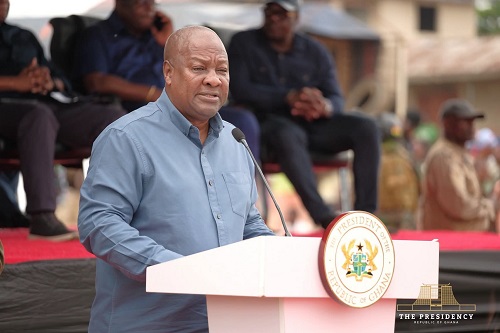
President John Dramani Mahama has called for a renewed and action-oriented Non-Aligned Movement (NAM), urging member states to protect their independence in decision-making and turn the movement’s resolutions into practical action.
Addressing the first Conference of Heads of State and Government of the Non-Aligned Movement in Belgrade, Serbia, on September 1, 2026, President Mahama recalled the words of Ghana’s first President, Dr Kwame Nkrumah, at the movement’s founding conference in 1961.
He noted that 65 years later, the call for non-aligned countries to play an active role in resolving global challenges remains relevant.
President Mahama stressed that the strength of NAM should not be measured only by its large membership but also by its ability to work together on issues affecting its members and the wider world.
“We must strengthen consultation and coordination among member states, particularly within the United Nations and other multilateral institutions where our interests converge,” he urged.
He called for NAM summits and ministerial meetings to focus more on key issues where the movement can make a meaningful impact.
President Mahama pointed to Ghana’s recent role in securing international support for a resolution on the transatlantic slave trade as an example of what collective action can achieve.
He noted that on March 23, 2026, the United Nations General Assembly adopted Resolution A/RES/80/250, led by Ghana and supported by the African Union, recognising the trafficking of enslaved Africans and the racialised system of chattel enslavement of Africans as the gravest crime against humanity.
The resolution received 123 votes in favour, and President Mahama expressed appreciation to NAM member states for their support.
On development, he argued that political independence must be supported by economic strength, stressing the need for countries in the Global South to have greater control over their natural resources.
“We cannot accept a global order in which countries of the Global South remain exporters of raw materials and importers of finished goods,” he stated.
He called for stronger collective action on climate change, pointing to fires in Southern Europe, drought and desertification in Africa, and floods in parts of Asia as evidence of the growing effects of climate change.
President Mahama reaffirmed Ghana’s commitment to working with NAM members to strengthen multilateralism, promote a fairer international system and give the Global South a stronger voice in global affairs.
He ended his address with a call for the movement to renew its founding spirit and work together with “principle, purpose and confidence” for the benefit of its people.
By: Jacob Aggrey
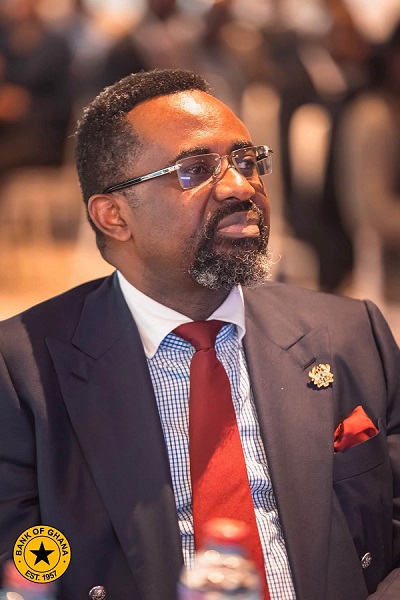
The Bank of Ghana (BoG) and the Securities and Exchange Commission (SEC) have warned the public against a suspected crypto investment scam operating under the name “Daily Wealth Guide.”
The warning follows the circulation of a doctored video on social media purporting to show President John Dramani Mahama endorsing the investment platform.
In a notice issued on Tuesday, September 1, 2026, the two regulators cautioned the public not to invest money in the platform or similar schemes promising quick and high returns.
The BoG explained that inviting members of the public to deposit money with such schemes amounts to deposit-taking, which can only be carried out by institutions licensed by the Bank of Ghana.
It stressed that it has not licensed any individual or entity to engage in crypto investment activities.
According to the notice, individuals or entities involved in such activities risk prosecution and may be required to refund all funds received.
The regulators further warned that offenders could face administrative penalties under the Anti-Money Laundering Act, 2020 (Act 1044), as well as investigations and prosecution by law enforcement agencies.
The Bank of Ghana urged the public to verify the licensing status of any individual or company before depositing money with them.
It advised the public to place deposits only with institutions licensed by the Bank of Ghana and other relevant authorities.
The central bank has, meanwhile, directed media houses, including radio, television and online platforms, not to advertise the services of the so-called “foreign investors” without first verifying their licensing status.
The public has been encouraged to report suspected illegal investment activities to the Bank of Ghana’s Financial Stability Department through its official contact channels.
By: Jacob Aggrey