News
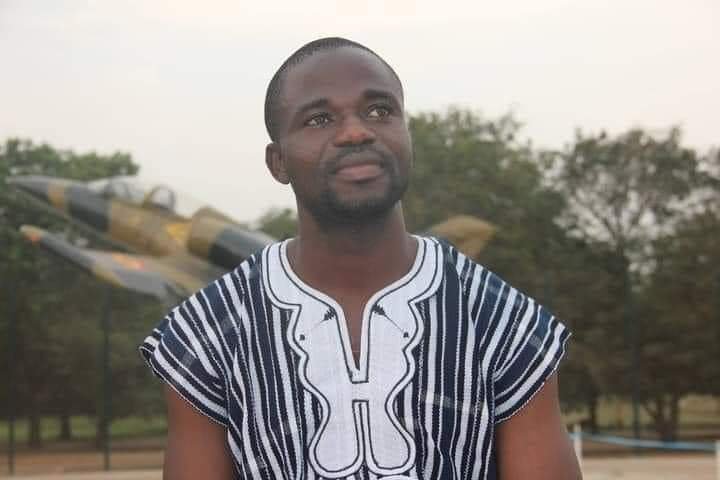
Manasseh Azure reacts to President’s response to Martin Amidu

- /home/u249204778/domains/spectator.com.gh/public_html/wp-content/plugins/mvp-social-buttons/mvp-social-buttons.php on line 27
https://spectator.com.gh/wp-content/uploads/2020/11/WhatsApp-Image-2020-11-18-at-10.18.49.jpeg&description=Manasseh Azure reacts to President’s response to Martin Amidu', 'pinterestShare', 'width=750,height=350'); return false;" title="Pin This Post">
- Share
- Tweet /home/u249204778/domains/spectator.com.gh/public_html/wp-content/plugins/mvp-social-buttons/mvp-social-buttons.php on line 72
https://spectator.com.gh/wp-content/uploads/2020/11/WhatsApp-Image-2020-11-18-at-10.18.49.jpeg&description=Manasseh Azure reacts to President’s response to Martin Amidu', 'pinterestShare', 'width=750,height=350'); return false;" title="Pin This Post">
He writes
READING THE PRESIDENT’S RESPONSE CRITICALLY
I have just read the detailed response of the Presidency to Martin Amidu’s resignation letter and his (amidu’s) accusation of interference.
My first impression is the measured tone of the response to the strongly-worded letter from Amidu.
The president has denied ever interfering or asking Amidu to shelve the Agyapa Royalties report so that he (the president) would deal with the matter. It is Amidu’s word against the president’s word. And we may not know who is telling the truth apart from deciding to believe who we think will more likely be truthful on this matter.
What makes Amidu look very terrible in the president’s response is the detailed explanation of how Martin Amidu did not recruit even though he was given the clearance to do so.
Another detailed explanation that makes Martin Amidu look really terrible in the eyes of those who read the president’s response is how budgetary allocations were made available to him, but he failed to spend.
I don’t know what Martin Amidu has to say about those two main issues in the president’s response, but if you read the concluding part of the president’s response about the office space for the Office of the Special Prosecutor, you would understand why Martin Amidu could not have recruited or spent the money allocated to his office.
According to the response from the presidency, the search for a befitting office space started and concluded between September 2019 and September 2020. That problem was resolved about two months ago.
The three-bedroom office could not have contained the staff if Martin Amidu had recruited.
And if he didn’t recruit there would not be the need to spend. So if Martin Amidu can be blamed legitimately for not recruiting or spending, then that should be after two months ago.
It’s like giving a headmaster an office and enough money to admit students without first providing classrooms.
Martin Amidu should explain why he rejected the keys to his new office that was dispatched to him in an envelope. But as we await that explanation, it is important to ask whether that is the standard procedure for handing over a public building to an office such as the Office of the Special Prosecutor.
Should there not have been a more detailed process that gives an inventory of what was being handed to the OSP? Apart from the key, should there not be a list of facilities, the cost and other important considerations for the sake of accountability?
If Martin Amidu does not heed the advice of a delegation of eminent people who might be sent to him to call for a cease fire, we are likely to get a response from him.
Reading the president’s response, however, has given me a new perspective on the matter. The setting up of such an important office demanded more than just a law and a serious anti-corruption crusader.
It might not have been the duty of the president or the government, but more effort should have gone into making that office operational. Even if it meant hiring international consultants well-lettered in matters of security and systems needed to make such an important office effective, it should have been explored.
The OSP, like the BNI and EOCO should not just be put into any facility at all. What do they need in their interrogation rooms? What systems are needed to check those who would use the office to make money from the rich and corrupt targets of investigations?
Having said that, the fight against corruption will not go anywhere until we get a leader who is willing to fight it.
And where was the board of the OSP in all of this?
The Auditor General has been forced to go home because he was seriously fighting corruption and had taken the fight to the senior minister. If Martin Amidu is out because it’s his fault, what about Daniel Domelevo, the Auditor General?
As I type this, the Attorney General is sitting on a docket prepared by the Financial Forensic Unit of the Ghana Police Service which has concrete evidence of how over 200 million cedis was paid to Zoomlion and its subsidiaries but the public officials who paid the money cannot give evidence of work done. Not even one official could say he or she saw the work being executed but they paid.
This is just one of the many cases, which the Presidency is aware of, and we do not need a special prosecutor to punish these acts of corruption and deter others.
Manasseh Azure Awuni, November 18, 2020.

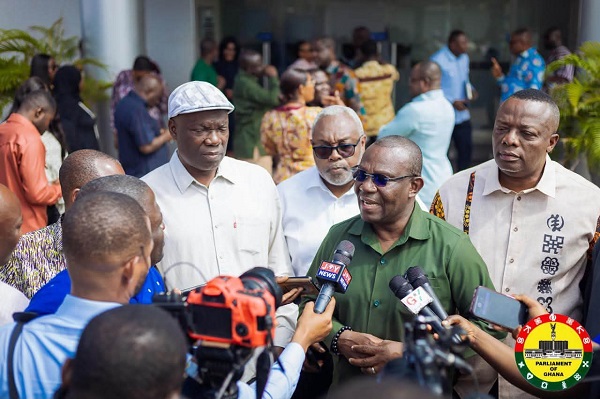
The Parliamentary Select Committee on Energy has appealed to the Ministry of Finance to release GH¢5.6 million to the Petroleum Commission to enable it to establish and operate a world-class data centre.
According to the Committee, access to the funds will strengthen the Commission’s capacity to manage critical upstream petroleum data and improve its operations.
Speaking during the appeal, Chairman of the Committee, Emmanuel Kwasi Bedzrah, said the move was crucial to efforts to revitalise Ghana’s upstream petroleum industry and increase oil production.
He noted that although investment and hydrocarbon production had declined in recent years, Parliament’s approval of an extension of the petroleum agreement to 2030 had attracted additional funding and contributed to an increase in production from about 80,000 to 120,000 barrels per day.
Meanwhile, concerns have been raised over repeated budget allocations for oil exploration in the Voltaian Basin.
Mr. Bedzrah stressed that funds approved for exploration must produce tangible results, adding that the Committee would require clear evidence of progress before supporting future budget allocations for the programme.
The appeal was made during a working visit to the Petroleum Commission as part of the Committee’s oversight activities to assess its operations and management procedures.
During the engagement, the Chief Executive Officer of the Petroleum Commission, Emeafa Hardcastle, took the Committee through the Commission’s working procedures and mandate, which includes regulating, managing and coordinating upstream petroleum activities.
She disclosed that since assuming office in 2025, government had pursued measures to reverse the decline in crude oil production, sustain output and reposition Ghana as an attractive destination for investment in Africa’s increasingly competitive petroleum sector.
In addition, she said government had secured fresh commitments of about US$35 billion to help revitalise the sector.
As part of the oversight exercise, the Committee is expected to conclude its monitoring visit with engagements at the National Petroleum Authority (NPA) and the Ghana Oil Company Limited (GOIL).
By Edem Mensah-Tsotorme
News
“No civilisation deserves to be annihilated” – Mahama calls for dialogue on global conflicts at UNGA 81

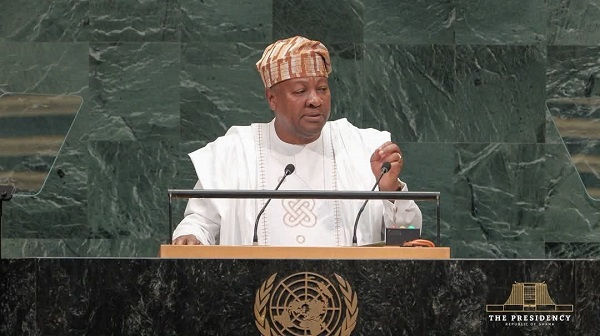
President John Dramani Mahama has called for solidarity and dialogue in resolving global conflicts, insisting that no civilisation deserves to be wiped out.
“No human civilisation deserves to be annihilated, certainly not a member state of the United Nations,” President Mahama stated in his address at the 81st United Nations General Assembly in New York.
He called for solidarity with nations facing terrorism, especially the Alliance of Sahel States (AES), and for a uniform approach to conflicts in Europe, the Middle East and Africa.
On the Middle East, the President called for a return to negotiations, saying “The current Middle East crisis is having a deleterious effect on the world economy.”
“I believe that dialogue can resolve even the most intractable of problems,” he added.
By Edem Mensah-Tsotorme

 Entertainment1 week ago
Rhythms On Da Runway returns November 28 with 16th edition themed ‘Unbound’
- Entertainment1 week ago
Ohemaa Mercy’s Tehillah Experience outfit was priestly regalia, not costume – Management clarifies
 News1 week ago
Janet Asana Nabla criticises Mahama over China curriculum controversy involving Haruna Iddrisu