News
Ghana Red Cross Society handicapped …needs more funding, logistics

- /home/u249204778/domains/spectator.com.gh/public_html/wp-content/plugins/mvp-social-buttons/mvp-social-buttons.php on line 27
https://spectator.com.gh/wp-content/uploads/2020/09/Red-cross-staff-interracting-with-some-residents.jpg&description=Ghana Red Cross Society handicapped …needs more funding, logistics', 'pinterestShare', 'width=750,height=350'); return false;" title="Pin This Post">
- Share
- Tweet /home/u249204778/domains/spectator.com.gh/public_html/wp-content/plugins/mvp-social-buttons/mvp-social-buttons.php on line 72
https://spectator.com.gh/wp-content/uploads/2020/09/Red-cross-staff-interracting-with-some-residents.jpg&description=Ghana Red Cross Society handicapped …needs more funding, logistics', 'pinterestShare', 'width=750,height=350'); return false;" title="Pin This Post">
The Ghana Red Cross Society has initiated a number of activities and supported the health sector in its efforts to combat the COVID-19 pandemic.
In spite of the crucial role it plays, the organisation continues to rely on the benevolence of individuals and organisations to execute many of its programmes in the country.
Officials indicate that funding and logistic constraints, to a large extent, have been preventing the society from reaching out to the vulnerable during crucial moments.
The Greater Accra regional office, for instance, has only one pickup vehicle for its routine operations.
Madam Catherine Adasu, the Regional Manageress, who confirmed this in an interview with The Spectator said that there was the need to close the “funding and logistic gap” so that the society could do more for the nation.
She said that officers at the regional office sometimes had to offer their personal vehicles to complement the only available pickup in order to carry out field work satisfactorily.
“We are handicapped in so many ways. The little resources we have are used to encourage volunteers and settle other administrative costs. As much as we want to do more, we are not able to do so for lack of funds until we get help.
“Our headquarters is equally handicapped when it comes to funding to implement some strategic programmes,” she noted.
Madam Adasu said that district officers of the society also needed motorbikes to fast-track their movement and quick response to emergencies within their jurisdictions and pointed out that volunteers of the society also required insurance packages.
According to her, Red Cross volunteers were not considered frontline workers although they had, in the last eight months, supported risk communication and other activities meant to combat COVID-19.
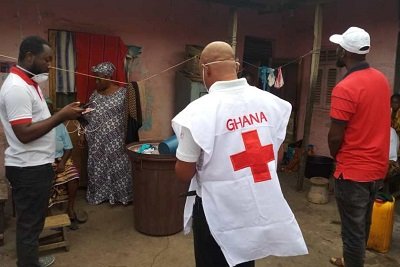
She said that the society, since January this year, had engaged in sensitisation at bus terminals and other public places following the outbreak of the disease.
“We have set up hand washing points at public places and intensified community education on safety protocols in all the regions.
“During the lockdown we partnered Nestle Ghana to distribute items to about 50 000 households in Accra and Kumasi. About 500 volunteers are still on the field educating the public and engaging community leaders in other areas where hand washing centres can be established,” she explained.
Highlighting other support services, Madam Adasu said that the Ghana Red Cross had distributed Personal Protective Equipment (PPE) to hospitals and schools across the country with support from different organisations including Master Card and the International Federation for the Red Cross.
The Regional Manageress further explained that the society was in the process of identifying and supporting persons who had lost their jobs due to the impact of the pandemic, adding that five markets had been earmarked to get mechanised boreholes to help improve on access to potable water.
Madam Adasu therefore appealed to corporate bodies to help absorb part of the society’s administrative cost to help sustain their operations.
“We need people to provide used clothing and other useful items which we can in turn give out to vulnerable people to improve their lives.
“If volunteers can receive similar packages given to other frontline workers or be put on monthly allowances by government this would be very useful as well,” she added.
Touching on other aspects of their work, she noted that suspension of sporting activities and closure of schools had halted part of their activities.
Madam Adasu appealed for more government support and called for a review of the Red Cross Act which had for the past years not been amended.
She also appeal to all support the Red Cross by patronising first aid training, first aid kits, health and safety training.
The Ghana Red Cross Society was established by an Act of Parliament (ACT 10 1958) and the Geneva Convention to, among other things, deliver relief and humanitarian services to the vulnerable during disasters and emergiencies.
By Ernest Nutsugah


Over 20 structures built within the 50-metre buffer zone of the Kpeshie Lagoon at the Laboma Beach Resort in the La Dade-Kotopon Municipality were on Sunday demolished by the Greater Accra Regional Coordinating Council (GARCC).
Buildings such as single-unit semi-detached under construction and completed chalets at the resort were pulled down while portions of a newly constructed perimeter wall were also demolished. Read More
SKIP THE QUEUE, TAP THE NEWS
You can now read the Ghanaian Times and The Spectator newspapers from the comfort of your device via TimesNewsPlus.
Join our WhatsApp Channel: https://whatsapp.com/channel/0029VbBElzjInlqHhl1aTU27

About 120 golfers from clubs across Ghana participated in an 18-hole competition, dubbed ‘MTN 30th Anniversary CEO Invitational Golf Tournament’ held at the Achimota Golf Club on Saturday.
At the end of the hectic day, Frederick Semenu Duvor won the Men’s Group A event with 39 points, while Julienne Afi claimed the Ladies’ Group A title with the same score.
Yaw Mireku Jnr. won the Men’s Group B with an impressive 45 points, while Kous Louanges Mang took the Ladies’ Group B title with 38 points.
Kofi Mangesi won Men’s Group C with 40 points while Elorm R. Akuash Bonney claimed the Ladies’ version with 42 points.
In the Seniors Division, Jan Vogel emerged winner of the men’s category with 39 gross, while Helen Appah topped the ladies’ category with 44 gross.
Addressing participants, the company’s Board Chairman, Mr Ishmael Yamson, urged the company to approach its next phase with the same resilience, discipline and determination that have defined its success over the past three decades.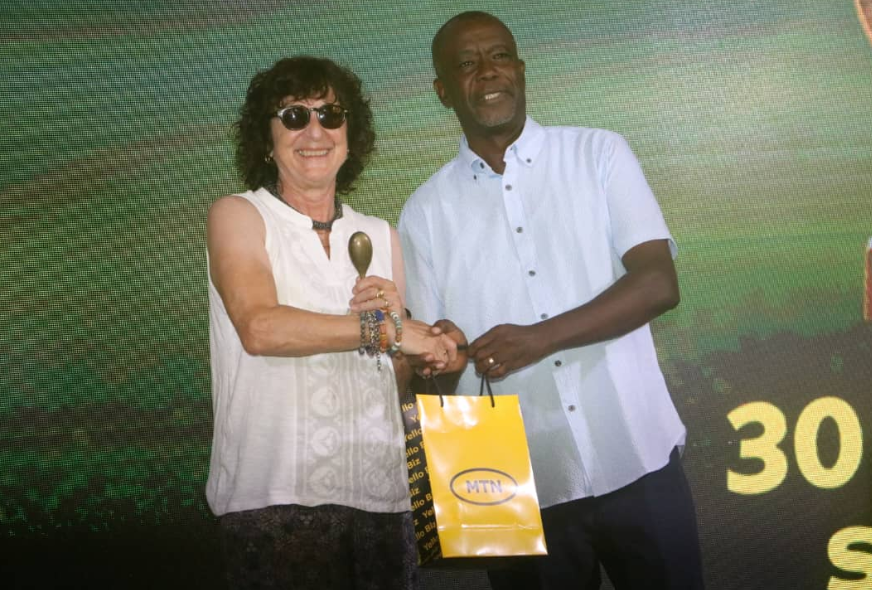
He drew a striking parallel between the game of golf and MTN Ghana’s three-decade journey, describing both as long games in which success depends less on one spectacular moment than on consistency, patience, judgment and the ability to recover from setbacks.
He said, golf had taught him a lesson that extended far beyond the fairways, thus, a round cannot be won on the first hole.

In golfing terms, he said, MTN Ghana had encountered its share of regulatory bunkers, competitive hazards and unexpected storms that had forced the company to pause, reassess and change its approach.
But those challenges, he suggested, were part of the journey rather than reasons to abandon it.
By Andrew Nortey
SKIP THE QUEUE, TAP THE NEWS
You can now read the Ghanaian Times and The Spectator newspapers from the comfort of your device via TimesNewsPlus.
Join our WhatsApp Channel: https://whatsapp.com/channel/0029VbBElzjInlqHhl1aTU27

 Entertainment1 week ago
Fiifi Coleman Productions adapt ‘I Told You So’ stage play into feature film
- Entertainment7 days ago
Rhythms On Da Runway returns November 28 with 16th edition themed ‘Unbound’
- News1 week ago
48 Engineer Regiment to be major sub-contractor on Accra-Kumasi Expressway, $2bn ready- Prez Mahama